The Water color transfer experiment for children is one of the most exciting and visually appealing STEM activities young learners can explore. With just a few simple materials, kids can watch colored water seemingly move on its own from one cup to another. This magical process captures attention immediately while teaching important scientific concepts such as capillary action, absorption, color mixing, and observation skills.
Parents, teachers, and homeschool educators love this experiment because it combines science, creativity, and hands-on learning in a way children genuinely enjoy. Best of all, it is inexpensive, easy to set up, and suitable for a wide range of ages.
In this guide, you’ll discover 10 amazing STEM ideas based on the Water color transfer experiment for children, along with tips, explanations, and educational benefits.
Quick Summary Table
| STEM Idea | Main Concept | Difficulty | Time Required |
| Classic Walking Water | Capillary Action | Easy | 30 Minutes |
| Rainbow Walking Water | Color Mixing | Easy | 45 Minutes |
| Flower Color Transfer | Plant Science | Easy | 1 Day |
| Paper Towel Race | Absorption | Easy | 20 Minutes |
| Multi-Color Transfer | Color Theory | Medium | 45 Minutes |
| Water Bridge Challenge | Engineering | Medium | 30 Minutes |
| Temperature Comparison | Scientific Method | Medium | 40 Minutes |
| Salt Water Transfer | Solution Science | Medium | 45 Minutes |
| Food Dye Investigation | Observation Skills | Easy | 30 Minutes |
| STEM Challenge Station | Problem Solving | Medium | 60 Minutes |
What Is the Water Color Transfer Experiment?
The Water color transfer experiment for children demonstrates how water can travel through porous materials such as paper towels. As the water moves upward and across the paper towel fibers, it carries food coloring along with it.
This movement occurs because of a scientific process called capillary action. Plants use the same principle to move water from their roots to their leaves.
For children, the experiment feels like magic. For educators, it provides a perfect opportunity to introduce important STEM concepts in a memorable way.
Why This Experiment Is Perfect for STEM Learning
STEM stands for Science, Technology, Engineering, and Mathematics. The Water color transfer experiment for children naturally incorporates all four areas:
Science
Children learn about liquids, absorption, capillary action, and color mixing.
Technology
Kids can document observations using tablets, cameras, or digital journals.
Engineering
Students can modify designs and build different transfer systems.
Mathematics
Children measure water levels, timing, distances, and compare results.
Because the experiment combines multiple learning areas, it creates a rich educational experience.
Materials Needed
Most versions of this activity require only a few household items:
- Clear plastic cups
- Water
- Food coloring
- Paper towels
- Measuring cups
- Notebook for observations
- Markers or crayons
These simple supplies make the experiment affordable and accessible for nearly every classroom or home.
STEM Idea 1: Classic Walking Water Experiment
This is the most popular version of the activity.
Instructions
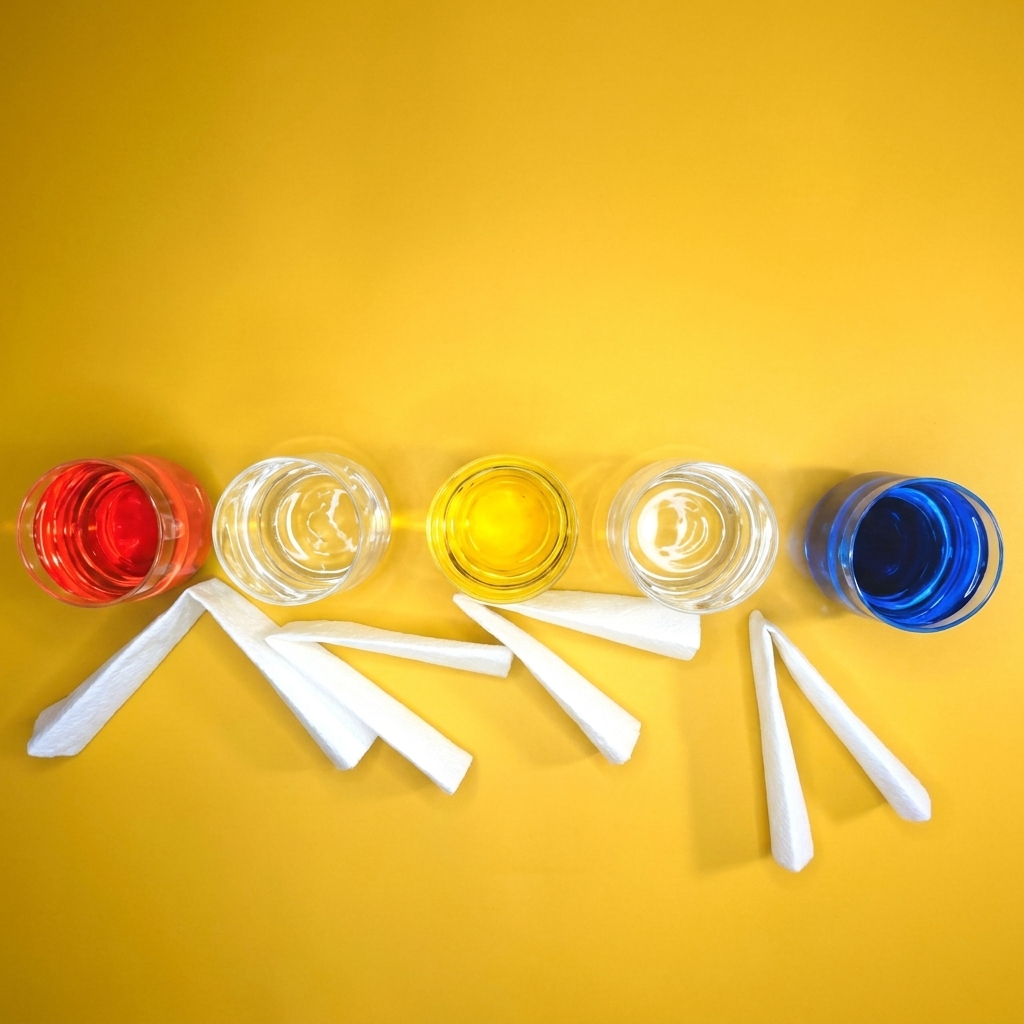
- Fill one cup with blue water.
- Leave the middle cup empty.
- Fill the third cup with yellow water.
- Place folded paper towels between cups.
- Observe the water moving into the empty cup.
STEM Lesson
Children discover capillary action and learn how water travels through tiny spaces within paper towel fibers.
Learning Outcome
Students observe scientific processes in real time and record their findings.
STEM Idea 2: Rainbow Walking Water
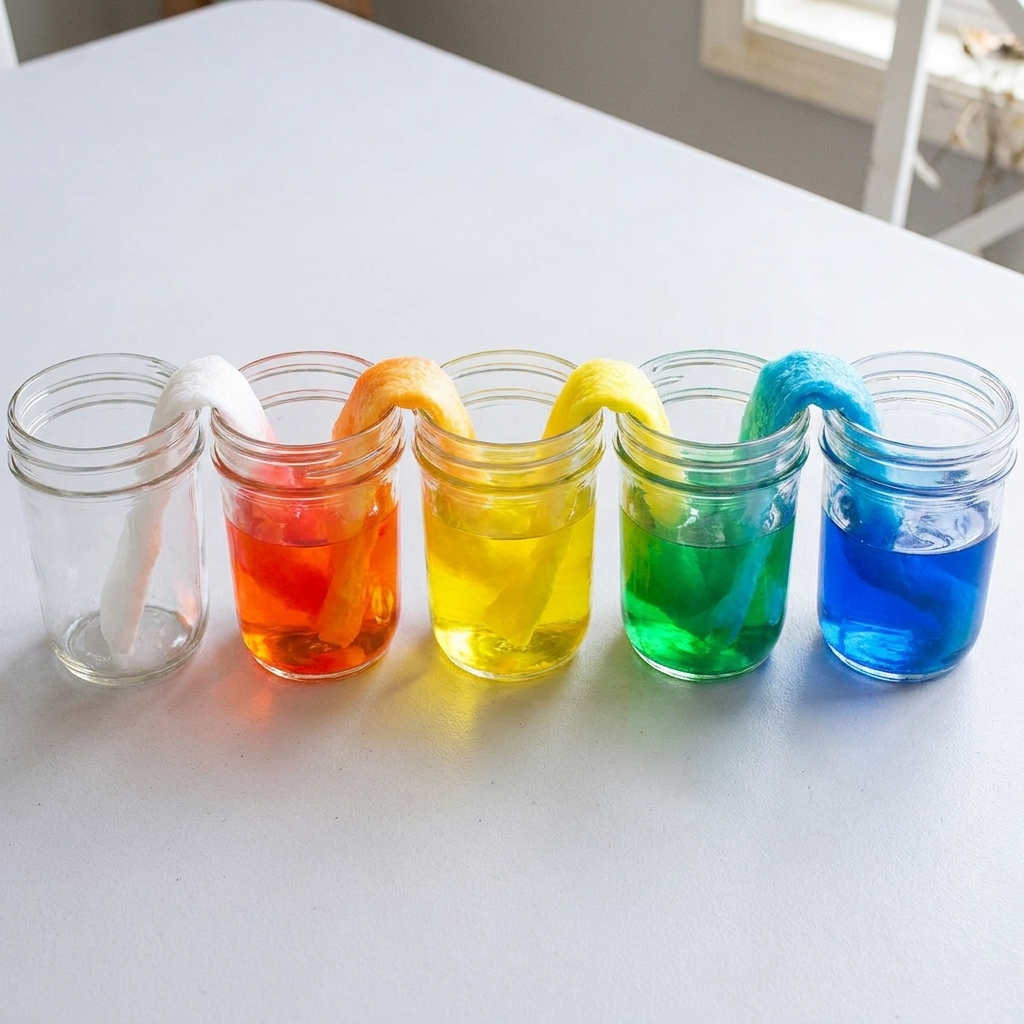
Create a colorful rainbow using multiple cups.
Instructions
Arrange seven cups in a row.
Fill alternating cups with rainbow-colored water while leaving the others empty.
Connect each cup using folded paper towels.
STEM Lesson
As colors transfer and mix, children learn color theory and basic chemistry.
Learning Outcome
Students predict color combinations and compare their predictions with actual results.
STEM Idea 3: Flower Color Transfer Investigation
This experiment demonstrates how flowers absorb water.
Instructions
- Fill cups with colored water.
- Place white carnations or celery stalks into the cups.
- Observe changes over several hours.
STEM Lesson
Children learn how plants transport water.
Learning Outcome
Students connect capillary action to real-life plant functions.
STEM Idea 4: Paper Towel Race Challenge
Turn science into a friendly competition.
Instructions
Use different paper towel brands.
Place equal amounts of colored water in cups.
Measure which paper towel transfers water the fastest.
STEM Lesson
Children explore variables and fair testing.
Learning Outcome
Students practice data collection and analysis.
STEM Idea 5: Multi-Color Transfer Lab
Encourage creativity by testing various color combinations.
Instructions
Experiment with:
- Red + Yellow
- Blue + Yellow
- Red + Blue
Observe newly created colors.
STEM Lesson
Kids discover primary and secondary colors.
Learning Outcome
Students develop observation and prediction skills.
STEM Idea 6: Water Bridge Engineering Challenge
Can water travel uphill?
Instructions
Create different paper towel bridge shapes between cups.
Test:
- Flat bridges
- Curved bridges
- High arches
STEM Lesson
Students investigate engineering design and fluid movement.
Learning Outcome
Children learn how structure affects performance.
STEM Idea 7: Temperature Comparison Experiment
Does water temperature affect transfer speed?
Instructions
Prepare three setups:
- Cold water
- Room-temperature water
- Warm water
Compare transfer times.
STEM Lesson
Children learn about variables and controlled experiments.
Learning Outcome
Students practice scientific investigation methods.
STEM Idea 8: Salt Water Transfer Study
Add another scientific variable.
Instructions
Create two identical setups.
Add salt to one set.
Observe differences.
STEM Lesson
Children explore solutions and dissolved substances.
Learning Outcome
Students understand how materials affect water behavior.
STEM Idea 9: Food Dye Observation Project
Focus on detailed scientific observation.
Instructions
Use different dye concentrations.
Record:
- Transfer speed
- Color intensity
- Final results
STEM Lesson
Students learn about concentration and diffusion.
Learning Outcome
Children improve recording and observation skills.
STEM Idea 10: STEM Challenge Learning Station
Combine multiple experiments into one activity center.
Station Ideas
- Walking water challenge
- Color mixing station
- Plant science investigation
- Timing and measurement station
STEM Lesson
Children experience several scientific concepts in one session.
Learning Outcome
Students strengthen problem-solving and critical-thinking abilities.
The Science Behind Water Transfer
The Water color transfer experiment for children works because of capillary action.
Capillary action occurs when water molecules stick to other surfaces and pull additional water molecules along with them.
This principle helps:
- Trees transport water
- Plants absorb nutrients
- Soil retain moisture
- Paper towels absorb spills
When children observe colored water climbing upward against gravity, they witness this scientific principle firsthand.
Questions to Ask During the Experiment
Encourage critical thinking by asking:
- What do you think will happen next?
- Which color will move fastest?
- What color will form when two colors meet?
- Why is the water moving?
- How long will the process take?
These questions transform a simple activity into a meaningful STEM investigation.
Educational Benefits
Builds Curiosity
Children become excited when they see water seemingly walk between cups.
Encourages Observation
Students carefully watch changes over time.
Supports Scientific Thinking
Kids learn to make predictions and test ideas.
Develops Problem-Solving Skills
Children analyze outcomes and suggest improvements.
Strengthens Fine Motor Skills
Pouring water and arranging materials improve coordination.
Safety Tips
Although this activity is generally safe, adult supervision is recommended.
Safety Guidelines
- Use non-toxic food coloring.
- Avoid drinking experimental water.
- Clean spills immediately.
- Use plastic cups with younger children.
- Wash hands after completing activities.
Simple precautions ensure a fun and safe learning experience.
Extending the Learning
After completing the Water color transfer experiment for children, encourage additional STEM exploration.
Create Science Journals
Record observations and draw diagrams.
Make Predictions
Ask children to predict future results before experimenting.
Graph Results
Older students can chart transfer times and compare data.
Connect to Nature
Discuss how trees and flowers transport water.
These extension activities deepen understanding and reinforce STEM concepts.
Why Kids Love This Experiment
The experiment combines everything children enjoy:
- Bright colors
- Hands-on learning
- Surprising results
- Creative exploration
- Scientific discovery
Watching water appear to move by itself feels magical, making science fun and memorable.
Conclusion
The Water color transfer experiment for children is one of the best STEM activities for introducing young learners to science in a fun and engaging way. Through colorful demonstrations, children discover capillary action, color mixing, observation skills, and scientific investigation techniques.
Whether you’re a parent looking for educational activities at home, a teacher planning a classroom lesson, or a homeschool educator seeking hands-on STEM projects, these 10 creative ideas provide countless opportunities for learning and exploration.
Most importantly, they help children see that science isn’t just something found in textbooks—it’s happening all around them every day. With a few cups, some food coloring, and paper towels, you can inspire curiosity, creativity, and a lifelong love of STEM learning.
