
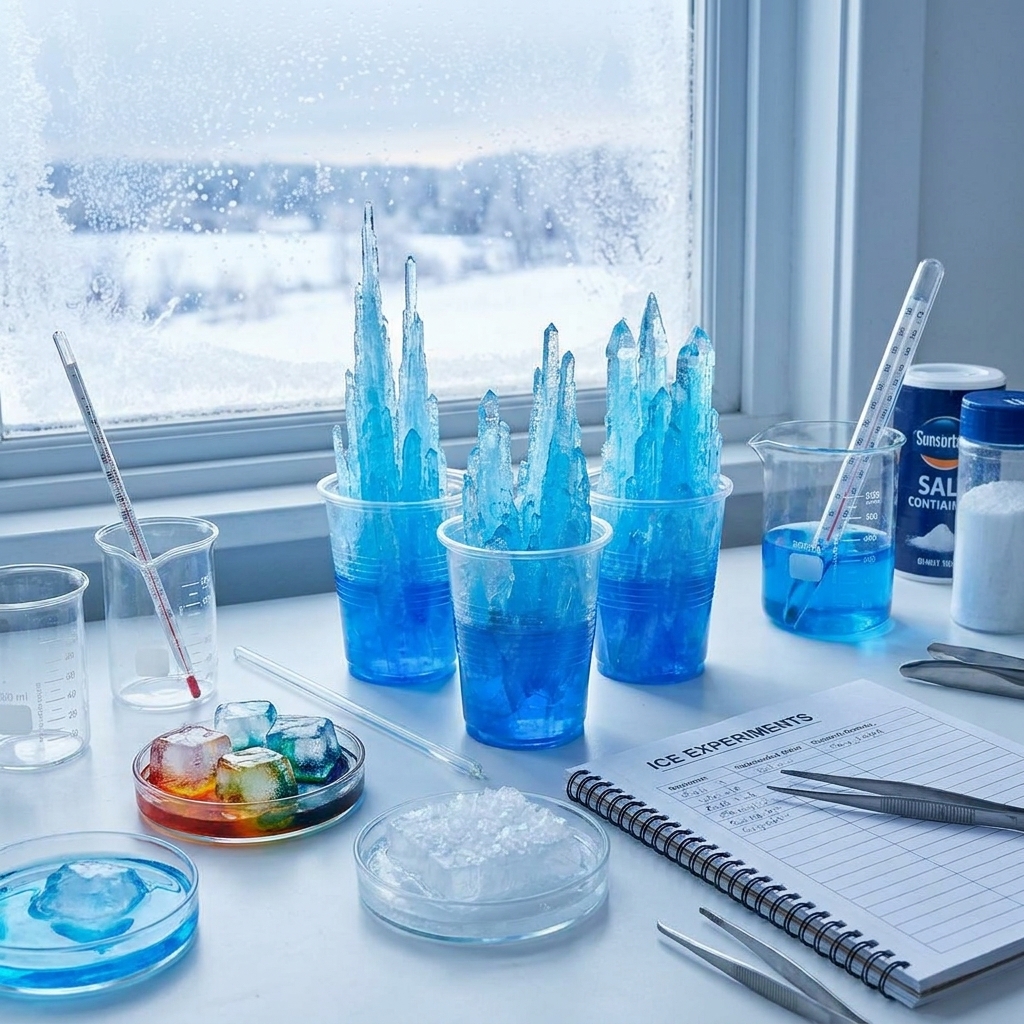
Winter travel has a special kind of magic. Snowy landscapes, frozen lakes, and chilly air naturally spark curiosity in children. Instead of treating cold weather as a limitation, it can become an outdoor science laboratory. That’s exactly where Experiments with Ice. become powerful learning tools.
These simple, hands-on activities help children understand scientific concepts like freezing, melting, density, insulation, and temperature changes—all while having fun during family trips. Whether you’re traveling to snowy mountains, winter campsites, or cold cities, ice experiments turn ordinary moments into exciting discoveries.
In this article, we’ll explore the best winter travel science ideas and explain how ice-based experiments can transform any trip into an interactive learning adventure.
Quick Summary Table
| Experiment Idea | Location | Difficulty | Materials Needed | Learning Focus | Travel Friendly |
| Ice Melting Race | Outdoors / Snow area | Easy | Ice cubes, salt, water | Melting speed | Very high |
| Frozen Treasure Hunt | Snow field / hotel yard | Medium | Small toys, containers | Freezing & discovery | High |
| Ice Painting | Campsite / snowy area | Easy | Ice, food coloring | Color mixing | Very high |
| Ice Cube Tower | Indoor / outdoor cold area | Easy | Ice cubes | Structure stability | High |
| Salt Ice Reaction | Outdoor table | Medium | Ice, salt | Chemical reaction | Very high |
| Ice Fishing Game | Frozen-safe area | Medium | Ice tray, string, salt | Adhesion & freezing | Medium |
| DIY Ice Lantern | Cold outdoor space | Medium | Balloon, water, candle | Freezing expansion | High |
| Ice Floating Test | Indoor / cabin | Easy | Ice, water, containers | Density | Very high |
| Ice Rescue Mission | Outdoor snowy field | Medium | Frozen toys, warm water | Melting techniques | High |
Why ice experiments are perfect for winter travel
Traveling during winter often limits outdoor activity time due to cold temperatures. However, Experiments with Ice. turn this challenge into an opportunity for creativity and discovery.
1. Natural science classroom
Snow and ice are everywhere in winter destinations. Instead of avoiding them, children can study them directly.
2. No expensive equipment needed
Most ice experiments use basic materials like water, salt, cups, and natural snow.
3. Highly engaging for kids
The transformation of ice from solid to liquid feels like magic to children, keeping them curious and focused.
4. Perfect for travel downtime
When outdoor activities are limited, ice experiments can be done in cabins, hotels, or campsites.
5. Strong educational value
These experiments introduce scientific principles in a simple, memorable way.
1. Ice Melting Race Challenge
One of the easiest and most exciting Experiments with Ice. is the melting race.
How it works:
Children are given ice cubes and different materials like salt, cloth, or warm water. The goal is to melt the ice the fastest.
What kids learn:
- How temperature affects melting
- How salt lowers freezing points
- Basic chemical reactions
Travel advantage:
You can do this almost anywhere—hotel rooms, campsites, or snowy outdoor tables.
2. Frozen Treasure Hunt Adventure
This activity turns ice into a mystery game.
How it works:
Small toys or objects are frozen inside ice blocks. Kids must “rescue” them using warm water, tools, or sunlight.
What kids learn:
- Problem-solving skills
- Melting techniques
- Patience and experimentation
Travel advantage:
Perfect for snowy cabins or winter resorts where kids need indoor-outdoor balance.
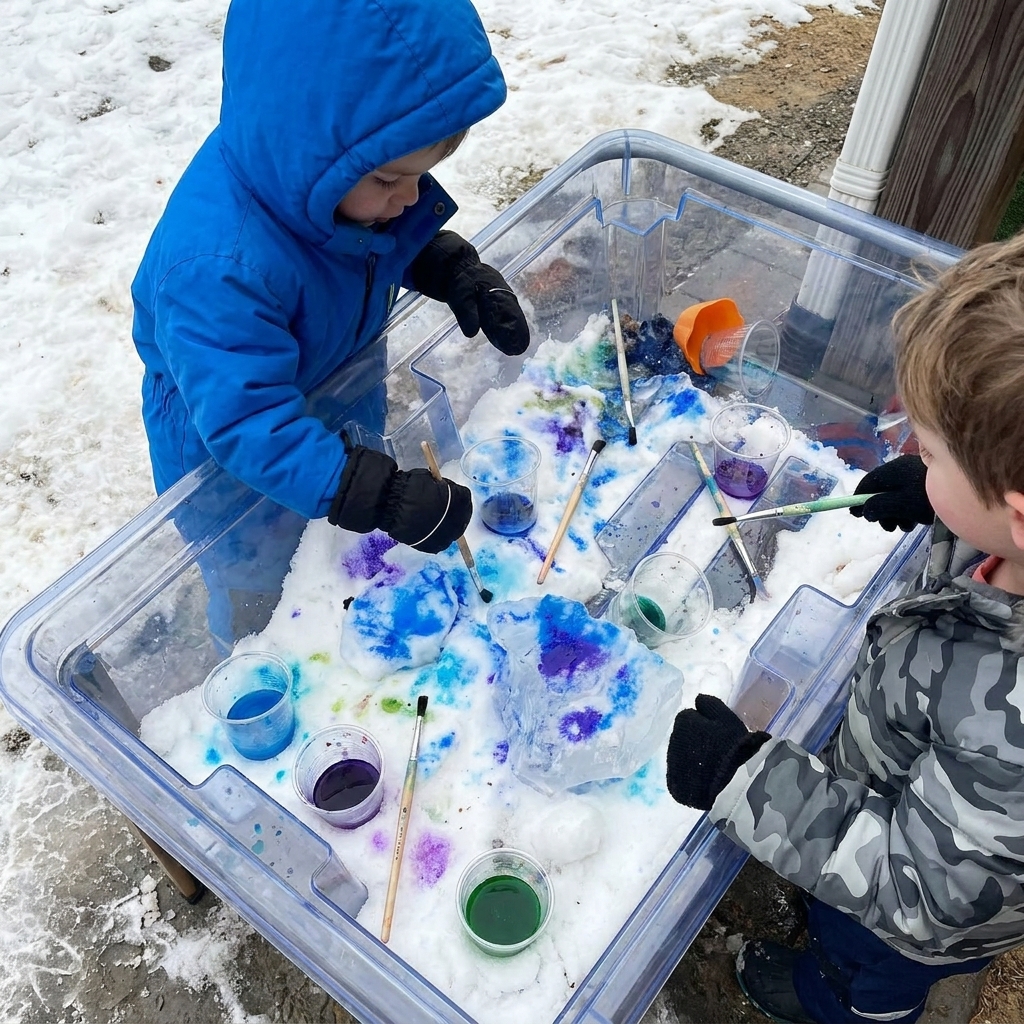
3. Ice Painting Creativity Game
Art meets science in this colorful experiment.
How it works:
Ice cubes are frozen with food coloring. Kids use them like paint brushes on paper or snow surfaces.
What kids learn:
- Color blending
- Melting process visualization
- Temperature impact on materials
Travel advantage:
Extremely portable and ideal for snowy landscapes or picnic areas.
4. Ice Cube Tower Stability Test
This experiment challenges balance and structure building.
How it works:
Children stack ice cubes to build towers before they melt.
What kids learn:
- Structural stability
- Temperature effects on materials
- Engineering basics
Travel advantage:
Can be done indoors or outdoors in cold climates.
5. Salt and Ice Reaction Experiment
A classic scientific discovery activity.
How it works:
Salt is sprinkled over ice cubes, causing rapid melting and temperature drops.
What kids learn:
- Freezing point depression
- Chemical interactions
- Heat transfer
Travel advantage:
Simple setup makes it ideal for travel science kits.
6. Ice Fishing Simulation Game
A playful experiment inspired by real ice fishing.
How it works:
A string or stick is used to “catch” objects frozen inside ice trays.
What kids learn:
- Adhesion principles
- Freezing behavior
- Patience and technique
Travel advantage:
Great for indoor winter travel activities.
7. DIY Ice Lantern Craft
A beautiful mix of science and art.
How it works:
Water is frozen inside balloons or containers to form hollow ice lanterns. A candle or LED light is placed inside.
What kids learn:
- Expansion of water when frozen
- Light reflection through ice
- Structural formation of ice
Travel advantage:
Perfect for winter campsites or snowy evening settings.
8. Ice Floating Test Experiment
A simple but fascinating scientific discovery.
How it works:
Ice cubes are placed in water to observe floating behavior.
What kids learn:
- Density differences
- Water properties
- Buoyancy basics
Travel advantage:
Can be done anywhere with a cup of water.
9. Ice Rescue Mission Challenge
A problem-solving adventure game.
How it works:
Small toys are trapped inside ice, and kids must free them using tools, salt, or warm water.
What kids learn:
- Strategy development
- Scientific observation
- Trial and error learning
Travel advantage:
Highly engaging for group travel activities.
Educational benefits of ice experiments during travel
Adding Experiments with Ice. to winter trips transforms entertainment into learning.
Cognitive benefits:
- Improves critical thinking
- Encourages curiosity
- Enhances problem-solving skills
Emotional benefits:
- Reduces boredom during travel
- Creates excitement in cold weather
- Builds confidence through discovery
Social benefits:
- Encourages teamwork
- Promotes communication
- Strengthens family bonding
Safety tips for ice experiments
Even simple science activities need supervision and care.
- Avoid ingestion of melted experimental water
- Keep sharp tools away from young children
- Use gloves in extremely cold environments
- Always supervise outdoor winter activities
- Choose safe, non-slippery areas
These precautions ensure Experiments with Ice. remain fun and safe.
How to plan ice science activities during winter travel
To get the best results, a little planning helps:
- Pack a small science travel kit (cups, salt, food coloring)
- Choose experiments based on weather conditions
- Mix indoor and outdoor activities
- Keep sessions short to maintain interest
- Combine learning with storytelling or games
This approach ensures smooth and enjoyable winter learning experiences.
Why kids love ice experiments
Children are naturally drawn to transformation—especially when something solid turns into liquid before their eyes. Experiments with Ice. feel like magic but are rooted in real science.
They love:
- Watching instant changes
- Touching cold textures
- Solving “mini mysteries”
- Competing in fun challenges
This combination of play and discovery makes ice experiments unforgettable.
Final thoughts
Winter travel is more than just sightseeing—it’s a chance to explore nature’s science lab. With Experiments with Ice., families can turn cold weather into an opportunity for learning, creativity, and bonding.
These 9 winter travel science ideas are simple, affordable, and highly engaging. They transform ice into a powerful educational tool that sparks curiosity in every child.
So the next time you pack for a winter trip, don’t just bring warm clothes—bring curiosity, imagination, and a little science.
