
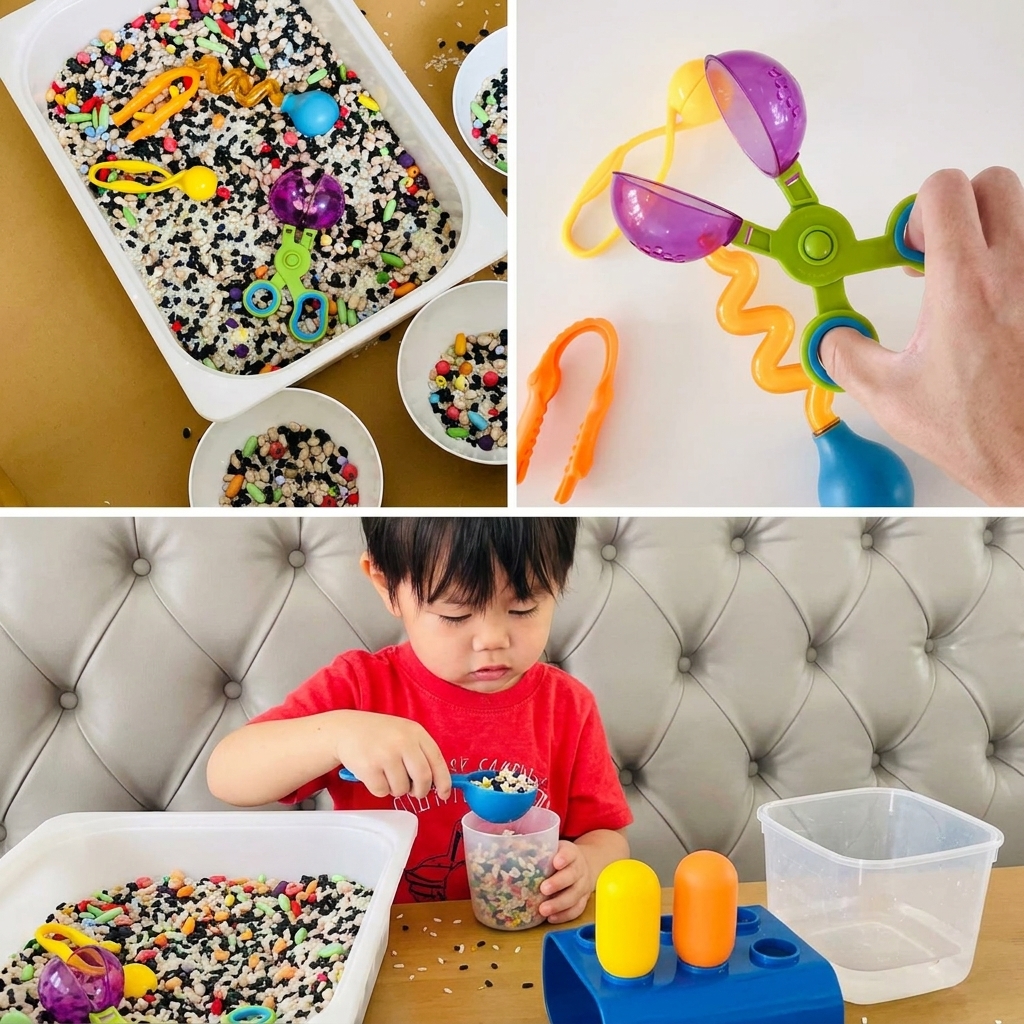
Traveling with children is an excellent opportunity to combine adventure with meaningful learning experiences. While vacations are often associated with sightseeing and relaxation, they also provide countless chances for children to strengthen essential developmental abilities through play. Among these abilities, fine motor skills are especially important because they help children perform everyday tasks such as writing, drawing, buttoning clothes, tying shoelaces, eating independently, and using classroom tools confidently.
Parents searching for the Best games for developing fine motor skills often assume they need expensive educational toys or structured learning programs. Fortunately, nature offers one of the richest learning environments available. Parks, beaches, forests, campsites, gardens, and hiking trails provide endless opportunities for children to pinch, grasp, sort, stack, thread, build, and manipulate natural objects. These simple actions strengthen the small muscles of the hands while improving coordination, concentration, creativity, and problem-solving skills.
Outdoor travel games also encourage children to disconnect from electronic devices and become more aware of their surroundings. Instead of staring at screens during a road trip or family vacation, children can explore nature, work together with siblings, and discover that learning happens everywhere. Parents benefit as well because these games require very little preparation and use materials that are already available outdoors.
Whether your family is planning a camping adventure, a weekend picnic, a beach holiday, or a visit to a national park, these activities transform ordinary moments into educational experiences. Best of all, children see them as exciting games rather than lessons.
In this guide, you’ll discover seven engaging outdoor travel games designed to strengthen fine motor skills while making every family trip more memorable. Each activity is easy to organize, inexpensive, and adaptable for children of different ages and skill levels.
Why Outdoor Games Improve Fine Motor Skills
Fine motor skills involve the precise movement of the hands, fingers, wrists, and eyes working together. These skills develop gradually through repeated practice and are essential for both academic success and everyday independence. Activities such as holding a pencil correctly, cutting with scissors, fastening buttons, opening containers, and typing all rely on strong fine motor control.
Outdoor play naturally provides many opportunities for these movements. Picking up tiny stones requires a careful pincer grasp. Building with sticks develops finger strength. Pouring water from one container to another improves wrist stability and hand control. Threading leaves onto a string encourages precision while also improving bilateral coordination because both hands must work together.
Unlike structured indoor lessons, outdoor games feel spontaneous and enjoyable. Children are motivated by curiosity rather than instruction, allowing them to practice important movements repeatedly without becoming bored. They also experience different textures, shapes, and weights that challenge their hands in new ways.
Another benefit is that outdoor environments stimulate imagination. Children invent their own rules, solve problems creatively, and collaborate with family members. These experiences develop cognitive and social skills alongside physical coordination, creating a balanced learning environment.
After understanding why outdoor play is so valuable, let’s explore some of the Best games for developing fine motor skills during family travel.
Quick Summary Table
| Outdoor Travel Game | Skills Developed | Best Age | Materials Needed |
| Nature Treasure Hunt | Pincer grasp, sorting, observation | 3–10 years | Small bag or basket |
| Pebble Stack Challenge | Hand stability, balance, coordination | 4–12 years | Smooth stones |
| Leaf Threading Race | Finger precision, bilateral coordination | 4–10 years | Leaves and string |
| Water Transfer Relay | Grip strength, wrist control | 3–8 years | Cups, sponge, water |
| Stick Building Contest | Dexterity, creativity, teamwork | 5–12 years | Sticks and twigs |
| Rope Shape Adventure | Finger control, planning | 4–10 years | Rope or thick string |
| Nature Art Puzzle | Fine finger movements, creativity | 3–12 years | Leaves, flowers, pebbles |
1. Nature Treasure Hunt
A nature treasure hunt remains one of the Best games for developing fine motor skills because it combines exploration with precise hand movements. Before beginning, prepare a simple checklist containing natural objects such as a small feather, a smooth pebble, a pine cone, a yellow leaf, or a flower petal.
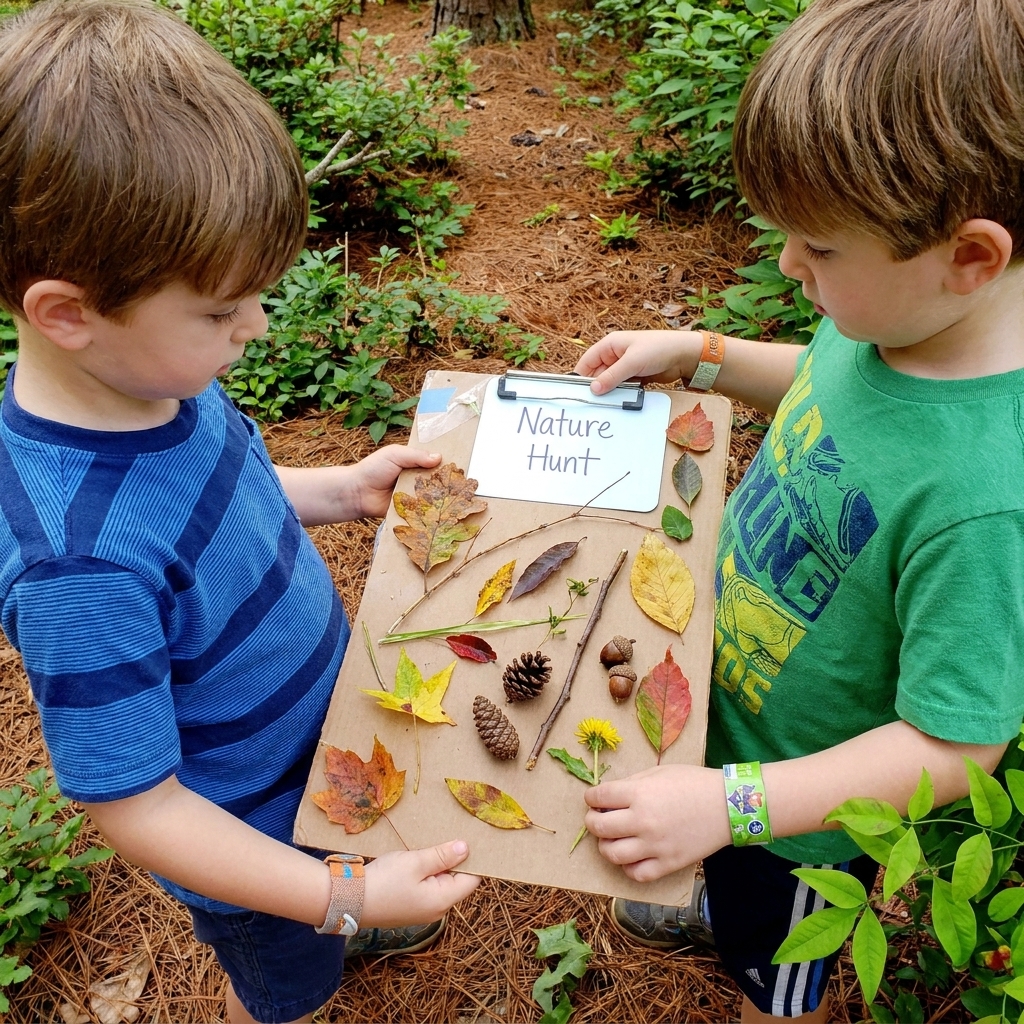
Children carefully search for each item while picking them up gently and placing them into a small basket or cloth bag. Every object requires a different grip, helping strengthen finger muscles naturally.
Parents can increase the difficulty by asking children to sort the collected objects by size, color, or texture. This activity also improves observation skills, vocabulary, and classification abilities.
Since every destination offers different natural treasures, the game feels fresh during every vacation.
2. Pebble Stack Challenge
Stacking smooth stones may look simple, but it requires remarkable patience and precision. Children must carefully position each pebble without knocking down the tower.
The activity strengthens finger control, wrist stability, and hand-eye coordination while teaching persistence. Parents can encourage friendly competition by seeing who builds the tallest stable tower or who balances unusual shapes successfully.
Different sizes and weights of stones provide new challenges that keep children engaged throughout the game.
3. Leaf Threading Race
Leaf threading is a wonderful travel activity because it uses materials found almost anywhere. Collect fallen leaves with sturdy stems and provide children with a thick piece of yarn or string.
The challenge is to carefully thread each leaf without tearing it. This movement develops bilateral coordination because one hand stabilizes the leaf while the other guides the string.
Children can turn their finished strands into necklaces, decorations, or campsite ornaments, making the activity both educational and creative.
4. Water Transfer Relay
If you’re visiting a beach, campsite, or picnic area, a water transfer relay is guaranteed to keep children entertained.
Provide two containers, a sponge, or small cups. Children move water from one container to another using only the provided tool.
The squeezing action strengthens hand muscles, while careful pouring improves wrist control and coordination. Parents can introduce timed challenges or team relays to make the activity even more exciting.
Besides developing fine motor skills, children also learn about measuring, estimating, and conserving water.
5. Stick Building Contest
Nature offers countless building materials without spending any money. Gather sticks, twigs, bark, and small branches to challenge children to construct bridges, tiny houses, forts, or imaginative sculptures.
Arranging sticks into balanced structures requires careful positioning and controlled hand movements. Children constantly adjust pieces until they fit securely.
This activity strengthens finger dexterity while encouraging engineering thinking, creativity, teamwork, and problem-solving.
Families often discover that children spend far longer building than expected because each creation inspires new ideas.
6. Rope Shape Adventure
A simple rope becomes an amazing learning tool during outdoor adventures.
Ask children to create different shapes such as circles, squares, triangles, hearts, stars, letters, or even animals by manipulating the rope on the ground.
This activity improves finger strength, planning skills, and spatial awareness. Older children can work together to create larger designs, while younger children practice basic geometric shapes.
Parents may also turn the activity into a guessing game by asking family members to identify each completed shape.
7. Nature Art Puzzle
Nature art combines creativity with careful hand movements. Children gather leaves, flowers, grass, shells, pine cones, feathers, and colorful stones before arranging them into pictures.
They might create butterflies, trees, smiling faces, animals, or abstract designs. Each small adjustment requires precision and concentration.
Parents can photograph each masterpiece before the wind rearranges it, creating lasting vacation memories without disturbing the environment.
This game develops fine motor control while encouraging artistic expression and appreciation for nature.
Tips for Parents
To make these outdoor games even more successful, remember a few simple guidelines:
- Allow children to work at their own pace without rushing.
- Choose age-appropriate challenges.
- Encourage creativity instead of perfection.
- Supervise younger children around small objects.
- Praise effort and persistence rather than focusing only on results.
- Use natural materials responsibly and leave protected environments undisturbed.
- Adapt games to different travel destinations, including beaches, forests, parks, gardens, and campsites.
Why Travel Is the Perfect Classroom
Family travel exposes children to constantly changing environments that naturally stimulate learning. Every destination introduces new textures, colors, landscapes, and challenges.
Instead of relying solely on traditional educational materials, children practice real-world skills while exploring unfamiliar places. They become more independent, curious, and confident with every adventure.
These experiences also strengthen family relationships. Working together to build, collect, create, and solve challenges encourages communication and teamwork that children remember long after the vacation ends.
Conclusion
Choosing the Best games for developing fine motor skills doesn’t require expensive toys, electronic devices, or carefully planned lessons. Nature already provides everything children need to strengthen their hands while having fun during family travel.
Whether stacking pebbles beside a river, threading colorful leaves in a forest, transferring water at the beach, building imaginative stick structures, or creating beautiful works of nature art, every activity helps children develop essential motor skills through joyful play.
The greatest advantage of these outdoor travel games is that children hardly realize they are learning. Instead, they experience adventure, creativity, and family connection while naturally improving the coordination and finger strength needed for everyday success. By incorporating these seven simple activities into your next vacation, you’ll create meaningful memories while supporting your child’s physical, cognitive, and emotional development in the most enjoyable way possible.
