
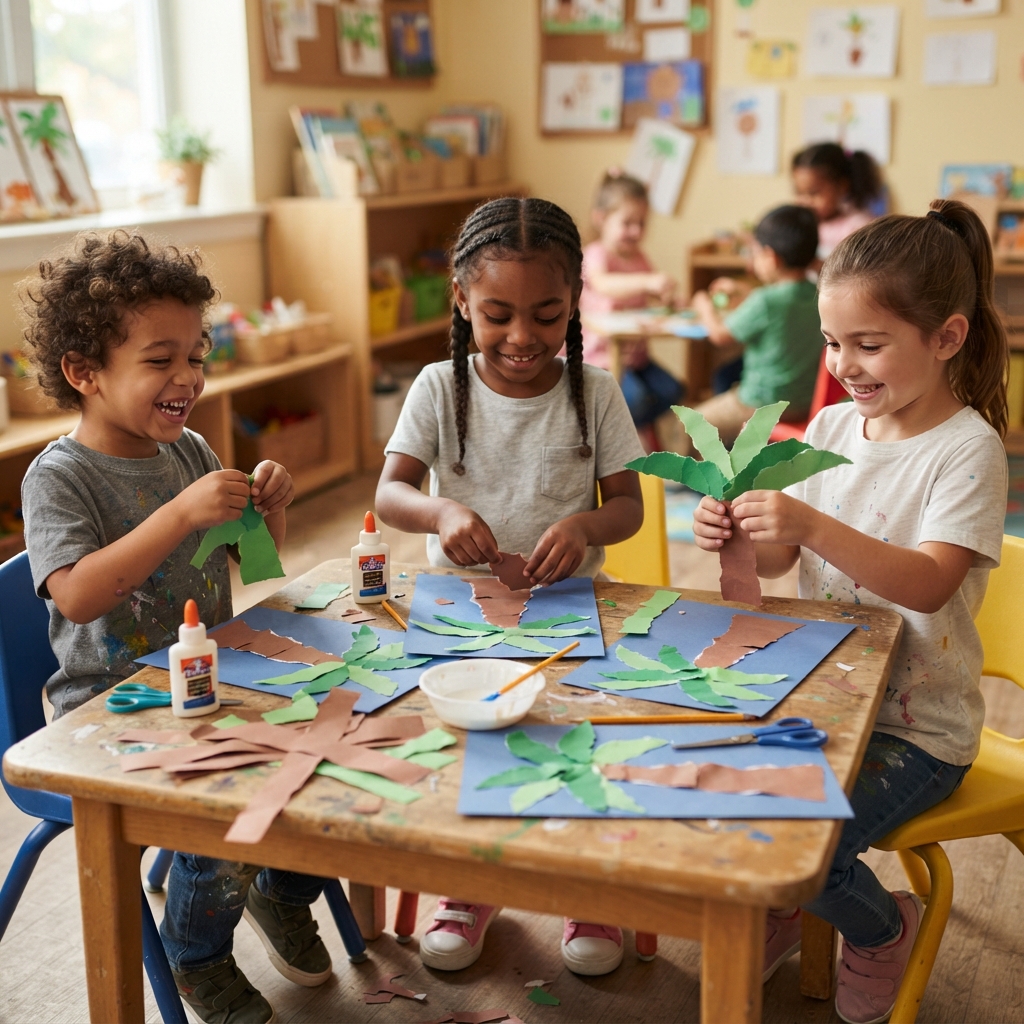
Summer is the perfect season for colorful art projects that spark children’s imagination. One exciting and easy craft idea is creating a palm tree from torn paper. This simple activity combines creativity, hands-on learning, and fine motor practice while introducing children to tropical landscapes. Using small pieces of torn paper instead of carefully cut shapes gives the artwork a textured, colorful appearance and allows every child to create a unique masterpiece.
This craft is ideal for preschoolers, kindergarten children, and elementary school students. It can be enjoyed at home, in classrooms, at summer camps, or during vacation-themed activities. Besides being fun, it also encourages children to learn about nature, tropical plants, and the beauty of beaches around the world.
Why Choose Torn Paper Art?
Torn paper art is an excellent activity for young children because it is both simple and engaging. Instead of using scissors, children tear paper into small pieces using their fingers. This strengthens the muscles in their hands, improves hand-eye coordination, and develops the fine motor skills needed for writing and drawing.
Unlike crafts that require perfect cutting, torn paper projects encourage children to experiment freely. Every torn piece has a different size and shape, creating interesting textures that make each artwork look lively and unique.
Children also develop patience, concentration, and confidence as they slowly build their picture one piece at a time.
Materials Needed
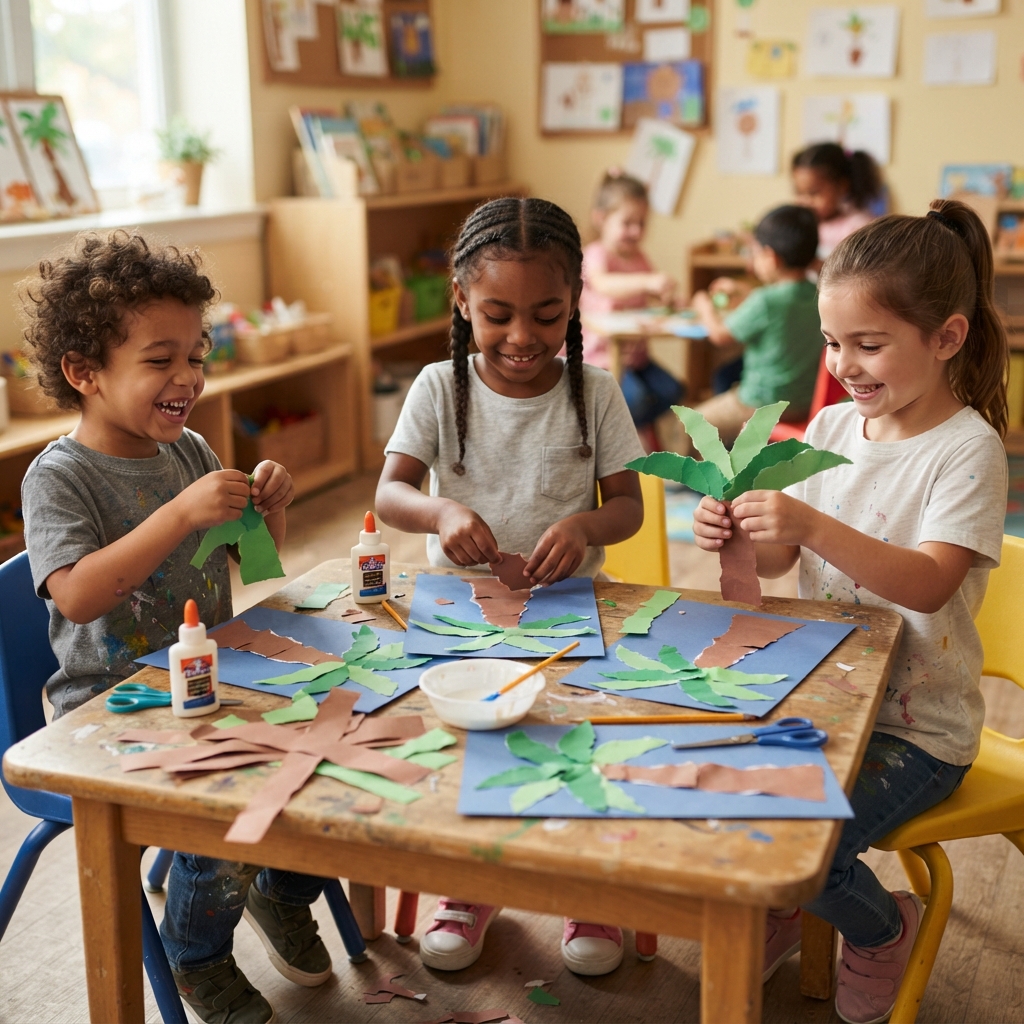
This project requires only a few basic supplies:
- Blue construction paper for the background
- Brown construction paper for the palm tree trunk
- Green construction paper for the palm leaves
- Yellow paper for the sun
- White paper for clouds
- Glue stick or school glue
- Pencil
- Optional decorations such as sand, tissue paper, glitter, stickers, or small seashells
These inexpensive materials are commonly available in homes, schools, and art rooms.
Learning About Palm Trees
Before beginning the craft, children can look at pictures or books about palm trees.
They may notice that palm trees have:
- A tall, narrow trunk
- Large green leaves called fronds
- A tropical habitat
- Coconuts on some varieties
- Long lifespans in warm climates
Children also learn that palm trees grow in many tropical and subtropical regions around the world and are often found near beaches and islands.
Step 1: Create the Background
Begin with a sheet of blue construction paper.
Children can tear different shades of blue paper into small pieces to create the sky and ocean.
Next, they can add a sandy beach by tearing yellow or light brown paper into small pieces and gluing them along the bottom of the page.
This creates a bright tropical setting.
Step 2: Make the Palm Tree Trunk
Draw the outline of a tall palm tree trunk in the center of the page.
Children tear brown construction paper into small pieces and glue them inside the outline.
The uneven torn edges create a rough texture that resembles real tree bark.
A few darker brown pieces can be added to give the trunk extra detail.
Step 3: Create the Palm Leaves
Now it is time to make the large green leaves.
Children tear green construction paper into long, narrow pieces.
Each piece is glued at the top of the trunk, spreading outward like a fan.
Using different shades of green makes the leaves look fresh and realistic.
Step 4: Add Coconuts
Small brown circles or torn paper pieces can be placed where the leaves meet the trunk.
These represent coconuts growing on the palm tree.
Children may also add a few fallen coconuts on the beach.
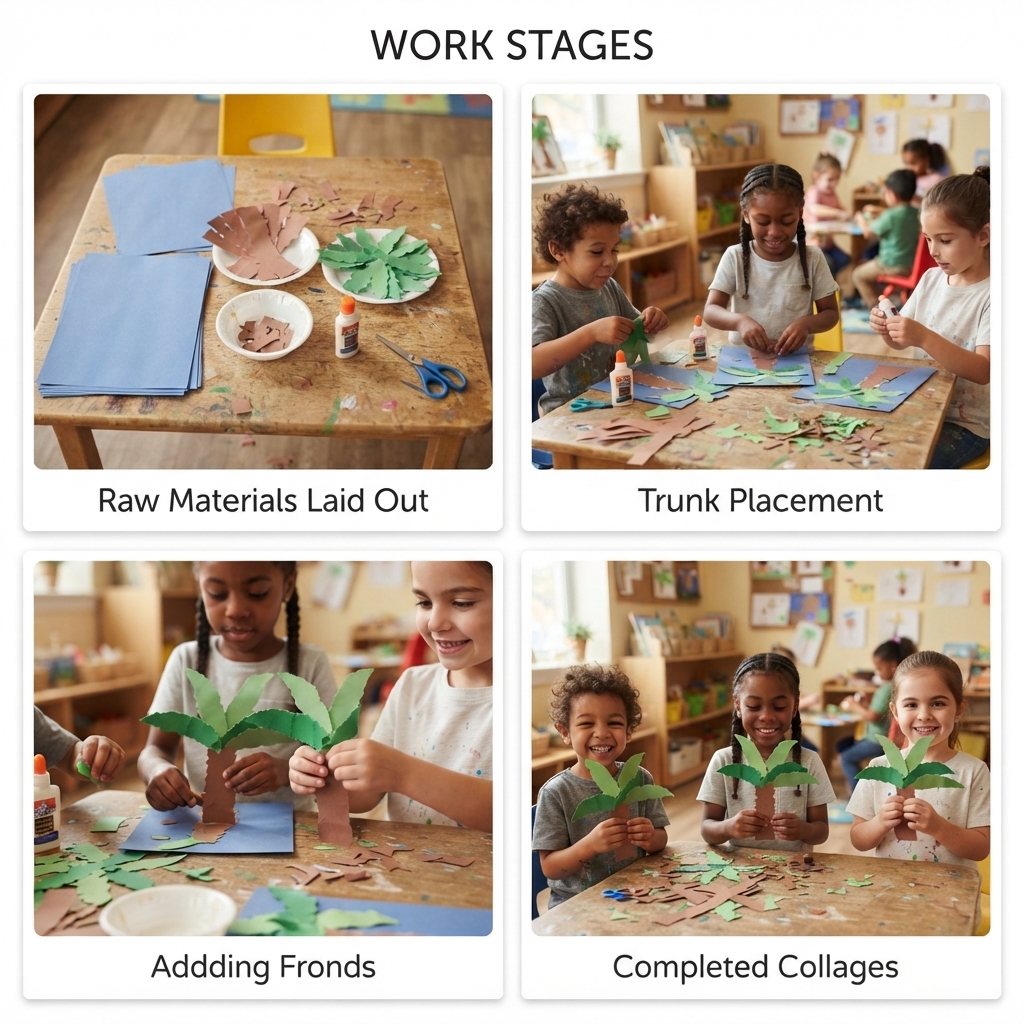
Decorate the Tropical Scene
The artwork becomes even more exciting when children decorate the background with beach-themed objects.
They can create:
- A bright sun
- White fluffy clouds
- Gentle ocean waves
- Seashells
- Starfish
- Fish
- Dolphins
- Seagulls
- Sandcastles
- Beach umbrellas
- Boats
- Crabs
These details turn the picture into a cheerful summer paradise.
Skills Children Develop
Making a torn paper palm tree helps children strengthen many important developmental skills, including:
- Fine motor skills
- Finger strength
- Hand-eye coordination
- Creativity
- Patience
- Concentration
- Color recognition
- Spatial awareness
- Problem-solving
The activity also encourages children to make artistic decisions as they choose colors and arrange their paper pieces.
Interesting Palm Tree Facts
Adults can make the activity even more educational by sharing fun facts.
Children may learn that:
- There are more than 2,500 different species of palm trees.
- Coconut palms produce coconuts that provide food, water, and useful materials.
- Palm trees can live for many decades.
- Some palm trees grow over 80 feet (24 meters) tall.
- Many tropical animals live in or around palm trees.
These fascinating facts help children appreciate plants and ecosystems around the world.
Creative Variations
This project can easily be customized.
Children can create:
- A sunset beach scene
- A tropical island with several palm trees
- A palm tree with colorful birds
- A beach picnic under the tree
- A family vacation scene
- A large classroom mural featuring an entire tropical island
Every artwork becomes unique because each child adds their own creative ideas.
Perfect for Home or School
Teachers and parents can connect this activity with lessons about:
- Summer
- Beaches
- Tropical habitats
- Plants
- Nature
- Art
- Recycling
Children can also work together to create one large tropical display for a classroom bulletin board.
Encouraging Recycling
Instead of using only new paper, children can recycle colorful magazines, wrapping paper, newspapers, or leftover craft paper.
This teaches them that beautiful artwork can be created from recycled materials while helping protect the environment.
Tips for Parents and Teachers
To make the activity enjoyable:
- Let children tear the paper themselves.
- Encourage creativity rather than perfection.
- Allow children to choose their own colors and decorations.
- Praise effort and imagination.
- Play relaxing ocean sounds or tropical music while children work.
- Display the finished artwork to celebrate every child’s creativity.
Conclusion
Creating a palm tree from torn paper is a fun, colorful, and educational art activity that children will enjoy throughout the summer. It combines creativity, learning, and hands-on exploration while strengthening fine motor skills and encouraging artistic expression. With only a few simple materials, children can build a beautiful tropical scene filled with sunshine, beaches, and swaying palm trees. Whether completed at home, in preschool, or in elementary school, this engaging project inspires imagination and shows that even small pieces of torn paper can become a stunning work of art.
