
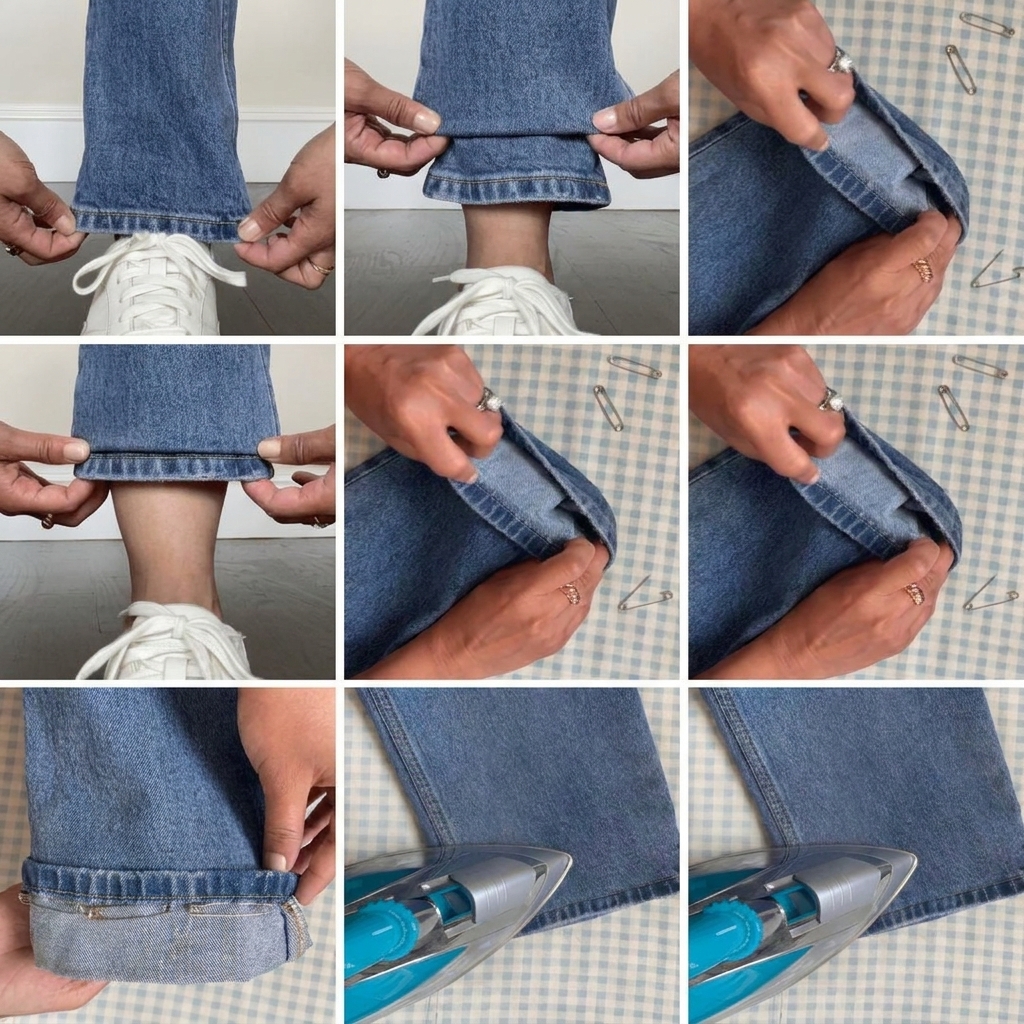
Learning how to shorten trousers without a sewing machine is a useful skill for beginners. Whether your trousers are slightly too long or you want to create a shorter style, you can make a neat adjustment using basic hand-sewing techniques.
You do not need complicated equipment. With a needle, thread, scissors, pins, a measuring tape, and an iron, you can shorten many types of trousers at home.
This guide explains how to measure, mark, cut, fold, and hand-sew trousers for a clean finish.
What You Will Need
Before starting, gather these basic supplies:
- The trousers you want to shorten
- Sewing needle
- Matching sewing thread
- Sharp fabric scissors
- Measuring tape
- Ruler
- Straight pins or sewing clips
- Fabric chalk or washable fabric marker
- Iron and ironing board
- Seam ripper, if necessary
Choose thread that closely matches the color of your trousers for a less noticeable finish.
Step 1: Try On the Trousers
Put on the trousers with the shoes you normally plan to wear with them.
This is important because the shoes can affect how long the trousers appear.
Stand naturally and decide where you want the new hem to end.
Ask someone to help mark the desired length if possible. This makes it easier to get an accurate measurement.
Step 2: Mark the New Length
Take off the trousers and place them on a flat surface.
Turn them inside out.
Use a measuring tape and fabric chalk to mark the new hemline.
Measure carefully from the existing hem to the desired length. Make the same measurement around both trouser legs.
Check that the marks are even before cutting anything.
Step 3: Decide How Much Hem Allowance You Need
Do not cut directly on your final hemline.
You need extra fabric to fold under and create the new hem.
For a simple hand-sewn hem, about 2–4 centimeters of extra fabric is often enough, depending on the trouser fabric and the type of finish you want.
Mark a second cutting line below your desired finished length.
Step 4: Cut Away the Extra Fabric
Use sharp fabric scissors to cut along the cutting line.
Cut slowly and carefully.
Before cutting both legs, double-check your measurements. It is always better to measure twice than accidentally cut too much fabric.
Keep the cut pieces in case you need them for another craft project.
Step 5: Fold the New Hem
Turn the trousers inside out.
Fold the raw edge upward toward the inside of the trousers.
Use the iron to press the fold flat.
For a cleaner finish, you can fold the raw edge inward slightly before making the final fold. This hides the cut edge and helps prevent fraying.
Pin or clip the folded hem in place.
Step 6: Thread Your Needle
Choose a thread that matches your trousers.
Cut approximately 40–50 centimeters of thread. Avoid using an extremely long piece because it can become tangled.
Thread your needle and make a small knot at the end.
If the fabric is thick, you may want to use a stronger hand-sewing thread and a sturdy needle.
Step 7: Choose a Hand-Sewing Stitch
There are several stitches you can use to sew a trouser hem.
Slip Stitch
A slip stitch is a good choice when you want the stitches to be nearly invisible from the outside.
Take a tiny amount of fabric from the inside of the trouser leg, then pass the needle through the folded hem.
Repeat along the entire hem.
Blind Hem Stitch
A blind hem stitch is designed to keep most of the stitching hidden.
Make small stitches that catch only a tiny amount of the outside fabric.
This creates a neat appearance while securely holding the hem.
Running Stitch
A running stitch is simple and beginner-friendly.
Make small, evenly spaced stitches along the inside of the hem.
This method is easy but may be more visible from the outside.
Step 8: Sew Around the Leg
Begin sewing near the inside seam of the trouser leg.
Work around the entire hem using your chosen stitch.
Keep the stitches relatively small and evenly spaced.
Do not pull the thread too tightly. Excessive tension can cause the fabric to pucker.
When you reach the starting point, make a secure knot on the inside of the trousers.
Trim the excess thread.
Step 9: Press the Finished Hem
Turn the trousers right side out.
Use an iron to press the new hem carefully.
Follow the fabric’s care instructions and use an appropriate temperature.
Pressing the hem helps create a clean, professional-looking finish.
How to Shorten Jeans by Hand
Jeans are thicker than many other trouser fabrics, so they require a little extra care.
You can shorten jeans using the same basic process, but use:
- A strong hand-sewing needle
- Heavy-duty thread
- Small, strong stitches
- A thimble if needed
If you want to preserve the original jeans hem, there is also a technique called an original-hem alteration. This involves repositioning the existing hem rather than creating a completely new one.
How to Shorten Trousers Without Cutting Them
If you are unsure about cutting your trousers, you can create a temporary shorter length.
Fold the fabric inward and secure the fold with hand stitches.
This option is useful when you want to test a shorter length before making a permanent alteration.
You can remove the stitches later and return the trousers to their original length.
Tips for Getting an Even Hem
Uneven hems are one of the most common problems when shortening trousers.
To avoid this:
- Measure both legs carefully.
- Mark the hem while wearing the trousers.
- Use a ruler to check the measurements.
- Compare both legs before cutting.
- Press the fold before sewing.
- Check the finished trousers while standing.
Take your time during the measuring stage. Accurate measuring makes the sewing much easier.
Common Mistakes to Avoid
Cutting Too Much
Always leave enough fabric for the new hem. Once fabric has been cut away, it can be difficult to restore the original length.
Skipping the Pressing Step
Ironing the fold helps keep the hem straight and makes sewing easier.
Using Very Long Thread
Long thread can tangle easily. Use shorter lengths and replace the thread when necessary.
Pulling the Thread Too Tightly
Tight stitches can cause puckering. Pull the thread just enough to secure the fabric.
Choosing the Wrong Needle
A lightweight needle may bend or break when sewing thick denim. Use a needle appropriate for the fabric.
Can You Shorten Trousers With Fabric Glue?
Fabric adhesive can sometimes be used for a quick temporary or no-sew hem, depending on the fabric and product instructions.
However, hand sewing is often a more durable option, particularly for trousers that will be washed and worn frequently.
If you use fabric adhesive, always check that it is suitable for your particular fabric and follow the manufacturer’s instructions.
A Simple Beginner Practice
If you have never sewn a hem before, practice on an old pair of trousers or a piece of scrap fabric.
Draw a straight line, fold the fabric, and practice a few rows of slip stitches or running stitches.
Once you feel comfortable, you can work on the trousers you actually want to shorten.
Final Thoughts
Shortening trousers without a sewing machine is a practical skill that beginners can learn with a little patience. You only need basic sewing supplies and a simple hand stitch to create a neat new hem.
The most important part of the process is measuring carefully before cutting. Take your time, press the fabric as you work, and keep your stitches small and secure.
With practice, you can shorten trousers, jeans, and other garments by hand and give them a comfortable length without needing a sewing machine.
