

Ever heard a kid whisper, “Are these real dinosaur eggs?” That’s exactly the magic of this activity. Baking Soda Dinosaur Eggs are designed to look and feel like something straight out of a prehistoric dig site. Imagine being a tiny explorer, brushing away dust and uncovering a mysterious egg buried for millions of years—only to make it fizz and explode in bubbly excitement!
The funny thing is, no dinosaurs are actually involved… unless you count the toy ones hiding inside! The name was inspired by how the hardened baking soda shapes crack open like fossil shells when vinegar touches them. It’s almost like science is performing a magic trick right in front of your eyes.
Parents love it because it blends education with imagination. Kids love it because it feels like an adventure movie. And let’s be honest—who wouldn’t want to “rescue” a tiny dinosaur from a fizzy egg explosion?
🧑🔬 How to Make Baking Soda Dinosaur Eggs
● Quick Overview
This activity is simple, fast to prepare, and full of excitement. You mix baking soda with a little water, shape it into eggs, freeze them, and then let vinegar bring them to life with a fizzy reaction. The preparation takes about 15–20 minutes, plus freezing time. The result is a hands-on science adventure that feels like a real dinosaur excavation mission.
● Key Ingredients for Baking Soda Dinosaur Eggs
Here’s everything you need to create your prehistoric experiment:
- 2 cups baking soda
- ½ cup water (add slowly until moldable)
- Food coloring (green, brown, gray for dino vibes)
- Small plastic dinosaur toys (for hidden surprises)
- White vinegar (for fizz reaction)
- Spray bottle or dropper
- Mixing bowl
- Spoon or gloves (optional for messy fun)
- Freezer-safe tray
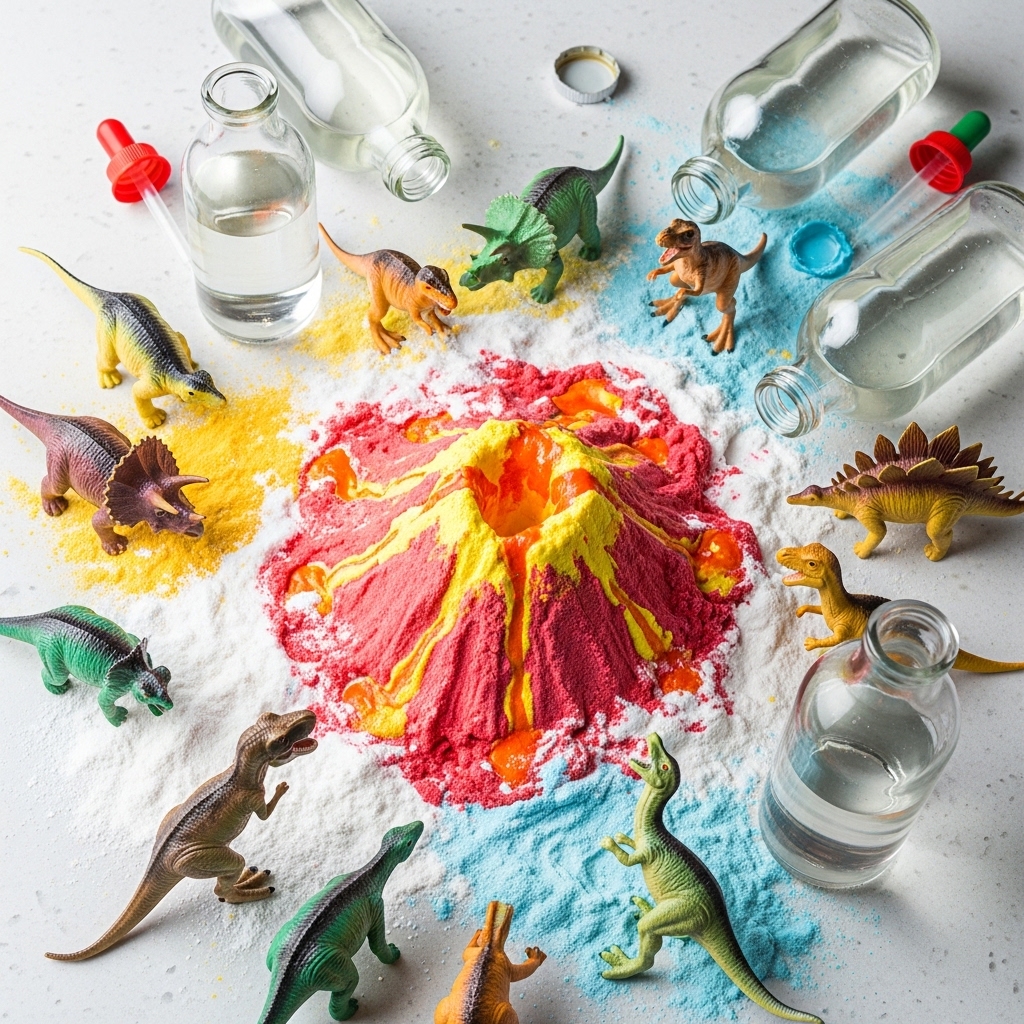
🖼️ Imagine a colorful setup of baking soda mixture, tiny dinosaur toys, and vinegar bottles ready for action.
● Step-by-Step Instructions
1. Mix your “egg dough”
Combine baking soda and water in a bowl. Stir slowly until it feels like damp sand that holds shape when pressed.
2. Add prehistoric colors
Mix in food coloring to create earthy dinosaur tones. Green gives jungle vibes, brown feels fossil-like, and gray looks ancient and mysterious.
3. Hide the dinosaurs
Take a small handful of mixture, flatten it, and place a tiny dinosaur toy inside. Then shape it into an egg.
4. Freeze the eggs
Place all eggs on a tray and freeze them for 3–4 hours or overnight. This step is what makes them hard like real “fossils.”
5. Set up your dig site
Put the frozen eggs in a tray or outside area where mess is okay. This becomes your dinosaur excavation zone.
6. Start the excavation
Give kids vinegar in a spray bottle or dropper and let them slowly apply it to the eggs.
7. Watch the eruption
The eggs will fizz, crack, and slowly reveal hidden dinosaurs. Excitement guaranteed!
🍽️ What to Serve Baking Soda Dinosaur Eggs With
This activity pairs perfectly with other sensory and science fun. You can create a full “Dinosaur Day” by combining it with activities like our Baking Soda Volcano Experiment, slime-making, or sand excavation play.
For snacks, keep things simple and themed:
- Dino-shaped cookies
- Fruit skewers “fossil sticks”
- Juice boxes labeled “Jurassic Fuel”
If you’re hosting a playdate or birthday activity, combine multiple experiments into stations so kids can rotate between digging, mixing, and erupting. It turns a simple afternoon into a full adventure zone.
🧠 Top Tips for Perfect Baking Soda Dinosaur Eggs
- Freeze longer for stronger “egg shells” that don’t break too fast.
- Use less water for firmer, longer-lasting shapes.
- Add glitter for a magical “dino crystal egg” effect.
- Use droppers for younger kids for better control.
- Do it outdoors to avoid cleanup stress.
- Try different toy sizes for surprise difficulty levels.
Common mistake? Adding too much water. If the mixture is too soft, the eggs won’t hold their shape. Think “snowball consistency,” not soup.
🔬 The Science Behind the Fun
This activity isn’t just play—it’s chemistry in action. Baking soda is a base, and vinegar is an acid. When they meet, they create carbon dioxide gas. That gas is what causes the bubbling, fizzing reaction you see.
The freezing step doesn’t change the chemistry—it just slows everything down so kids can enjoy the discovery process. It’s like setting up a delayed surprise explosion!
So while kids think they’re digging up dinosaurs, they’re actually exploring one of the most classic acid-base reactions in science.
🆚 Baking Soda Dinosaur Eggs vs. Baking Soda Volcano
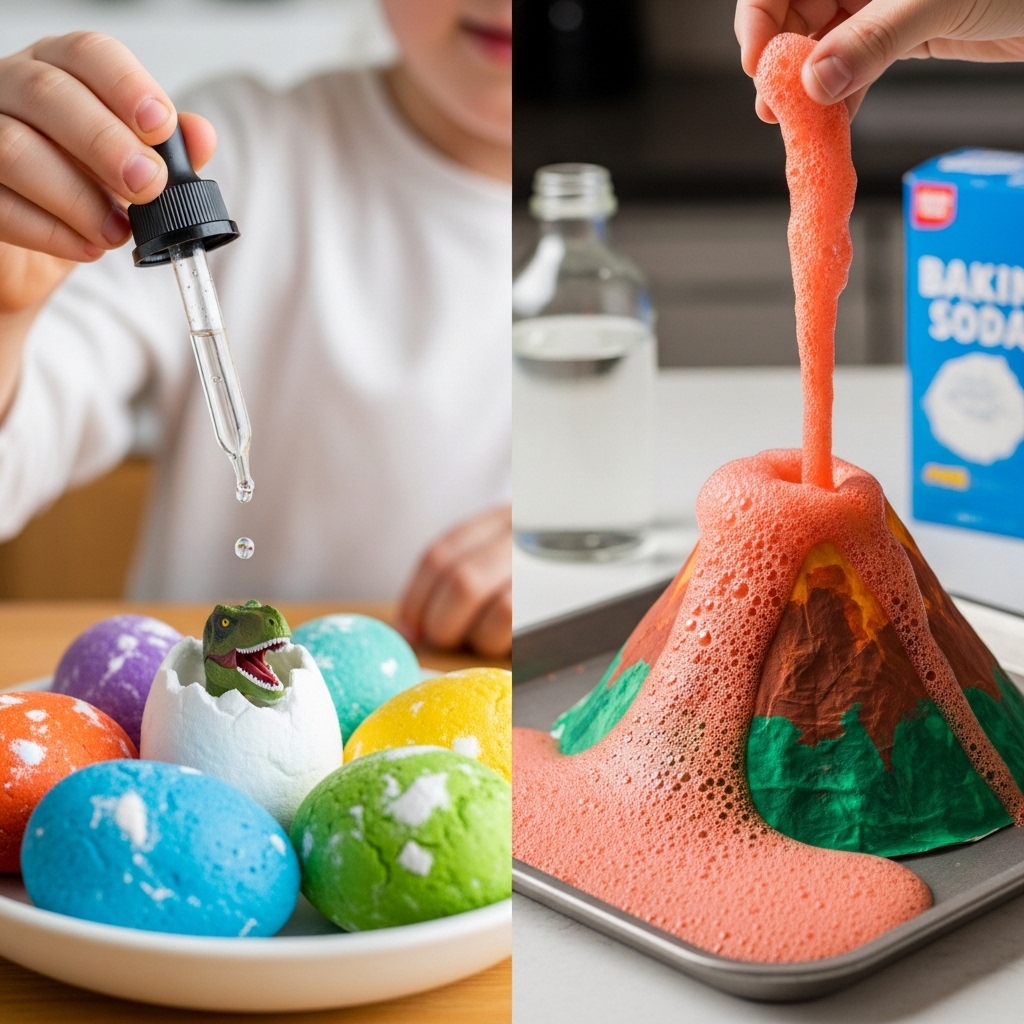
Both activities are huge hits, but they offer slightly different experiences.
The volcano experiment is more dramatic and fast, with a big lava-like eruption. It’s great for instant wow-factor.
The dinosaur eggs activity, however, is more interactive and story-driven. Kids get to physically break open each egg, making it feel like a real archaeological dig.
If the volcano is a “show,” the dinosaur eggs are a “mission.” Together, they make the perfect science combo day.
❓ Fun FAQ
Can I reuse the baking soda eggs?
No, once they react with vinegar, they dissolve. But you can always make new ones!
Is this safe for toddlers?
Yes, with supervision. Just ensure they don’t drink vinegar or baking soda.
Can I skip freezing?
You can, but freezing makes the activity much more exciting and long-lasting.
🧊 Storing and Reusing Tips
Unused baking soda eggs can be stored in the freezer for up to 2 weeks. Keep them in an airtight container so they don’t absorb moisture or odors.
If they soften, just refreeze them before use. Each session works best when the eggs are fully frozen.
There’s no reheating needed—just more vinegar for repeated fizz fun!
🎉 Final Thoughts
Baking Soda Dinosaur Eggs are more than just a craft—they’re a full adventure packed with science, imagination, and excitement. Kids get to explore, dig, discover, and learn without even realizing they’re doing chemistry.
If you enjoyed this activity, you’ll also love our Baking Soda Volcano Experiment, which brings even more explosive fun to your kitchen science lab.
So grab your ingredients, gather your little explorers, and turn your home into a prehistoric discovery zone today! 🦖✨
