
Introduction
Mathematics becomes much easier and more enjoyable when students can see and touch the concepts they are learning. One of the most important foundational topics in elementary mathematics is place value. Understanding how digits represent different values depending on their position helps children develop strong number sense and prepares them for addition, subtraction, multiplication, division, decimals, and even algebra later in life.
However, many students find place value difficult when it is taught only through worksheets and textbooks. This is where a Place Value Project: School Math Project can make a huge difference. Hands-on activities allow children to explore numbers creatively while building confidence and understanding. By using colorful materials, games, models, and real-life examples, students can visualize how ones, tens, hundreds, and thousands work together.
Whether you are a teacher planning a classroom activity, a parent helping with homework, or a student looking for an exciting school project, these ideas can make learning place value fun and memorable.
In this article, you’ll discover ten engaging activities that transform place value into an interactive learning experience. These projects are easy to create, budget-friendly, and suitable for various grade levels.
Quick Overview Table
| Activity | Difficulty Level | Materials Needed | Recommended Age |
| Place Value House | Easy | Cardboard, markers | 6-9 years |
| Place Value Chart Poster | Easy | Chart paper, stickers | 6-10 years |
| Number Tower Project | Easy | Building blocks | 6-9 years |
| Place Value Flip Book | Medium | Paper, staples | 7-11 years |
| Place Value Tree | Medium | Colored paper | 7-10 years |
| Bead Place Value Model | Medium | Beads, strings | 7-12 years |
| Place Value Wheel | Medium | Cardboard circles | 8-12 years |
| Place Value City | Advanced | Craft supplies | 8-12 years |
| Digital Place Value Presentation | Advanced | Computer software | 9-14 years |
| Place Value Board Game | Advanced | Board, dice, cards | 8-13 years |
What Is Place Value?
Place value refers to the value of a digit based on its position within a number.
For example:
- In 25, the digit 2 represents 20.
- In 256, the digit 2 represents 200.
- In 2,567, the digit 2 represents 2,000.
The same digit can have different values depending on where it appears.
Understanding place value helps students:
- Compare numbers
- Round numbers
- Perform calculations
- Understand decimals
- Develop logical thinking
A Place Value Project: School Math Project helps reinforce these concepts through active learning.
Why Use Hands-On Place Value Activities?
Hands-on learning offers many benefits:
Improves Understanding
Students can physically manipulate objects and visualize number relationships.
Increases Engagement
Interactive activities make mathematics more enjoyable.
Encourages Creativity
Projects allow students to personalize their learning.
Supports Different Learning Styles
Visual, auditory, and kinesthetic learners all benefit.
Builds Confidence
Children gain a deeper understanding through practice and experimentation.
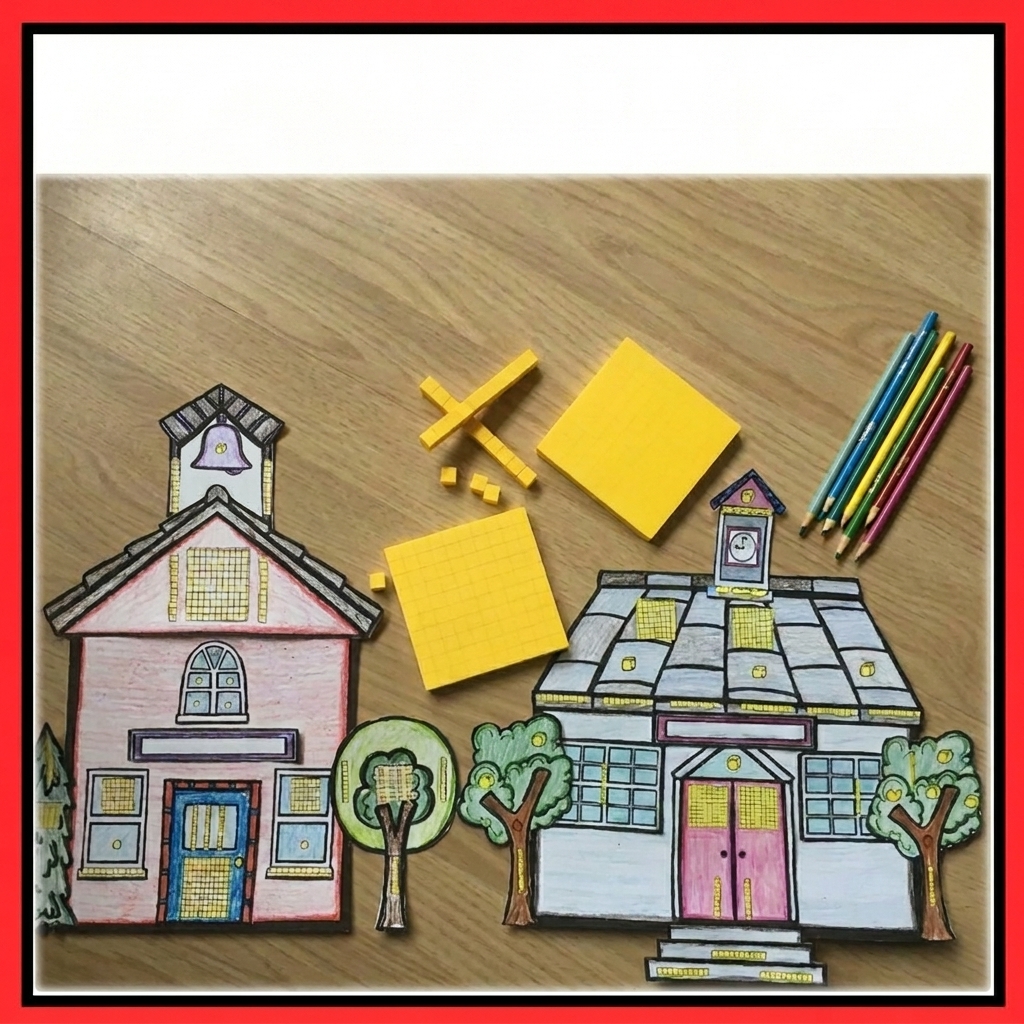
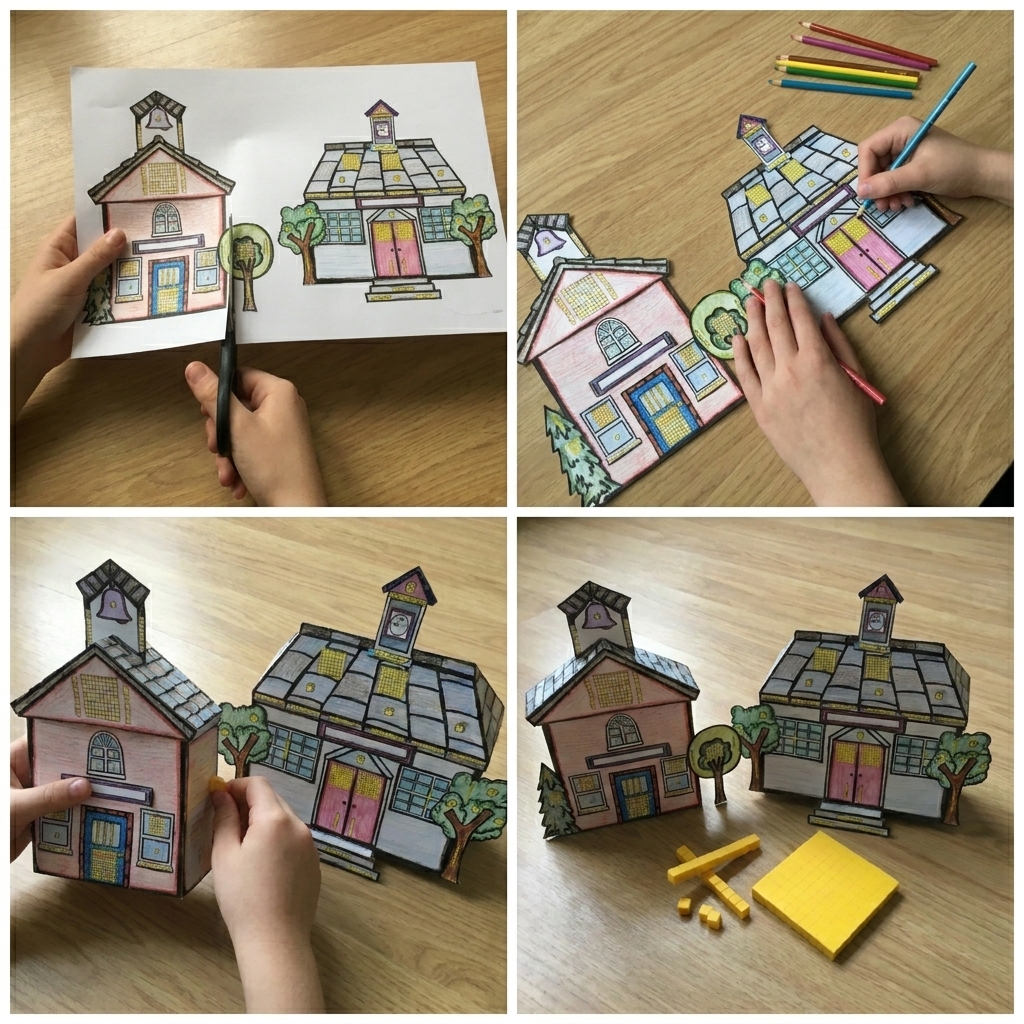
Activity 1: Place Value House
This is one of the most popular place value projects.
Materials
- Cardboard
- Colored paper
- Markers
- Glue
- Scissors
Instructions
Create a house with separate rooms labeled:
- Ones
- Tens
- Hundreds
- Thousands
Students place numbers into the correct room.
Example:
Number: 3,452
- Thousands = 3
- Hundreds = 4
- Tens = 5
- Ones = 2
Learning Benefits
- Reinforces digit placement
- Makes abstract concepts visual
- Encourages organization
Activity 2: Place Value Chart Poster
A colorful classroom poster helps students practice regularly.
Materials
- Poster board
- Stickers
- Markers
- Colored paper
Instructions
Create columns for:
- Ones
- Tens
- Hundreds
- Thousands
- Ten Thousands
Students can attach number cards to demonstrate different values.
Extension Activity
Challenge students to create the largest and smallest numbers possible using specific digits.
Activity 3: Number Tower Project
Building towers makes place value exciting.
Materials
- LEGO bricks
- Building blocks
- Plastic cups
Instructions
Assign values:
- One block = Ones
- Stack of 10 = Tens
- Stack of 100 = Hundreds
Students build numbers physically.
Example:
234 =
- 2 hundred towers
- 3 ten towers
- 4 single blocks
Benefits
- Strong visual representation
- Hands-on engagement
- Improved understanding
Activity 4: Place Value Flip Book
A flip book allows students to generate hundreds of numbers.
Materials
- Colored paper
- Stapler
- Markers
Instructions
Create separate flipping sections for:
- Thousands
- Hundreds
- Tens
- Ones
Each section contains digits 0–9.
Students flip pages to create new numbers.
Learning Outcome
Students observe how changing one digit changes the value of an entire number.
Activity 5: Place Value Tree
Transform mathematics into art.
Materials
- Construction paper
- Poster board
- Markers
Instructions
Draw a large tree.
Label branches:
- Ones
- Tens
- Hundreds
- Thousands
Attach number leaves representing values.
Example
Number 5,684
Leaves show:
- 5 Thousands
- 6 Hundreds
- 8 Tens
- 4 Ones
Benefits
- Creative expression
- Visual learning
- Easy classroom display
Activity 6: Bead Place Value Model
This activity combines crafting with mathematics.
Materials
- Colored beads
- Pipe cleaners
- String
Instructions
Use different bead colors for each place value.
Example:
- Red = Ones
- Blue = Tens
- Green = Hundreds
- Yellow = Thousands
Students create number models.
Educational Value
- Enhances counting skills
- Develops fine motor skills
- Reinforces place value concepts
Activity 7: Place Value Wheel
A rotating wheel makes learning interactive.
Materials
- Cardboard circles
- Split pins
- Markers
Instructions
Create layered wheels displaying digits.
Rotate wheels to create different numbers.
Students identify:
- Digit values
- Expanded forms
- Number names
Example
4,382
Expanded form:
4,000 + 300 + 80 + 2
Activity 8: Place Value City
Build an entire city based on place value.
Materials
- Boxes
- Colored paper
- Craft supplies
Instructions
Assign buildings:
- Small houses = Ones
- Shops = Tens
- Schools = Hundreds
- Skyscrapers = Thousands
Students construct a city representing specific numbers.
Benefits
- Teamwork
- Creativity
- Deep understanding
This is one of the most impressive projects for school exhibitions.
Activity 9: Digital Place Value Presentation
Technology can enhance place value learning.
Tools
- PowerPoint
- Google Slides
- Canva
Instructions
Students create presentations showing:
- Place value charts
- Expanded forms
- Visual representations
- Practice questions
Benefits
- Digital literacy
- Presentation skills
- Mathematical understanding
Activity 10: Place Value Board Game
Turn learning into play.
Materials
- Poster board
- Dice
- Number cards
Instructions
Players move around the board and complete place value challenges.
Examples:
- Identify digit values
- Write expanded forms
- Compare numbers
Correct answers earn points.
Benefits
- Friendly competition
- Repeated practice
- Increased engagement
How to Assess Student Learning
Teachers can evaluate projects using several criteria.
Accuracy
Did students correctly identify place values?
Creativity
Did they demonstrate original thinking?
Presentation
Is the project neat and organized?
Understanding
Can students explain their work?
Participation
Did students actively engage in the project?
Common Mistakes Students Make
Confusing Digit and Value
Many students think a digit always has the same value.
Example:
2 in 25 is different from 2 in 205.
Ignoring Zero Placeholders
Zero plays an important role in place value.
Example:
205 and 25 are very different numbers.
Reading Numbers Incorrectly
Students sometimes skip place values while reading large numbers.
Hands-on projects help correct these misunderstandings.
Tips for Teachers
Use Real-Life Examples
Connect place value to money, population, and measurements.
Encourage Group Work
Students learn from one another.
Include Games
Games reduce anxiety and increase participation.
Display Student Projects
Showcasing work motivates students.
Differentiate Activities
Provide easier and more challenging versions.
Tips for Parents
Parents can reinforce place value at home by:
- Using coins and money
- Counting household items
- Playing number games
- Creating mini-projects
- Practicing expanded forms
Even ten minutes daily can improve understanding.
Real-World Applications of Place Value
Place value appears everywhere.
Examples include:
Money
$235 means:
- 2 Hundreds
- 3 Tens
- 5 Ones
Population Numbers
Large populations rely on place value understanding.
Measurements
Distance, weight, and volume all involve place value concepts.
Technology
Computers process numbers based on positional systems.
Teaching place value builds skills students will use throughout life.
Benefits of a Place Value Project: School Math Project
A successful project helps students:
- Understand number relationships
- Improve problem-solving skills
- Develop confidence
- Strengthen creativity
- Enjoy mathematics
Most importantly, it transforms abstract concepts into meaningful experiences.
Conclusion
A Place Value Project: School Math Project is one of the most effective ways to teach number sense and mathematical understanding. By combining creativity, hands-on learning, and problem-solving, students gain a deeper appreciation for how numbers work.
From Place Value Houses and Trees to interactive Board Games and Digital Presentations, these ten activities provide exciting opportunities for learning. They can be adapted for different ages, classroom settings, and skill levels, making them ideal for teachers, parents, and students alike.
When children actively build, create, explore, and play with numbers, place value becomes much more than a lesson—it becomes an engaging adventure in mathematics. By incorporating these fun projects into your teaching or learning routine, you can help students build a strong foundation that supports future success in math.
