
Quick Summary Table
| Feature | Details |
| Topic | Fun and Edible Science Experiments |
| Category | STEM Activities for Kids |
| Difficulty Level | Easy |
| Age Group | 5+ Years |
| Time Required | 10–30 Minutes |
| Main Materials | Everyday Food Ingredients |
| Learning Focus | Chemistry, Physics, Observation Skills |
| Safety Level | High with Adult Supervision |
| Best Location | Kitchen or Classroom |
| Number of Experiments | 5 Delicious Activities |
Introduction
Fun and edible science experiments are one of the most exciting ways to introduce children to the world of STEM learning. Science often feels mysterious and complicated, but when it is combined with food, it suddenly becomes approachable, engaging, and delicious. Children love activities that involve tasting, mixing, creating, and discovering. When those activities also teach scientific concepts, learning becomes a memorable adventure.
Many parents and teachers search for educational activities that capture children’s attention while helping them develop important skills. Fun and edible science experiments accomplish exactly that goal. These experiments use common kitchen ingredients to demonstrate scientific principles such as chemical reactions, density, crystallization, states of matter, and molecular behavior.
One of the greatest benefits of edible science activities is that they transform ordinary kitchen ingredients into learning tools. Sugar, milk, fruit, chocolate, and gelatin become opportunities to explore chemistry and physics in a safe and enjoyable way.
In this guide, you’ll discover five delicious experiments that combine science and food. Each activity is simple to perform, educational, and designed to inspire curiosity. Whether you’re a parent, teacher, homeschooler, or simply someone who enjoys creative learning, these fun and edible science experiments will turn your kitchen into a fascinating science laboratory.
Why Edible Science Experiments Are Effective
Before diving into the experiments, it helps to understand why edible science activities are so successful.
They Engage Multiple Senses
Children learn better when they can see, touch, smell, and taste what they are exploring.
They Make Science Less Intimidating
Using familiar foods helps children feel comfortable with scientific concepts.
They Encourage Curiosity
Unexpected reactions naturally inspire questions and exploration.
They Support STEM Education
Science, Technology, Engineering, and Mathematics concepts become easier to understand through hands-on experiences.
They Create Positive Learning Memories
Children often remember practical activities longer than textbook lessons.
Safety First
Although these are edible experiments, safety remains important.
Follow these guidelines:
- Wash hands before starting.
- Use clean utensils and containers.
- Follow ingredient instructions carefully.
- Supervise young children.
- Be aware of food allergies.
- Clean work surfaces before and after activities.
Now let’s explore five amazing edible science experiments.
Experiment 1: Homemade Rock Candy Crystals
What You’ll Need
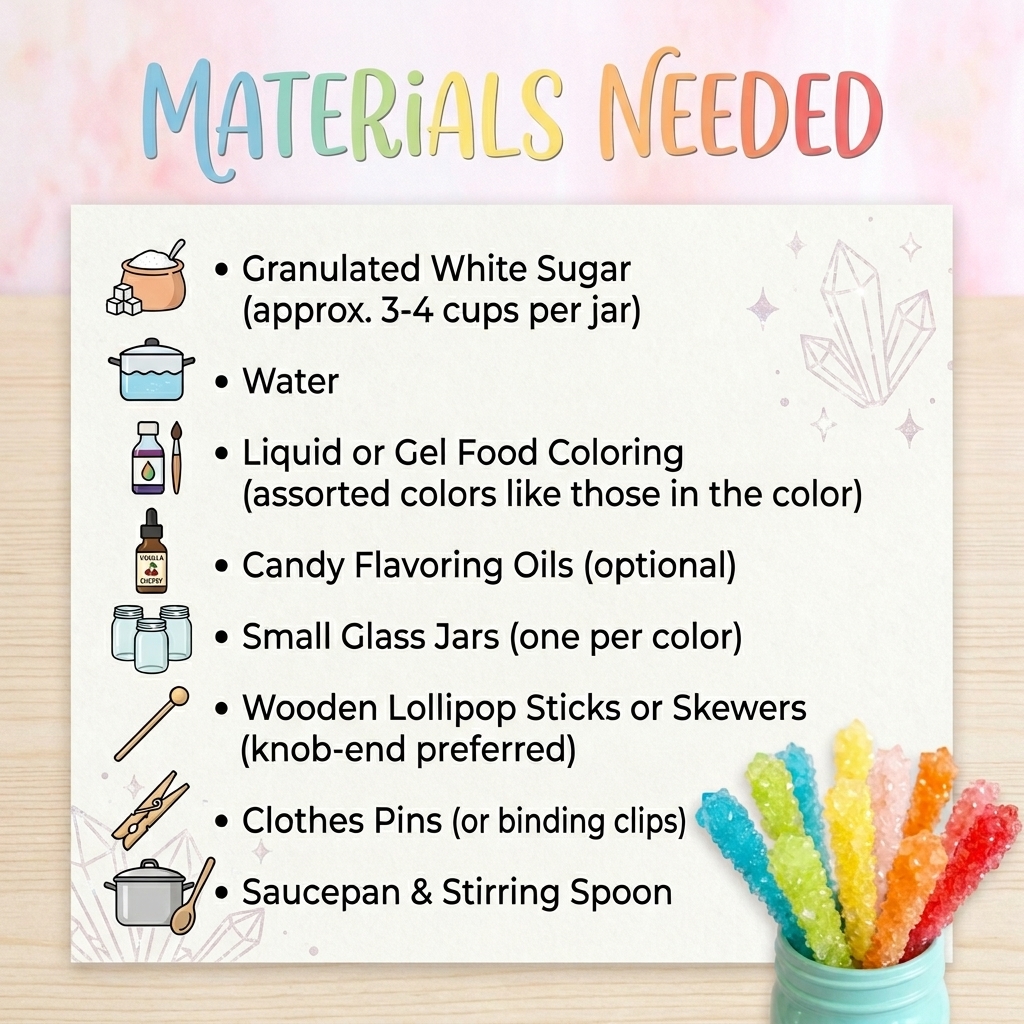
- White sugar
- Water
- Glass jar
- Wooden skewer
- Clothespin
Instructions
- Boil water.
- Slowly add sugar until no more dissolves.
- Pour the solution into a jar.
- Suspend a skewer in the liquid.
- Leave the jar undisturbed for several days.
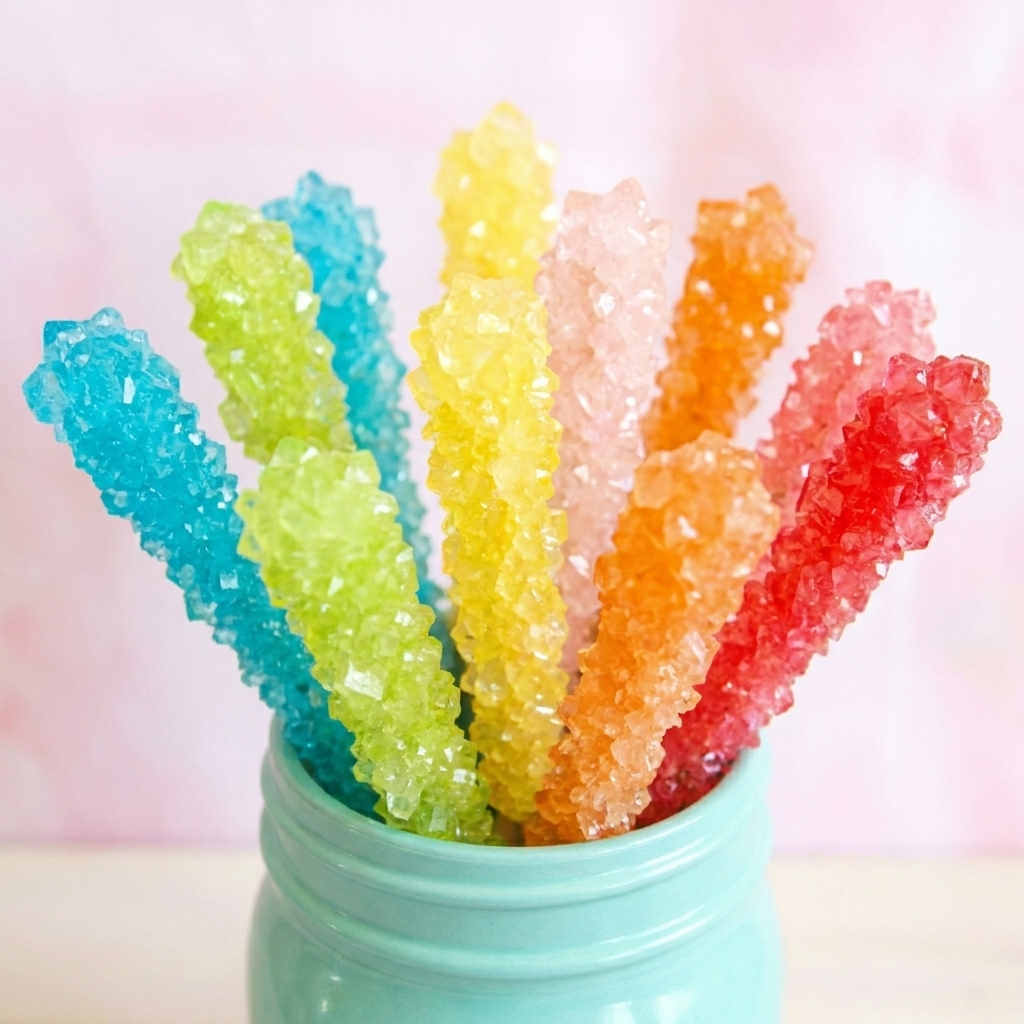
Over time, sugar crystals begin forming on the stick.
The Science Behind It
The sugar solution becomes supersaturated, meaning it contains more dissolved sugar than it can normally hold at room temperature.
As the water slowly evaporates, sugar molecules join together and form crystals.
Educational Concepts
- Crystal formation
- Saturation
- Evaporation
- Molecular structures
Why Kids Love It
Children enjoy watching the crystals grow day by day and then eating their scientific creation.
Experiment 2: Magic Color-Changing Lemonade
What You’ll Need
- Lemon juice
- Water
- Sugar
- Butterfly pea flower tea
- Clear glasses
Instructions
- Prepare butterfly pea flower tea and allow it to cool.
- Pour the blue liquid into a glass.
- Add lemonade slowly.
- Watch the color change from blue to purple or pink.
The Science Behind It
Butterfly pea flowers contain natural pigments called anthocyanins.
These pigments react to acidity. Lemon juice lowers the pH, causing a dramatic color transformation.
Educational Concepts
- Acids and bases
- pH indicators
- Natural pigments
- Chemical reactions
Why Kids Love It
The magical color change feels like a science trick, yet it’s completely safe and edible.
Experiment 3: Ice Cream in a Bag
What You’ll Need
- Milk
- Cream
- Sugar
- Vanilla extract
- Ice
- Salt
- Two zip-top bags
Instructions
- Mix milk, cream, sugar, and vanilla in a small bag.
- Fill a larger bag with ice and salt.
- Place the small bag inside the larger one.
- Shake for 5–10 minutes.
The liquid mixture gradually turns into ice cream.
The Science Behind It
Salt lowers the freezing point of ice.
This allows the surrounding temperature to become cold enough to freeze the ice cream mixture.
Educational Concepts
- Freezing point depression
- States of matter
- Heat transfer
- Physical changes
Why Kids Love It
Children enjoy making and eating their own ice cream while learning about temperature and chemistry.
Experiment 4: Dancing Raisins
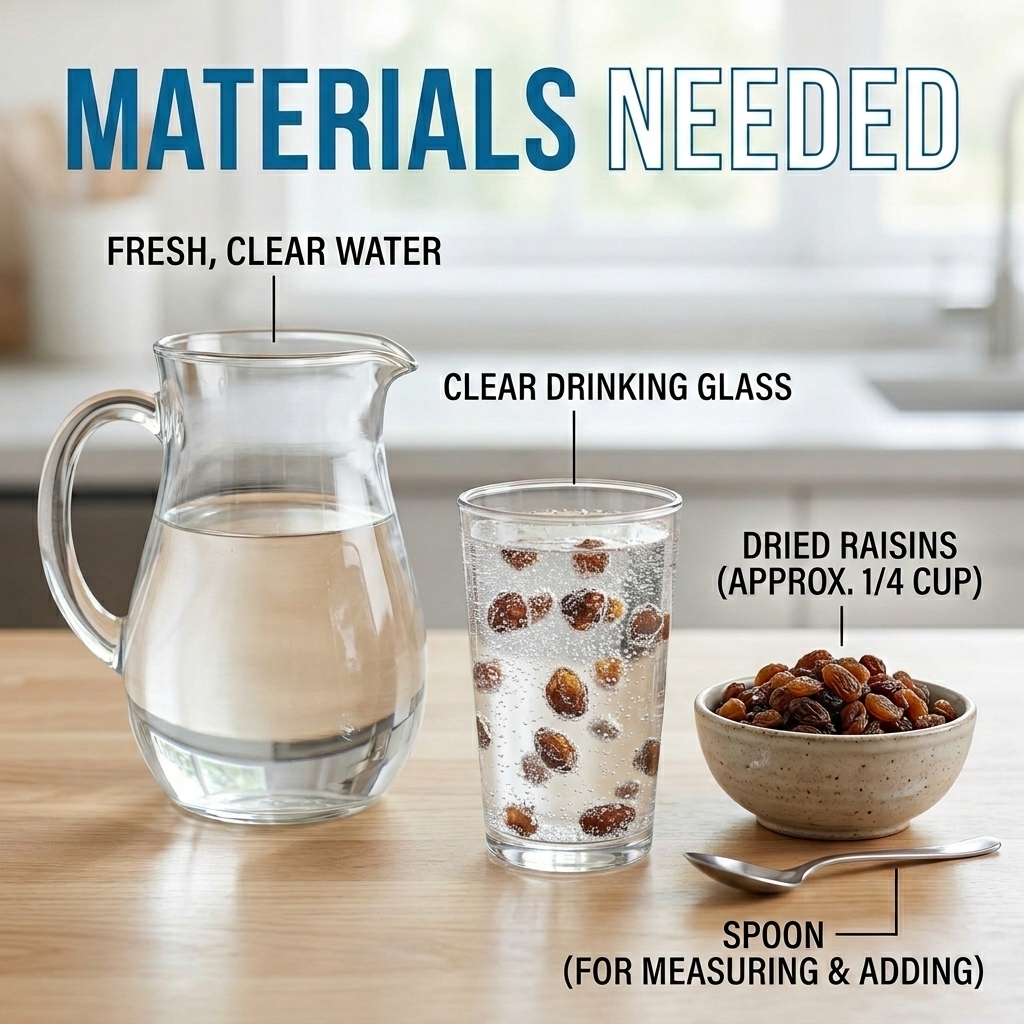
What You’ll Need
- Clear glass
- Sparkling water
- Raisins
Instructions
- Fill a glass with sparkling water.
- Add several raisins.
- Observe carefully.
The raisins begin rising and falling repeatedly.
The Science Behind It
Carbon dioxide bubbles attach to the wrinkled surfaces of the raisins.
The bubbles make the raisins buoyant enough to float upward.
When the bubbles burst at the surface, the raisins sink again.
Educational Concepts
- Buoyancy
- Density
- Gas behavior
- Observation skills
Why Kids Love It
Watching raisins dance in water feels magical and encourages scientific thinking.
Experiment 5: Chocolate Melting Challenge
What You’ll Need
- Chocolate pieces
- Different containers
- Warm water
- Refrigerator
- Sunlight
Instructions
- Place chocolate samples in different environments.
- Observe which pieces melt first.
- Compare melting speeds.
The Science Behind It
Chocolate changes from solid to liquid when it reaches its melting point.
Different temperatures affect the speed of this transformation.
Educational Concepts
- States of matter
- Heat energy
- Melting points
- Temperature effects
Why Kids Love It
The experiment combines scientific observation with a delicious reward.
Understanding the Science of Food
Food science is a branch of chemistry and physics that studies how ingredients interact.
Everyday cooking involves scientific processes such as:
Dissolving
Sugar disappears into water because its molecules spread throughout the liquid.
Crystallization
Sugar molecules join together to form crystals.
Freezing
Liquids lose energy and become solids.
Melting
Solids absorb heat and become liquids.
Chemical Reactions
Acids and bases interact to create new substances or visible changes.
Understanding these processes helps children see science in everyday life.
Educational Benefits of Fun and Edible Science Experiments
Develop Critical Thinking
Children learn to predict outcomes and analyze results.
Improve Observation Skills
Experiments encourage careful attention to details.
Build Scientific Vocabulary
Kids become familiar with words such as:
- Crystal
- Molecule
- Acidity
- Density
- Evaporation
- Temperature
Encourage Creativity
Many experiments can be modified to test new ideas.
Strengthen Confidence
Successfully completing experiments boosts self-esteem.
How to Make Experiments More Educational
To maximize learning, encourage children to think like scientists.
Ask Questions
Examples include:
- What do you think will happen?
- Why did the color change?
- Which sample melted fastest?
Record Observations
Create a simple science journal.
Children can write:
- Predictions
- Observations
- Conclusions
Repeat Experiments
Changing variables helps children understand scientific investigation.
Compare Results
Discuss why different outcomes occur.
These simple steps transform a fun activity into a meaningful STEM lesson.
Tips for Successful Edible Science Activities
Use Clear Containers
Transparent containers make observations easier.
Prepare Materials Ahead of Time
Organization keeps children engaged.
Encourage Exploration
Allow children to ask questions and test ideas.
Take Photos
Documenting experiments creates lasting memories.
Focus on Learning
Success is not just about the final product but also about the discovery process.
Frequently Asked Questions
Are edible science experiments safe?
Yes, when using food-safe ingredients and proper supervision.
What age group benefits most?
Most activities are suitable for children ages 5 and older.
Do I need special equipment?
No. Most experiments use common kitchen supplies.
Can these be used in classrooms?
Absolutely. They are excellent for STEM lessons and group activities.
How long do the experiments take?
Most require between 10 and 30 minutes, although crystal-growing projects may take several days.
The Future of Learning Through Food
Educational experts increasingly recognize the value of experiential learning. Food-based science activities help children connect abstract scientific concepts with real-world experiences.
When children discover that chemistry can create ice cream, grow crystals, or change colors, science becomes exciting rather than intimidating. These positive experiences can inspire lifelong curiosity and even future careers in science, engineering, medicine, or technology.
The kitchen offers countless opportunities for exploration. Every recipe contains scientific principles waiting to be discovered.
Conclusion
Fun and edible science experiments are an outstanding way to combine education, creativity, and delicious rewards. By transforming everyday ingredients into exciting scientific demonstrations, children gain hands-on experience with chemistry and physics while having fun.
The five experiments in this guide—Homemade Rock Candy Crystals, Magic Color-Changing Lemonade, Ice Cream in a Bag, Dancing Raisins, and the Chocolate Melting Challenge—demonstrate important scientific concepts in simple and memorable ways.
Whether you’re teaching STEM at home, planning a classroom activity, or looking for a rainy-day project, these fun and edible science experiments provide the perfect blend of learning and enjoyment. Best of all, the lessons extend beyond the kitchen, helping children develop curiosity, confidence, and a lifelong appreciation for science.
