
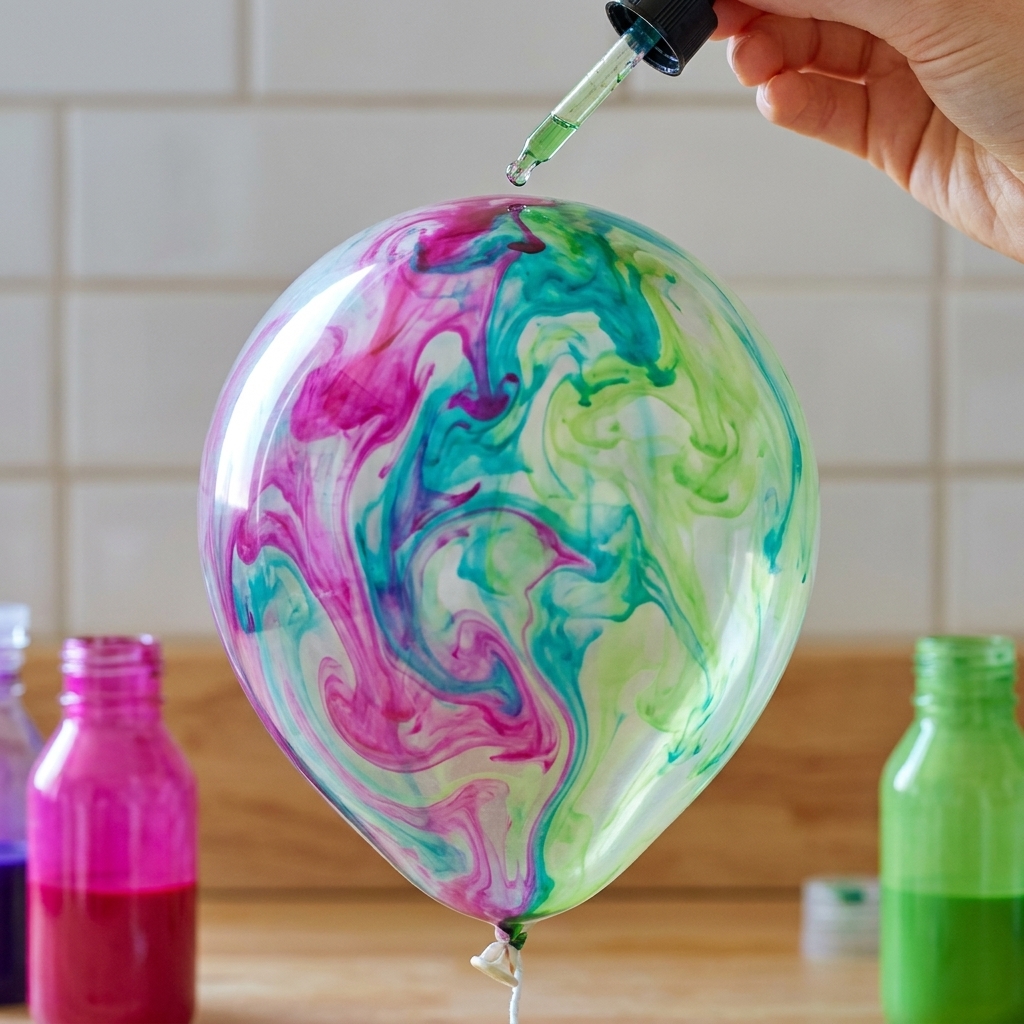
Science becomes truly exciting when children can see it happen right before their eyes. Among the many fun STEM activities available for young learners, the Self-Inflating Balloon experiment stands out as one of the most fascinating. Watching a balloon grow larger without anyone blowing into it feels almost magical. For children, it sparks curiosity and wonder. For parents and teachers, it provides an excellent opportunity to introduce scientific concepts through hands-on learning.
The Self-Inflating Balloon experiment combines simple household materials with an exciting chemical reaction. As the balloon slowly inflates, children witness science in action while developing observation, prediction, and problem-solving skills. This activity is inexpensive, easy to set up, and suitable for a variety of ages.
In this article, we’ll explore why the Self-Inflating Balloon experiment is so popular among children and examine five key reasons kids love it. We’ll also discuss the science behind the activity, educational benefits, setup instructions, and ways to extend learning.
Quick Summary Table
| Feature | Description |
| Activity Type | STEM Science Experiment |
| Difficulty Level | Easy |
| Recommended Age | 5–12 Years |
| Time Required | 15–30 Minutes |
| Main Concept | Chemical Reactions |
| Materials Needed | Balloon, Vinegar, Baking Soda |
| Educational Focus | Science, Observation, Critical Thinking |
| Best Learning Outcome | Understanding Gas Production |
What Is a Self-Inflating Balloon?
A Self-Inflating Balloon is a science experiment in which a balloon inflates automatically due to a chemical reaction. Unlike a regular balloon that requires air from a person’s lungs, this balloon fills with gas produced when baking soda and vinegar mix together.
When the ingredients combine, they create carbon dioxide gas. As more gas forms, it fills the balloon and causes it to expand. The result is a dramatic visual demonstration that captures children’s attention immediately.
Many kids describe the experiment as magical because they cannot initially see where the gas comes from. This mystery creates the perfect opportunity for scientific exploration.
Materials Needed
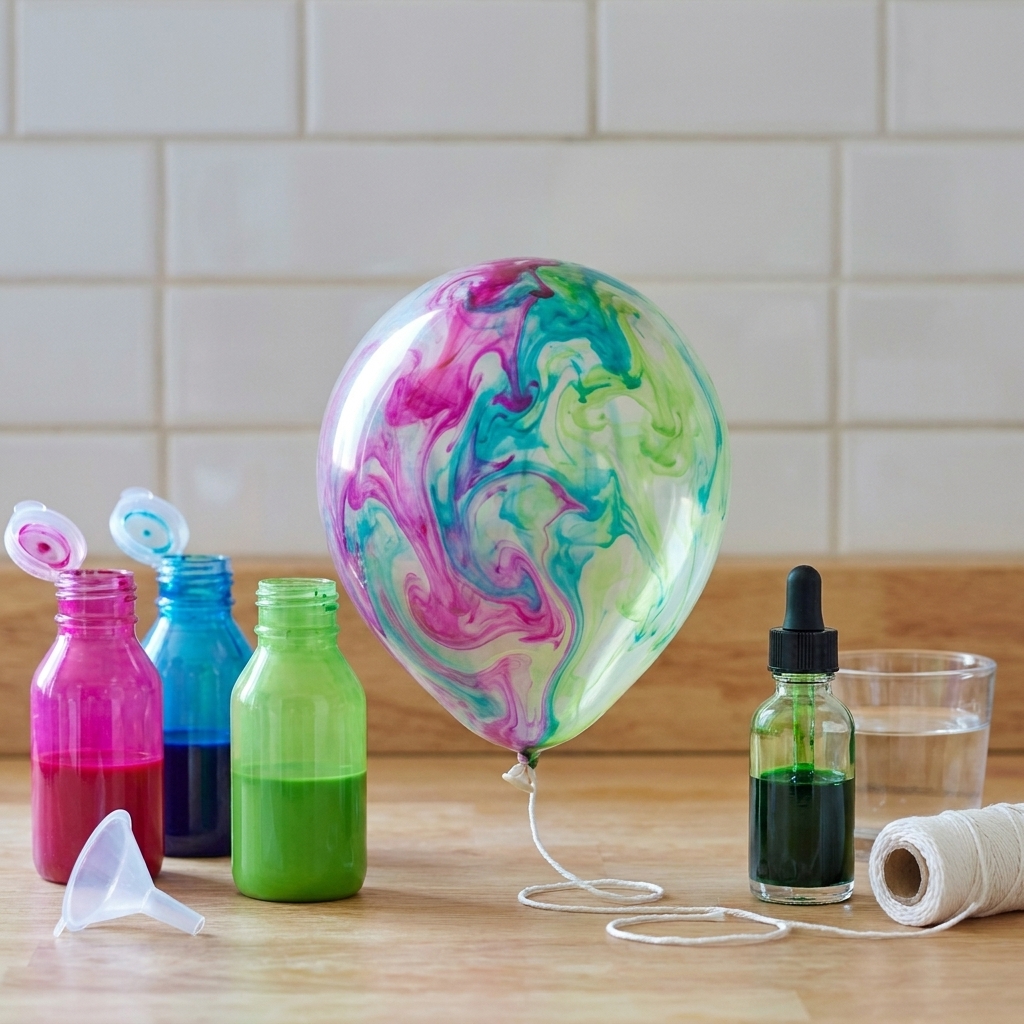
One reason the Self-Inflating Balloon experiment is so popular is that it requires only a few inexpensive household items.
Supplies
- One empty balloon
- One small plastic bottle
- Baking soda
- Vinegar
- Funnel
- Measuring spoon
These materials are often already available at home, making the activity accessible for families and classrooms alike.
How to Perform the Experiment
Step 1: Prepare the Balloon
Use a funnel to place two tablespoons of baking soda inside the balloon.
Step 2: Fill the Bottle
Pour approximately half a cup of vinegar into the bottle.
Step 3: Attach the Balloon
Carefully stretch the balloon opening over the bottle without allowing the baking soda to fall inside yet.
Step 4: Start the Reaction
Lift the balloon so the baking soda drops into the vinegar.
Step 5: Observe
Watch as the balloon begins to inflate on its own.
Children are often amazed as they see the balloon expand without any blowing involved.
Why Five Kids Love It
1. It Feels Like Magic
The first reason children love the Self-Inflating Balloon experiment is that it appears magical.
Most children understand that balloons normally need air from a person. When a balloon suddenly inflates by itself, it challenges their expectations and sparks curiosity.
Young learners naturally ask questions such as:
- How is the balloon growing?
- Where is the air coming from?
- Why is it getting bigger?
These questions create valuable learning opportunities and encourage scientific thinking.
The surprise element keeps children engaged throughout the activity.
2. It Creates Instant Results
Many educational activities require patience before children see outcomes. The Self-Inflating Balloon experiment delivers visible results almost immediately.
Within seconds of mixing the ingredients, bubbles begin forming. Soon afterward, the balloon starts expanding.
Children enjoy activities that provide quick feedback because they can instantly connect their actions to the results.
This immediate cause-and-effect relationship strengthens understanding and maintains excitement.
3. It Encourages Hands-On Learning
Children learn best when they actively participate.
Rather than simply reading about chemical reactions, they experience one firsthand.
During the experiment, kids can:
- Measure ingredients
- Pour liquids
- Attach balloons
- Make predictions
- Record observations
This hands-on involvement helps transform abstract scientific concepts into real experiences.
Active participation also improves memory retention and understanding.
4. It Inspires Curiosity
The Self-Inflating Balloon experiment encourages children to think like scientists.
After seeing the reaction, many kids begin asking deeper questions:
- What happens if I add more baking soda?
- Will a larger bottle make a bigger balloon?
- Does temperature affect the reaction?
- Can other substances create gas too?
Curiosity is one of the most important foundations of scientific learning.
By encouraging questions and experimentation, this activity helps develop a lifelong interest in science.
5. It Combines Fun and Learning
Perhaps the biggest reason children love the Self-Inflating Balloon experiment is that it doesn’t feel like a lesson.
Instead, it feels like play.
Children enjoy:
- Watching bubbles form
- Seeing the balloon grow
- Predicting outcomes
- Testing ideas
- Sharing results with friends
At the same time, they learn valuable STEM concepts without even realizing it.
This combination of entertainment and education makes the activity especially effective.
The Science Behind the Self-Inflating Balloon
The experiment works because of a chemical reaction between baking soda and vinegar.
What Is Baking Soda?
Baking soda is a substance known scientifically as sodium bicarbonate.
What Is Vinegar?
Vinegar contains acetic acid.
What Happens When They Mix?
When these substances combine, they react and produce carbon dioxide gas.
The simplified reaction looks like this:
Baking Soda + Vinegar → Carbon Dioxide + Water + Other Compounds
The carbon dioxide gas has nowhere to go except into the balloon.
As the gas accumulates, it stretches the balloon outward.
This process demonstrates how gases occupy space and create pressure.
STEM Learning Opportunities
The Self-Inflating Balloon experiment supports several STEM concepts.
Science
Children learn about:
- Chemical reactions
- Gas formation
- Matter
- Observation
Technology
Students can document results using digital devices.
Engineering
Children can design different bottle and balloon setups.
Mathematics
Students can:
- Measure ingredients
- Compare balloon sizes
- Calculate reaction times
These interdisciplinary connections make the experiment highly educational.
Questions to Ask During the Experiment
Encourage deeper thinking with questions such as:
- What do you predict will happen?
- Why is the balloon growing?
- Which ingredient creates the gas?
- What happens if we double the ingredients?
- How long will the reaction continue?
These discussions help children develop critical thinking skills.
Extending the Experiment
Once children understand the basic setup, they can try variations.
Change Ingredient Amounts
Test different quantities of baking soda and vinegar.
Compare Balloon Sizes
Use different balloon types and compare results.
Temperature Investigation
Experiment with warm and cold vinegar.
Measurement Challenge
Measure balloon circumference after inflation.
These extensions introduce scientific experimentation and data collection.
Educational Benefits
The Self-Inflating Balloon experiment offers numerous educational advantages.
Builds Observation Skills
Children learn to notice details and record changes.
Develops Problem-Solving Abilities
Students analyze results and suggest improvements.
Encourages Prediction
Making predictions strengthens reasoning skills.
Supports Scientific Vocabulary
Children learn terms such as:
- Reaction
- Gas
- Carbon dioxide
- Observation
- Experiment
Increases Confidence
Successfully completing the experiment helps children feel capable and curious.
Classroom Applications
Teachers often use the Self-Inflating Balloon experiment because it fits many educational objectives.
It can support lessons about:
- States of matter
- Chemical reactions
- Scientific inquiry
- STEM education
- Observation and recording
The activity also works well for science fairs and classroom demonstrations.
Homeschool Benefits
Homeschool families appreciate the experiment because it requires minimal preparation while delivering significant educational value.
Benefits include:
- Low cost
- Easy setup
- Flexible timing
- Strong STEM connections
- Engaging results
Parents can easily adapt the activity for different age groups.
Safety Tips
Although the experiment is generally safe, adult supervision is recommended.
Safety Guidelines
- Do not drink the mixture.
- Avoid getting vinegar in the eyes.
- Use clean containers.
- Wash hands afterward.
- Dispose of materials responsibly.
Following these precautions ensures a safe learning experience.
Making Science Memorable
Children often remember experiments more clearly than textbook lessons.
The visual impact of a balloon inflating by itself creates a memorable learning moment that reinforces scientific concepts.
Years later, many children still recall the excitement of seeing the balloon grow and learning why it happened.
This lasting impression demonstrates the power of hands-on STEM activities.
Conclusion
The Self-Inflating Balloon experiment is much more than a fun science activity. It introduces children to chemical reactions, gas production, observation skills, and scientific inquiry in a simple yet exciting way.
The five main reasons kids love the Self-Inflating Balloon experiment are clear: it feels magical, produces instant results, encourages hands-on learning, inspires curiosity, and combines fun with education. These qualities make it one of the most effective STEM activities for young learners.
Whether performed at home, in a classroom, or during a science fair, the Self-Inflating Balloon experiment helps children discover that science is not only educational but also exciting, surprising, and enjoyable. Through simple materials and a fascinating reaction, kids gain valuable knowledge while creating memories that can inspire a lifelong interest in learning.
