
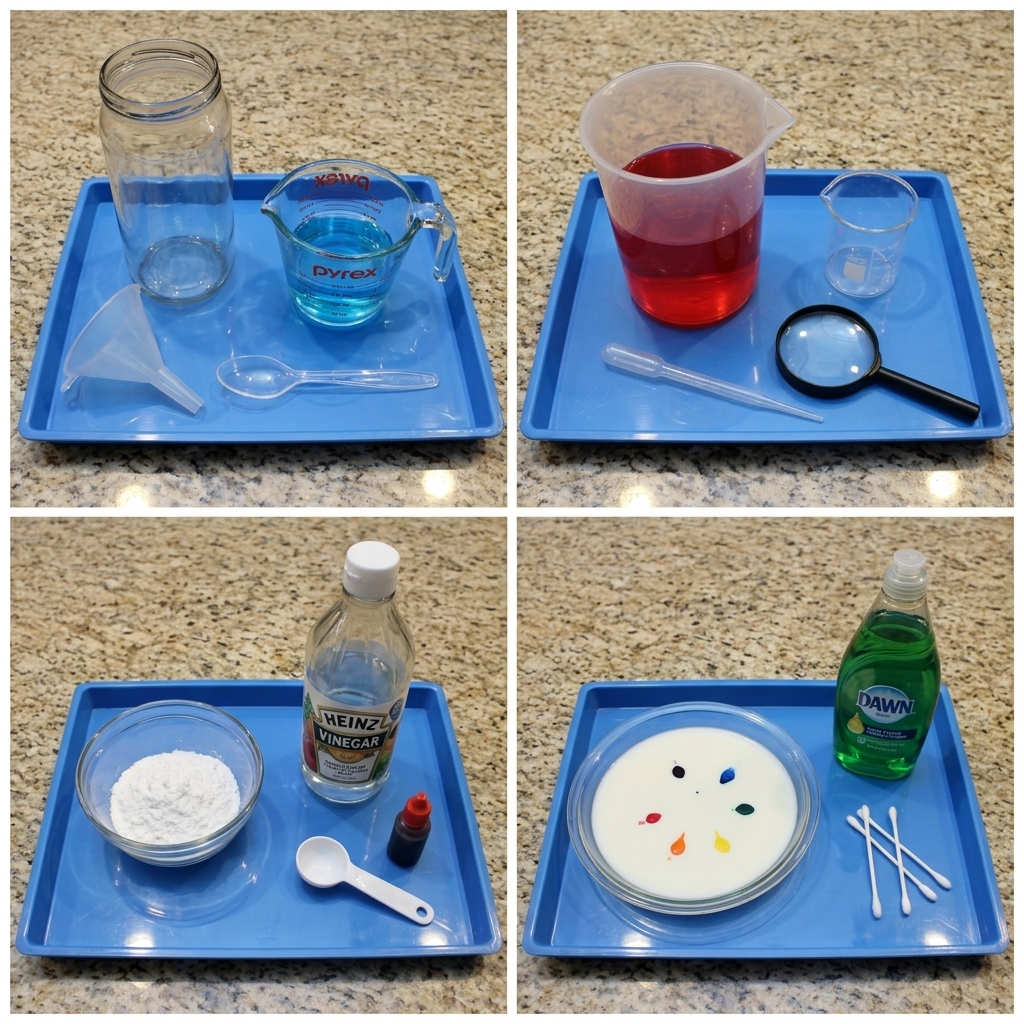
Science becomes unforgettable when children can actually see it happening in front of their eyes. One of the most magical and educational STEM activities for young learners is the Cloud-Making Experiment in a Jar. With just a few simple household materials, kids can create a tiny “cloud” inside a glass jar and watch it form, swirl, and disappear like real weather in action.
This experiment is not only fun but also deeply educational. It introduces children to important atmospheric science concepts such as condensation, air pressure, and the water cycle. More importantly, it transforms abstract science ideas into something visible, exciting, and easy to understand.
In this article, we will explore how the Cloud-Making Experiment in a Jar works, what materials are needed, step-by-step instructions, and—most importantly—why five key reasons make kids absolutely love it.
Quick Summary Table
| Feature | Details |
| Experiment Name | Cloud-Making Experiment in a Jar |
| Difficulty Level | Easy |
| Age Group | 5–12 years |
| Time Required | 15–25 minutes |
| Key Science Concept | Condensation & Air Pressure |
| Materials Needed | Jar, warm water, ice, hairspray/match (adult use) |
| Learning Area | STEM (Science & Weather Science) |
| Main Benefit | Understanding cloud formation |
What Is the Cloud-Making Experiment in a Jar?
The Cloud-Making Experiment in a Jar is a simple science demonstration that mimics how real clouds form in the sky. In nature, clouds are created when warm, moist air rises and cools down. Water vapor then condenses into tiny droplets, forming visible clouds.
In this experiment, we recreate the same process inside a jar. By combining warm water, cooling conditions, and a small source of particles (called condensation nuclei), we can produce a visible cloud that appears and disappears inside the container.
Children often describe it as “magic in a bottle,” but in reality, it is pure science at work.
Materials Needed
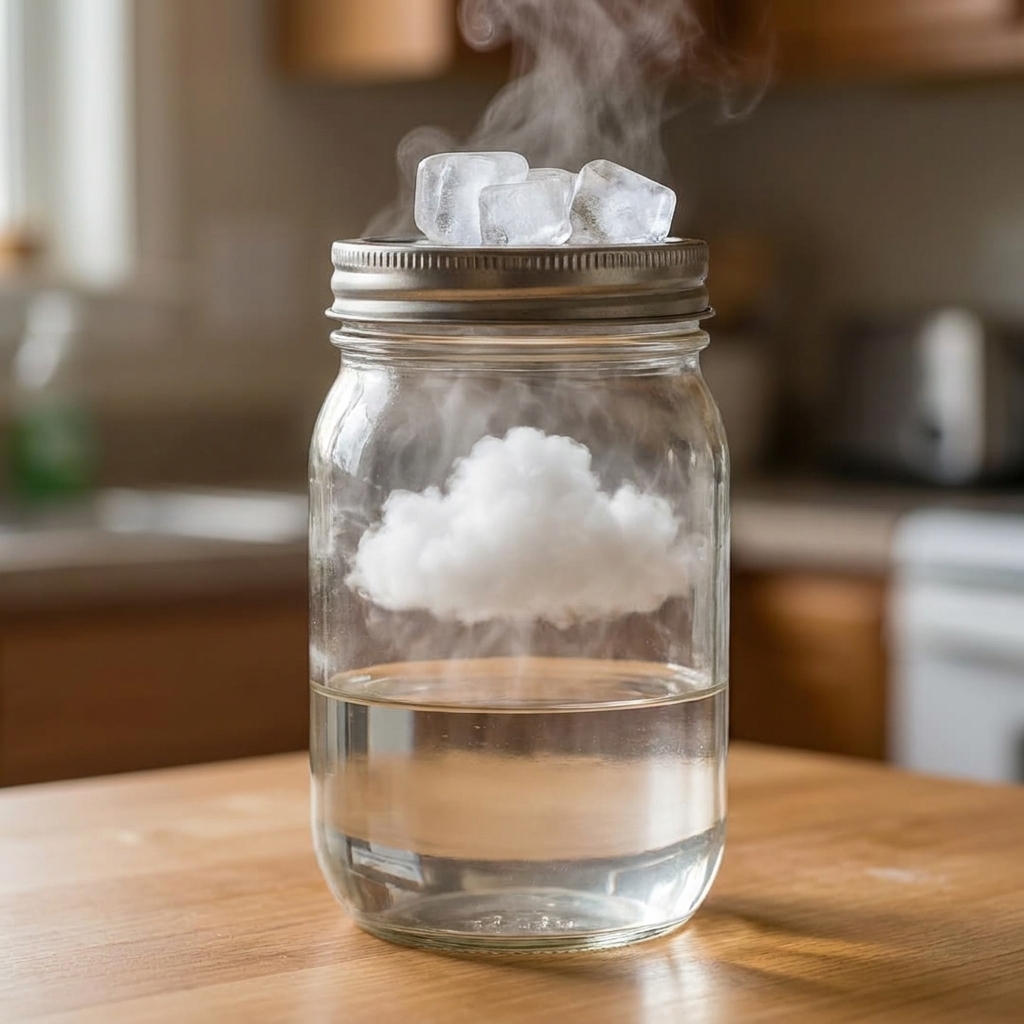
One of the best things about this experiment is that it uses simple and affordable materials.
- A clear glass jar with lid
- Warm water
- Ice cubes
- Matches or hairspray (adult supervision required)
- A small plate or lid
- Safety towel or gloves (optional)
Because the materials are common household items, this activity is perfect for home learning or classroom demonstrations.
Step-by-Step Instructions
Step 1: Add Warm Water
Pour a small amount of warm water into the jar. Swirl it around so the inside becomes slightly humid.
Step 2: Create Warm Air
Let the warm water sit for a few seconds so steam builds up inside the jar.
Step 3: Add a Condensation Trigger
An adult should quickly insert a small amount of smoke from a match or a short spray of hairspray into the jar. This gives water vapor something to cling to.
Step 4: Cover the Jar
Immediately place the lid or plate on top of the jar to trap the air inside.
Step 5: Add Cooling Effect
Place ice cubes on top of the lid. This cools the air inside the jar.
Step 6: Watch the Cloud Form
Within seconds, a visible cloud will begin to appear inside the jar.
Why Five Kids Love the Cloud-Making Experiment in a Jar
1. It Feels Like Real Magic
The first reason children love this experiment is because it looks magical. A clear jar suddenly fills with a cloudy mist, just like a real cloud appearing indoors.
Kids are naturally curious, and anything that seems to defy expectations instantly captures their attention. The idea that they can “make a cloud” with their hands makes science feel exciting and mysterious.
This magical feeling helps children become more interested in how nature actually works.
2. It Makes Weather Science Easy to Understand
Weather can be a difficult topic for children to grasp because it happens on such a large scale. The Cloud-Making Experiment in a Jar simplifies it into something small and visible.
Children can clearly see:
- How warm air rises
- How cooling creates condensation
- How clouds are formed from water vapor
Instead of reading about the water cycle in a book, they experience it directly. This hands-on learning improves understanding and memory retention.
3. It Encourages Curiosity and Questions
Once children see a cloud forming inside a jar, they naturally start asking questions:
- Why did the cloud appear?
- Where did the water come from?
- Why does it disappear after a while?
- Can we make it bigger?
These questions are the foundation of scientific thinking. The experiment encourages kids to explore, test ideas, and think critically about the world around them.
This curiosity-driven learning is one of the most powerful educational benefits of STEM activities.
4. It Involves Hands-On Participation
Children learn best when they are actively involved, and this experiment gives them multiple opportunities to participate.
They can:
- Pour water
- Place ice on the lid
- Observe changes
- Record results
- Predict outcomes
Even though some steps require adult supervision, kids still feel fully engaged in the process. This active involvement makes the learning experience more meaningful.
Hands-on experiments also help children develop fine motor skills and coordination.
5. It Creates a Memorable Learning Experience
Unlike traditional classroom lessons, the Cloud-Making Experiment in a Jar creates a visual and emotional memory.
Children are more likely to remember what they saw and felt rather than what they only read. Watching a cloud form in front of their eyes creates a strong learning moment that stays with them.
This memorable experience builds a positive attitude toward science and encourages long-term interest in STEM subjects.
The Science Behind the Experiment
The Cloud-Making Experiment in a Jar works through a process called condensation.
Step 1: Warm Air Rises
Warm air inside the jar rises because it is lighter.
Step 2: Cooling Occurs
The ice on top cools the air inside the jar.
Step 3: Water Vapor Condenses
As the air cools, water vapor turns into tiny droplets.
Step 4: Cloud Formation
These droplets gather around smoke or particles, forming a visible cloud.
This process is the same one that forms real clouds in the sky.
STEM Learning Benefits
This experiment supports multiple areas of STEM education:
Science
Children learn about the water cycle, weather, and atmospheric changes.
Technology
Students can document results using photos or videos.
Engineering
Kids can test different jar setups to improve results.
Mathematics
They can measure time, temperature, and compare outcomes.
Classroom Applications
Teachers love using the Cloud-Making Experiment in a Jar because it is simple yet powerful.
It can be used to teach:
- Weather systems
- Water cycle
- States of matter
- Scientific observation
It also works well as a demonstration activity for group learning.
At-Home Learning Benefits
Parents can easily perform this experiment at home with minimal preparation.
Benefits include:
- Affordable materials
- Quick setup
- Strong educational value
- Safe with supervision
- Engaging for multiple ages
It is an excellent weekend or holiday activity for curious kids.
Safety Tips
While the experiment is generally safe, some precautions are important:
- Always use adult supervision when handling matches or hairspray
- Avoid touching hot or sharp objects
- Keep the jar stable during the experiment
- Ensure proper ventilation if using smoke
Safety ensures a smooth and enjoyable experience.
Extending the Experiment
To deepen learning, try variations such as:
- Using different water temperatures
- Changing the amount of ice
- Comparing jars with and without smoke particles
- Timing how fast the cloud forms
These variations help children understand scientific variables and testing methods.
Why This Experiment Matters
The Cloud-Making Experiment in a Jar is more than just a fun activity. It introduces children to the real processes that shape our planet’s weather systems.
By transforming invisible scientific concepts into visible actions, it bridges the gap between theory and understanding.
Most importantly, it shows children that science is not something distant or complicated—it is something they can explore, touch, and create.
Conclusion
The Cloud-Making Experiment in a Jar is a powerful and engaging STEM activity that helps children understand how clouds form in nature. Through simple materials and a fascinating visual effect, kids experience real atmospheric science firsthand.
The five main reasons kids love this experiment—its magical appearance, educational clarity, curiosity stimulation, hands-on involvement, and memorable impact—make it one of the best science activities for young learners.
Whether at home or in the classroom, this experiment turns learning into an exciting adventure and inspires children to explore the wonders of science every day.
