
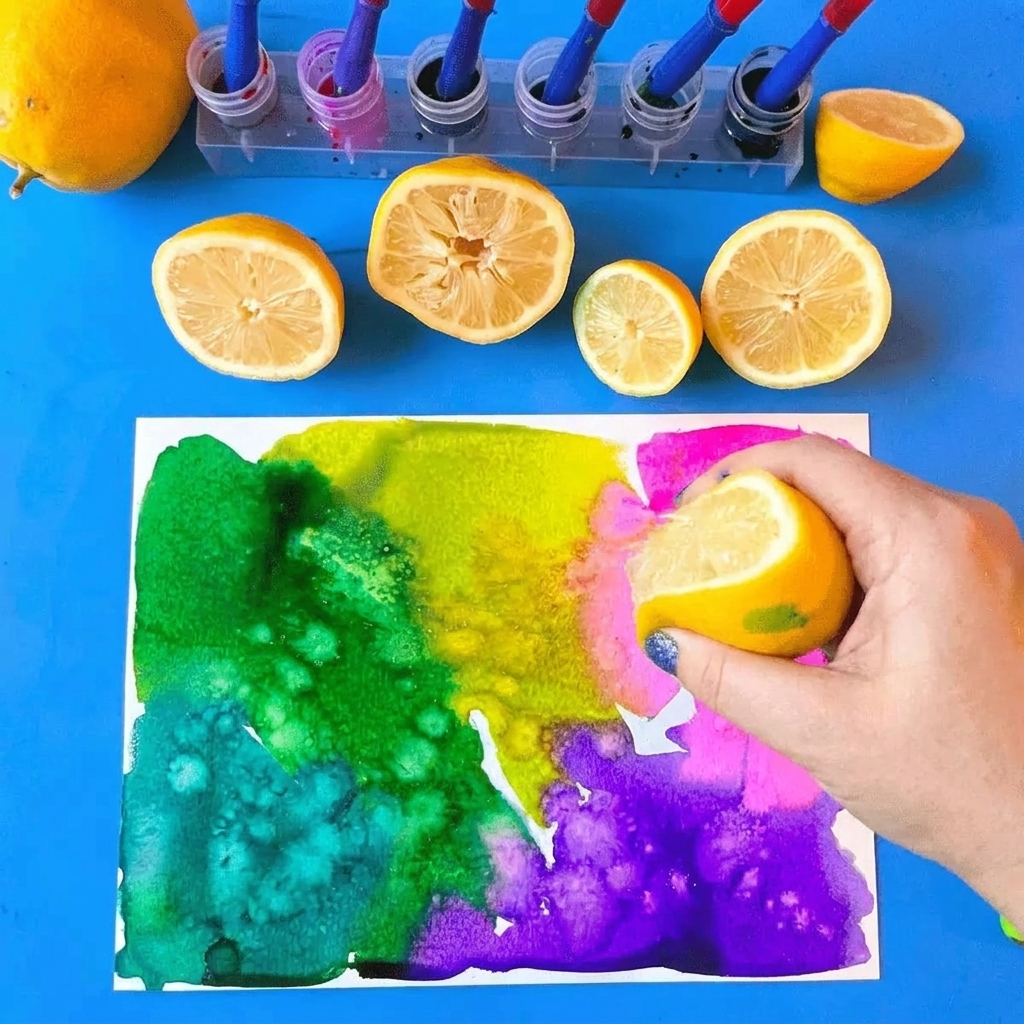
Lemon science and watercolors is a creative and engaging way to introduce children to STEM learning through simple, colorful, and hands-on experiments. By combining everyday materials like lemons, watercolors, and a glass container, children can explore fascinating scientific reactions, color mixing principles, and basic chemistry in a fun and memorable way.
This approach turns ordinary household items into powerful teaching tools. A lemon becomes a source of chemical reactions, watercolors become a medium for experimentation, and a glass serves as a transparent observation tool that allows children to clearly see scientific changes happening in real time.
In this article, we will explore seven great STEM ideas using lemon science and watercolors, explain the science behind them, and highlight why these activities are so effective for children’s learning.
Quick Summary Table
| Idea | STEM Focus | Materials | Difficulty | Learning Outcome |
| Lemon Volcano Art | Chemistry Reaction | Lemon, baking soda, watercolors, glass | Easy | Acid-base reaction |
| Lemon Color Magic | Color Mixing | Lemon juice, paint, glass | Easy | Pigment transformation |
| Invisible Lemon Ink | Chemistry & Writing | Lemon juice, paper, glass | Easy | Oxidation reaction |
| Lemon Bubble Science | Gas Formation | Lemon, soap, glass | Easy | Carbon dioxide production |
| Lemon Gradient Art | Art + Chemistry | Lemon extract, watercolors, glass | Medium | Color diffusion |
| Lemon Density Layers | Physics | Lemon juice, water, colors, glass | Medium | Liquid density |
| Lemon Reaction Painting | STEM Art Fusion | Lemon, paint, brush, glass | Medium | Chemical visualization |
Why Lemon Science and Watercolors Work So Well in STEM Education
Children learn best when multiple senses are engaged. Lemon science and watercolors combine smell, sight, touch, and movement to create a rich learning environment.
The lemon provides a natural acid that reacts with other materials, while watercolors help visualize scientific changes. A glass container is especially useful because it allows children to observe processes from all angles without interference.
This combination helps children:
- Understand chemistry through visible reactions
- Develop creativity through painting
- Improve observation skills
- Build curiosity about natural processes
- Learn cause-and-effect relationships
By turning science into art, learning becomes enjoyable rather than intimidating.
Idea 1: Lemon Volcano Art
This is one of the most exciting lemon-based STEM experiments.
How It Works
When lemon juice reacts with baking soda, it produces carbon dioxide gas. This creates bubbling and fizzing effects similar to a volcano eruption.
Materials
- Lemon
- Baking soda
- Watercolors
- Glass cup or jar
Process
Cut the lemon, place it in a glass, add baking soda, and drip watercolors into the mixture.
STEM Concept
Children learn about acid-base reactions and gas production.
Why Kids Love It
The colorful bubbling effect looks like a miniature volcanic explosion inside a glass.
Idea 2: Lemon Color Magic
This activity focuses on color transformation.
How It Works
Lemon juice reacts with pigments in watercolors, slightly altering shades and brightness.
Materials
- Lemon juice
- Watercolors
- Brush
- Clear glass
Process
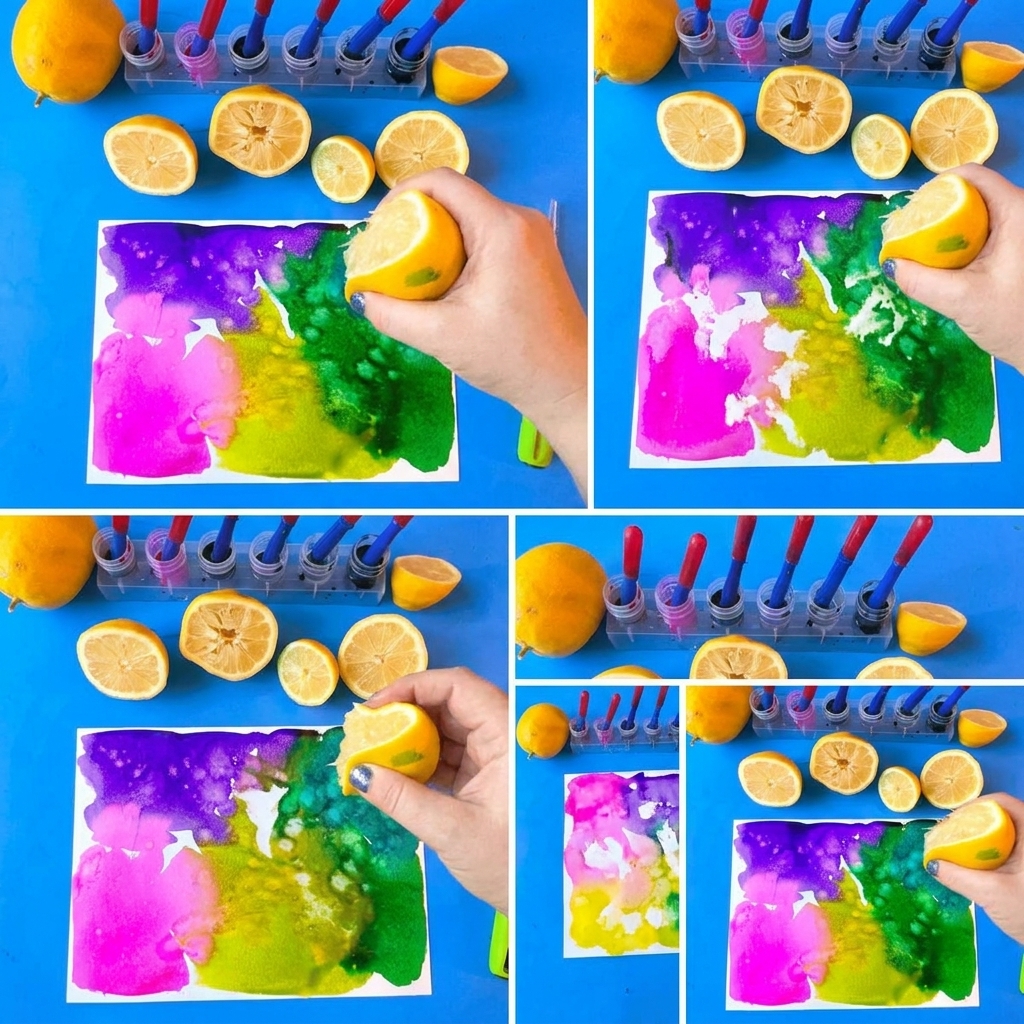
Paint watercolor strokes on paper or glass surfaces, then apply lemon juice to observe changes.
STEM Concept
Children explore chemical changes in pigments and pH sensitivity.
Why Kids Love It
Colors appear to shift and change unexpectedly, creating a magical effect.
Idea 3: Invisible Lemon Ink
A classic STEM experiment with a citrus twist.
How It Works
Lemon juice becomes invisible when dry but appears when heated or exposed to oxidation.
Materials
- Lemon juice
- Paper
- Cotton swab
- Glass container for mixing
Process
Write messages using lemon juice and reveal them with gentle heat.
STEM Concept
Children learn about oxidation and chemical visibility.
Why Kids Love It
The hidden message feels like secret spy writing.
Idea 4: Lemon Bubble Science
This experiment introduces gas formation in a fun way.
How It Works
Lemon juice reacts with soap and baking soda, producing bubbles.
Materials
- Lemon
- Dish soap
- Baking soda
- Glass container
Process
Mix ingredients and observe foamy bubble formation inside the glass.
STEM Concept
Children study carbon dioxide and gas expansion.
Why Kids Love It
The foamy reaction is exciting and visually dynamic.
Idea 5: Lemon Gradient Art
This experiment blends science and artistic expression.
How It Works
Watercolors and lemon juice spread and diffuse differently based on concentration.
Materials
- Lemon juice
- Watercolors
- Brush
- Glass panel or jar
Process
Layer colors and observe how they blend and separate.
STEM Concept
Children learn diffusion and fluid behavior.
Why Kids Love It
The slow blending of colors creates beautiful gradient effects.
Idea 6: Lemon Density Layers
This activity introduces physics concepts.
How It Works
Different liquids separate based on density when poured into a glass.
Materials
- Lemon juice
- Water
- Watercolors
- Sugar (optional)
- Glass container
Process
Layer liquids carefully and observe separation.
STEM Concept
Children learn about density and fluid stratification.
Why Kids Love It
The colorful layers look like a rainbow inside a glass.
Idea 7: Lemon Reaction Painting
This final idea combines art and chemistry in one activity.
How It Works
Chemical reactions between lemon juice and pigments create unpredictable patterns.
Materials
- Lemon
- Watercolors
- Brush
- Glass surface or jar
Process
Paint with watercolors and add lemon juice drops to trigger reactions.
STEM Concept
Children explore chemical interaction and artistic unpredictability.
Why Kids Love It
Every artwork looks unique and surprising.
The Role of Glass in Lemon STEM Experiments
The keyword “glass” is essential in these experiments because it enhances observation.
A glass container allows children to:
- See reactions from all angles
- Observe layering and movement
- Track color changes clearly
- Understand scientific processes visually
Unlike opaque materials, glass provides full transparency, making it ideal for STEM learning.
Educational Benefits of Lemon Science and Watercolors
These experiments offer a wide range of learning advantages.
Builds Scientific Thinking
Children learn to ask questions, make predictions, and test ideas.
Encourages Creativity
Art and science blend together, promoting imagination.
Improves Observation Skills
Kids carefully watch changes in color, texture, and reaction.
Strengthens Understanding of Chemistry
Basic chemical reactions become easy to understand.
Enhances Problem-Solving Skills
Children experiment with variations and observe outcomes.
Tips for Parents and Teachers
To make the most of lemon science and watercolors:
- Always use clear glass containers for visibility
- Encourage children to make predictions
- Allow free experimentation
- Ask open-ended questions
- Combine science with storytelling
These techniques improve engagement and learning outcomes.
Safety Guidelines
Although these experiments are safe, supervision is recommended:
- Do not ingest lemon mixtures
- Handle glass carefully
- Avoid contact with eyes
- Clean surfaces after experiments
Safety ensures a positive learning experience.
Conclusion
Lemon science and watercolors offer a powerful way to introduce children to STEM education through creativity, experimentation, and visual learning. By using simple materials like lemons, watercolors, and glass containers, children can explore chemistry, physics, and art in a fun and engaging way.
The seven ideas presented in this article show how everyday objects can become exciting learning tools. From volcano reactions to invisible ink and colorful layering, each experiment encourages curiosity and hands-on discovery.
Most importantly, these activities help children understand that science is not just something found in textbooks—it is something they can see, touch, and create every day.
