
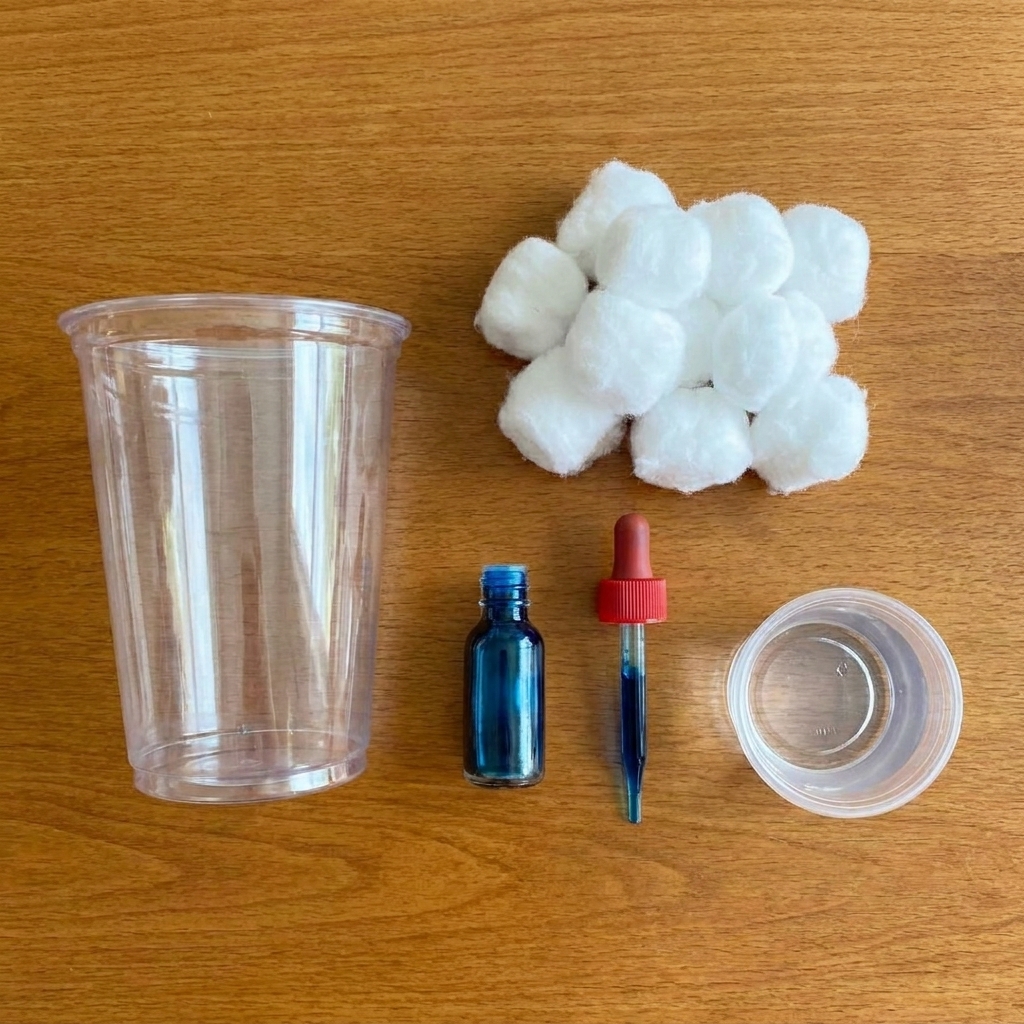
Hands-on learning is one of the most effective ways to introduce children to science, technology, engineering, and mathematics (STEM). Among the simplest and most engaging activities are experiments in a cup, which use everyday household materials to demonstrate fascinating scientific principles.
One of the most popular themes in this category is Rain in a Cup for Kids, a fun and visual way to teach children how rain forms in nature. Through these experiments, kids can observe cloud formation, water cycles, density, chemical reactions, and more—all inside a simple cup.
This article explores ten creative STEM experiments in a cup that are perfect for home or classroom learning.
Quick Summary Table
| Experiment Idea | STEM Focus | Difficulty | Time Needed |
| Rain Cloud in a Cup | Water Cycle | Easy | 10–15 min |
| Rainbow Layers | Density | Easy | 15 min |
| Fizzy Rain Reaction | Chemistry | Easy | 10 min |
| Mini Tornado Cup | Physics | Medium | 20 min |
| Color Mixing Cup | Chemistry | Easy | 10 min |
| Floating Ice Clouds | States of Matter | Easy | 15 min |
| Oil & Water Rain | Density & Separation | Easy | 10 min |
| Sponge Rain Simulation | Absorption | Easy | 10 min |
| DIY Weather Cup | Meteorology | Medium | 20 min |
| STEM Prediction Cup | Scientific Method | Medium | 15 min |
Why Cup Experiments Are Perfect for STEM Learning
Cup-based experiments are powerful teaching tools because they are:
- Simple and low-cost
- Safe for children
- Easy to set up and clean
- Visually engaging
- Suitable for all age groups
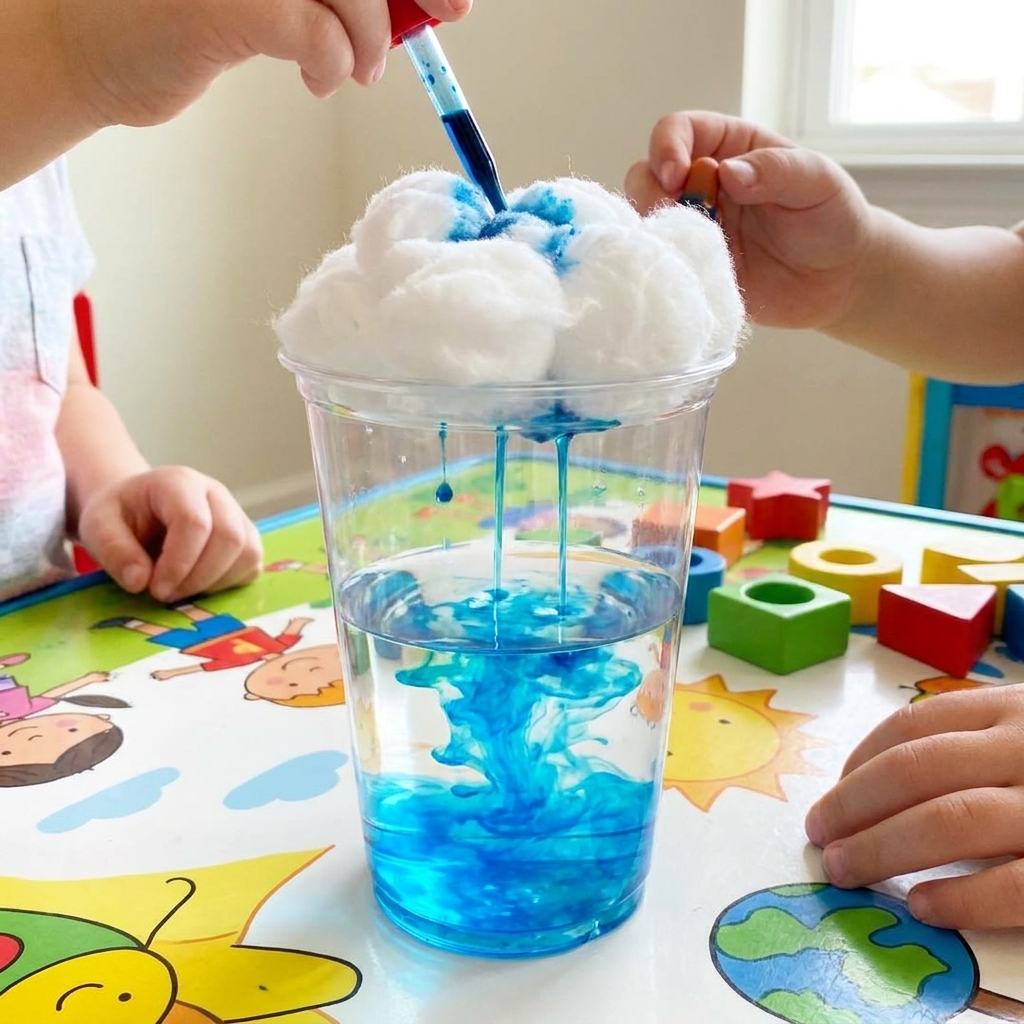
The concept of Rain in a Cup for Kids is especially effective because it simulates real weather processes in a controlled environment. Children can literally see how rain forms, drops, and cycles through different stages.
1. Rain Cloud in a Cup (Classic Rain Experiment)
This is the most famous “rain in a cup” activity.
How It Works
Warm water creates vapor inside the cup, and cold conditions above simulate clouds. When condensation forms, “rain” begins to fall.
Materials
- Clear cup or glass
- Warm water
- Shaving foam (cloud)
- Blue food coloring
Learning Concept
Water cycle: evaporation → condensation → precipitation
Why Kids Love It
They can actually see rain falling inside a cup.
2. Rainbow Layers Cup
How It Works
Different liquids with different densities form layers.
Materials
- Sugar water
- Plain water
- Food coloring
- Oil
- Clear cup
Learning Concept
Density and liquid separation
Fun Factor
A rainbow appears inside the cup.
3. Fizzy Rain Reaction Cup
How It Works
Baking soda reacts with vinegar to produce gas bubbles.
Materials
- Vinegar
- Baking soda
- Food coloring
- Cup
Learning Concept
Chemical reactions and gas formation
Why It’s Exciting
Kids see bubbling “rainstorms” forming instantly.
4. Mini Tornado Cup
How It Works
Swirling water creates a vortex like a tornado.
Materials
- Two cups
- Water
- Tape
Learning Concept
Centrifugal force and motion
STEM Insight
Demonstrates weather patterns and air movement.
5. Color Mixing Cup
How It Works
Primary colors combine to form secondary colors.
Materials
- Red, yellow, blue water
- Clear cup
Learning Concept
Color theory and chemical diffusion
Creative Aspect
Kids predict what colors will form.
6. Floating Ice Cloud Cup
How It Works
Ice floats and melts slowly, simulating clouds.
Materials
- Ice cubes
- Water
- Cup
Learning Concept
States of matter and temperature effects
Observation Skill
Children track melting changes.
7. Oil and Water Rain Cup
How It Works
Oil and water separate, creating droplet effects.
Materials
- Oil
- Water
- Food coloring
- Cup
Learning Concept
Density and immiscibility
Visual Effect
Color droplets look like falling rain.
8. Sponge Rain Simulation Cup
How It Works
A sponge releases water like rainfall.
Materials
- Sponge
- Water
- Cup
Learning Concept
Absorption and release systems
Real-Life Connection
Shows how clouds hold and release rain.
9. DIY Weather Cup
How It Works
Multiple weather effects are simulated in one cup.
Materials
- Water
- Ice
- Foam
- Food coloring
Learning Concept
Meteorology basics
STEM Value
Combines multiple weather processes.
10. STEM Prediction Cup Challenge
How It Works
Children predict outcomes before experiments.
Materials
- Any cup experiment materials
- Notebook
Learning Concept
Scientific method: hypothesis → test → result
Educational Value
Encourages critical thinking and reasoning.
The Science Behind Rain in a Cup for Kids
The concept of Rain in a Cup for Kids is based on the natural water cycle:
- Evaporation – water turns into vapor
- Condensation – vapor forms clouds
- Precipitation – water falls as rain
Cup experiments replicate these processes in a controlled environment, making invisible science visible and understandable.
Educational Benefits
Cup-based STEM experiments help children:
- Understand weather systems
- Develop observation skills
- Learn scientific vocabulary
- Improve critical thinking
- Explore cause and effect
They also build curiosity and confidence in science learning.
Safety Tips
- Use plastic cups for younger children
- Avoid ingesting materials
- Supervise chemical reactions
- Clean spills immediately
- Use safe food coloring
Conclusion
Educational cup experiments, especially those inspired by Rain in a Cup for Kids, are powerful tools for teaching STEM in a fun and accessible way. From rain simulations to color mixing and chemical reactions, each activity transforms simple materials into exciting learning experiences.
These experiments help children see that science is not just something in textbooks—it is happening all around them, even inside a simple cup.
By encouraging curiosity, creativity, and hands-on exploration, these ten ideas make STEM learning both meaningful and unforgettable.
