
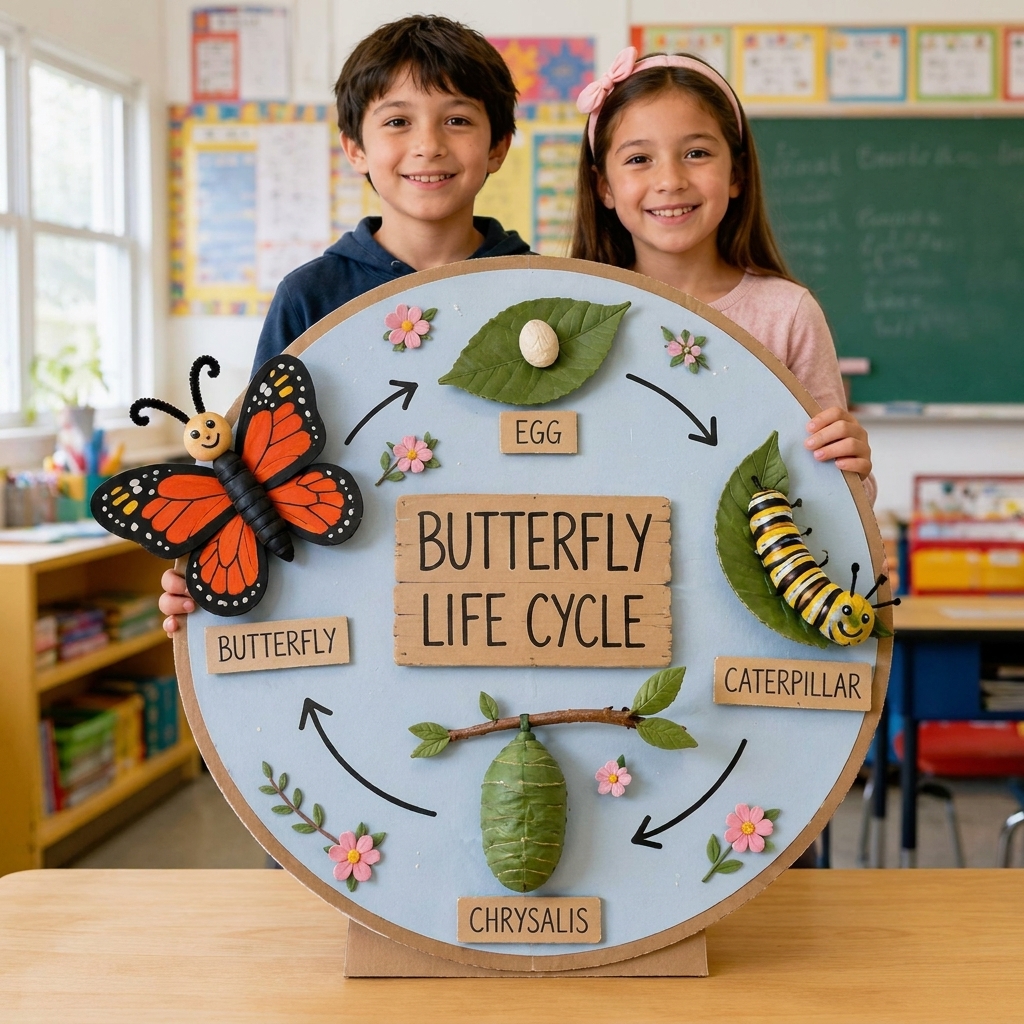
Observing the butterfly life cycle for children is one of the most fascinating and educational nature-based learning experiences available. It transforms science from something abstract in textbooks into something real, colorful, and alive. Instead of simply reading about metamorphosis, children get the chance to witness it step by step—from a tiny egg to a crawling caterpillar, then a chrysalis, and finally a beautiful butterfly.
This hands-on experience captures children’s imagination in a powerful way. Butterflies are already symbols of beauty and transformation, so watching their life cycle unfold naturally creates excitement, curiosity, and emotional connection. It is not just a science lesson; it is a living story happening right before their eyes.
In classrooms and homes around the world, observing the butterfly life cycle for children has become a popular STEM and nature activity. It combines biology, responsibility, patience, and environmental awareness in one simple but meaningful project.
This essay explores why kids love this experience, how it works, what they learn, and why it remains one of the most impactful early science activities.
Summary Table
| Topic | Details |
| Activity Name | Observing the Butterfly Life Cycle for Children |
| Science Area | Biology / Life Cycle / Metamorphosis |
| Difficulty Level | Easy to Medium |
| Age Group | 5–12 years |
| Duration | 2–4 weeks |
| Materials | Caterpillars, habitat container, food leaves |
| Main Concept | Metamorphosis stages |
| Learning Type | Hands-on STEM learning |
| Cost | Low to Medium |
| Engagement Level | Very High |
What Is Observing the Butterfly Life Cycle for Children?
Observing the butterfly life cycle for children involves raising caterpillars in a controlled environment and watching them transform into butterflies. This process includes four main stages:
- Egg
- Larva (caterpillar)
- Pupa (chrysalis)
- Adult butterfly
Instead of learning about these stages in theory, children see them happen in real time. This makes the learning experience more meaningful and memorable.
The process is often done in classrooms using butterfly kits or in home science projects with proper guidance.
Why Kids Love Observing the Butterfly Life Cycle for Children
There are many reasons children are deeply fascinated by this activity. Here are the five main reasons.
1. It Feels Like Watching a Real-Life Magic Transformation
One of the most exciting parts of observing the butterfly life cycle for children is the dramatic transformation that takes place.
Children watch a tiny caterpillar:
- Eat constantly
- Grow rapidly
- Form a chrysalis
- Transform completely
- Emerge as a butterfly
This process feels magical because it is so different from anything else they see in everyday life.
The idea that a crawling caterpillar can turn into a flying butterfly amazes children. It often leads to questions like:
- How does this transformation happen?
- Where do wings come from?
- Why does it change shape completely?
This sense of wonder keeps kids deeply engaged throughout the entire cycle.
2. It Builds Emotional Connection with Nature
Children naturally form emotional bonds with living things they care for.
When observing the butterfly life cycle for children, they often name their caterpillars and treat them like small pets. They feed them, check on them daily, and watch them grow.
This care creates:
- Empathy for living creatures
- Respect for nature
- Responsibility for life
When the butterfly finally emerges, children often feel proud and emotionally connected to the process.
This emotional learning is just as important as scientific knowledge.
3. It Teaches Patience in a Fast-Paced World
In today’s digital world, children are used to instant results. Videos, games, and apps provide immediate feedback.
However, observing the butterfly life cycle for children teaches something very different: patience.
The transformation takes weeks, not seconds. Children must wait through each stage.
They learn:
- Growth takes time
- Nature follows its own rhythm
- Results require patience and care
This slow process helps children develop emotional maturity and appreciation for gradual change.
4. It Makes Science Real and Memorable
Many science lessons remain abstract because children cannot see the processes happening.
But observing the butterfly life cycle for children makes science visible.
Kids directly observe:
- Feeding behavior of caterpillars
- Formation of chrysalis
- Structural changes inside the cocoon
- Emergence of butterfly wings
This hands-on experience helps children understand biological concepts deeply.
Instead of memorizing facts, they experience science in action.
This makes learning:
- Easier
- More memorable
- More meaningful
5. It Encourages Responsibility and Daily Care
Taking care of caterpillars requires daily attention.
Children must:
- Provide fresh leaves
- Clean the habitat
- Monitor temperature
- Watch for changes
- Ensure safety of the insects
This routine builds responsibility.
Kids learn that living creatures depend on care and consistency.
They also develop habits of:
- Observation
- Documentation
- Patience
- Accountability
These are valuable life skills beyond science education.
Materials Needed
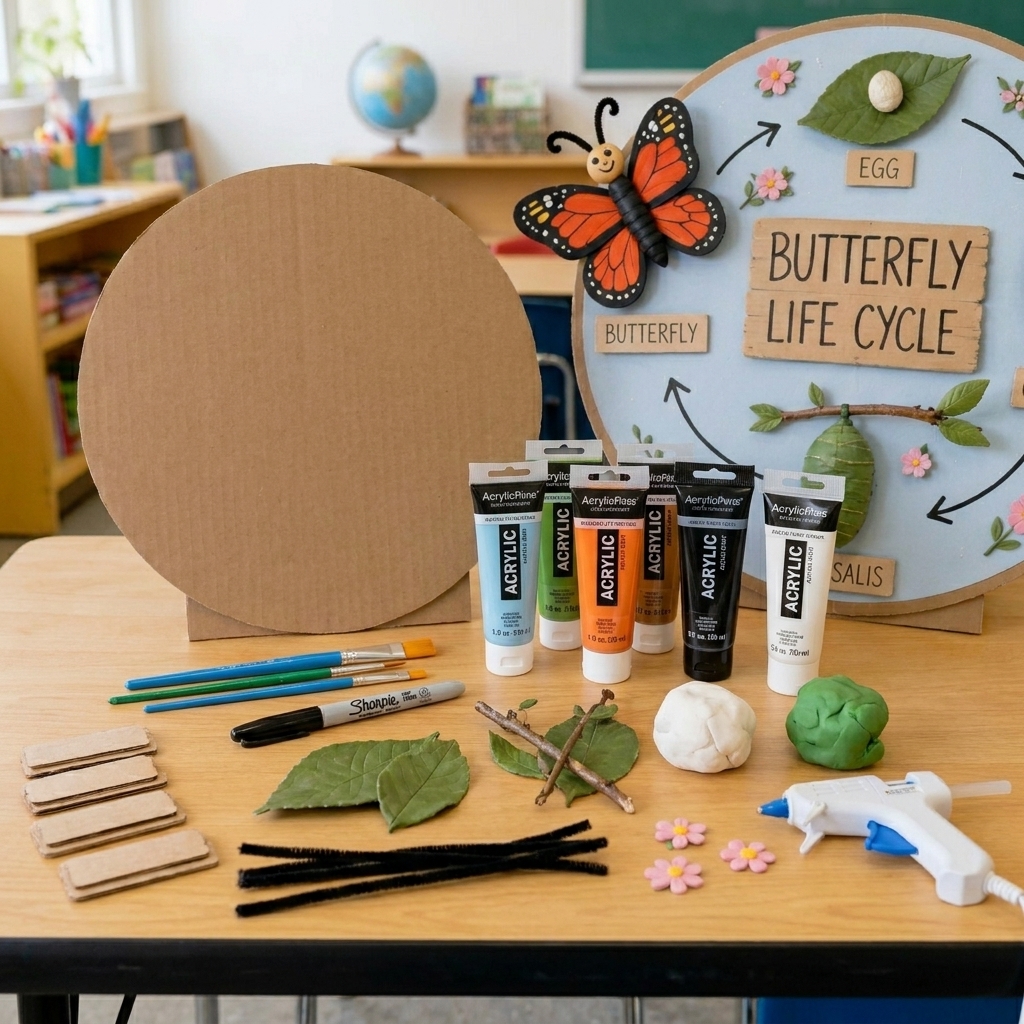
The materials for observing the butterfly life cycle for children are simple and often available in educational kits.
- Caterpillars (commonly painted lady or monarch species)
- Butterfly habitat container
- Fresh leaves for feeding
- Paper towels
- Water spray bottle
- Observation journal
Some classrooms also use magnifying glasses for closer observation.
The Four Stages of the Butterfly Life Cycle
Stage 1: Egg
The life cycle begins when a butterfly lays tiny eggs on leaves.
Children may observe:
- Small round eggs
- Attached to leaf surfaces
- Very delicate structures
Stage 2: Caterpillar (Larva)
The caterpillar stage is the most active phase.
Kids observe:
- Rapid eating
- Fast growth
- Skin shedding (molting)
This stage is exciting because the caterpillar grows visibly every day.
Stage 3: Chrysalis (Pupa)
The caterpillar forms a chrysalis, entering a resting stage.
Children notice:
- Stillness
- Hard outer shell formation
- No visible movement
Inside, major transformation occurs.
Stage 4: Adult Butterfly
Finally, the butterfly emerges.
Children witness:
- Wings unfolding
- First flight
- Color development
- Full transformation
This moment is often the most memorable.
Educational Benefits
Observing the butterfly life cycle for children supports many learning areas.
Biology
Understanding metamorphosis and insect development.
Ecology
Learning about ecosystems and food chains.
Observation Skills
Tracking changes over time.
Scientific Thinking
Making predictions and recording results.
Emotional Development
Building empathy and responsibility.
Classroom Activities
Teachers often expand the experience with:
- Life cycle diagrams
- Journaling activities
- Drawing stages
- Measuring growth
- Group discussions
These activities reinforce learning and engagement.
Common Questions Children Ask
Why do caterpillars change into butterflies?
It is part of their natural life cycle called metamorphosis.
Do all insects go through this process?
No, only certain insects like butterflies and beetles do.
Why do butterflies need wings?
To travel, find food, and reproduce.
These questions help deepen understanding.
Challenges and Solutions
Challenge: Caterpillar not growing
Solution: Check food freshness and environment.
Challenge: Chrysalis not forming properly
Solution: Maintain stable habitat conditions.
Challenge: Butterfly not emerging
Solution: Allow natural timing without disturbance.
Why This Activity Is So Powerful
Observing the butterfly life cycle for children is powerful because it combines:
- Science education
- Emotional learning
- Real-world observation
- Responsibility
- Wonder and curiosity
It is not just a lesson—it is an experience.
Conclusion
Observing the butterfly life cycle for children is one of the most meaningful educational experiences available for young learners. It transforms abstract science into a living story that children can see, touch, and emotionally connect with.
Kids love this activity because it feels magical, builds responsibility, teaches patience, strengthens scientific understanding, and creates unforgettable memories.
Whether used in classrooms or at home, this experience leaves a lasting impression and helps children develop a deeper appreciation for nature and life itself.
It is a perfect blend of education, emotion, and discovery—making it one of the most loved science activities for children everywhere.
