
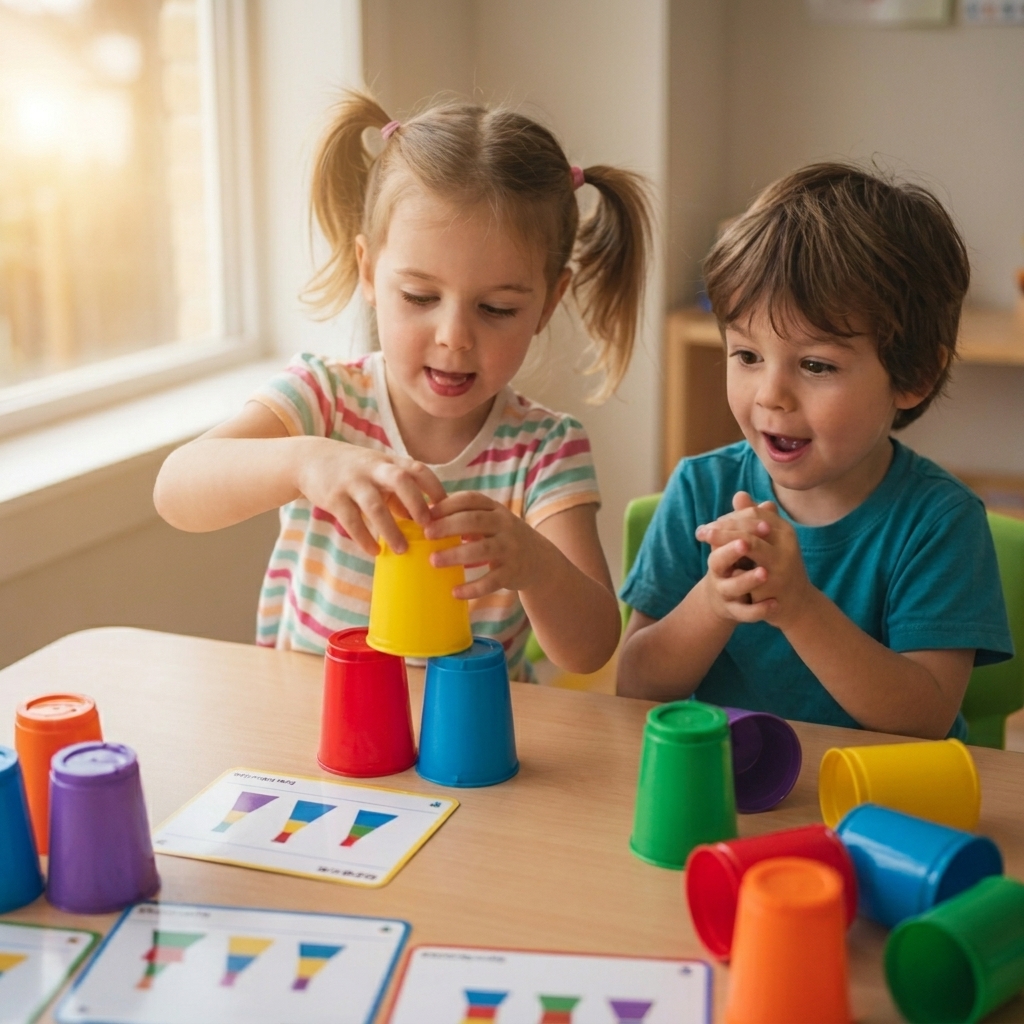
Concentration is one of the most important skills children need for successful learning and healthy development. It allows children to pay attention, complete tasks, follow instructions, solve problems, and remember new information. Whether a child is reading a book, solving a math problem, building with blocks, or playing a sport, concentration helps them stay focused and achieve their goals.
However, maintaining attention can be difficult for children. Loud environments, electronic devices, lack of sleep, stress, or activities that do not match a child’s interests can easily distract them. Fortunately, concentration is not a fixed ability—it can be strengthened through regular practice and engaging activities.
Parents and teachers play a key role in helping children develop strong attention skills. By providing enjoyable games, creative challenges, physical movement, and a positive learning environment, adults can encourage children to stay focused while having fun. This essay explores the importance of concentration, factors that affect it, and a variety of activities that help children improve their focus, memory, and self-control.
Why Concentration Is Important
Concentration is the ability to focus attention on one task while ignoring distractions. It supports many areas of learning and personal growth.
Children with good concentration are more likely to:
- Complete school assignments successfully.
- Understand new concepts more easily.
- Follow instructions carefully.
- Solve problems with confidence.
- Remember important information.
- Develop patience and self-discipline.
- Build strong communication skills.
- Enjoy learning new subjects.
Strong concentration also helps children perform better in sports, music, art, and everyday activities.
Factors That Affect Concentration
Many different factors influence a child’s ability to focus.
Sleep
Children who get enough sleep usually pay better attention during the day. Tired children often become distracted and have difficulty remembering information.
Healthy Nutrition
Balanced meals containing fruits, vegetables, whole grains, proteins, and healthy fats provide the energy the brain needs to stay alert.
Physical Activity
Regular exercise improves blood circulation and supports healthy brain function, making it easier for children to concentrate.
Learning Environment
A quiet, organized, and comfortable space with few distractions helps children stay focused on their tasks.
Emotional Well-Being
Children who feel safe, happy, and supported are generally better able to concentrate than those who feel anxious or stressed.
Memory Matching Games
Memory card games are excellent for improving concentration.
Children place cards face down and take turns turning over two cards at a time, trying to find matching pairs.
This activity helps children:
- Improve visual memory.
- Increase attention to detail.
- Practice patience.
- Develop observation skills.
As children become more experienced, more cards can be added to increase the challenge.
Puzzle Activities
Puzzles encourage children to stay focused for extended periods while solving a problem.
Examples include:
- Jigsaw puzzles
- Maze puzzles
- Logic puzzles
- Picture matching puzzles
- Shape puzzles
These activities develop persistence, reasoning, and spatial awareness.
Building with Blocks
Building towers, bridges, houses, and other structures using construction blocks requires careful planning and concentration.
Children must think about:
- Balance
- Size
- Shape
- Stability
- Design
Building activities also improve creativity and fine motor skills.
Reading Together
Reading is one of the best ways to improve concentration.
Parents and teachers can:
- Read short stories aloud.
- Ask questions during the story.
- Encourage children to predict what happens next.
- Discuss characters and events afterward.
These activities strengthen listening skills, vocabulary, memory, and comprehension.
Coloring and Drawing
Art activities encourage children to focus on details.
Children concentrate while:
- Staying inside the lines.
- Choosing colors.
- Creating patterns.
- Drawing objects carefully.
Coloring books, painting, and free drawing help children remain calm while improving attention.
Sorting and Classification Games
Children enjoy organizing objects into groups.
They can sort items by:
- Color
- Shape
- Size
- Number
- Texture
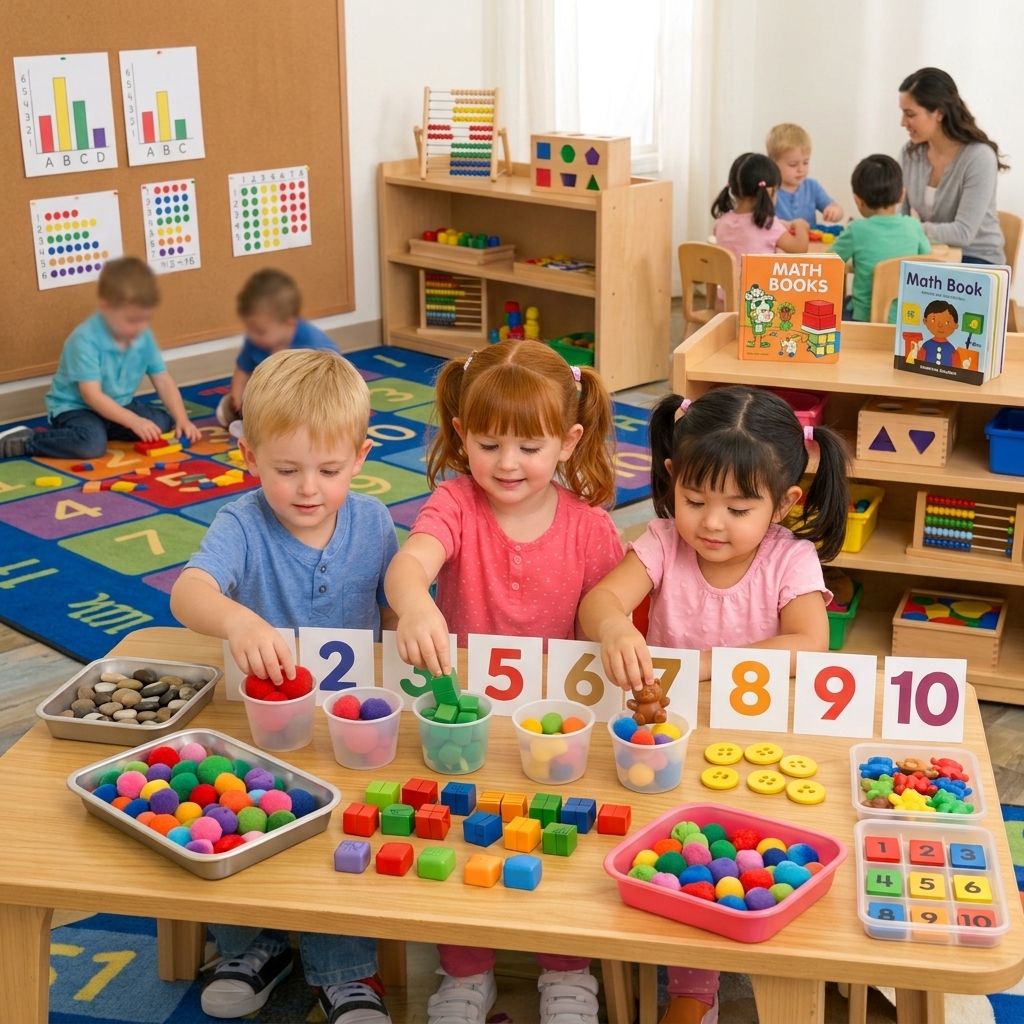
Buttons, blocks, toy animals, bottle caps, or leaves can all be used for sorting games.
These activities improve observation and logical thinking.
Spot the Difference
Children compare two similar pictures and identify small differences between them.
This enjoyable activity strengthens:
- Visual attention
- Observation
- Patience
- Concentration
It also encourages children to slow down and examine details carefully.
Following Instructions
Games that require children to listen carefully and follow directions improve both concentration and listening skills.
Examples include:
- Simon Says
- Treasure hunts
- Cooking simple recipes
- Craft projects
- Building models from instructions
These activities teach children to pay close attention before acting.
Memory Tray Game
Place several everyday objects on a tray.
Allow children one minute to study them.
Cover the tray and ask children to remember as many objects as possible.
To make the game more challenging, remove one object and ask which item is missing.
This activity develops visual memory and sustained attention.
Word and Letter Games
Language games are excellent concentration exercises.
Examples include:
- Word searches
- Crossword puzzles
- Alphabet games
- Rhyming activities
- Unscrambling letters
- Story completion
These games improve vocabulary while strengthening thinking skills.
Number Game
Mathematics also improves concentration.
Children may enjoy:
- Sudoku for beginners
- Counting games
- Number matching
- Mental math challenges
- Pattern recognition
- Dice games
These activities encourage careful thinking and logical reasoning.
Mindfulness Activities
Simple mindfulness exercises help children learn to control their attention.
Examples include:
Quiet Breathing
Children sit comfortably and slowly breathe in and out while counting each breath.
Listening Game
Children close their eyes and identify sounds around them, such as birds, wind, or footsteps.
Body Awareness
Children notice how different parts of their body feel while remaining still.
Mindfulness activities help children relax and improve self-control.
Nature Walks
Outdoor learning encourages careful observation.
Children can search for:
- Different leaves
- Birds
- Flowers
- Insects
- Rocks
- Clouds
Teachers may ask children to remember everything they observed during the walk.
Nature activities strengthen concentration while encouraging appreciation for the environment.
Obstacle Courses
Obstacle courses require children to:
- Follow directions.
- Remember the sequence.
- Balance carefully.
- Plan movements.
Combining physical activity with thinking improves both body and mind.
Music Activities
Music develops attention in many enjoyable ways.
Children can:
- Repeat rhythms.
- Sing songs from memory.
- Clap patterns.
- Play simple musical instruments.
- Dance while following instructions.
These activities improve listening and timing.
Board Games
Many traditional board games strengthen concentration.
Examples include games that require players to:
- Take turns
- Plan ahead
- Remember rules
- Solve problems
- Make decisions
Board games also teach patience and teamwork.
Creative Storytelling
Storytelling encourages children to organize ideas while staying focused.
Activities include:
- Finishing unfinished stories
- Creating stories from pictures
- Acting out characters
- Story circles where each child adds one sentence
Creative storytelling develops imagination alongside concentration.
Science Experiments
Simple science experiments naturally capture children’s attention.
Examples include:
- Growing plants
- Mixing colors
- Floating and sinking objects
- Building paper airplanes
- Making simple volcano models
Children carefully observe changes and record results, strengthening scientific thinking.
Limiting Distractions
Adults can improve concentration by reducing distractions.
Helpful strategies include:
- Turning off televisions during homework.
- Limiting unnecessary screen time.
- Organizing learning materials.
- Keeping workspaces clean.
- Providing regular breaks during long tasks.
A calm environment supports focused learning.
Encouraging Short Breaks
Young children often concentrate better when activities are divided into shorter sessions.
For example:
- Twenty minutes of learning
- Five minutes of movement
- Return to learning refreshed
Short breaks help maintain motivation without causing fatigue.
Positive Encouragement
Children develop stronger concentration when adults recognize their efforts.
Parents and teachers should:
- Praise persistence.
- Celebrate improvement.
- Encourage problem-solving.
- Avoid unnecessary criticism.
- Support children when tasks become difficult.
Positive feedback increases confidence and motivation.
Family Activities
Families can improve concentration together through simple games such as:
- Card matching
- Puzzle competitions
- Reading together
- Cooking recipes
- Gardening
- Treasure hunts
- Building projects
- Board game evenings
These shared experiences strengthen family relationships while supporting learning.
Common Mistakes to Avoid
Adults should avoid:
- Expecting children to concentrate for too long.
- Giving too many instructions at once.
- Comparing children with others.
- Using only electronic entertainment.
- Criticizing mistakes excessively.
- Ignoring the need for rest and play.
Every child develops concentration at a different pace.
Long-Term Benefits
Children who regularly practice concentration-building activities often experience many long-term advantages.
These include:
- Better academic performance
- Improved memory
- Greater independence
- Increased confidence
- Stronger problem-solving abilities
- Better emotional control
- Improved communication skills
- Greater creativity
- Stronger decision-making abilities
- Lifelong learning habits
These benefits continue to support success throughout school and adulthood.
Conclusion
Concentration is a skill that grows stronger with practice, patience, and encouragement. By providing enjoyable activities such as memory games, puzzles, reading, storytelling, building projects, science experiments, music, mindfulness exercises, and outdoor exploration, parents and teachers can help children strengthen their attention while making learning exciting and rewarding.
Creating a healthy environment that includes proper sleep, balanced nutrition, regular physical activity, and positive encouragement also plays an important role in developing focus. Rather than expecting perfect attention at all times, adults should recognize that concentration improves gradually through consistent practice and meaningful experiences.
When children develop strong concentration skills, they become more confident learners, better problem-solvers, and more independent thinkers. These abilities not only improve academic success but also prepare children for the challenges and opportunities they will encounter throughout life. By making concentration-building activities a regular part of everyday routines, families and schools can help children build strong minds, healthy habits, and a lifelong love of learning.
