
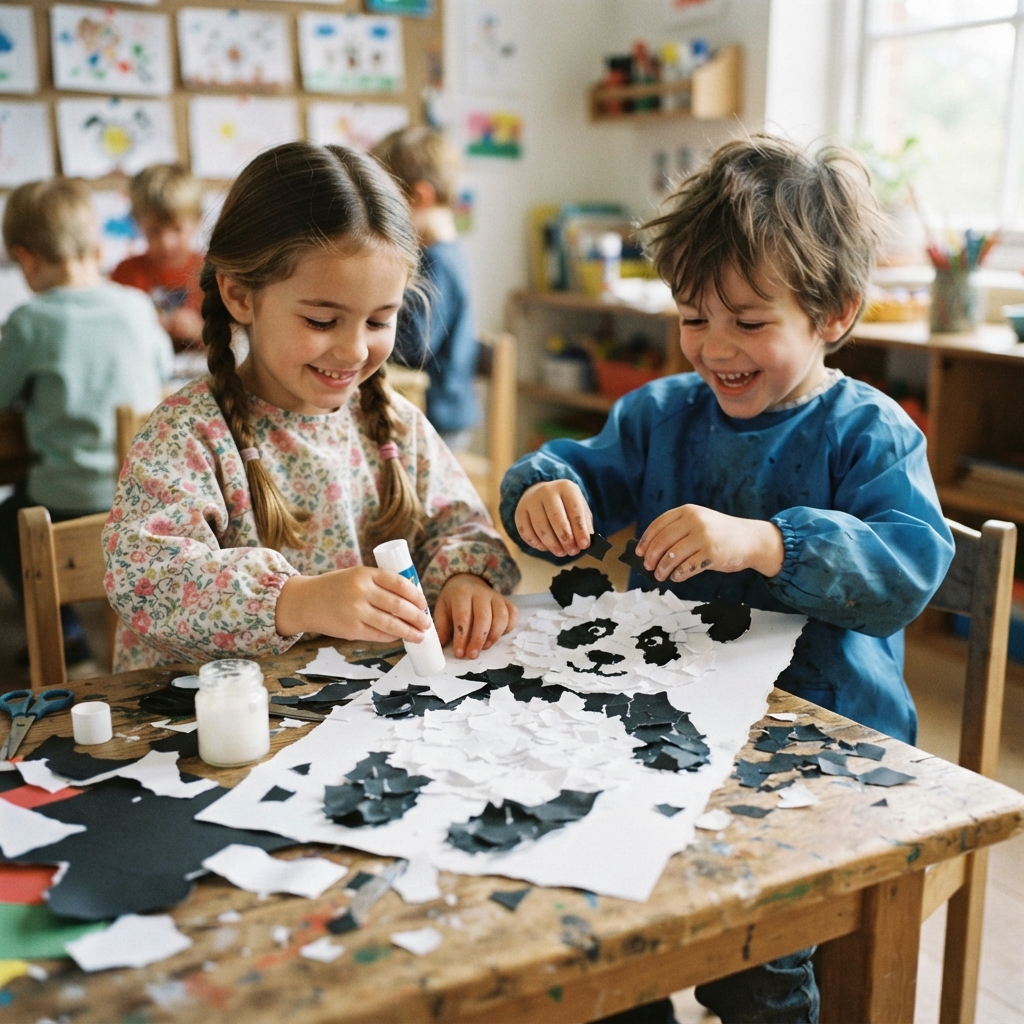
Pandas are among the most loved animals in the world. With their fluffy black-and-white fur, gentle appearance, and playful behavior, they capture the hearts of children everywhere. Creating a panda out of torn paper is a fun and educational craft that allows children to explore their creativity while learning about one of nature’s most fascinating animals. This easy activity is perfect for preschoolers, kindergarten students, and elementary school children because it requires only simple materials and encourages imagination.
Why Make Torn Paper Art?
Torn paper art is an excellent activity for young children because it does not require perfect cutting skills. Instead of using scissors, children tear paper into small pieces with their fingers and glue them onto a drawing. This process strengthens the small muscles in their hands, improves hand-eye coordination, and develops fine motor skills that are important for writing and drawing.
Each torn piece has its own unique shape, giving every panda a soft, textured appearance. Children also learn patience as they carefully cover the entire picture one piece at a time. Most importantly, they discover that creativity is about having fun rather than making everything perfect.
Materials Needed
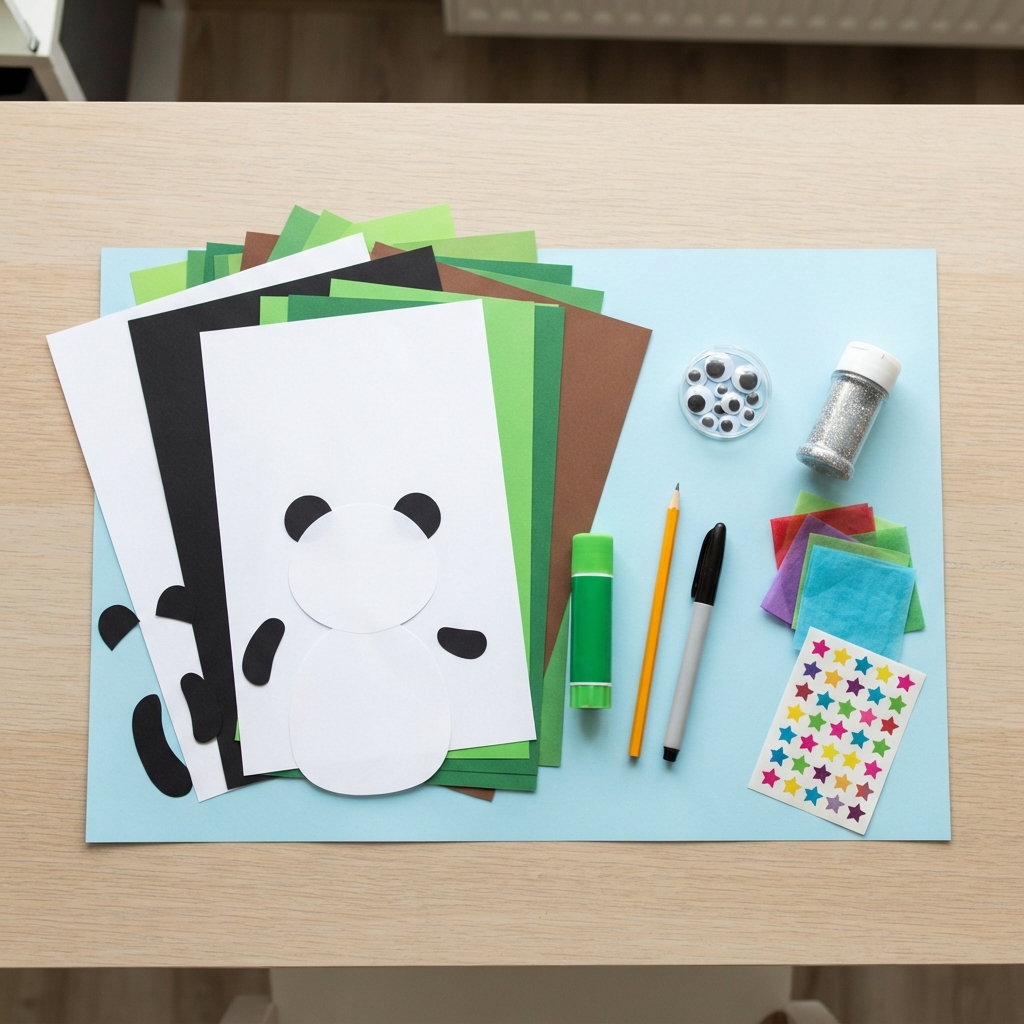
Gather these simple supplies before starting:
- White construction paper for the panda’s body
- Black construction paper for the ears, arms, legs, and eye patches
- Green construction paper for bamboo leaves
- Brown construction paper for bamboo stems
- Blue or light-colored paper for the background
- Glue stick or school glue
- Pencil
- Black marker
- Optional decorations such as googly eyes, glitter, tissue paper, or stickers
These inexpensive materials are commonly found in homes, schools, and art classrooms.
Learning About Pandas
Before beginning the craft, children can spend a few minutes learning about pandas.
They may discover that pandas have:
- Round faces
- Black ears
- Black patches around their eyes
- Thick black-and-white fur
- Strong legs
- Large paws
- A love for eating bamboo
Children also learn that giant pandas live mainly in the mountain forests of China and spend many hours every day eating bamboo.
Step 1: Create the Background
Choose a sheet of blue or light-colored construction paper as the background.
Children can decorate the scene by adding:
- Green grass
- Bamboo plants
- Hills
- Clouds
- A bright sun
- Flowers
- Butterflies
These decorations create a peaceful forest where the panda can live.
Step 2: Draw the Panda
Lightly draw the outline of a panda using a pencil.
The drawing should include:
- A round head
- Two ears
- A large body
- Four legs
- Two arms
Adults may prepare the outline for younger children.
Step 3: Tear the White Paper
Now the fun begins.
Children tear white construction paper into many small pieces.
These pieces are glued onto the panda’s face, belly, and other white areas until the body is completely covered.
The torn edges create a fluffy texture that looks like soft fur.
Step 4: Add the Black Fur
Next, children tear black construction paper into small pieces.
These pieces are glued onto:
- The ears
- The eye patches
- The arms
- The legs
- The shoulders
The contrast between the black and white paper makes the panda instantly recognizable.
Step 5: Make the Face
Give the panda a friendly expression.
Children can add:
- Two eyes
- A small black nose
- A smiling mouth
- Rosy cheeks if they wish
Googly eyes can also make the panda look extra playful.
Add Bamboo
Since bamboo is a panda’s favorite food, children can create bamboo stalks using brown paper for the stems and green paper for the leaves.
The panda may be holding bamboo or sitting beside a bamboo forest.
This makes the artwork even more realistic.
Decorate the Forest
The forest can become even more exciting by adding other animals and plants.
Children may include:
- Birds
- Butterflies
- Rabbits
- Trees
- Mushrooms
- Rocks
- Colorful flowers
These decorations create a beautiful natural habitat.
Skills Children Develop
Making a torn paper panda helps children practice many valuable skills, including:
- Fine motor skills
- Finger strength
- Hand-eye coordination
- Creativity
- Concentration
- Patience
- Color recognition
- Spatial awareness
- Independent thinking
Each step encourages careful observation and artistic expression.
Interesting Panda Facts
Adults can make the activity even more educational by sharing fun facts.
Children may learn that:
- Giant pandas spend up to 14 hours a day eating bamboo.
- Adult pandas can weigh more than 200 pounds (90 kilograms).
- Baby pandas are very tiny when they are born.
- Pandas are excellent climbers.
- Conservation programs have helped increase panda populations in recent years.
These facts help children understand why protecting wildlife is so important.
Creative Variations
Children can personalize their projects by creating:
- A baby panda
- A panda family
- A panda eating bamboo
- A panda playing in the forest
- A winter panda surrounded by snow
- A colorful fantasy panda
Every artwork becomes unique because each child uses different colors, decorations, and ideas.
Perfect for Home or School
This craft fits perfectly into lessons about:
- Forest animals
- Wildlife conservation
- Asian animals
- Nature
- Art
- Recycling
- Fine motor development
Teachers can also organize a classroom mural where each child contributes one panda to a large forest scene.
Encouraging Recycling
Instead of using only new paper, children can recycle old magazines, wrapping paper, colorful packaging, or leftover craft paper.
This teaches them that beautiful artwork can be created while helping protect the environment by reducing waste.
Tips for Parents and Teachers
To make the activity enjoyable:
- Let children tear the paper themselves.
- Encourage imagination rather than perfection.
- Allow children to choose their own decorations.
- Praise creativity and effort.
- Read a story about pandas before beginning the craft.
- Display the finished artwork where children can proudly share it with others.
Conclusion
Making a panda out of torn paper is a simple, enjoyable, and educational craft that children will love. It combines creativity, learning, and hands-on fun while strengthening fine motor skills and encouraging artistic expression. Using only a few inexpensive materials, children can create an adorable panda surrounded by a peaceful bamboo forest. Whether the activity takes place at home, in preschool, or in elementary school, it offers an exciting opportunity to learn about one of the world’s most beloved animals while discovering that even tiny pieces of torn paper can become a beautiful work of art.
