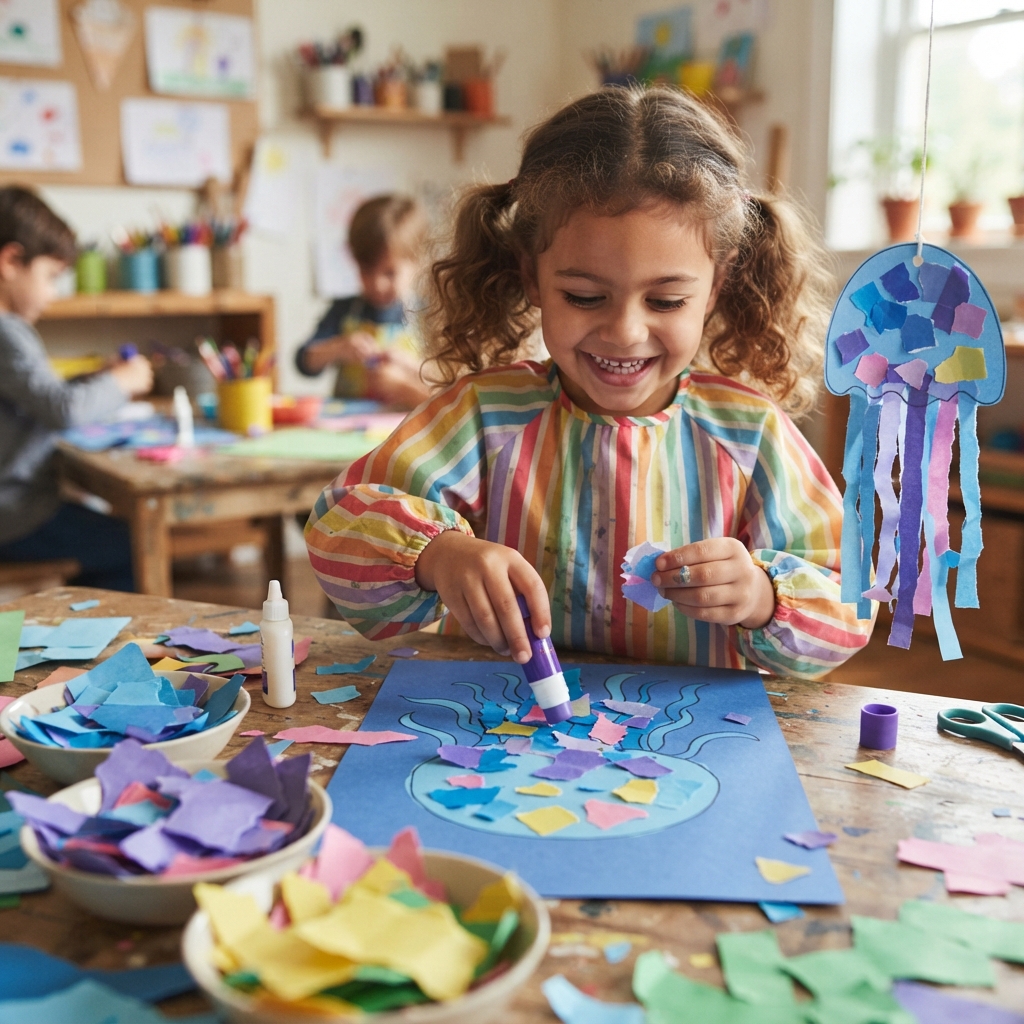
Arts and crafts give children a wonderful opportunity to explore their imagination while developing important learning skills. One colorful and exciting craft is making a jellyfish out of torn paper. This simple ocean-themed project allows children to transform small pieces of colorful paper into a beautiful sea creature while practicing creativity, patience, and fine motor skills. Using torn paper instead of scissors creates a unique texture that makes every jellyfish look different and special.
This activity is ideal for preschoolers, kindergarten children, and elementary school students. It requires only a few inexpensive materials and can be enjoyed at home, in school, or during summer camp. Along the way, children also learn fascinating facts about marine life and discover the beauty of the underwater world.
Why Torn Paper Art Is a Great Activity
Torn paper art is a wonderful craft because it is simple, safe, and enjoyable for children of different ages. Instead of cutting paper with scissors, children tear paper into small pieces using their fingers. This movement strengthens the small muscles in their hands, helping prepare them for writing, drawing, and other everyday tasks.
The activity also encourages concentration and patience. Children carefully place each torn piece onto their picture until the entire jellyfish is complete. Since no two torn pieces are exactly alike, every finished craft becomes a unique work of art.
Most importantly, children learn that creativity does not require perfection. Every design is beautiful because it reflects the child’s own imagination.
Materials Needed
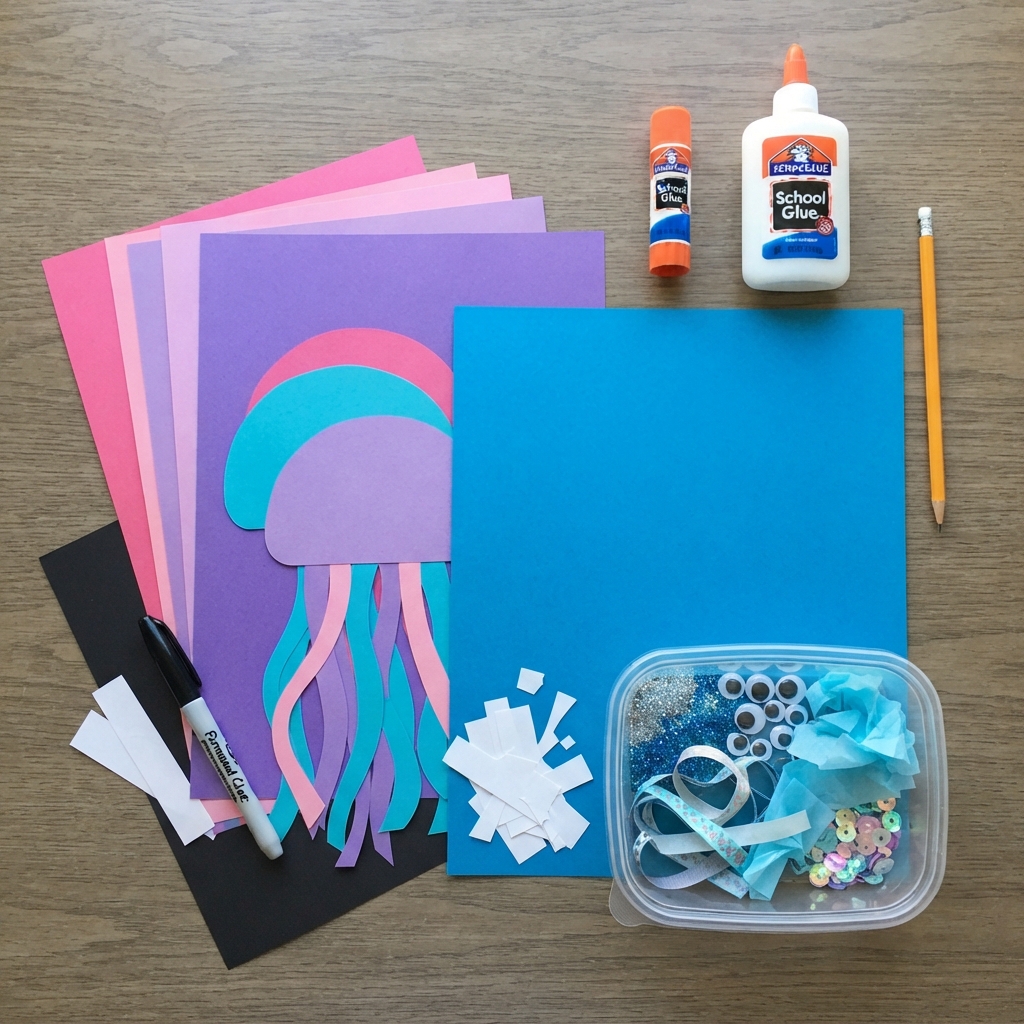
This project uses only a few simple craft supplies:
- Blue construction paper for the ocean background
- Pink, purple, blue, or turquoise paper for the jellyfish
- White paper for highlights and bubbles
- Black paper or a black marker for the eyes
- Glue stick or school glue
- Pencil
- Optional decorations such as glitter, googly eyes, ribbon, tissue paper, or sequins
These inexpensive materials are easy to find in classrooms or at home.
Learning About Jellyfish
Before beginning the craft, children can look at pictures or read a short book about jellyfish. This helps them become familiar with these fascinating sea animals.
Children can observe that jellyfish have:
- A round or umbrella-shaped body
- Long flowing tentacles
- Soft movements in the water
- Many beautiful colors
- Transparent or glowing appearances
They also learn that jellyfish have lived in Earth’s oceans for millions of years and are among the oldest animals on the planet.
Step 1: Create the Ocean Background
Begin with a sheet of blue construction paper.
Children may tear different shades of blue paper into small pieces and glue them across the page to create moving water. Mixing light and dark blue colors gives the ocean extra depth and beauty.
Next, children can decorate the background with:
- White bubbles
- Seaweed
- Coral reefs
- Seashells
- Sand
- Small fish
- Starfish
These decorations make the underwater scene lively and colorful.
Step 2: Draw the Jellyfish
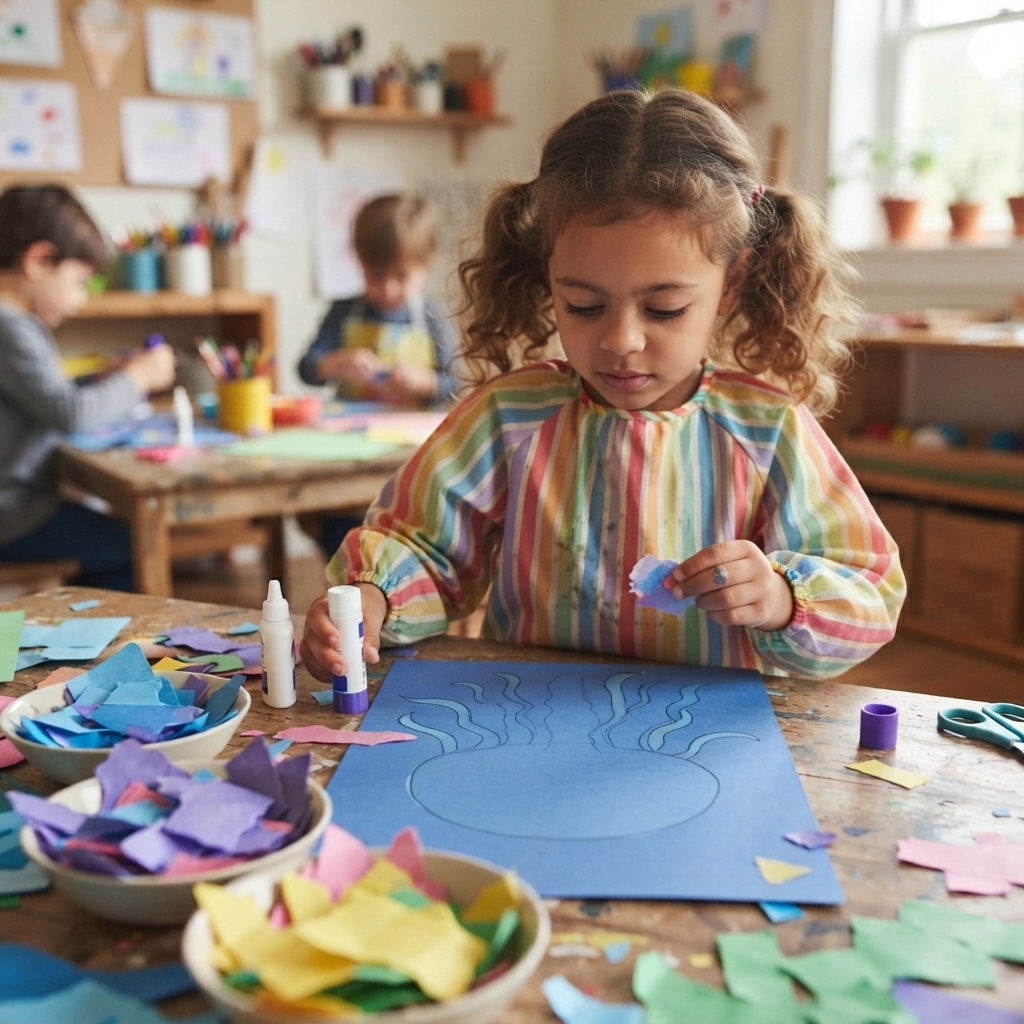
Lightly draw the outline of a jellyfish near the center of the page.
The body should look like a half-circle or umbrella with long tentacles hanging below.
Adults may prepare the outline for younger children if necessary.
Step 3: Tear the Colored Paper
Now the creative fun begins.
Children tear pink, purple, turquoise, or light blue paper into many small pieces.
Each piece is glued carefully inside the jellyfish body until the outline is completely filled.
Mixing several colors creates beautiful patterns that make the jellyfish appear bright and magical.
Small white paper pieces can be added to create shiny highlights.
Step 4: Make the Tentacles
The jellyfish’s tentacles can be made by tearing long, thin strips of paper.
Children glue the strips underneath the body, allowing them to hang freely.
The tentacles may have different lengths and colors, making the jellyfish look as if it is floating through the ocean.
Some children may enjoy curling the strips slightly to create gentle waves.
Step 5: Add a Friendly Face
Although real jellyfish do not have smiling faces, children often enjoy giving their craft a friendly personality.
Add:
- Two large eyes
- A smiling mouth
- Rosy cheeks if desired
This turns the jellyfish into a cheerful underwater friend.
Decorating the Underwater World
The jellyfish does not have to swim alone.
Children can add many ocean animals, including:
- Dolphins
- Sea turtles
- Sharks
- Octopuses
- Seahorses
- Whales
- Crabs
- Tropical fish
Together, these sea creatures create an exciting underwater adventure.
Skills Children Develop
This activity helps children strengthen many important developmental skills, including:
- Fine motor skills
- Finger strength
- Hand-eye coordination
- Creativity
- Concentration
- Patience
- Color recognition
- Spatial awareness
- Problem-solving
Working slowly with torn paper also teaches children persistence and careful observation.
Fun Jellyfish Facts
Adults can make the activity even more educational by sharing interesting facts.
Children may learn that:
- Jellyfish live in every ocean around the world.
- Some jellyfish glow in the dark because of natural chemicals in their bodies.
- They move by gently pulsing their umbrella-shaped bodies.
- Many jellyfish are almost transparent.
- Sea turtles enjoy eating certain kinds of jellyfish.
These facts help children appreciate the diversity of ocean life.
Creative Variations
This craft can easily be customized in many exciting ways.
Children can create:
- A rainbow jellyfish
- A family of jellyfish
- A giant jellyfish
- A glowing jellyfish with glitter
- A smiling cartoon jellyfish
- A complete ocean mural filled with sea animals
Each child can express their own ideas and imagination.
Perfect for Home or School
Teachers and parents can use this activity alongside lessons about:
- Ocean animals
- Marine habitats
- Summer themes
- Art and creativity
- Colors
- Environmental awareness
- Recycling
Children can also work together to build one large underwater display for the classroom.
Encouraging Recycling
Instead of using only new paper, children can reuse old magazines, wrapping paper, construction paper scraps, or colorful packaging.
This introduces the idea of recycling while showing that beautiful artwork can be created from materials that might otherwise be thrown away.
Tips for Adults
To make the project enjoyable:
- Let children tear the paper themselves.
- Encourage imagination instead of perfection.
- Allow children to experiment with different colors.
- Praise effort and creativity.
- Read a story about ocean animals before or after the activity.
- Display the finished jellyfish where children can proudly admire their work.
Conclusion
Making a jellyfish out of torn paper is a fun, creative, and educational craft for children. It combines art, science, and imagination while helping young learners strengthen their fine motor skills and confidence. Using only a few simple materials, children can create a colorful underwater masterpiece filled with fascinating sea life. Whether completed at home, in preschool, or in elementary school, this enjoyable activity encourages creativity, supports learning, and reminds children that even tiny pieces of torn paper can come together to create something truly amazing.
