
A cardboard farm is a wonderful craft project that lets children build their own countryside filled with friendly farm animals, colorful barns, green fields, and fun farming activities. Using recycled cardboard, paper, paint, and other simple craft supplies, kids can create an imaginative miniature farm while learning about nature, agriculture, and animal care. This hands-on activity combines creativity, recycling, and pretend play, making it perfect for home, school, or community art workshops.
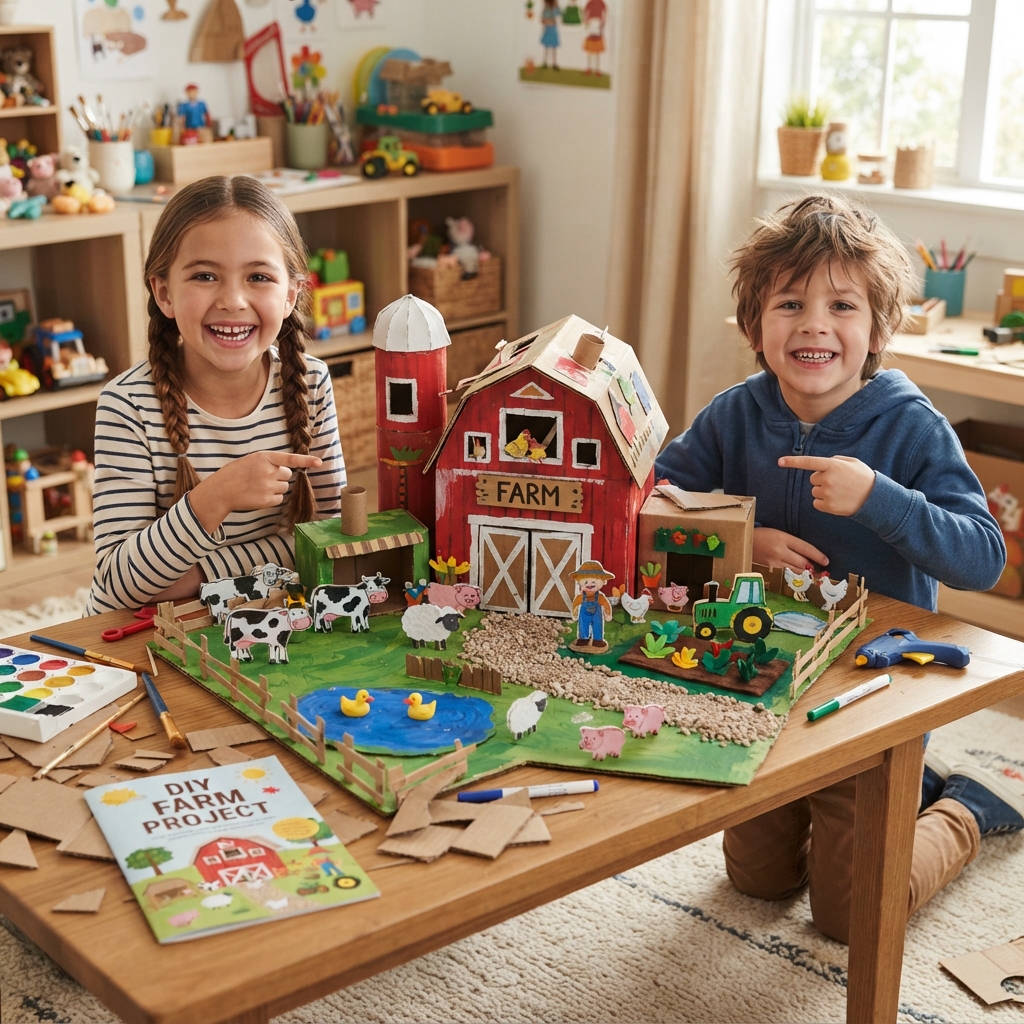
Building a cardboard farm encourages children to explore the exciting world of farming while developing important artistic and problem-solving skills.
Why Make a Cardboard Farm?
Many children enjoy animals, tractors, and outdoor adventures. A cardboard farm allows them to create their own miniature world where they can care for animals, grow crops, and imagine life on a busy farm.
This project helps children:
- Develop creativity through designing farm buildings and landscapes.
- Improve fine motor skills by cutting, folding, and gluing.
- Learn about farm animals and crops.
- Practice counting, sorting, and organizing.
- Encourage teamwork and communication through role-playing.
- Discover the value of recycling by reusing cardboard materials.
Materials You’ll Need
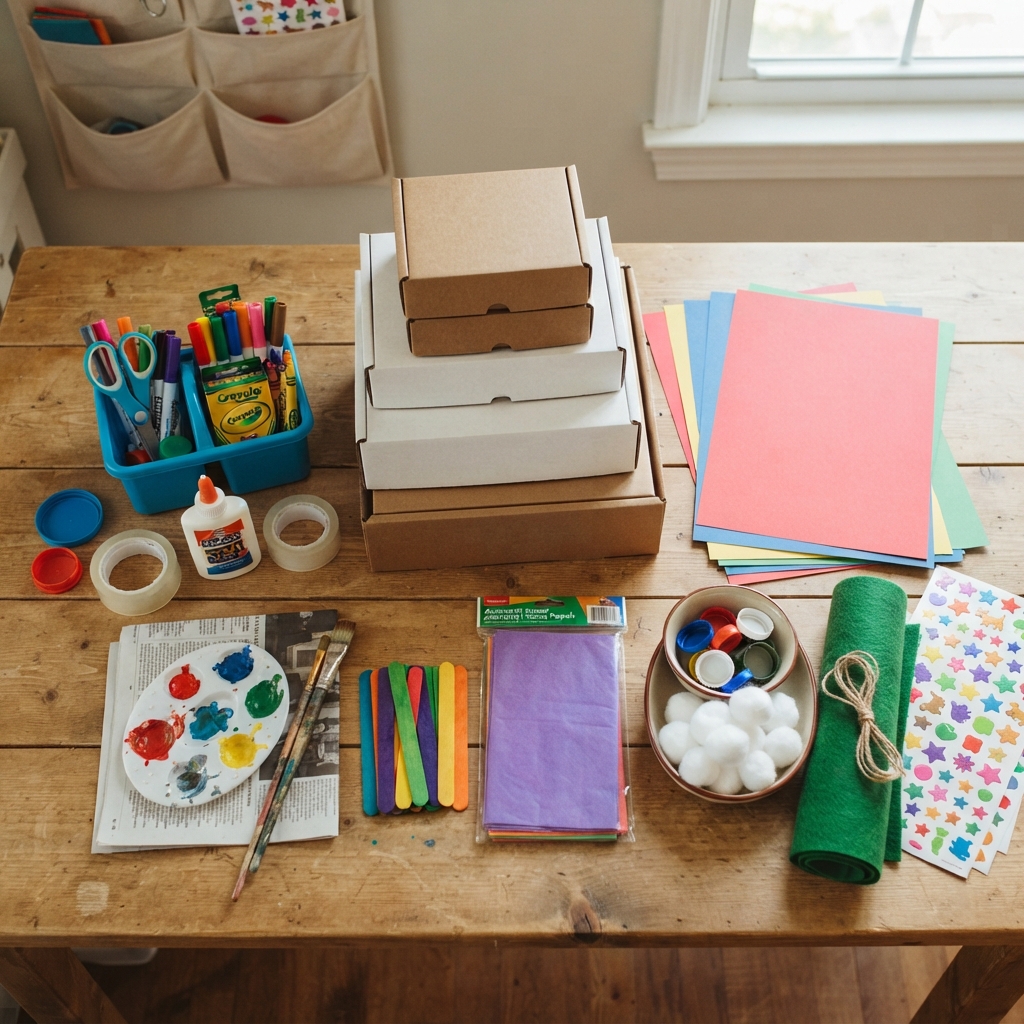
Gather these easy-to-find supplies before you begin:
- Large and small cardboard boxes
- Colored construction paper
- Child-safe scissors
- Craft glue or tape
- Markers and crayons
- Paint and paintbrushes (optional)
- Popsicle sticks
- Tissue paper
- Bottle caps
- Cotton balls
- Green felt or green paper
- Twine or string (optional)
- Stickers for decoration
Most of these materials can be collected from your recycling bin.
Step 1: Build the Farm Base
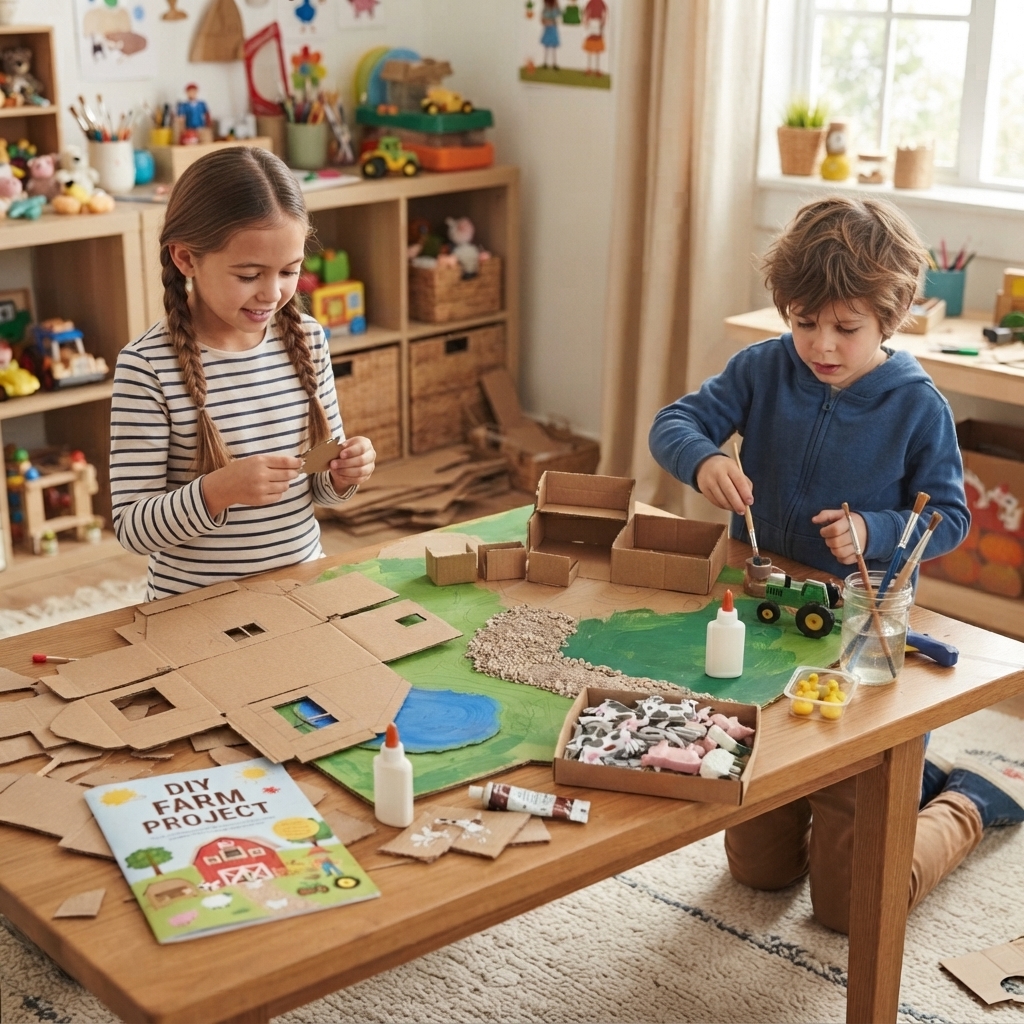
Start with a large piece of cardboard to serve as the farmyard.
Cover parts of the surface with green paper to create grassy fields and brown paper for dirt paths. Add blue paper for a small pond or stream.
Draw winding paths that connect the different areas of the farm.
Step 2: Make a Barn
Create a barn from a small cardboard box.
Paint it red or cover it with red construction paper. Add:
- White doors
- Small windows
- A gray roof
- A weather vane
- A large barn sign
The barn can become the home for many farm animals.
Step 3: Build Animal Pens
Use strips of cardboard or popsicle sticks to create fenced areas.
Make separate spaces for different animals, such as:
- Cows
- Sheep
- Horses
- Goats
- Chickens
- Ducks
- Pigs
- Rabbits
Each pen can include a small food bowl and a water trough made from folded cardboard.
Step 4: Create Farm Animals
Cut animal shapes from cardboard and decorate them with markers or colored paper.
Use cotton balls to make fluffy sheep, pink paper for pigs, brown paper for horses, and black-and-white spots for cows.
Give each animal a smiling face to make the farm cheerful and welcoming.
Step 5: Add Crop Fields
Create colorful crop areas using paper and craft materials.
You can make fields of:
- Corn
- Carrots
- Tomatoes
- Pumpkins
- Sunflowers
- Wheat
- Lettuce
- Strawberries
Arrange the crops in neat rows just like a real farm.
Step 6: Make Farm Vehicles
No farm is complete without vehicles.
Build simple cardboard versions of:
- Tractor
- Trailer
- Wheelbarrow
- Pickup truck
- Hay wagon
Use bottle caps as wheels and decorate each vehicle with bright colors.
Step 7: Add Farm Decorations
Bring your farm to life with extra details.
Create:
- Trees
- Windmill
- Scarecrow
- Hay bales
- Wooden signs
- Flower garden
- Birdhouse
- Small bridge
- Mailbox
These decorations make the farm feel realistic and fun.
Step 8: Create a Farmer
Draw or craft a cheerful farmer using cardboard and paper.
Add a hat, overalls, boots, and a friendly smile.
Children can also create farm helpers and family members to work around the farm.
Step 9: Enjoy Pretend Play
After finishing the farm, children can imagine many exciting activities.
They can:
- Feed the animals.
- Harvest crops.
- Drive the tractor.
- Collect eggs.
- Water the garden.
- Build new animal shelters.
- Deliver fresh vegetables to the market.
- Welcome visitors to the farm.
These role-playing activities encourage creativity and storytelling.
Learning Benefits
A cardboard farm provides many educational opportunities.
Children practice:
- Animal recognition
- Counting and sorting
- Fine motor coordination
- Creative thinking
- Problem-solving
- Communication skills
- Vocabulary development
- Understanding nature and agriculture
The project also teaches children where food comes from and why farms are important.
Eco-Friendly Crafting
One of the greatest lessons of this project is recycling.
Old cardboard boxes, paper tubes, bottle caps, and paper scraps become barns, tractors, fences, and animals instead of being thrown away.
Children learn that everyday materials can be transformed into imaginative creations while helping protect the environment.
Tips for Parents and Teachers
To make the activity even more enjoyable:
- Read a children’s book about farms before crafting.
- Play farm animal sounds during the activity.
- Encourage children to invent names for their animals.
- Discuss the jobs farmers do each day.
- Display the completed farm in the classroom or playroom.
- Invite children to tell stories about a day on their farm.
Celebrate every child’s creativity and imagination throughout the project.
Conclusion
A cardboard farm is a fun and educational craft project that combines creativity, recycling, and imaginative play. Children enjoy building barns, creating friendly animals, designing crop fields, and pretending to care for their farm. Along the way, they develop important artistic, social, and problem-solving skills while learning about farming and the natural world. Best of all, this simple DIY project transforms recycled cardboard into a lively miniature farm where learning, creativity, and adventure grow together.
