
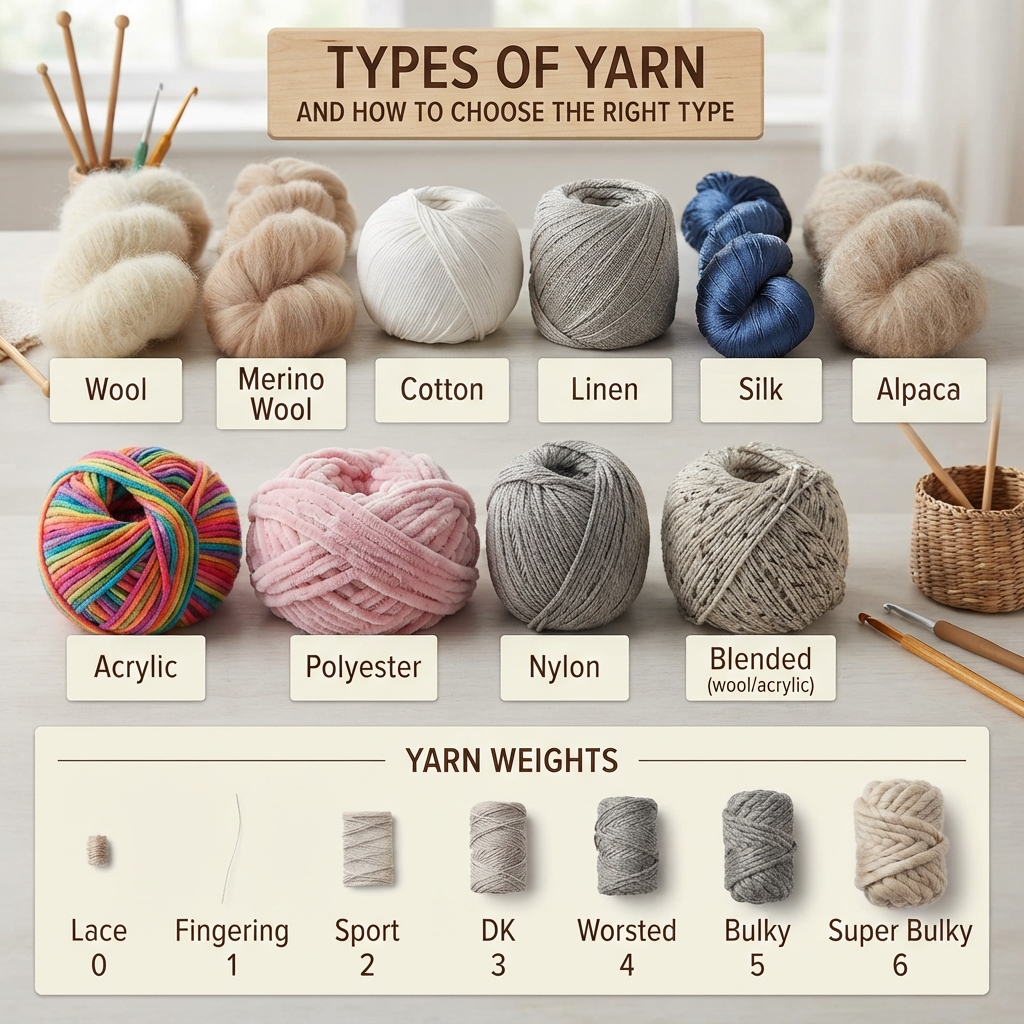
Choosing the right yarn is one of the first important decisions when starting a knitting or crochet project. Walk into a craft store and you may find dozens of yarns in different colors, thicknesses, textures, and materials. For beginners, this wide selection can feel confusing.
The good news is that choosing yarn becomes much easier once you understand a few basic differences. Yarn can be made from natural or synthetic fibers, and each type has its own advantages and best uses.
This beginner-friendly guide explains the most common types of yarn and how to choose the right one for your project.
What Is Yarn?
Yarn is a long strand made by twisting or spinning fibers together. It can be made from natural materials, synthetic fibers, or a combination of both.
Yarn is commonly used for:
- Knitting
- Crochet
- Embroidery
- Weaving
- Macramé
- Decorative crafts
- Pom-poms and tassels
- Textile projects
Different yarns behave differently depending on their fiber, thickness, texture, and construction.
Main Types of Yarn by Fiber
One of the easiest ways to understand yarn is to look at what it is made from.
1. Wool Yarn
Wool is a natural fiber that comes from sheep.
It is warm, soft, and naturally insulating, making it popular for cold-weather clothing and accessories.
Wool yarn is commonly used for:
- Sweaters
- Hats
- Scarves
- Mittens
- Blankets
- Socks
Wool can vary greatly in softness. Some types are very soft, while others can feel slightly rough against sensitive skin.
2. Merino Wool
Merino wool comes from Merino sheep and is known for being particularly soft.
It is lightweight, warm, and comfortable to wear.
Merino yarn is a popular choice for:
- Baby clothing
- Sweaters
- Scarves
- Hats
- Socks
- Lightweight garments
It can be more expensive than standard wool, but its softness makes it attractive for clothing projects.
3. Cotton Yarn
Cotton is a natural plant-based fiber.
Cotton yarn is breathable, durable, and easy to wash. It does not have the same elasticity as wool, which can make it behave differently during knitting and crochet.
Cotton is excellent for:
- Dishcloths
- Summer clothing
- Bags
- Baby items
- Home decorations
- Amigurumi
- Kitchen accessories
It is particularly useful for warm-weather projects.
4. Linen Yarn
Linen is made from the fibers of the flax plant.
It is lightweight, breathable, and strong. Linen often becomes softer with use and washing.
It works well for:
- Summer garments
- Lightweight tops
- Home textiles
- Decorative projects
- Warm-weather accessories
Linen can feel somewhat stiff at first, but it develops a pleasant texture over time.
5. Silk Yarn
Silk is a luxurious natural fiber known for its smooth texture and beautiful appearance.
Silk yarn can add softness and drape to handmade projects.
It is often used for:
- Lightweight garments
- Scarves
- Shawls
- Decorative pieces
- Blended yarns
Pure silk can be delicate and may require careful washing.
6. Alpaca Yarn
Alpaca fiber is soft, warm, and lightweight.
It is known for its smooth feel and excellent insulation.
Alpaca yarn can be used for:
- Sweaters
- Scarves
- Hats
- Blankets
- Shawls
- Winter accessories
It is often blended with other fibers to change its strength, texture, or price.
Synthetic Yarn Types
Synthetic fibers are manufactured rather than naturally produced.
7. Acrylic Yarn
Acrylic is one of the most popular yarn choices for beginners.
It is generally affordable, lightweight, colorful, and easy to care for.
Acrylic yarn is useful for:
- Blankets
- Scarves
- Hats
- Toys
- Crochet projects
- Beginner knitting projects
Because it is available in many colors and weights, it is an excellent yarn for practicing new techniques.
8. Polyester Yarn
Polyester yarn is durable and resistant to shrinking and stretching.
It is often used for:
- Blankets
- Home decorations
- Toys
- Textured projects
- Craft accessories
Some polyester yarns have a soft, fuzzy, or plush texture.
9. Nylon Yarn
Nylon is a strong synthetic fiber that is often blended with other yarns.
It can add strength and durability to a yarn blend.
Nylon is commonly found in:
- Sock yarn
- Durable garments
- Bags
- Accessories
- Specialty projects
Blended Yarn
Many yarns combine two or more fibers.
For example, you may find blends such as:
- Wool and acrylic
- Cotton and polyester
- Wool and nylon
- Alpaca and wool
- Cotton and linen
Blended yarns are designed to combine useful characteristics from different fibers.
For example, a wool-and-nylon blend can provide warmth while adding durability.
Understanding Yarn Weight
Yarn weight refers to the thickness of the yarn, not how heavy the ball physically is.
Common yarn weights range from very fine yarn to very bulky yarn.
Lace Weight
Very thin yarn used for delicate projects.
Good for:
- Lace
- Fine shawls
- Delicate accessories
Fingering Weight
A lightweight yarn commonly used for socks and lightweight garments.
Sport Weight
A light-to-medium yarn suitable for clothing and accessories.
DK Weight
DK, or double knitting, is a versatile medium-light yarn.
It is commonly used for:
- Sweaters
- Baby clothing
- Hats
- Scarves
- Small blankets
Worsted Weight
Worsted weight is a popular medium-weight yarn and a good choice for beginners.
It works well for:
- Blankets
- Sweaters
- Hats
- Scarves
- Home projects
Bulky Weight
Bulky yarn is thick and works up quickly.
It is useful for:
- Winter hats
- Thick scarves
- Blankets
- Cozy sweaters
Super Bulky
Super bulky yarn is extremely thick and can produce large stitches very quickly.
It is suitable for:
- Chunky blankets
- Thick winter accessories
- Oversized decorative projects
How to Choose the Right Yarn
Choosing yarn becomes easier when you consider several factors.
1. Consider the Project
Think about what you are making.
A summer top may benefit from cotton or linen, while a warm winter hat may be better suited to wool or alpaca.
For a beginner blanket, acrylic or worsted-weight yarn can be an easy option.
2. Think About the Season
Choose breathable fibers such as cotton or linen for warm weather.
For cold weather, wool, alpaca, and other insulating fibers can provide more warmth.
3. Check the Yarn Weight
Always check the yarn label for the recommended weight.
Using a yarn that is much thicker or thinner than the pattern expects can change the final size and appearance of your project.
4. Check the Recommended Hook or Needle Size
Yarn labels usually provide suggested knitting needle or crochet hook sizes.
These recommendations are useful starting points, but the best size can vary depending on your personal tension and the project.
5. Consider Washing Requirements
Think about how the finished item will be cared for.
If you are making a baby blanket or everyday item, machine-washable yarn may be convenient.
Delicate fibers such as silk may require more careful washing.
Always read the yarn label before washing a finished project.
6. Think About Texture
Smooth yarn is usually easier for beginners because you can clearly see your stitches.
Very fuzzy, textured, or novelty yarn can be more difficult to work with.
If you are learning to knit or crochet, start with a smooth, medium-weight yarn.
7. Choose a Comfortable Yarn
If the project will be worn against the skin, consider softness.
A yarn that looks beautiful may not be comfortable as a scarf or sweater if it feels scratchy.
How to Read a Yarn Label
Yarn labels contain useful information.
Look for:
- Fiber content
- Yarn weight
- Recommended needle size
- Recommended crochet hook size
- Care instructions
- Length of yarn
- Weight of the ball or skein
- Dye lot information
The dye lot number is particularly important if you need several balls of the same color. Buying yarn from the same dye lot can help keep the color consistent.
How Much Yarn Do You Need?
The amount of yarn required depends on the project, yarn weight, pattern, and your personal tension.
Always check the pattern’s recommended yarn quantity when possible.
If you are creating your own design, it is safer to buy a little extra yarn, especially when working with a particular color that may be difficult to find later.
Tips for Beginners
If you are new to knitting or crochet, choose a yarn that makes your stitches easy to see.
Medium-weight acrylic or wool-blend yarn is often a practical starting point.
Avoid very thin, slippery, or highly textured yarn until you are comfortable with the basics.
Before starting a large project, make a small test piece. This allows you to see how the yarn behaves and whether you like the texture and stitch definition.
Common Yarn Mistakes to Avoid
Beginners sometimes choose yarn based only on color. While color is important, it should not be the only consideration.
Avoid choosing a yarn that:
- Is difficult to handle
- Does not match the pattern’s recommended weight
- Is uncomfortable for the intended item
- Requires care you cannot easily provide
- Makes stitches difficult to see
The best yarn is one that suits both the project and your skill level.
Final Thoughts
There are many types of yarn to explore, from soft wool and breathable cotton to affordable acrylic and luxurious silk. Each fiber has different characteristics, so choosing the right yarn depends on what you want to make.
For beginners, a smooth, medium-weight yarn is often the easiest place to start. As you gain experience, try different fibers, textures, and yarn weights to discover which ones you enjoy working with most.
The right yarn can make a project easier, more comfortable, and more enjoyable—and choosing it is an important part of the creative process.
