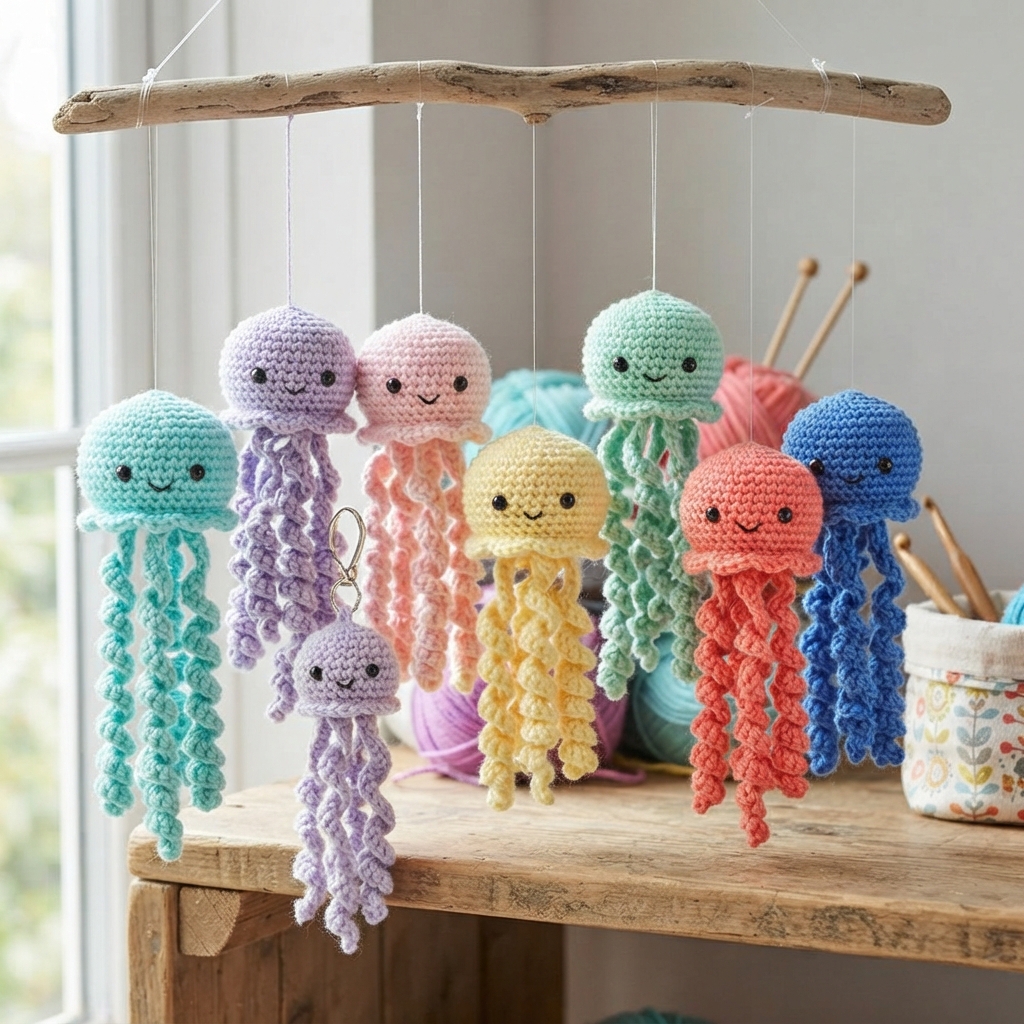
A crocheted jellyfish is a charming handmade project that combines creativity, color, and simple crochet techniques. With its round body, flowing tentacles, and playful appearance, a crochet jellyfish can become a delightful decoration, toy, classroom craft, or handmade gift. It is also an excellent project for crochet beginners who want to practice basic stitches while creating something fun.
Crochet jellyfish designs can be made in many different sizes and styles. You can create a tiny jellyfish as a keychain, a medium-sized one as a decorative toy, or a larger version for a child’s room. Different yarn colors and textures can completely change the appearance of the finished project.
This article explores creative ideas for making a crocheted jellyfish, the materials needed, basic construction techniques, decoration ideas, safety considerations, and ways to customize the finished piece.
What Is a Crocheted Jellyfish?
A crocheted jellyfish is a handmade representation of a jellyfish created primarily with yarn and a crochet hook. It usually consists of a rounded or dome-shaped body and several long, curly, wavy, or spiral tentacles.
Unlike a real jellyfish, which has a delicate transparent body, a crochet jellyfish can be made from colorful yarn. Pastel shades can create a soft and gentle appearance, while bright colors can make the project cheerful and playful.
The basic shape is surprisingly simple. The body can be crocheted in rounds, gradually increasing stitches to create a dome. Once the body is finished, tentacles can be attached underneath. Small eyes, embroidered facial features, or decorative details can then give the jellyfish its own personality.
Materials Needed
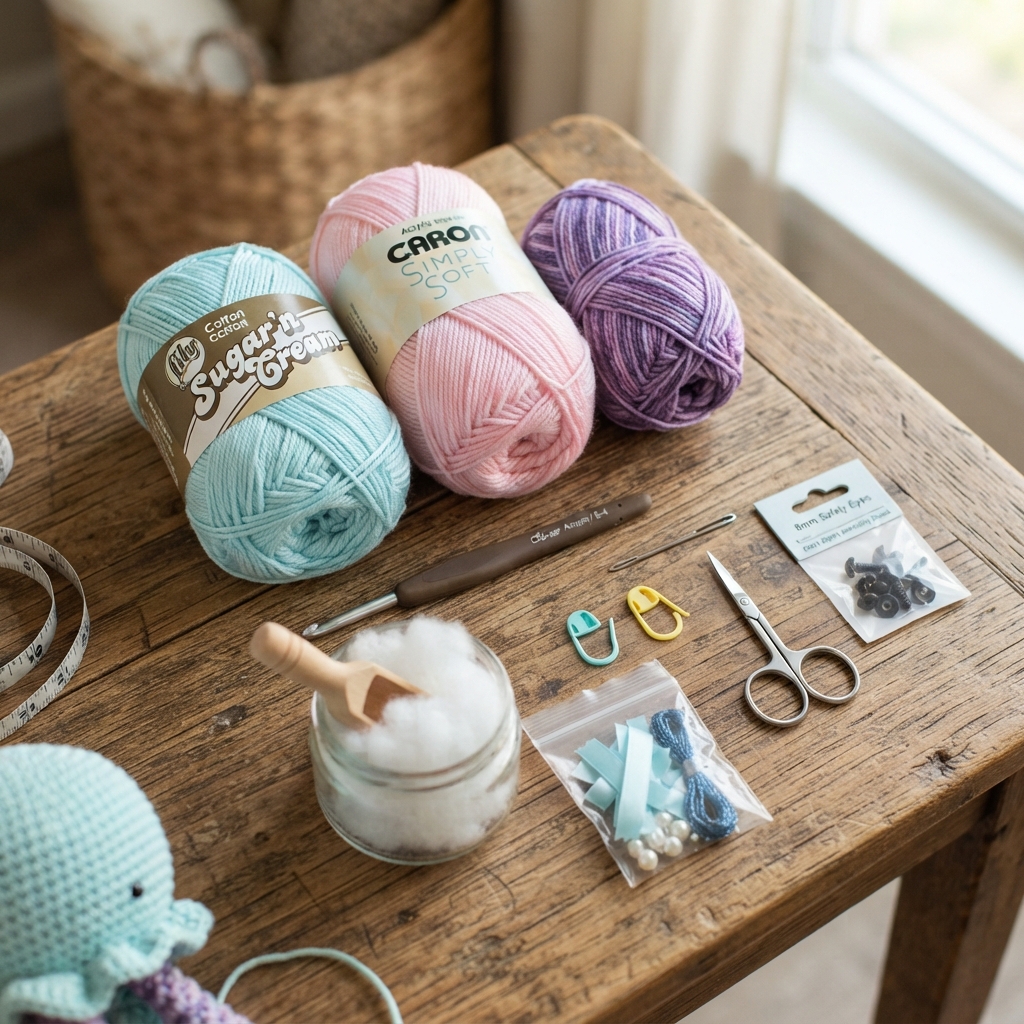
Making a crocheted jellyfish does not require a large collection of supplies. Beginners can start with a few basic materials.
You will usually need:
- Yarn in one or more colors
- A suitable crochet hook
- Fiberfill or another appropriate stuffing material
- Yarn needle
- Scissors
- Stitch marker
- Safety eyes or embroidery thread for facial details
- Optional ribbons, beads, or decorative yarn
Cotton yarn is a popular choice because it creates clearly defined stitches and is easy to work with. Acrylic yarn can also be used when you want a soft and colorful finished project.
The crochet hook size should match the yarn according to the yarn manufacturer’s recommendation. For stuffed projects, many crocheters prefer a slightly smaller hook so that the stitches remain tight and the stuffing does not show through.
Choosing Colors
One of the most enjoyable parts of making a crocheted jellyfish is choosing its colors. There are no strict rules, so you can let your imagination guide the design.
A pastel jellyfish can be made with pink, lavender, mint, pale blue, and cream. These colors work particularly well for nursery decorations or gentle-looking handmade toys.
Bright colors such as orange, yellow, turquoise, purple, and green can create a cheerful underwater character. You can also make the body one color and use several contrasting colors for the tentacles.
A rainbow jellyfish is another fun idea. Each tentacle can be made in a different color, creating a vibrant and playful result.
Making the Jellyfish Body
The body is generally the main part of the project. It can be created using basic crochet stitches worked in continuous or joined rounds.
Many patterns begin with a small center circle and gradually increase the number of stitches. This creates a flat or rounded shape. As the project becomes larger, increases can be reduced or stopped to create the dome-like form associated with a jellyfish.
The exact stitch count depends on the desired size and pattern. Beginners may want to start with a simple pattern using single crochet stitches because they are easy to count and produce a sturdy fabric.
Once the body reaches the desired size, the sides can be worked downward slightly. The finished shape should resemble a small rounded cap.
Adding the Stuffing
If you are creating a three-dimensional jellyfish, stuffing can be added before completely closing the body.
Add small amounts of fiberfill at a time. Avoid filling the body too tightly because excessive stuffing can stretch the crochet stitches and change the intended shape.
Gently distribute the stuffing so that the body remains rounded and even. Once the desired firmness is achieved, continue crocheting until the opening is closed.
For decorative jellyfish that are not intended to be toys, you can also create a flat or lightly stuffed design.
Creating the Tentacles
The tentacles are what make a crochet jellyfish instantly recognizable. They can be short, long, straight, curly, wavy, or spiral-shaped.
One simple technique is to crochet chains and then work stitches back along the chain. Another method creates curly tentacles by placing several stitches into each chain stitch. The additional stitches cause the strip of crochet to naturally curl.
You can make all the tentacles the same color or use several colors. Different lengths can create a more natural and playful appearance.
For a more decorative design, combine different types of tentacles. For example, use curly strands alongside straight chains and textured strips.
Giving the Jellyfish a Face
A face can transform a simple crocheted jellyfish into a cute character.
Small safety eyes are a popular choice for handmade toys, but they should be attached securely and used appropriately for the intended age group. For very young children, embroidered eyes may be a safer alternative.
You can embroider simple eyes using black yarn or embroidery thread. A small embroidered smile can also create a friendly expression.
Try different facial styles. Large eyes can create a cute cartoon appearance, while tiny embroidered eyes can give the jellyfish a more minimalist look.
Decorative Jellyfish Ideas
There are many ways to make your crocheted jellyfish unique.
You could add:
- Small crochet flowers
- Colorful stripes
- Embroidered stars
- Tiny bows
- Contrasting borders
- Sparkly yarn
- Different colored tentacles
- A smiling face
- Small crochet bubbles
A simple jellyfish can look elegant with only two colors, while a highly decorated version can become a bright children’s character.
When adding decorations, make sure they are securely attached and appropriate for the intended use.
Mini Crochet Jellyfish
A miniature jellyfish is a great project for using leftover yarn. Because it requires only a small amount of material, you can experiment with different colors without purchasing large quantities.
Tiny jellyfish can be turned into ornaments, bag charms, keychains, or decorative pieces. Several small jellyfish can also be connected to create a colorful underwater-themed decoration.
A collection of miniature jellyfish in different colors can look especially attractive when displayed together.
Crochet Jellyfish Mobile
A crochet jellyfish mobile can be a creative decoration for a child’s room. Several lightweight jellyfish can be suspended at different heights to create the appearance of an underwater scene.
Use different shades of blue, purple, pink, and green for the jellyfish. Add crocheted bubbles, stars, fish, seaweed, or seashells to create a complete ocean theme.
The mobile should be securely assembled and positioned safely, especially if it will be placed in a child’s room. Decorative mobiles should always be kept well out of reach of babies and young children.
Jellyfish for Ocean-Themed Decor
Crocheted jellyfish are perfect for an ocean-themed room or classroom. They can be displayed alongside other handmade sea creatures such as whales, turtles, fish, octopuses, crabs, and seahorses.
You can create a coordinated collection by using similar yarn colors throughout the different projects.
For example, a blue jellyfish with purple tentacles could be displayed next to a green turtle and colorful fish. This creates an attractive handmade underwater scene.
Educational Uses
A crocheted jellyfish can also be used as part of an educational activity. Teachers and parents can use handmade sea creatures to introduce children to marine life.
A crochet jellyfish can encourage conversations about ocean ecosystems, different types of sea animals, and the importance of keeping oceans clean.
Children can also use handmade jellyfish in storytelling activities. Each jellyfish can become a character with a name, personality, and imaginary underwater adventure.
Crafting the jellyfish can even become an educational project where children learn about colors, shapes, counting, and basic textile crafts.
Crochet Jellyfish as a Gift
A handmade jellyfish can make a thoughtful gift for someone who enjoys ocean themes, handmade crafts, or cute decorations.
A small jellyfish can be added to a gift basket, while a larger one can become a decorative stuffed character.
You can personalize the gift by choosing the recipient’s favorite colors. Adding a small embroidered initial or a handmade tag can make the project feel even more personal.
Handmade gifts are special because they show time, effort, and creativity.
Tips for Crochet Beginners
If you are new to crochet, start with a simple jellyfish pattern. Avoid choosing a complicated design with many advanced stitches for your first attempt.
Practice making a foundation chain, single crochet stitches, increases, decreases, and basic finishing techniques.
Keep track of your stitches carefully. A stitch marker can help you identify the beginning of each round when working in continuous circles.
Do not worry if the first jellyfish is not perfect. Crochet improves with practice, and small imperfections can make handmade crafts feel unique.
Once you understand the basic construction, you can experiment with different body shapes, tentacles, colors, and decorative details.
Making the Project More Sustainable
Crochet is a craft that can be made more environmentally conscious by using leftover yarn. Small jellyfish require relatively little material, making them an excellent way to use scraps from previous projects.
Instead of throwing away short lengths of yarn, save them in a box organized by color. These scraps can later become tentacles, decorations, stripes, or tiny crochet projects.
You can also consider choosing durable yarn that can be used repeatedly and cared for properly.
Safety Considerations
Safety is particularly important when making crocheted items for children. Decorative elements such as beads, buttons, ribbons, and small plastic parts can become choking hazards if they become detached.
For babies and toddlers, embroidered facial features are generally preferable to loose small parts. Inspect handmade items regularly for loose stitches, damaged yarn, or detached decorations.
If the jellyfish is intended for a young child, follow appropriate toy-making safety practices and choose materials suitable for the child’s age.
Caring for a Crocheted Jellyfish
Proper care helps a handmade jellyfish remain attractive for a long time.
Always check the washing instructions for the yarn used. Depending on the materials, the jellyfish may need gentle hand washing or a delicate machine cycle.
Avoid harsh washing methods that could damage the stitches or cause colors to fade. After washing, reshape the jellyfish gently and allow it to dry completely.
Store it in a clean, dry place away from excessive moisture and direct sunlight.
Why Crochet Jellyfish Are So Popular
The appeal of crocheted jellyfish comes from their combination of simplicity and personality. The basic shape is easy to recognize, but there are countless ways to customize it.
A jellyfish can be elegant, funny, colorful, minimalist, tiny, or oversized. This flexibility makes the project suitable for many different skill levels.
Crochet jellyfish are also connected to the growing popularity of handmade ocean-themed decorations and amigurumi-style crafts. Their unusual shape provides an opportunity to experiment with stitches and textures.
Final Thoughts
A crocheted jellyfish is a fun and creative handmade project that can be adapted in countless ways. Its rounded body and flowing tentacles make it instantly recognizable, while colorful yarn and decorative details allow every crafter to create a unique character.
Whether you make a tiny jellyfish from leftover yarn, a soft stuffed decoration, a colorful classroom craft, or a collection of ocean-themed characters, the project offers plenty of opportunities for creativity.
For beginners, the jellyfish is a wonderful introduction to crocheting in rounds, shaping, stuffing, and creating simple decorative elements. For experienced crocheters, it provides an opportunity to experiment with colors, textures, unusual tentacle designs, and personalized details.
Most importantly, a handmade crocheted jellyfish is more than just a craft. It is a small piece of creativity made stitch by stitch, and it can become a charming decoration, thoughtful gift, or playful character that brings a little underwater magic into any space.
