
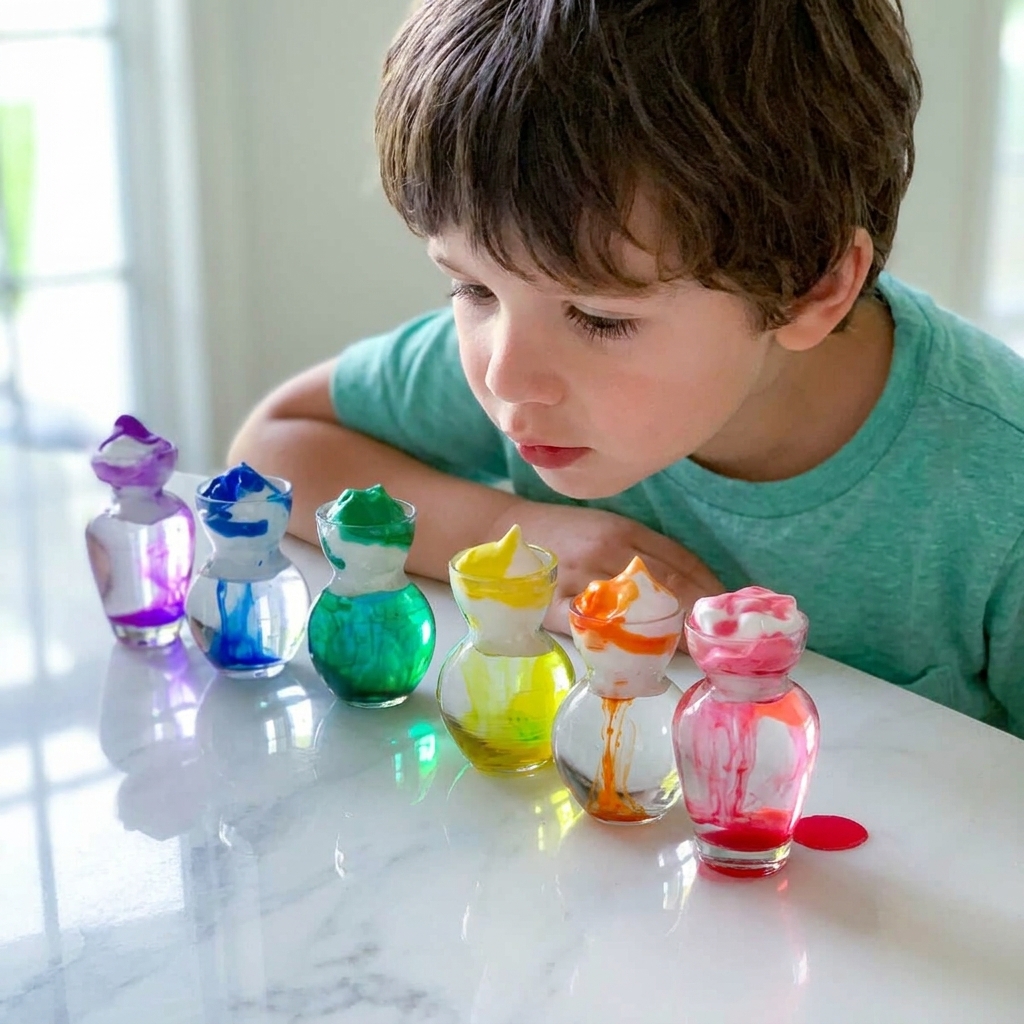
Quick Overview Table
| Activity Feature | Details |
| Recommended Ages | Toddlers to Grade 5 |
| Activity Type | STEM, sensory play, creative art |
| Time Needed | 20–45 minutes |
| Skill Focus | Science, creativity, fine motor skills |
| Main Materials | Shaving foam, food coloring, water |
| Learning Topics | Weather, density, diffusion, color mixing |
Introduction: Why Shaving Cream Is a Sensory Powerhouse
If you want a fun way to combine science, art, and sensory learning, then it is time to involve your children in a rainbow-colored shaving foam experiment. This colorful activity transforms ordinary shaving cream into a magical educational experience packed with creativity and STEM learning.
Parents and teachers love shaving cream projects because they are inexpensive, easy to set up, and incredibly engaging for children of all ages. Whether you are exploring weather science, creating marbled artwork, or building sensory play stations, shaving cream offers endless possibilities for purposeful play.
One reason the Rainbow shaving foam activity is so effective is because sensory play helps children build nerve connections in the brain. Activities involving touch, color, smell, and movement support language development, emotional regulation, and problem-solving skills.
When you involve your children in a rainbow-colored shaving foam experiment, you are not only creating exciting memories but also encouraging scientific curiosity and hands-on learning.
Key Takeaways
- Encourages STEM learning through play
- Supports sensory development and creativity
- Helps children explore weather science concepts
- Improves fine motor coordination
- Creates low-cost educational fun at home or school
The Rainbow Rain Science Experiment
One of the most popular ways to involve your children in a rainbow-colored shaving foam experiment is through the famous “Rain Cloud in a Jar” activity.
This colorful science project teaches children about clouds, rain, gravity, and the water cycle using simple household supplies.
Supplies Needed
Gather these materials before starting:
- A clear wide-mouth jar
- Water
- Foamy shaving cream
- Liquid food coloring
- Small droppers or spoons
Optional supplies include glitter, trays for easier cleanup, and extra jars for testing different colors.
Step-by-Step Instructions
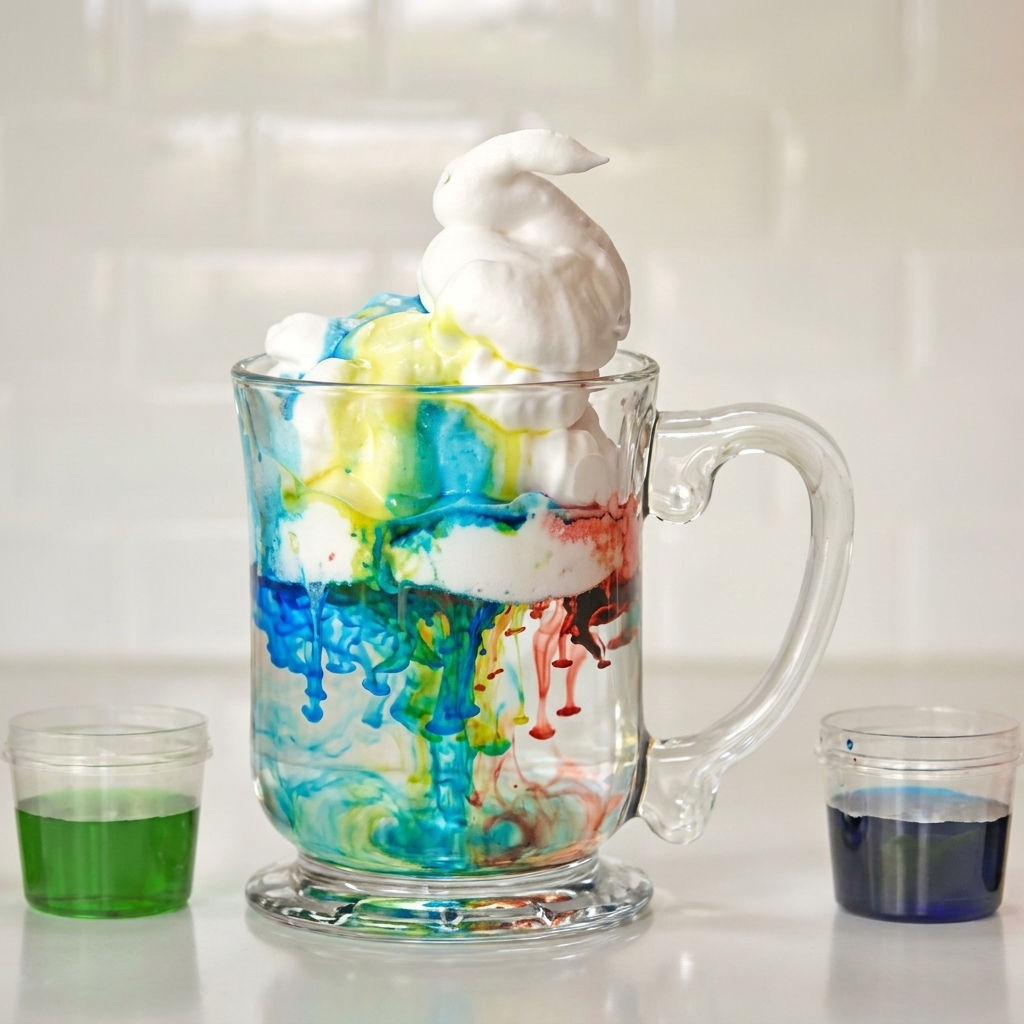
1. Fill the Jar with Water
Pour water into the jar until it is about three-quarters full.
This represents the atmosphere.
2. Add the Shaving Cream Cloud
Spray a thick layer of shaving cream onto the water surface.
The shaving cream acts as a cloud floating above the atmosphere.
3. Prepare the Rainbow Colors
Mix food coloring with a few drops of water in separate bowls.
Bright rainbow colors create the best visual effect for this Educational rainbow foam craft.
4. Drop the Colors onto the Cloud
Use droppers or spoons to gently add colored liquid onto the shaving cream cloud.
Children will love watching the colors slowly seep through the foam.
5. Watch the Rainbow Rain Begin
As the shaving cream becomes saturated, colorful “rain” falls into the water below.
The swirling rainbow effect looks magical and keeps children fully engaged.
Pro Tips for Better Results
- Thicker shaving cream creates longer-lasting rain clouds
- Concentrated food coloring falls faster through the foam
- Clear jars improve visibility for younger learners
- Use multiple colors to teach color blending
When you involve your children in a rainbow-colored shaving foam experiment, small adjustments like these can make the activity even more exciting.
The Science Behind the Magic
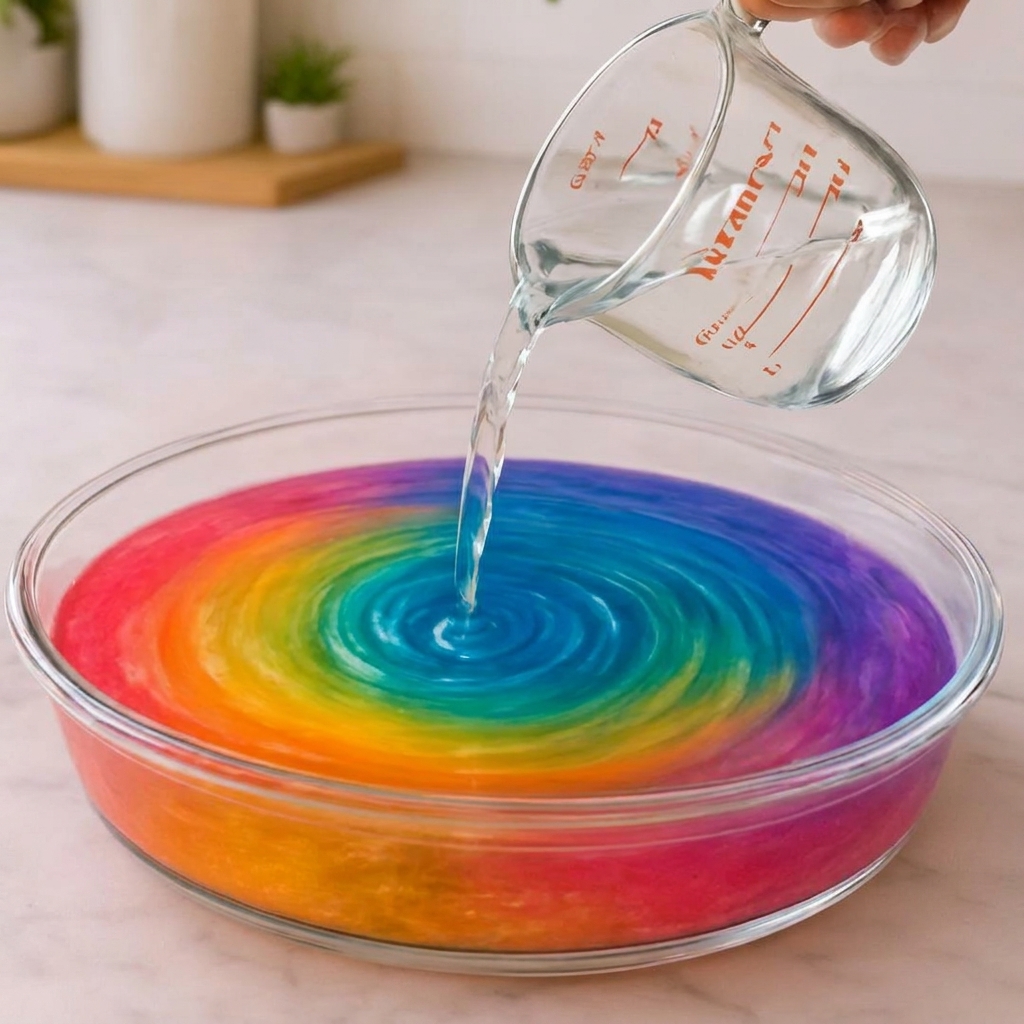
Children may think the rainbow rain looks like magic, but the experiment actually demonstrates several important scientific principles.
The Water Cycle
This experiment helps explain how rain forms in real clouds.
Evaporation
Water heats up and turns into vapor that rises into the sky.
Condensation
Water vapor cools and forms clouds.
Precipitation
When clouds become too heavy, rain falls back to Earth.
The shaving cream cloud represents condensed clouds in the atmosphere.
Scientific Principles Explained
Gravity
Gravity pulls the colored water downward once the shaving cream cloud becomes too full.
This is why the “rain” eventually falls into the jar.
Density
Shaving foam floats because it is less dense than water.
The lighter foam stays on top while heavier colored liquid moves downward.
Diffusion
As the colors spread through the water, children can observe diffusion in action.
Diffusion occurs when particles naturally spread and mix together.
Advanced STEM Vocabulary
Adding scientific language makes this Rainbow shaving foam activity even more educational.
Teach children terms such as:
- Atmosphere
- Water vapor
- Precipitation
- Density
- Gravity
- Condensation
- Diffusion
Older children especially enjoy using real science vocabulary during experiments.
Marbled Rainbow Art: Turning Play into Masterpieces
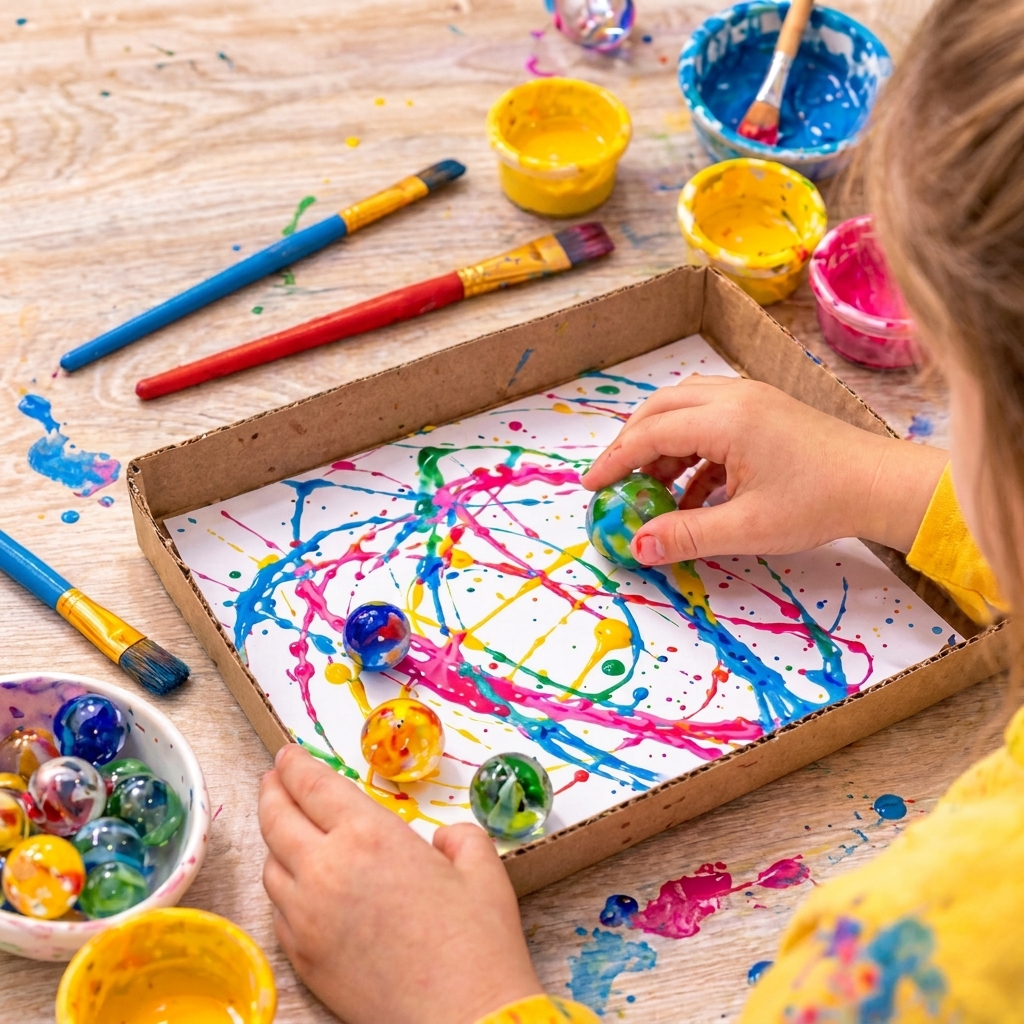
Another creative way to involve your children in a rainbow-colored shaving foam experiment is through marbled art projects.
These colorful prints look beautiful and allow kids to explore artistic expression while learning about color mixing.
Materials Needed
- Shallow tray or pan
- Foamy shaving cream
- Food coloring or washable paint
- Watercolor paper
- Ruler or scraper
How to Create Marbled Art
1. Spread the Shaving Cream
Add a thick layer of shaving cream into the tray.
Smooth it evenly across the surface.
2. Add Rainbow Colors
Drop paint or food coloring across the foam in rainbow patterns.
Use bright colors for the best visual effect.
3. Swirl the Colors
Drag a stick or spoon gently through the colors to create swirls and patterns.
Avoid overmixing so the rainbow effect stays vibrant.
4. Press the Paper
Place watercolor paper carefully onto the shaving cream surface.
Press lightly and remove slowly.
5. Scrape Away the Foam
Use a ruler or scraper to remove excess shaving cream.
Beautiful marbled rainbow prints will appear underneath.
Creative Ways to Use the Artwork
Children can transform their Educational rainbow foam craft into:
- Butterfly decorations
- Greeting cards
- Gift wrap
- Bookmarks
- Wall garlands
- Scrapbook pages
These projects encourage creativity and fine motor development at the same time.
STEM and Sensory Variations
Once you master the basic Rainbow shaving foam activity, try these exciting extensions.
Engineering with Foam
Use shaving cream as pretend “glue” to build:
- Foam block towers
- Bridges
- Arches
- Mini cities
This introduces children to early engineering concepts.
Rainbow Foam Fun
Create fluffy rainbow foam using:
- Water
- Dish soap
- Food coloring
Blend the ingredients together for extra-soft sensory foam perfect for rainy-day play.
Rainbow Roads
Spread colored shaving cream onto trays and let children drive toy cars through it.
Kids can:
- Explore tire tracks
- Mix colors
- Create patterns
- Practice imaginative storytelling
Sensory Dough Alternatives
For children who love textures, try adding:
- Sand foam
- Puffy paint
- Cornstarch mixtures
- Kinetic sand
These activities create varied sensory experiences that keep learning fresh and exciting.
Expert Tips for Parents and Teachers
Protect Your Workspace
Use:
- Plastic tablecloths
- Butcher paper
- Trays
- Aprons
This makes cleanup much easier.
Adapt for Different Ages
Toddlers
Focus on touching, squishing, and color exploration.
Preschoolers
Introduce simple science concepts and color names.
Older Kids
Encourage predictions, observations, and scientific method discussions.
Ask questions like:
- What happens if we add more color?
- Why does the rain fall faster sometimes?
- What changes when the foam layer is thicker?
Safety Reminder
Always use foamy shaving cream instead of gel.
Foamy cream creates better textures and safer sensory play for children.
Avoid contact with eyes and supervise younger children during all activities.
Frequently Asked Questions
How do you make a rain cloud in a jar with shaving cream?
Fill a jar with water, add shaving cream on top, then drop food coloring onto the foam to create colorful rain effects.
What does shaving cream teach kids about science?
It teaches children about weather, density, gravity, diffusion, and sensory exploration through hands-on learning.
How do you make shaving cream marbled art?
Spread shaving cream in a tray, swirl paint into it, press paper onto the surface, then scrape away the foam.
Is shaving cream play good for sensory processing?
Yes. Sensory play activities help children develop fine motor skills, emotional regulation, and brain connections.
Conclusion: The Joy of Purposeful Play
When you involve your children in a rainbow-colored shaving foam experiment, you create much more than a simple craft activity. You build opportunities for creativity, scientific discovery, sensory exploration, and family connection.
From rainbow rain clouds to marbled masterpieces, these hands-on projects help children learn through active play while developing confidence and curiosity. The combination of vibrant colors, fluffy textures, and exciting science keeps kids engaged for hours.
Whether you are a parent, teacher, homeschooler, or childcare provider, this Educational rainbow foam craft offers endless ways to turn ordinary materials into extraordinary learning adventures.
Gather your shaving cream, rainbow colors, and creative ideas, then start making magical STEM memories today.
