
Quick Overview Table
| Topic | Details |
| Focus Keyword | How to Turn Water Into Ice Instantly |
| Category | Science Experiments / STEM |
| Difficulty Level | Easy to Advanced |
| Time Required | Seconds to Minutes |
| Key Science Concept | Freezing Point, Supercooling, Phase Change |
| Number of Methods | 9 Effective Techniques |
| Best For | Kids, Students, STEM Projects |
| Main Materials | Ice, Salt, Freezer, Containers, Pressure Tools |
| Safety Level | Moderate (Adult supervision recommended) |
| Result | Rapid or Instant Water Freezing Effects |
Introduction
Have you ever wondered if it is really possible to freeze water instantly? At first glance, it sounds like magic. Water turns from a clear liquid into solid ice only when it reaches 0°C (32°F), so how could it possibly freeze in seconds?
The answer lies in physics and chemistry. There are several fascinating scientific tricks that can make water freeze extremely fast or even appear to turn into ice instantly under the right conditions. This is where the concept of How to Turn Water Into Ice Instantly becomes both a fun experiment and a powerful learning experience.
In reality, most “instant ice” effects are caused by supercooling, pressure changes, rapid heat transfer, or special materials that speed up freezing. These experiments are widely used in classrooms and STEM demonstrations because they show how temperature, energy, and molecular behavior interact in surprising ways.
In this article, we will explore 9 of the best methods that demonstrate How to Turn Water Into Ice Instantly, including safe home experiments, scientific explanations, and practical tips to achieve the fastest results.
Understanding the Science Behind Instant Freezing
Before jumping into the methods, it is important to understand what actually happens when water freezes.
Water molecules normally move freely in liquid form. When temperature drops, these molecules slow down and eventually form a rigid crystal structure—ice.
However, under certain conditions, water can behave unusually:
- It can stay liquid below 0°C (supercooling)
- It can freeze instantly when disturbed
- It can freeze faster with rapid heat extraction
- It can crystallize rapidly when nucleation is triggered
These principles are the foundation of How to Turn Water Into Ice Instantly experiments.
Method 1: Supercooled Water (Instant Ice Trick)
Supercooling is the most famous method.
How it works
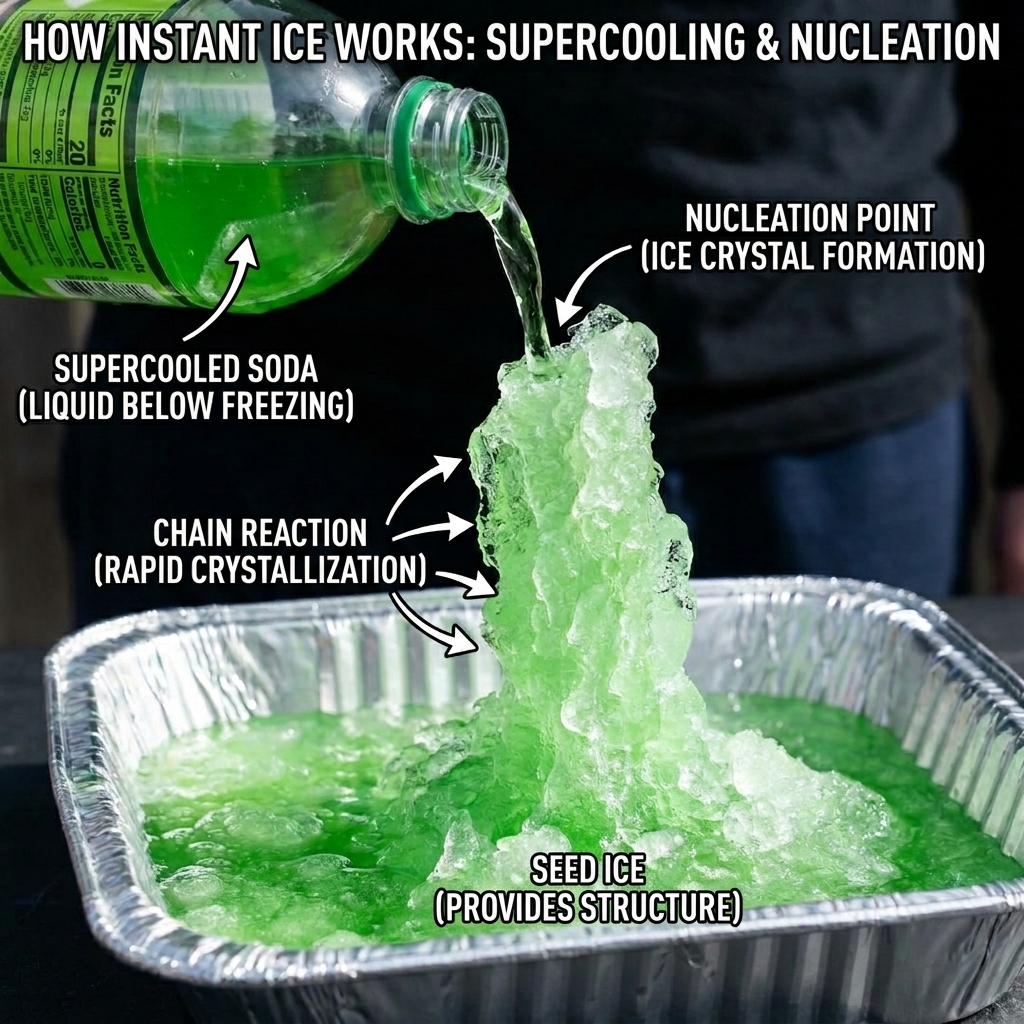
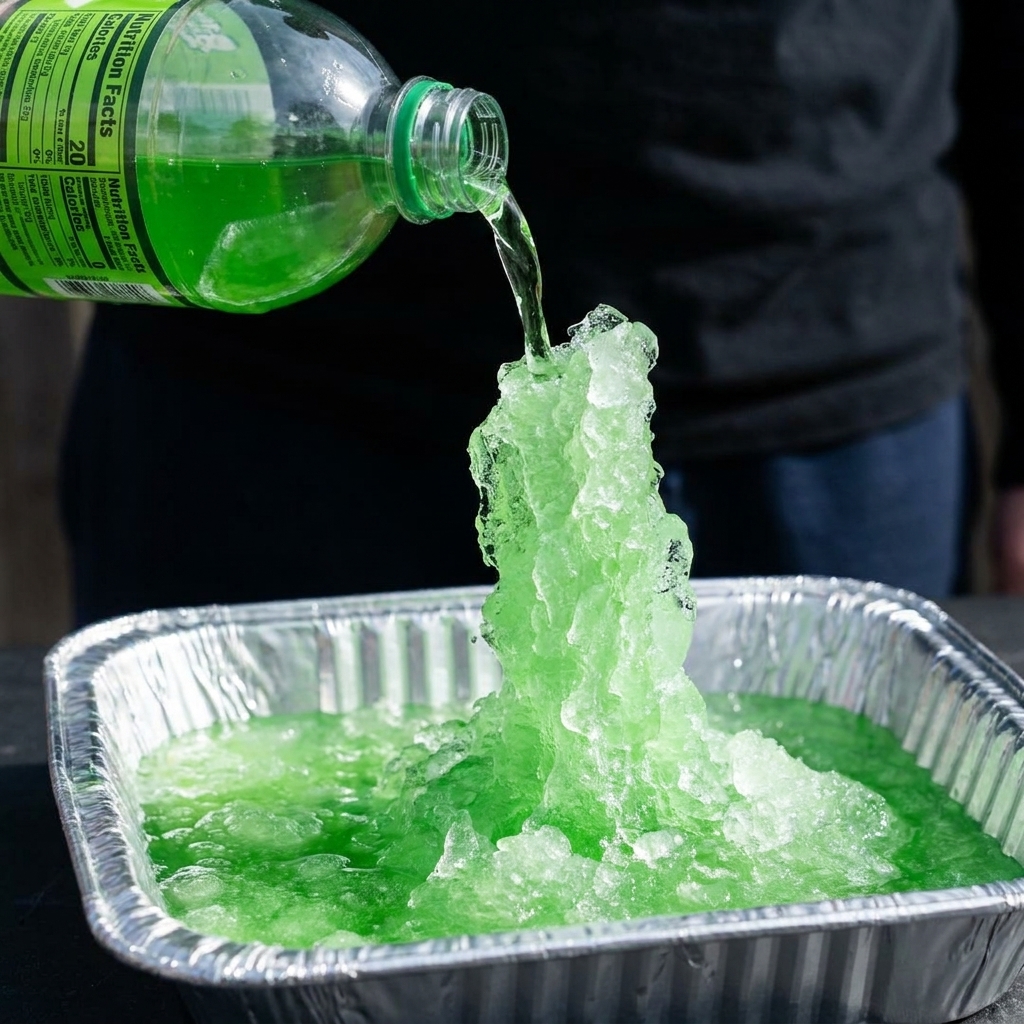
Water is cooled below 0°C but does not freeze because it lacks a “trigger” to form ice crystals.
Steps
- Place a bottle of distilled water in the freezer.
- Do NOT let it freeze completely.
- Cool it for 2–3 hours (depends on freezer strength).
- Carefully remove it without shaking.
- Pour it onto ice or tap the bottle.
What happens
The water instantly turns into ice before your eyes.
Science explanation
The liquid is unstable and freezes immediately once nucleation begins.
Method 2: Ice and Salt Freezing Bath
Salt lowers the freezing point of water and creates extreme cold temperatures.
Steps
- Fill a bowl with ice.
- Add salt generously.
- Place a sealed container of water inside.
- Wait and observe rapid freezing.
Why it works
Salt melts ice but lowers temperature to as low as -21°C.
This is one of the most reliable answers to How to Turn Water Into Ice Instantly in home experiments
Method 3: Rapid Ice Bath Cooling
This method uses fast heat transfer.
Steps
- Fill a metal bowl with ice water.
- Place a thin metal container with water inside.
- Stir gently.
Result
Water cools very quickly and begins freezing much faster than normal.
Science insight
Metal conducts heat quickly, speeding up energy loss.
Method 4: Disturbance Trigger Freezing
This is a continuation of supercooling.
Steps
- Supercool water in a bottle.
- Tap or shake it suddenly.
- Watch instant ice formation.
Why it works
Disturbance triggers crystal formation throughout the liquid.
Method 5: Pressure-Based Freezing
Changing pressure can affect freezing behavior.
Steps
- Use a syringe filled with water.
- Apply strong pressure.
- Release suddenly into a cold environment.
Result
Partial rapid freezing occurs.
Science explanation
Pressure changes molecular structure and stability.
Method 6: Very Cold Metal Surface
Metal rapidly removes heat.
Steps
- Freeze a metal plate or tray.
- Place water droplets on it.
- Observe freezing within seconds.
Why it works
Heat transfers instantly from water to metal.
Method 7: Liquid Nitrogen (Advanced Method)
⚠️ Only for professionals or supervised demonstrations.
Steps
- Slowly pour liquid nitrogen into a container of water.
- Observe immediate freezing and vapor clouds.
Result
Almost instant ice formation.
Safety warning
Liquid nitrogen is extremely cold (-196°C) and dangerous without proper equipment.
Method 8: Alcohol Cooling Method
Alcohol cools faster than water due to low freezing point.
Steps
- Place water container in alcohol-ice mixture.
- Wait for rapid cooling.
- Watch ice formation speed increase.
Science idea
Alcohol enhances heat transfer efficiency.
Method 9: Vacuum Flash Freezing (Concept Method)
Used in industrial settings.
Steps
- Place water in low-pressure chamber.
- Reduce pressure rapidly.
- Water evaporates quickly, cooling itself.
Result
Water freezes almost instantly.
Real-world use
Used in freeze-drying food technology.
Why These Methods Work Together
All 9 methods demonstrate different principles behind How to Turn Water Into Ice Instantly:
- Temperature reduction
- Pressure change
- Energy transfer
- Crystal nucleation
- Chemical interaction
Each method reveals a different side of physics.
Real Science Behind “Instant Ice”
Even though we say “instant,” freezing still obeys natural laws. What changes is the speed of the process.
Key factors include:
1. Heat Transfer Rate
Faster heat loss = faster freezing.
2. Nucleation Sites
Ice forms faster when crystals have a starting point.
3. Molecular Stability
Supercooled water is unstable and freezes suddenly.
4. External Triggers
Shock, movement, or impurities trigger freezing.
Safety Tips for Experiments
When trying to understand How to Turn Water Into Ice Instantly, safety is important:
- Always supervise children
- Avoid extreme chemicals without guidance
- Use safe containers
- Handle cold objects carefully
- Do not ingest experimental materials
Educational Benefits
These experiments are widely used in STEM learning because they teach:
- Phase changes
- Thermodynamics
- Molecular behavior
- Scientific observation
- Hypothesis testing
Students not only learn science but also develop curiosity and analytical thinking.
Common Mistakes
1. Using tap water instead of distilled water
Impurities affect freezing behavior.
2. Shaking supercooled water too early
This causes premature freezing.
3. Incorrect temperature timing
Freezing requires precise conditions.
4. Using plastic instead of metal containers
Slows down heat transfer.
Fun Classroom Activities
Teachers can turn this topic into interactive lessons:
- Freeze race experiments
- Supercooling demonstrations
- Ice crystal observation
- Group hypothesis testing
Students love seeing science in action.
Real-Life Applications
Understanding How to Turn Water Into Ice Instantly has practical uses:
- Food preservation
- Medical storage
- Industrial cooling systems
- Cryogenics research
- Weather science studies
Conclusion
Learning How to Turn Water Into Ice Instantly is not just a fun trick it is a journey into real scientific principles. From supercooling and salt ice baths to advanced vacuum freezing and liquid nitrogen effects, each method reveals how temperature, pressure, and molecular behavior shape the physical world.
While some methods are simple enough for home experiments, others are used in advanced laboratories and industrial processes. Together, they show that what looks like “instant ice” is actually the result of carefully controlled scientific conditions.
By exploring these 9 methods, you gain a deeper understanding of physics while enjoying exciting hands-on experiments. Whether you’re a student, teacher, or curious learner, these techniques turn everyday water into a fascinating scientific discovery.
