
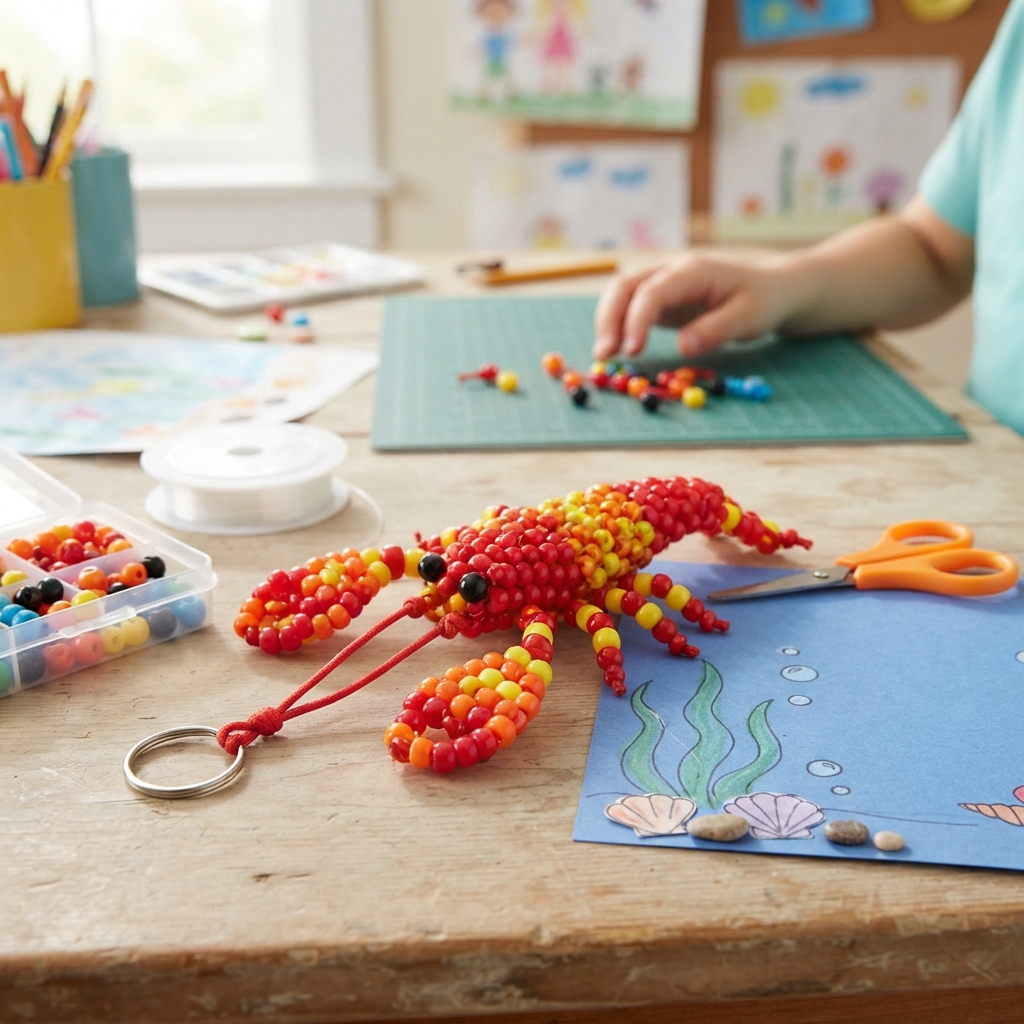
A beaded lobster is a fun and colorful craft project that children can enjoy making. With bright beads, strong craft cord, and a simple pattern, kids can create a cute lobster with a long body, many legs, and two large claws. This project is perfect for an ocean-themed classroom activity, a summer craft, or a creative afternoon at home.
Materials Needed
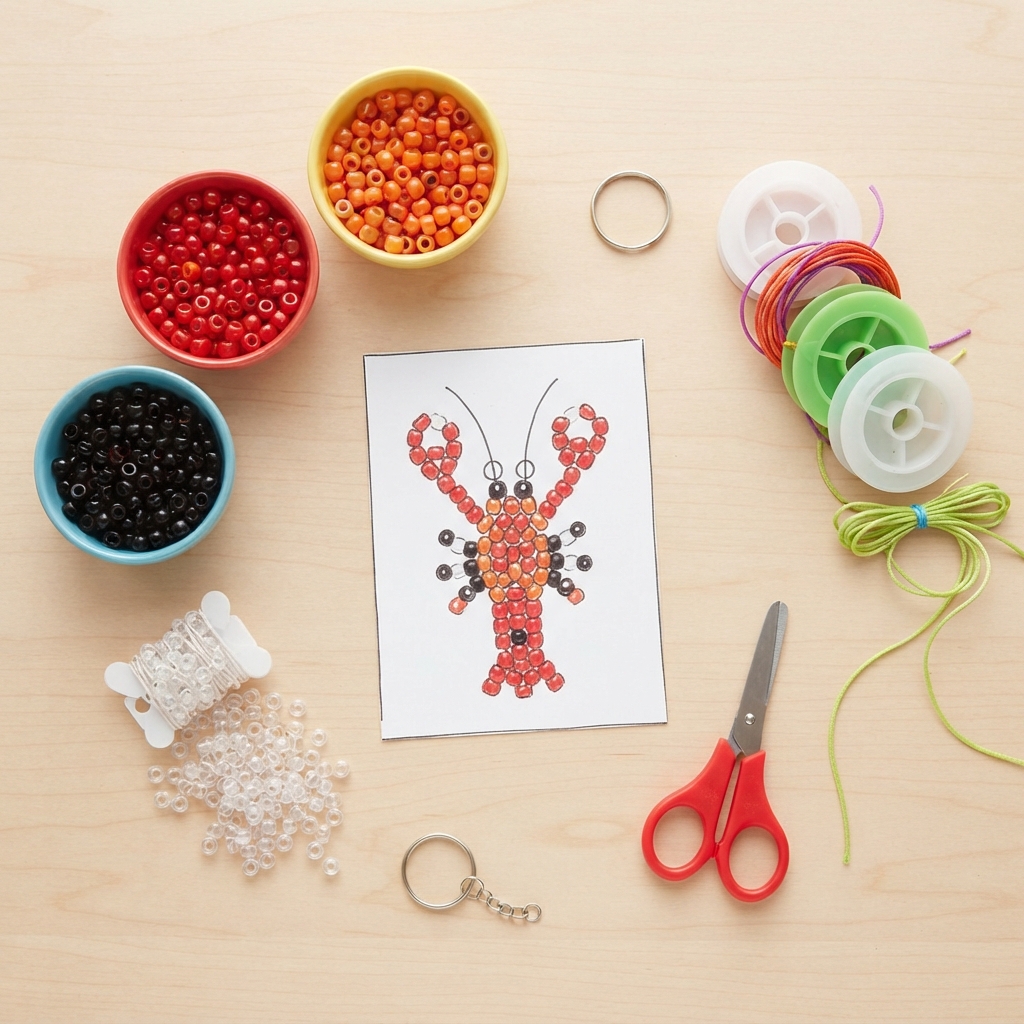
To make a beaded lobster, children will need:
- Red or orange beads for the body
- Black beads for the eyes
- Smaller beads for the legs
- Larger beads for the claws
- Strong beading cord or craft string
- Scissors
- A small keychain ring, optional
Children can use different colors to create their own imaginative lobster.
How to Make a Beaded Lobster
Begin by choosing the colors for the lobster. Red, orange, and dark blue are popular choices, but children can use any colors they like.
Cut a suitable length of beading cord and start threading the beads according to a simple lobster pattern. Use the main beads to create the lobster’s long body.
Add smaller beads along both sides to represent the legs. At the front, use larger beads to create the two claws. Small dark beads can be added for the eyes.
Continue following the pattern until the lobster is complete. Carefully tie the ends of the cord together. An adult can help children secure the knots and trim away any extra cord.
Make a Colorful Lobster
Children can make their lobsters bright and unique. They can use different colors for the body, claws, and legs.
Try making:
- A bright red lobster
- A blue and green lobster
- A purple lobster
- A rainbow lobster
- An orange and yellow lobster
Adding patterns to the body can make each lobster look special.
Why Children Enjoy This Craft
Making a beaded lobster helps children develop fine motor skills and hand-eye coordination. Threading small beads onto cord requires careful movements and attention.
Following a pattern also encourages concentration, patience, counting, and sequencing. Children can count the beads on the body and legs while learning to recognize different colors and shapes.
The craft also encourages creativity because children can invent their own lobster designs.
Learn About Lobsters
A beaded lobster can be part of an exciting lesson about ocean animals. Lobsters are marine crustaceans with hard shells, long antennae, and strong claws.
They use their claws to handle food and protect themselves. Lobsters also have several pairs of walking legs that help them move along the ocean floor.
Parents and teachers can explain that lobsters live in oceans and are often found near rocky areas or on the seafloor.
Turn the Lobster Into a Keychain
After finishing the beaded lobster, children can attach a small keychain ring to it. The finished craft can decorate a backpack, pencil case, school bag, or craft box.
It can also make a cute handmade gift for a friend, parent, teacher, or family member.
Create an Ocean-Themed Collection
Children can make several beaded sea animals to create their own underwater collection. They can make a lobster along with crabs, fish, dolphins, turtles, octopuses, whales, and starfish.
Arrange the finished animals on a blue sheet of paper or cardboard. Add paper seaweed, coral, shells, and bubbles to create a colorful underwater scene.
Safety Tips
Small beads can be a choking hazard, so young children should always complete this craft under adult supervision. Keep beads away from babies and toddlers.
Adults should also help children when using scissors and securing the final knots.
Conclusion
A beaded lobster is a creative, colorful, and educational craft for children. With simple materials and a little imagination, kids can create an adorable ocean animal while practicing fine motor skills, concentration, patience, and creativity. Whether used as a decoration, keychain, or part of an underwater collection, this beaded lobster is a fun project for young crafters.
