
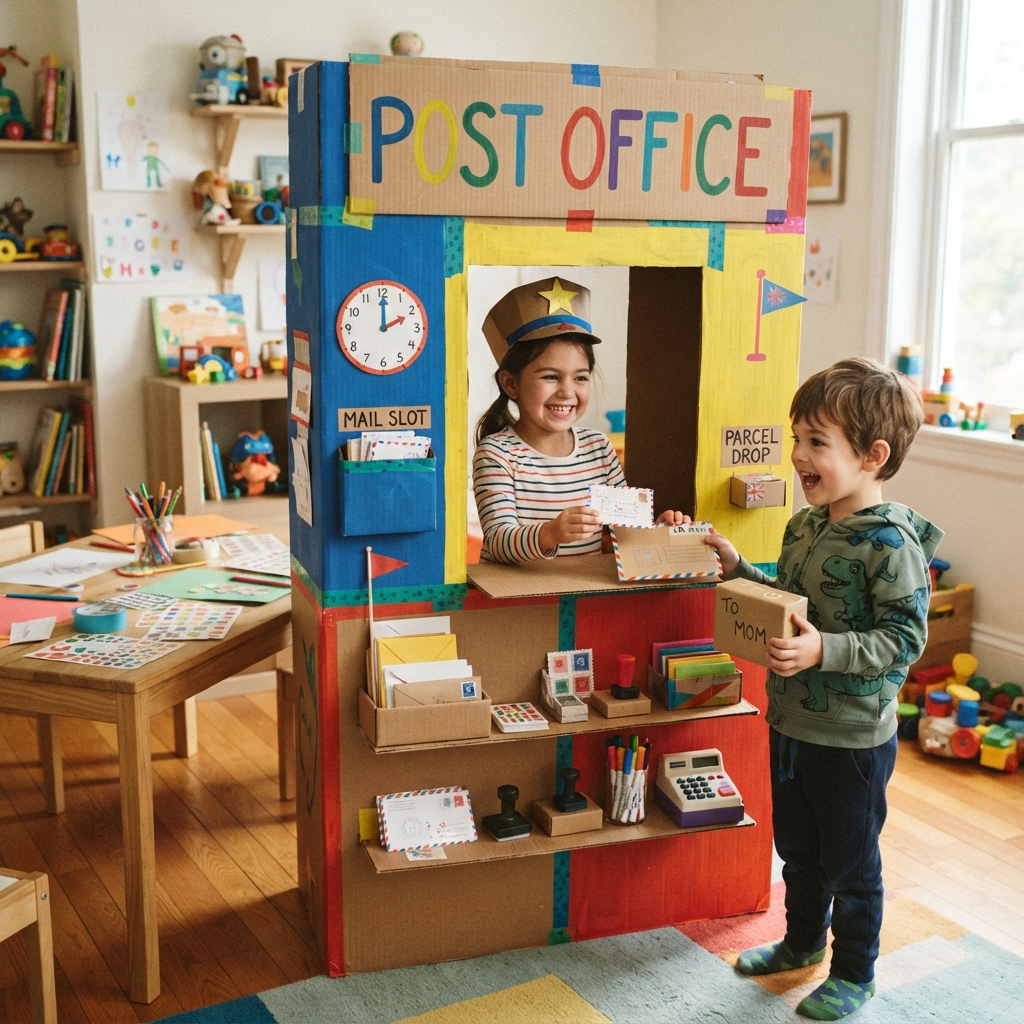
A cardboard post office project is a delightful craft that allows children to explore the exciting world of mail delivery while developing creativity, communication, and problem-solving skills. Using recycled cardboard and simple craft materials, kids can design their own post office complete with a service counter, mailboxes, sorting area, delivery truck, and even handwritten letters.
This engaging activity combines art, learning, and imaginative play, making it perfect for classrooms, homeschool lessons, weekend crafts, or family fun.
Why Make a Cardboard Post Office?
A post office is an important place where letters and packages begin their journey to people around the world. By creating a miniature version from cardboard, children learn how mail is collected, sorted, and delivered while practicing teamwork and creative thinking.
This project also encourages recycling by turning ordinary cardboard into an exciting educational toy.
Materials You’ll Need
Gather these easy-to-find supplies before you begin.
- Large cardboard boxes
- Small cardboard scraps
- Construction paper
- Colored paper
- White paper
- Washable paint
- Markers and crayons
- Child-safe scissors
- Non-toxic glue
- Tape
- Popsicle sticks
- Bottle caps
- Cardboard tubes
- Ruler
- Pencil
- Stickers
- Toy figures or paper dolls
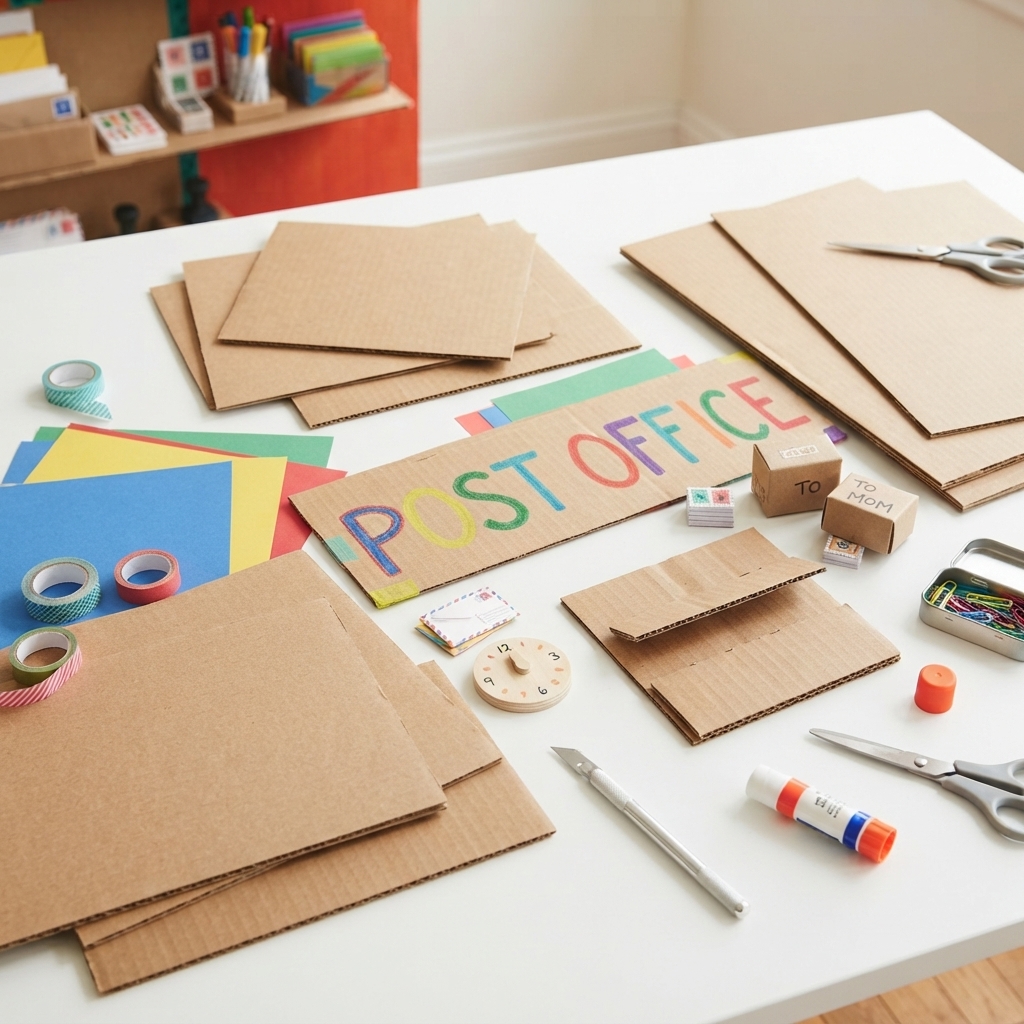
Step 1: Build the Base
Start with a large flat piece of cardboard.
This will become the foundation of your post office.
Sketch spaces for:
- Main building
- Mailboxes
- Delivery truck parking
- Sidewalk
- Trees
- Road
Paint the base green and gray to represent grass and pavement.
Step 2: Create the Post Office Building
Use a medium-sized cardboard box as the main building.
Cut out:
- Front door
- Windows
- Service entrance
Decorate the outside with bright colors.
Add a large sign reading:
Post Office
Children can invent their own town name, such as Sunnyville Post Office or Happy Mail Center.
Step 3: Make the Service Counter
Inside the building, create a customer service desk.
Use folded cardboard to build the counter.
Add paper items such as:
- Stamps
- Envelopes
- Forms
- Small parcels
Children can pretend to buy stamps and send letters.
Step 4: Build Mailboxes
Cut several small boxes from cardboard.
Decorate each one with numbers or names.
Paint them bright colors to make them easy to recognize.
Children can place letters inside and collect them during play.
Step 5: Create a Mail Sorting Area
The sorting room is where letters are organized before delivery.
Make shelves using thin cardboard strips.
Prepare tiny paper letters in different colors.
Label sorting bins with destinations such as:
- North
- South
- East
- West
This activity helps children practice sorting and organizing.
Step 6: Make a Delivery Truck
Transform a small cardboard box into a mail truck.
Decorate it with:
- Wheels made from bottle caps
- Windows
- Headlights
- Mail logo
Children can drive the truck around their cardboard town delivering letters and packages.
Step 7: Design Letters and Packages
Cut small rectangles from white paper.
Fold them into tiny envelopes.
Write friendly messages like:
- Hello!
- Thank You!
- Happy Birthday!
- Have a Great Day!
Create miniature cardboard boxes wrapped as pretend packages.
Step 8: Add a Stamp Station
Create a small stamp display.
Draw colorful pretend stamps featuring:
- Animals
- Flowers
- Rockets
- Butterflies
- Rainbows
Children can decorate their letters before mailing them.
Step 9: Decorate the Outside
Bring your post office to life with fun decorations.
Add:
- Trees
- Flowers
- Benches
- Streetlights
- Bicycle rack
- Flag
- Parking spaces
- Direction signs
These details make the project feel like a real neighborhood post office.
Step 10: Create Friendly Characters
Draw and cut out paper characters such as:
- Postal workers
- Mail carriers
- Customers
- Children
- Families
Fold small tabs at the bottom so they can stand upright.
Each character can have a unique story and role.
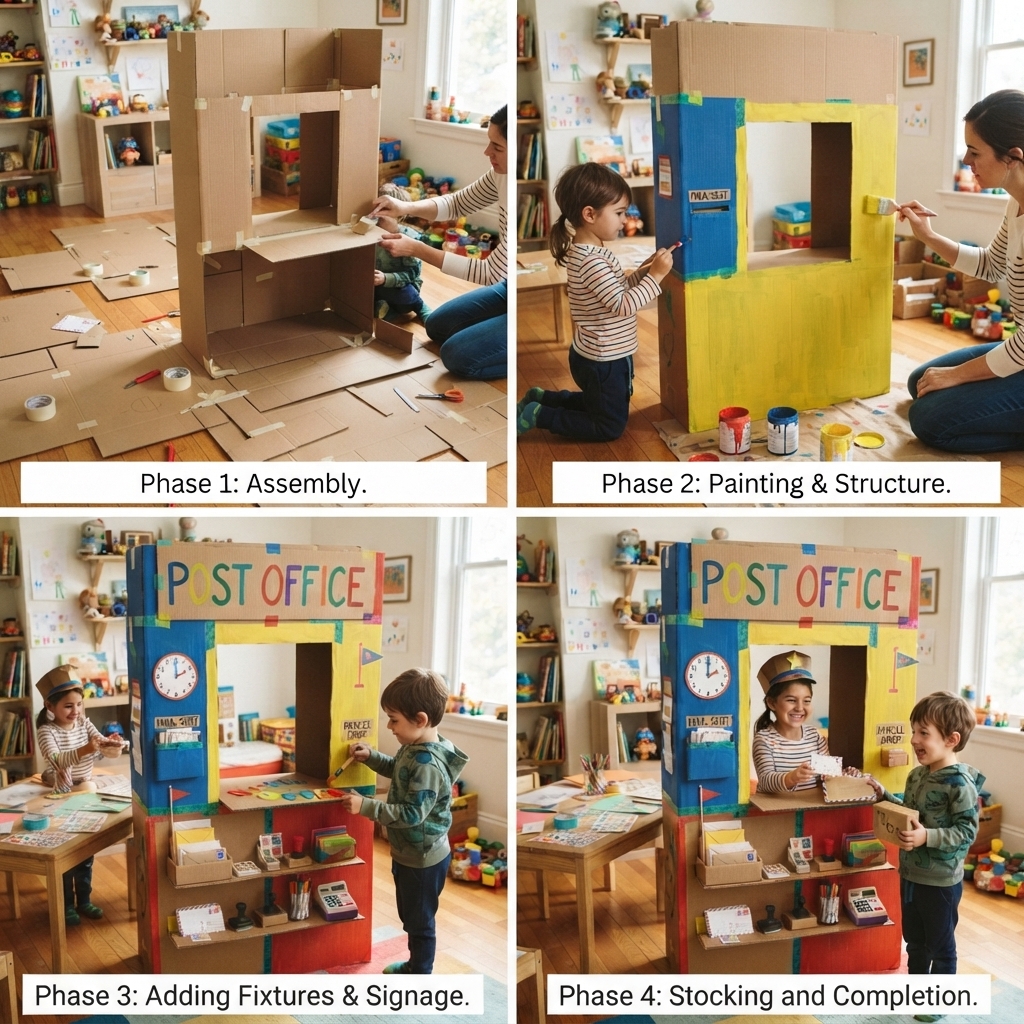
Educational Benefits
This cardboard project teaches many valuable skills.
Encourages Creativity
Children design and decorate every part of the post office.
Improves Fine Motor Skills
Cutting, folding, painting, and gluing strengthen hand coordination.
Develops Communication Skills
Writing letters encourages reading and writing practice.
Teaches Organization
Sorting mail helps children understand classification and sequencing.
Inspires Imaginative Play
Role-playing creates exciting stories and adventures.
Promotes Recycling
Children discover how everyday materials can become something amazing.
Fun Pretend Play Ideas
Once the post office is complete, children can enjoy endless activities.
Mail Carrier Adventure
Deliver letters throughout the cardboard town.
Stamp Collector
Design and collect colorful homemade stamps.
Package Delivery
Sort and deliver packages to different houses.
Friendly Pen Pals
Write kind messages to family members or friends.
Post Office Manager
Help customers send letters and organize the day’s mail.
Safety Tips
Craft safely by following these simple guidelines.
- Always use child-safe scissors.
- Use non-toxic glue and washable paint.
- Ask an adult for help with difficult cutting.
- Keep the work area clean.
- Wash hands after painting.
Creative Extension Ideas
Expand the project by adding:
- Parcel lockers
- Bicycle delivery service
- Mail airplane
- Mail train
- Town map
- Village houses
- Greeting card shop
- Gift wrapping station
- Recycling bin
- Community bulletin board
Each addition makes the cardboard town even more exciting.
Learning Through Play
Parents and teachers can ask questions such as:
- How does a letter travel from one place to another?
- Why do letters need addresses?
- What does a postal worker do each day?
- Why are stamps important?
- How can we write a kind message to someone?
These conversations help children understand communication while improving vocabulary and confidence.
Conclusion
A cardboard post office project for children is a creative and educational craft that transforms recycled materials into a busy place full of learning and imagination. As children build mailboxes, sorting stations, delivery trucks, and service counters, they develop fine motor skills, communication abilities, and problem-solving skills while discovering how the postal system connects people.
When the project is finished, the cardboard post office becomes a reusable playset where children can write letters, deliver packages, and invent exciting stories every day. It’s a wonderful way to combine creativity, recycling, and learning in one enjoyable activity that the whole family can share.
