
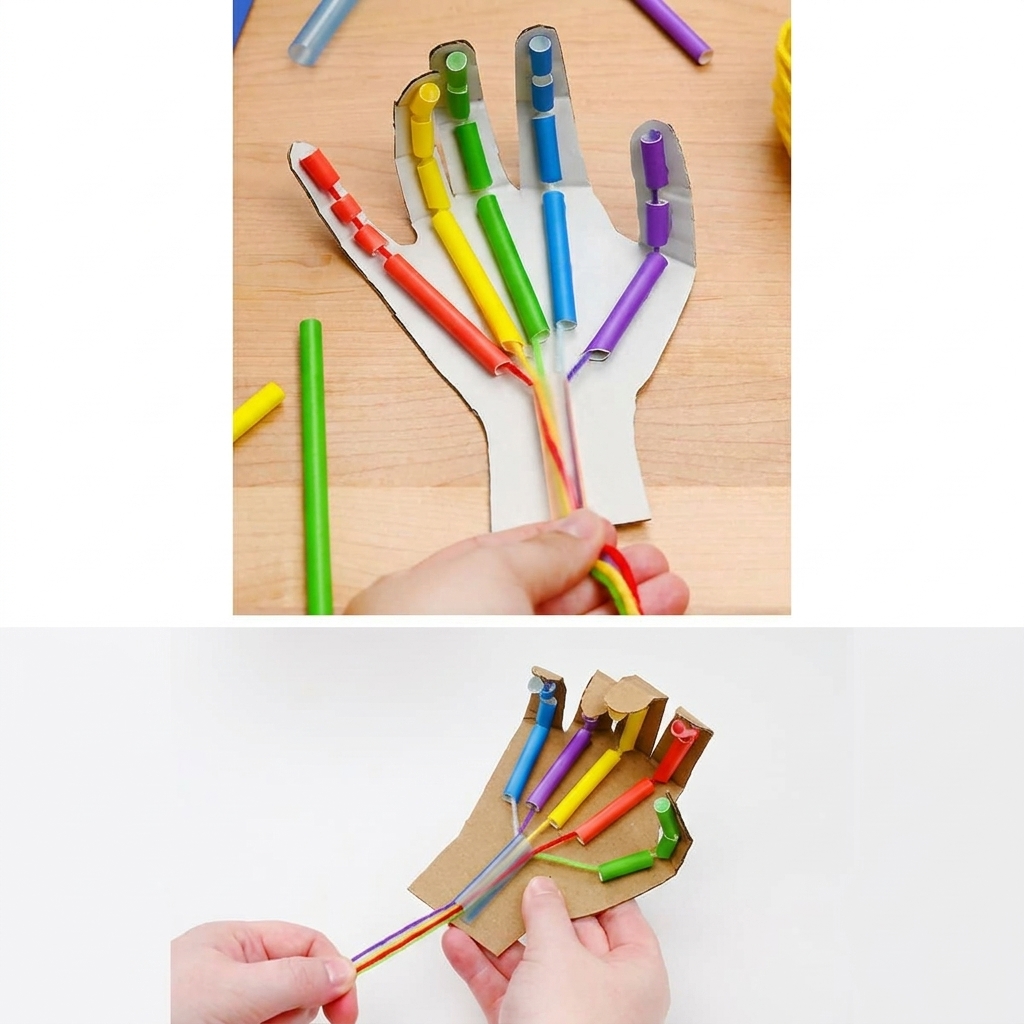
Traveling with children can be exciting, but keeping them entertained during long journeys often requires creativity. One of the most engaging STEM activities is learning how to make a robotic hand out of cardboard. This simple craft combines science, engineering, creativity, and hands-on fun using affordable materials that are easy to carry while traveling.
Whether you’re on a road trip, camping adventure, train ride, or family vacation, this cardboard robotic hand project can transform spare moments into educational experiences. In this guide, you’ll discover step-by-step instructions and seven travel-inspired craft variations that make learning exciting wherever you go.
Quick Overview Table
| Feature | Details |
| Project Name | How to Make a Robotic Hand Out of Cardboard |
| Skill Level | Beginner |
| Age Group | 6+ Years |
| Craft Type | STEM Travel Craft |
| Time Required | 30–60 Minutes |
| Main Materials | Cardboard, Straws, String, Glue |
| Educational Benefits | Engineering, Problem-Solving, Creativity |
| Travel Friendly | Yes |
| Cost | Low Budget |
| Adult Supervision | Recommended for Young Children |
Introduction
Finding meaningful travel activities for children can sometimes be challenging. Screens often become the default solution, but many parents prefer educational alternatives that encourage creativity and hands-on learning. That’s where learning how to make a robotic hand out of cardboard becomes the perfect travel craft.
This project introduces basic engineering concepts while remaining fun and accessible. Children learn how fingers move, how tendons work, and how simple mechanisms can create impressive results. Best of all, the materials are inexpensive, lightweight, and easy to pack in a travel bag.
A cardboard robotic hand can become a toy, a science project, a storytelling prop, or even part of a travel journal. The versatility of this craft makes it ideal for family adventures of all kinds.
Why Make a Robotic Hand While Traveling?
Travel crafts should be portable, engaging, and educational. A cardboard robotic hand checks all these boxes.
Here are some benefits:
- Encourages STEM learning
- Reduces screen time
- Keeps children occupied during downtime
- Promotes creativity and imagination
- Teaches basic engineering concepts
- Uses inexpensive materials
- Creates memorable travel experiences
Many children become fascinated when they realize they can control cardboard fingers using strings. The project feels like real robotics without requiring expensive technology.
Materials You’ll Need
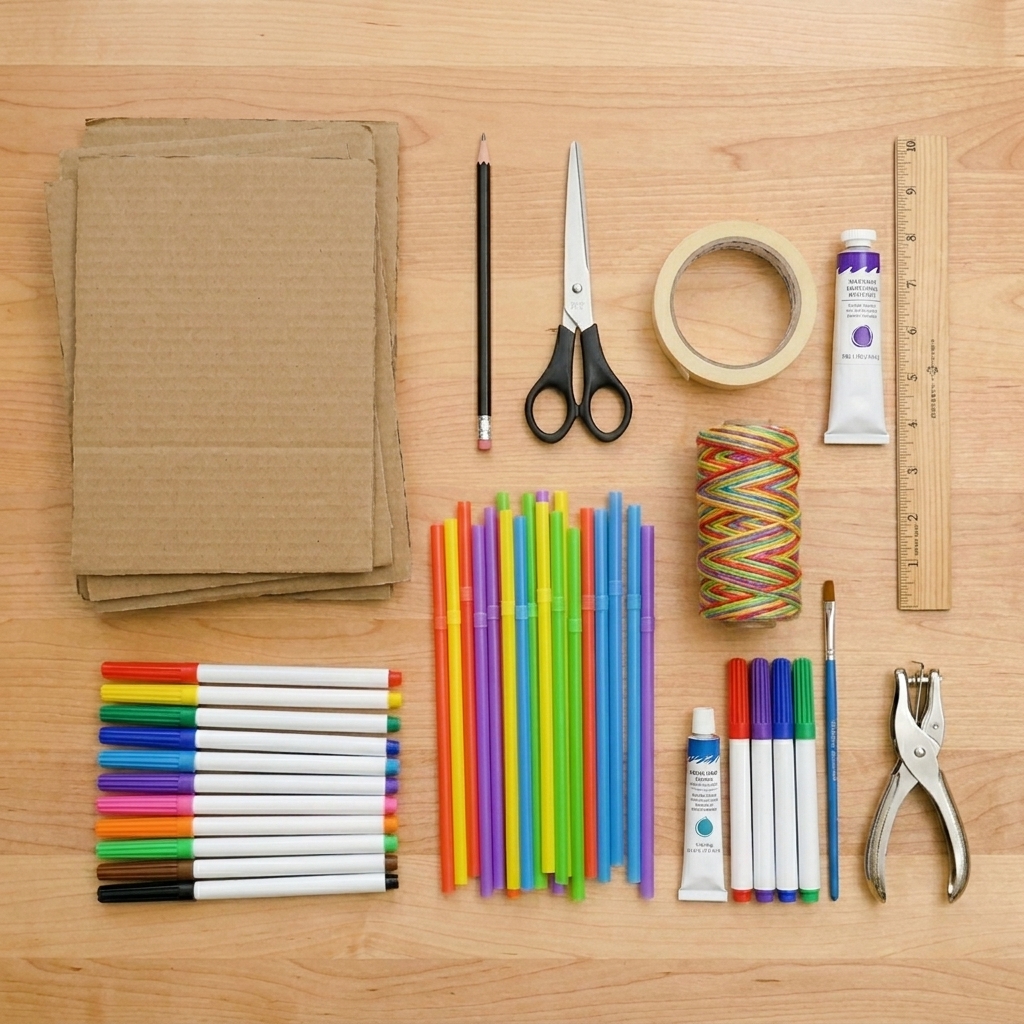
Before starting, gather these supplies:
- Thick cardboard
- Pencil
- Scissors
- Glue or tape
- Drinking straws
- String or yarn
- Ruler
- Markers or paint
- Hole punch (optional)
Most of these materials can be found at home or purchased inexpensively before a trip.
Step-by-Step Guide: How to Make a Robotic Hand Out of Cardboard
Step 1: Trace Your Hand
Place your hand on a piece of cardboard.
Using a pencil, carefully trace around your hand. Make the fingers slightly longer for a more robotic appearance.
Cut out the hand shape carefully.
Step 2: Create Finger Joints
Look at where your finger joints naturally bend.
Draw horizontal lines across each cardboard finger at those points.
Do not cut through the cardboard. Instead, lightly score the lines so the fingers can bend more easily.
Step 3: Prepare the Straws
Cut drinking straws into small sections.
Each finger will need three straw segments.
Glue the straw pieces vertically along each finger, leaving small gaps at the joints.
These straws act as guides for the strings.
Step 4: Thread the String
Insert a piece of string through the straw segments.
Start at the fingertip and continue down to the wrist area.
Leave extra string hanging below the wrist.
Repeat for every finger.
Step 5: Secure the Fingertips
Tape or glue the top of each string inside the fingertip.
Allow the adhesive to dry completely.
This connection enables the fingers to bend when the strings are pulled.
Step 6: Test the Movement
Pull each string gently.
The corresponding finger should curl inward.
If a finger sticks, adjust the straw placement or loosen the string.
Step 7: Decorate Your Robotic Hand
Use markers, stickers, paint, or travel-themed decorations.
Add gears, futuristic designs, maps, airplanes, or destination symbols.
Your robotic hand is now complete.
Understanding the Science Behind It
Learning how to make a robotic hand out of cardboard teaches children important scientific principles.
Human fingers move through tendons connected to muscles. The strings in the cardboard hand act similarly to tendons.
When a string is pulled, the cardboard finger bends. This demonstrates how mechanical systems can imitate biological movement.
Children gain exposure to:
- Robotics
- Biomechanics
- Engineering design
- Problem-solving
- Structural design
These concepts create a strong foundation for future STEM learning.
7 Fun Travel Crafts Inspired by the Cardboard Robotic Hand
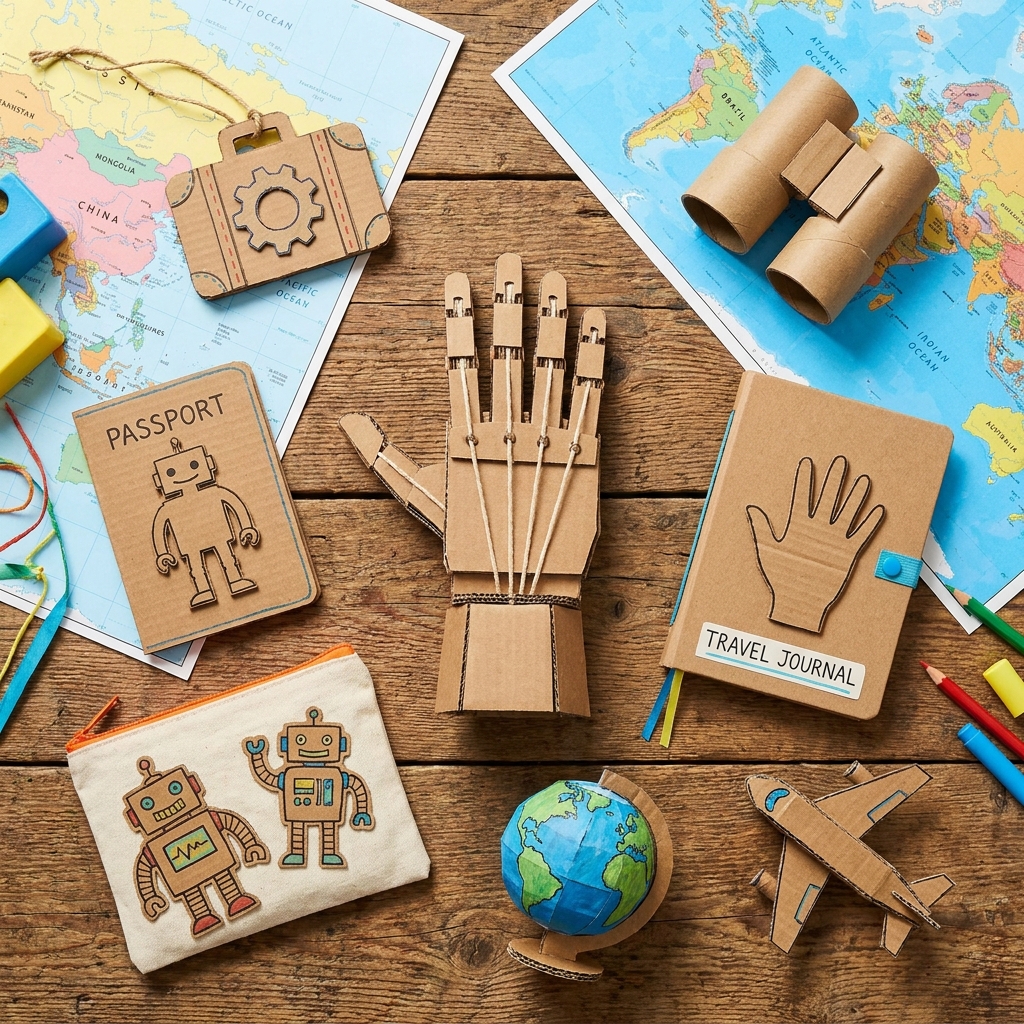
The basic robotic hand can be customized in many exciting ways. Here are seven travel-themed variations.
1. Explorer Robot Hand
Transform the robotic hand into an explorer’s tool.
Decorate it with:
- Compass drawings
- Mountain stickers
- Travel stamps
- Adventure symbols
Children can pretend the robotic hand helps them navigate new destinations.
Benefits
- Encourages imaginative play
- Enhances travel storytelling
- Builds curiosity about geography
2. Airport Adventure Hand
Turn the robotic hand into a futuristic airport robot.
Add:
- Airplane designs
- Runway markings
- Airport codes
- Travel luggage drawings
This version is especially fun before flights.
Benefits
- Builds excitement for travel
- Introduces aviation concepts
- Encourages creative role-playing
3. Safari Robot Hand
Decorate each finger as a different safari animal.
Examples include:
- Lion
- Elephant
- Zebra
- Giraffe
- Monkey
Children can use the robotic hand to tell animal stories during road trips.
Benefits
- Supports wildlife education
- Improves storytelling skills
- Increases animal knowledge
4. Ocean Explorer Hand
Create an underwater theme.
Decorate with:
- Fish
- Sharks
- Coral reefs
- Sea turtles
Each finger can represent a different marine creature.
Benefits
- Encourages environmental awareness
- Introduces ocean ecosystems
- Inspires creativity
5. Space Traveler Hand
Imagine traveling beyond Earth.
Decorate the hand using:
- Rockets
- Planets
- Stars
- Astronauts
The robotic hand becomes a space explorer’s gadget.
Benefits
- Encourages STEM exploration
- Sparks interest in astronomy
- Supports imaginative thinking
6. World Landmark Hand
Assign a famous landmark to each finger.
Ideas include:
- Eiffel Tower
- Big Ben
- Statue of Liberty
- Pyramids
- Taj Mahal
Children learn about global destinations while crafting.
Benefits
- Improves geography knowledge
- Supports cultural awareness
- Makes travel education fun
7. Camping Adventure Hand
Create a wilderness-themed robotic hand.
Add:
- Trees
- Tents
- Campfires
- Hiking trails
Perfect for outdoor family vacations.
Benefits
- Connects children with nature
- Encourages outdoor exploration
- Creates memorable camping activities
Travel Tips for Crafting on the Go
If you’re planning to make this project while traveling, consider these practical tips.
Pack a Craft Kit
Prepare a small container with:
- Mini scissors
- String
- Tape
- Markers
- Lightweight cardboard
Having everything organized makes crafting easier.
Use Recycled Materials
Reuse materials from travel packaging.
Examples include:
- Cereal boxes
- Shipping cartons
- Paper straws
This promotes sustainability and reduces waste.
Choose Easy-to-Clean Supplies
Washable markers and glue sticks are excellent options.
They minimize mess and make cleanup simple.
Encourage Group Activities
Children can work together to build multiple robotic hands.
This develops teamwork and communication skills.
Educational Benefits of Cardboard Robotics
Parents and educators appreciate projects that combine fun with learning.
Learning how to make a robotic hand out of cardboard supports:
Fine Motor Skills
Cutting, threading, and assembling improve hand coordination.
Problem-Solving
Children must identify and fix movement issues.
Creativity
Every robotic hand can be uniquely customized.
Engineering Thinking
Kids learn how structures and mechanisms function.
Patience
Building a robotic hand requires careful assembly and testing.
These skills benefit children far beyond the craft itself.
Common Mistakes and Solutions
Finger Won’t Bend
Cause:
String may be too tight.
Solution:
Loosen the string and test again.
Straw Segments Shift
Cause:
Insufficient glue.
Solution:
Apply stronger adhesive and allow drying time.
Cardboard Tears
Cause:
Cardboard is too thin.
Solution:
Use thicker cardboard.
Strings Tangle
Cause:
Poor organization.
Solution:
Label or separate strings during assembly.
Making the Project More Advanced
Older children can add extra features.
Ideas include:
- Elastic bands for finger return motion
- Multiple layers of cardboard
- Robotic arm attachments
- Decorative LED lights
- Mechanical wrist movement
These enhancements introduce more advanced engineering concepts.
Why This Craft Is Perfect for Family Travel
The best travel crafts combine education, creativity, and convenience.
Learning how to make a robotic hand out of cardboard provides all three.
Families appreciate that:
- Materials are inexpensive
- Setup is simple
- Children remain engaged
- Educational value is high
- Finished projects become memorable souvenirs
Unlike many disposable travel activities, the robotic hand can continue providing entertainment long after the trip ends.
Conclusion
Learning how to make a robotic hand out of cardboard is an exciting way to combine creativity, science, and travel fun. This simple project transforms ordinary cardboard into an interactive engineering masterpiece that children can proudly build and operate themselves.
Whether you’re enjoying a family road trip, flying to a new destination, camping in nature, or simply looking for educational entertainment during vacation downtime, this robotic hand project delivers hours of meaningful engagement. The seven travel-themed variations add even more possibilities, allowing children to explore geography, wildlife, space, landmarks, and adventure through imaginative play.
By using affordable materials and simple construction techniques, families can create memorable learning experiences anywhere. The next time you need an engaging travel activity, try making a cardboard robotic hand and discover how creativity, engineering, and exploration can come together in one unforgettable craft.
