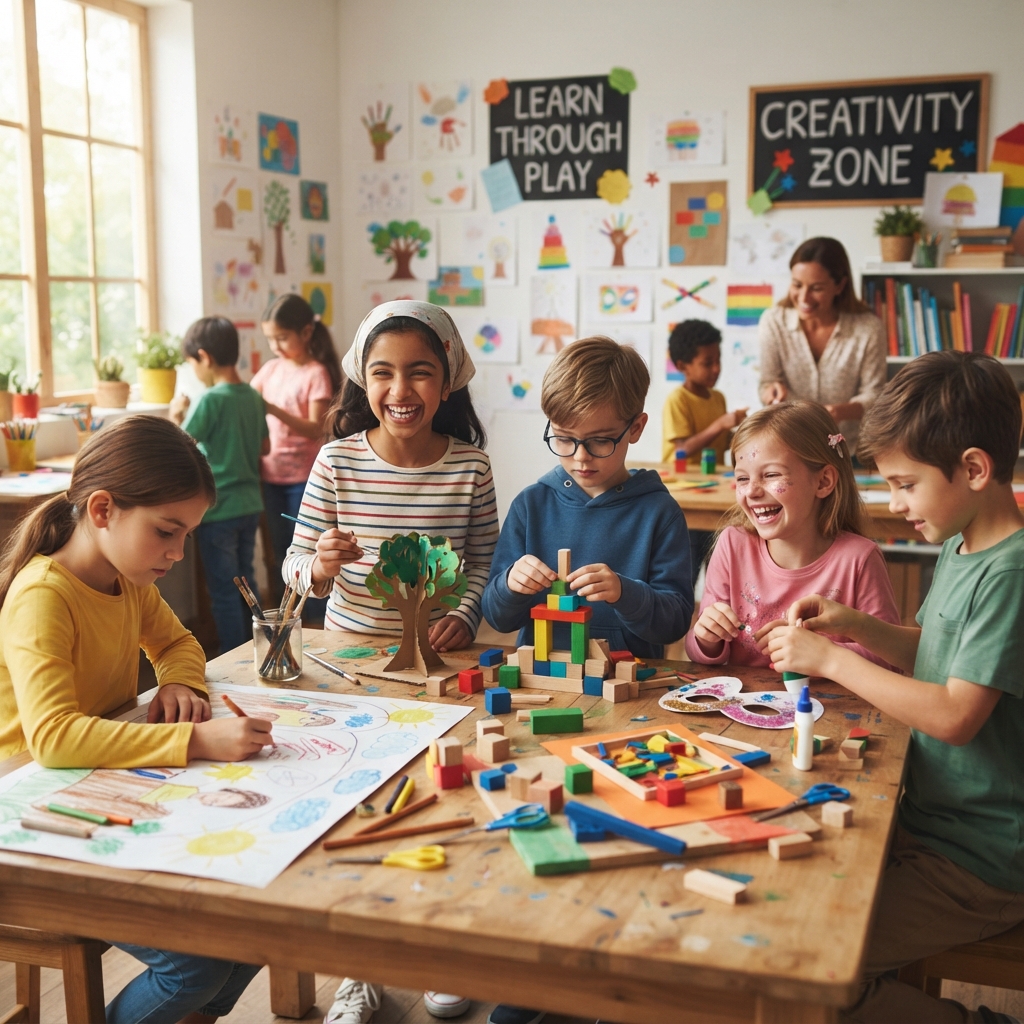
School projects are an essential part of a child’s learning journey because they encourage creativity, curiosity, and hands-on exploration. Instead of simply reading from textbooks, children actively participate in activities that help them understand new ideas through experience. Whether building a model, creating a craft, conducting a science experiment, or working as a team, students gain valuable knowledge while having fun.
A school project involving fun activities allows children to develop important academic, social, and practical skills in an enjoyable environment. These projects can be completed in classrooms, libraries, community centers, or at home, making learning flexible and exciting. By using simple or recycled materials, teachers and parents can create meaningful educational experiences without spending a lot of money.
This article explores the benefits of fun school projects, creative activity ideas, and practical tips for making every project successful.
Why Fun School Projects Are Important
Children learn best when they are actively involved in the learning process. Creative projects encourage them to ask questions, solve problems, and express their ideas while working independently or with classmates.
Fun school projects help children:
- Develop creativity and imagination.
- Improve fine motor skills.
- Build confidence and independence.
- Strengthen communication skills.
- Encourage teamwork and cooperation.
- Improve concentration and patience.
- Develop critical thinking abilities.
- Foster a positive attitude toward learning.
These experiences prepare children for future academic success while helping them enjoy the learning process.
Arts and Crafts Activities
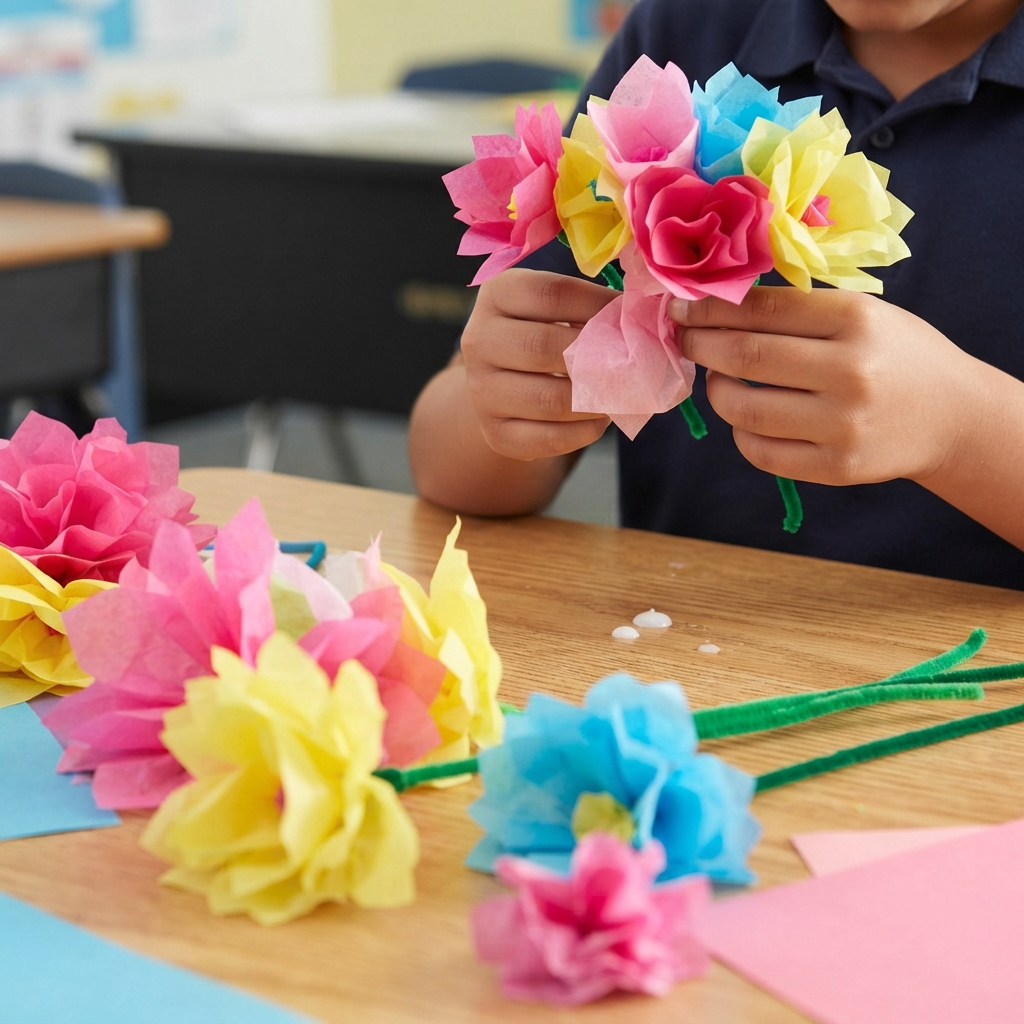
Arts and crafts encourage self-expression while developing fine motor skills and creativity.
Popular classroom craft ideas include:
- Paper flowers
- Animal masks
- Greeting cards
- Origami animals
- Friendship bracelets
- Paper collages
- Puppet making
- Decorative classroom posters
These projects allow children to experiment with colors, shapes, and textures while creating something unique.
Recycled Craft Projects
Using recycled materials teaches children the importance of protecting the environment while inspiring creative thinking.
Useful recycled materials include:
- Egg cartons
- Plastic bottle caps
- Cardboard boxes
- Toilet paper rolls
- Plastic bottles
- Newspapers
- Paper bags
- Cereal boxes
Children can transform these everyday items into toy vehicles, robots, animals, castles, flowers, and imaginative sculptures.
Exciting Science Experiments
Science projects introduce children to observation, prediction, and discovery.
Baking Soda Volcano
Mix baking soda and vinegar to create a colorful eruption while learning about chemical reactions.
Walking Water Experiment
Watch colored water travel through paper towels to demonstrate capillary action.
Floating Egg Experiment
Discover how salt changes the density of water, allowing an egg to float.
Balloon Inflation Experiment
Create carbon dioxide through a simple chemical reaction to inflate a balloon.
Rainbow Density Jar
Layer colorful liquids to explore density and create a beautiful rainbow effect.
These activities make science exciting and easy to understand.
STEM Challenges
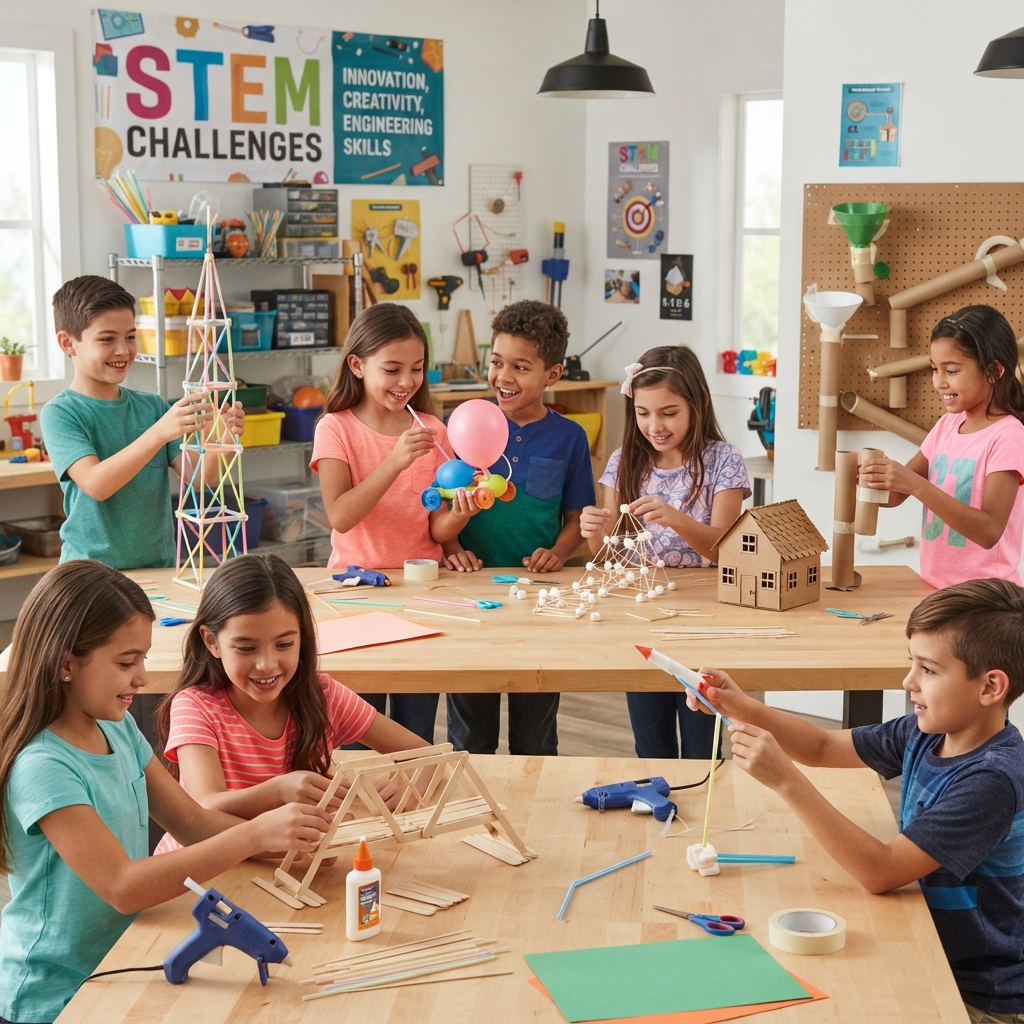
STEM activities encourage innovation, creativity, and engineering skills.
Children can build:
- Popsicle stick bridges
- Balloon-powered cars
- Straw towers
- Paper rockets
- Marble runs
- Marshmallow structures
- Cardboard houses
By testing and improving their designs, students learn perseverance and creative problem-solving.
Nature-Based Activities
Nature provides endless opportunities for learning.
Children can collect:
- Leaves
- Twigs
- Pinecones
- Flowers
- Small stones
- Seeds
These materials can be used to create collages, nature journals, decorative frames, and seasonal artwork while encouraging appreciation for the environment.
Animal-Themed Projects
Animal crafts combine creativity with science learning.
Children enjoy creating:
- Egg carton turtles
- Paper lions
- Butterfly crafts
- Frog puppets
- Beaded fish
- Paper owls
- Penguin decorations
- Elephant models
Teachers can connect these projects with lessons about habitats, ecosystems, and wildlife conservation.
Seasonal Activities
Seasonal projects keep classroom learning fresh and exciting.
Spring
- Flower crafts
- Butterflies
- Rainbows
- Bees
Summer
- Beach scenes
- Ice cream crafts
- Ocean animals
- Sun catchers
Autumn
- Leaf collages
- Pumpkins
- Hedgehogs
- Forest animals
Winter
- Snowflakes
- Snowmen
- Holiday ornaments
- Penguins
These projects help children understand and celebrate seasonal changes.
Sensory Learning Activities
Sensory play supports early childhood development by encouraging exploration through touch, sight, and movement.
Popular activities include:
- Homemade slime
- Kinetic sand
- Rainbow rice
- Sensory bottles
- Foam play
- Ice painting
- Water beads
These experiences encourage creativity while supporting sensory development.
Storytelling Projects
Storytelling activities strengthen literacy and communication skills.
Children can:
- Create puppets.
- Design storybooks.
- Paint story stones.
- Make comic strips.
- Build puppet theaters.
- Invent imaginative characters.
Sharing stories with classmates improves confidence and public speaking skills.
Group Classroom Project
Collaborative activities teach children how to work together and solve problems as a team.
Examples include:
- Classroom murals
- Friendship trees
- Kindness posters
- Community maps
- Alphabet walls
- Collaborative mosaics
These projects encourage cooperation, communication, and respect for others’ ideas.
Outdoor Learning Activities
Outdoor projects combine creativity with exploration and physical activity.
Fun ideas include:
- Sidewalk chalk art
- Nature scavenger hunts
- Bird feeders
- Garden planting
- Bubble painting
- Wind chimes
Outdoor learning encourages children to observe the natural world while staying active.
Essential Materials
Many school projects require only basic craft supplies.
| Material | Common Uses |
| Colored paper | Crafts and decorations |
| Cardboard | Models and structures |
| Glue | Assembly |
| Child-safe scissors | Cutting |
| Paint | Artwork |
| Markers | Drawing and coloring |
| Popsicle sticks | Building projects |
| Pipe cleaners | Decorations and animals |
| Beads | Jewelry and keychains |
| String | Hanging crafts |
| Bottle caps | Recycled art |
| Egg cartons | Animal projects |
Keeping these materials available makes it easy to organize creative activities throughout the school year.
Tips for Successful School Projects
Teachers and parents can help children enjoy projects by following a few simple guidelines:
- Select age-appropriate activities.
- Prepare materials before beginning.
- Explain each step clearly.
- Encourage creativity rather than perfection.
- Allow children to make independent choices.
- Praise effort and participation.
- Create a safe and organized workspace.
- Display completed projects proudly.
Positive encouragement helps children build confidence and enjoy learning.
Skills Children Develop
Fun school projects help children strengthen many valuable abilities:
- Creativity
- Critical thinking
- Communication
- Collaboration
- Fine motor coordination
- Observation
- Organization
- Problem-solving
- Responsibility
- Self-confidence
These lifelong skills support children’s academic achievement and personal development.
Conclusion
A school project involving fun activities for children transforms education into an exciting adventure filled with creativity, exploration, and discovery. Whether children are creating colorful crafts, conducting science experiments, building STEM models, exploring nature, or working together on group projects, they develop important skills while enjoying the learning process. By combining education with imagination and hands-on experiences, teachers and parents can inspire children to become confident, curious, and enthusiastic learners who are eager to explore the world around them.
