
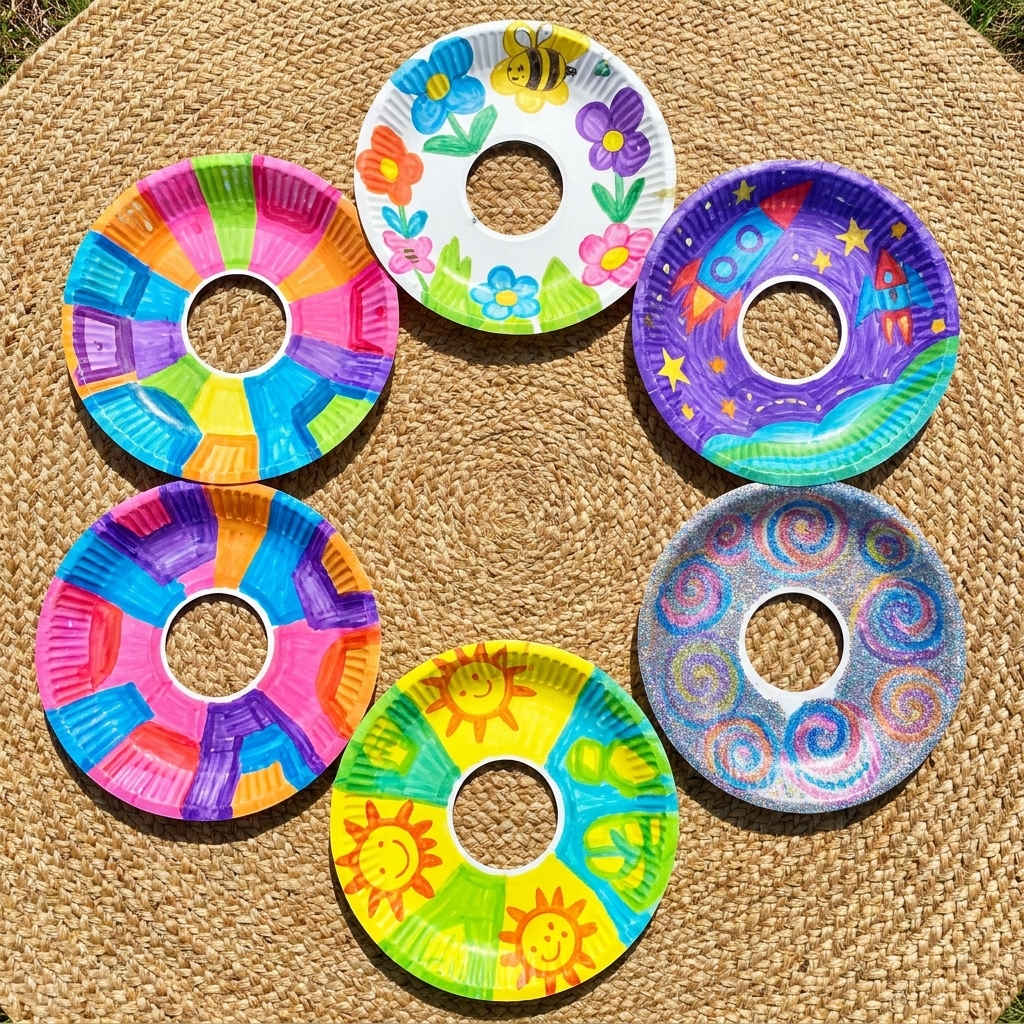
In a world where digital devices dominate children’s attention, simple hands-on crafts remain essential for healthy development. One of the most engaging and accessible activities is when children make flying discs from paper plates. This creative project transforms a basic household item into a fun, functional toy that encourages both imagination and physical activity.
Paper plate flying discs are not just crafts; they are learning experiences. Children gain confidence by creating something they can actually use, and they enjoy the excitement of seeing their handmade object fly through the air. This combination of creativity and movement makes the activity especially appealing.
Why Paper Plates Are Perfect for Flying Discs
Paper plates are lightweight, safe, and easy to decorate, making them ideal for children’s crafts. Their circular shape naturally resembles a flying disc, which means minimal modification is needed.
Key advantages include:
- Easy to find in homes and schools
- Very low cost
- Safe for young children
- Highly customizable
- Environmentally friendly when recycled
Because of these qualities, paper plates are often used in educational and recreational craft projects.
Table: Key Features of Paper Plate Flying Discs
| Feature | Description |
| Material | Lightweight paper plate |
| Difficulty | Very easy |
| Creativity level | High (colors, drawings, stickers) |
| Physical activity | Outdoor throwing and catching |
| Educational value | STEM learning through motion and aerodynamics |
| Social value | Encourages group play and teamwork |
Child #1: The Creative Artist
The first child who loves this activity is the creative artist. This child enjoys drawing, coloring, and designing unique patterns. For them, the paper plate is a blank canvas full of possibilities.
They may decorate their flying disc with:
- Bright rainbow patterns
- Animal faces
- Space themes like planets and stars
- Abstract art designs
This child values the creative process more than the final result. The act of designing the disc gives them joy and personal expression.
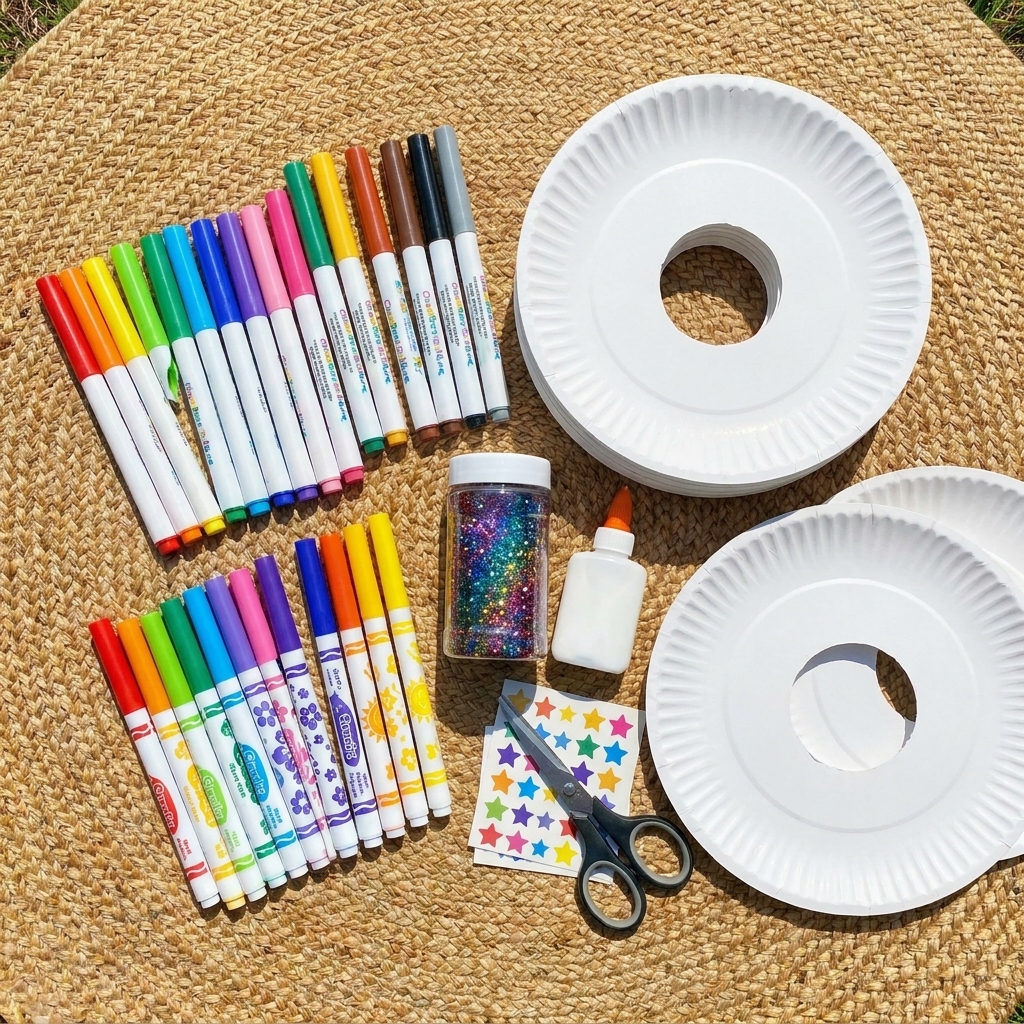
Child #2: The Active Explorer
The second child is the active explorer. This child loves running, jumping, and being outdoors. For them, the most exciting part is not making the disc but testing it.
Once the flying disc is ready, they immediately want to:
- Throw it as far as possible
- Compete with friends
- Improve their throwing technique
- Chase after flying discs in the park
This child benefits physically from the activity, improving coordination and endurance.
Child #3: The Curious Scientist
The third child is the curious scientist. This child is fascinated by how things work. They will often ask questions such as:
- Why does the disc fly straight?
- What happens if I fold the edges?
- Does weight affect distance?
This type of child uses the activity as a mini science experiment. They learn basic principles of aerodynamics, motion, and balance without even realizing it.
Child #4: The Social Team Player
The fourth child enjoys group interaction. For them, making flying discs is a social event.
They love:
- Working in groups
- Sharing materials
- Playing team games
- Competing in friendly matches
This activity strengthens communication skills and encourages cooperation. Children learn how to take turns, respect rules, and support others.
Child #5: The Imaginative Storyteller
The fifth child transforms the flying disc into part of a bigger story. For them, the disc is not just a toy—it is a magical object.
They might imagine:
- A superhero throwing energy discs
- A flying shield in a fantasy battle
- A magical object that travels between worlds
This type of imaginative play strengthens storytelling skills and emotional expression.
Educational Benefits of Paper Plate Flying Discs
Beyond fun, this activity has strong educational value. It supports multiple areas of development:
- Fine motor skills through cutting and drawing
- Cognitive skills through problem-solving
- Creativity through design choices
- Physical health through outdoor play
- Social skills through group interaction
Teachers often use this activity in classrooms because it is simple yet highly effective.
Why Children Love It So Much
The reason children make flying discs from paper plates: why 5 children love them can be summarized in three main ideas:
- Freedom of creativity – every child can design something unique
- Instant play value – what they create can be used immediately
- Physical excitement – the joy of throwing and catching
This combination makes the activity extremely satisfying for different personality types.
Conclusion
Paper plate flying discs are a perfect example of how simple materials can create meaningful learning experiences. They combine art, science, and physical activity in a way that naturally attracts children.
Whether a child is creative, active, curious, social, or imaginative, this activity offers something valuable for everyone. It is affordable, easy to set up, and endlessly enjoyable.
In the end, when children make flying discs from paper plates, they are not just crafting a toy—they are developing skills, building memories, and discovering the joy of learning through play.
