
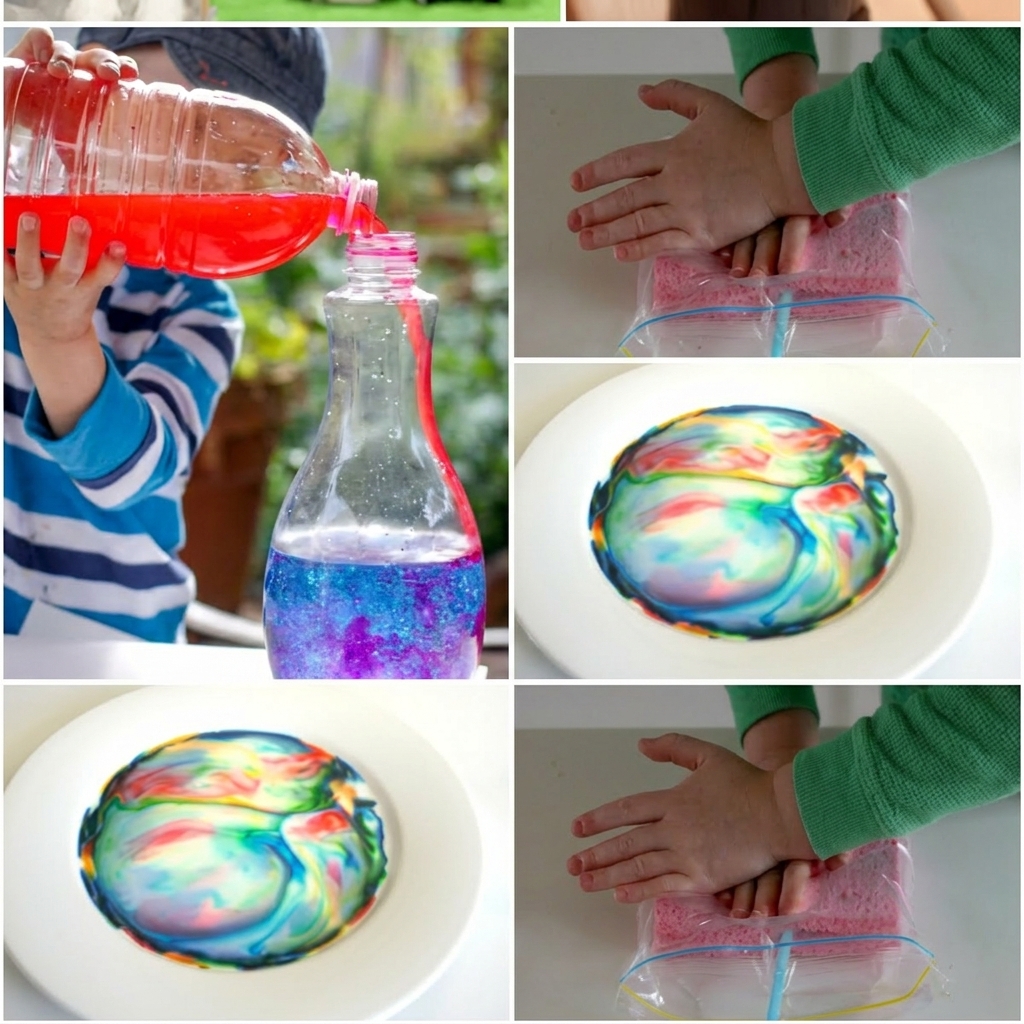
Science is all around us, and young children are naturally curious about how the world works. They love asking questions, exploring objects, mixing materials, and discovering new things. This is why 10 simple science experiments for 3-5 year olds can be such powerful learning tools. These easy activities transform everyday moments into exciting opportunities for discovery.
Children between the ages of three and five learn best through hands-on experiences. They enjoy touching, observing, testing, and experimenting. Science experiments designed for this age group encourage curiosity while introducing basic STEM concepts in a fun and age-appropriate way.
In this article, we will explore 10 simple science experiments for 3-5 year olds, explain how they work, and discuss why children love them so much.
Quick Summary Table
| Experiment | Main Concept | Difficulty |
| Color Mixing | Colors and observation | Easy |
| Sink or Float | Density | Easy |
| Baking Soda Volcano | Chemical reactions | Easy |
| Rainbow Walking Water | Capillary action | Easy |
| Dancing Raisins | Gas bubbles | Easy |
| Static Balloon | Static electricity | Easy |
| Ice Melting Test | Temperature changes | Easy |
| Magnet Discovery | Magnetism | Easy |
| Homemade Lava Lamp | Density and reactions | Easy |
| Water Filtration | Filtration | Easy |
Why Science Is Important for Young Children
Science helps children develop essential skills that support learning in many areas.
These skills include:
- Observation
- Problem-solving
- Communication
- Critical thinking
- Creativity
- Confidence
Young children learn through exploration. Science experiments provide safe opportunities to investigate questions and discover answers independently.
Experiment 1: Color Mixing Magic
Materials
- Clear cups
- Water
- Food coloring
How It Works
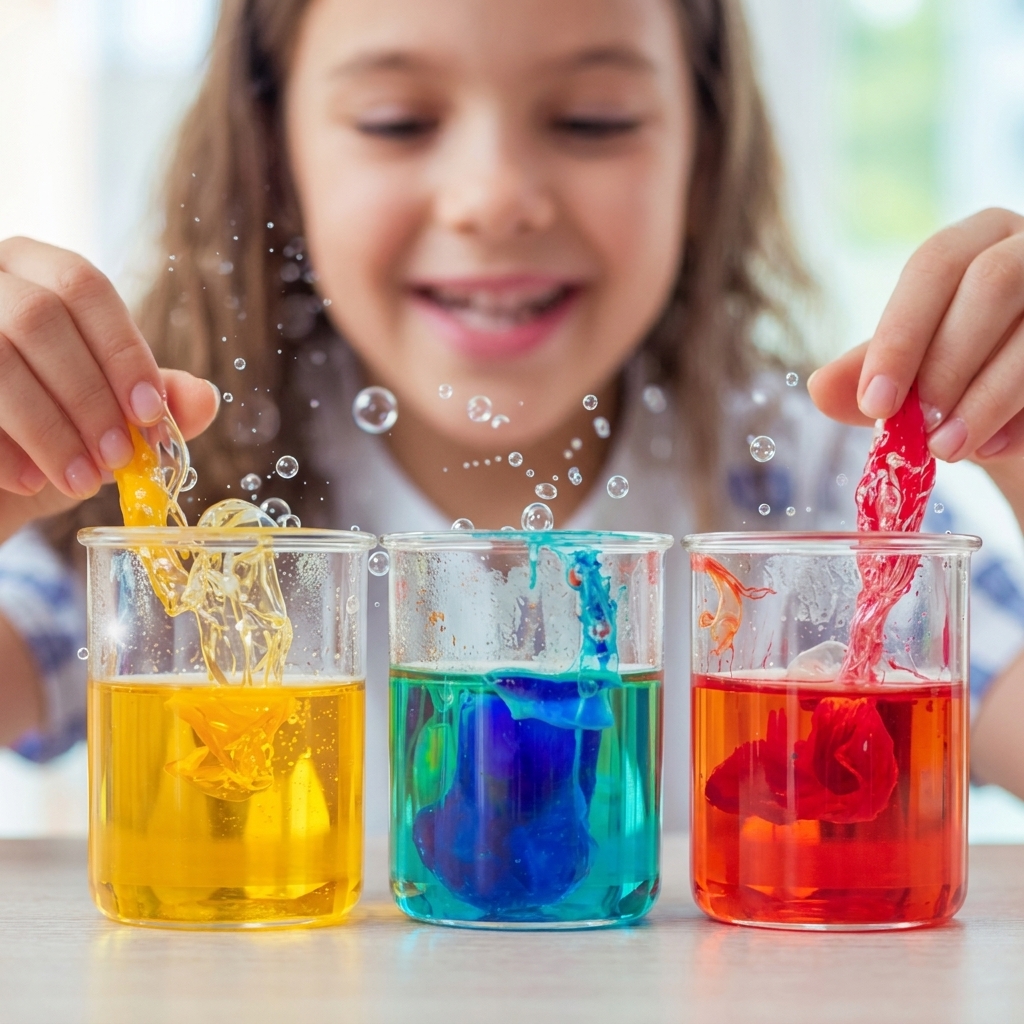
Fill cups with colored water and mix different colors together.
Children observe how:
- Blue and yellow create green
- Red and yellow create orange
- Blue and red create purple
Why Kids Love It
Children enjoy watching colors change before their eyes. The experiment feels like magic while teaching basic color science.
Learning Outcome
- Color recognition
- Observation skills
- Prediction
Experiment 2: Sink or Float Challenge
Materials
- Bowl of water
- Small household objects
How It Works
Children predict whether an object will sink or float before testing it.
Examples include:
- Spoon
- Leaf
- Toy block
- Coin
Why Kids Love It
Kids enjoy making guesses and seeing whether they are correct.
Learning Outcome
- Density concepts
- Classification
- Scientific prediction
Experiment 3: Baking Soda Volcano
Materials
- Baking soda
- Vinegar
- Small container
- Food coloring
How It Works
Mix baking soda and vinegar to create a foamy eruption.
Why Kids Love It
The bubbling reaction is exciting and dramatic.
Learning Outcome
- Chemical reactions
- Cause and effect
- Observation
Experiment 4: Rainbow Walking Water
Materials
- Cups
- Water
- Food coloring
- Paper towels
How It Works
Colored water travels through paper towels into empty cups.
Why Kids Love It
Children enjoy watching water “walk” between cups.
Learning Outcome
- Capillary action
- Water movement
- Patience
Experiment 5: Dancing Raisins
Materials
- Clear glass
- Sparkling water
- Raisins
How It Works
Gas bubbles attach to raisins and lift them upward.
When bubbles pop, the raisins sink again.
Why Kids Love It
The raisins appear to dance.
Learning Outcome
- Gas behavior
- Buoyancy
- Observation
Experiment 6: Static Balloon Fun
Materials
- Balloon
- Tissue paper
How It Works
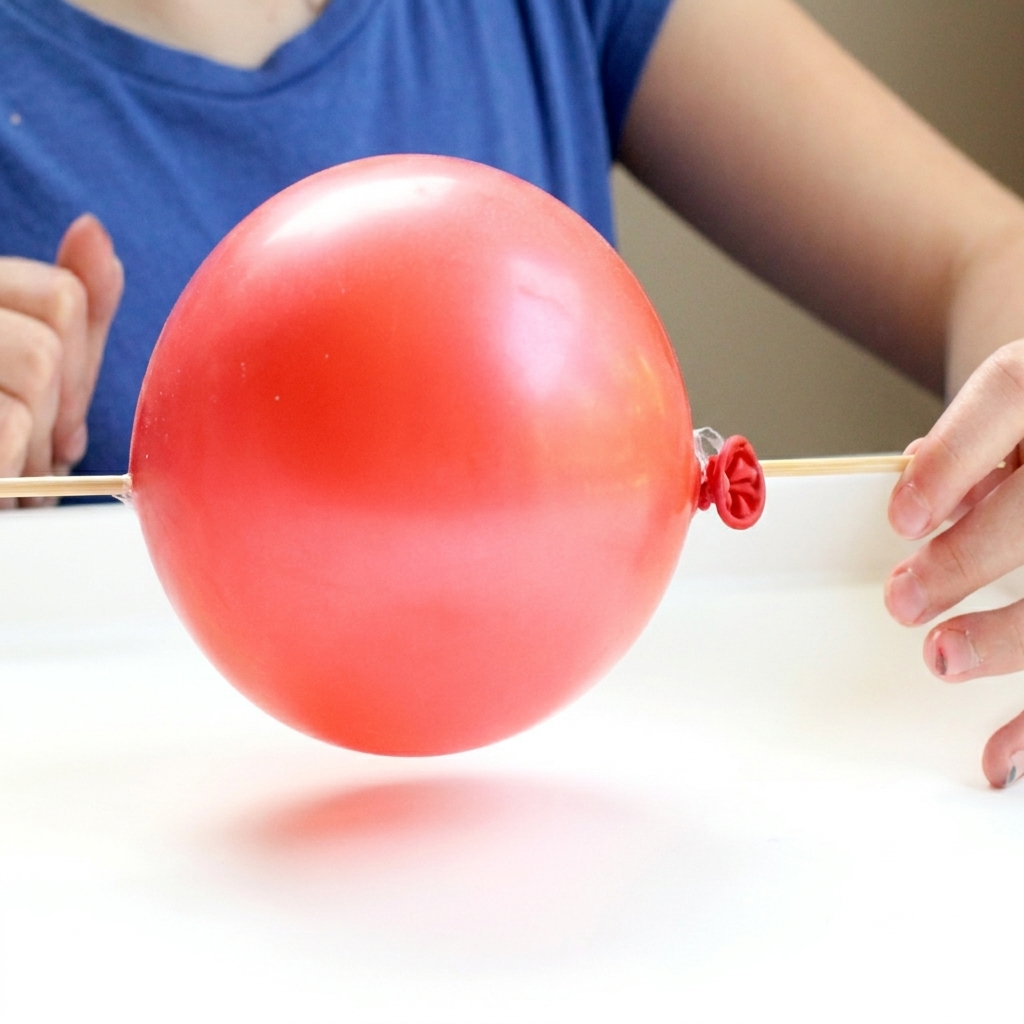
Rub the balloon on hair and bring it near tissue pieces.
The tissue jumps toward the balloon.
Why Kids Love It
The attraction seems magical.
Learning Outcome
- Static electricity
- Friction
- Scientific curiosity
Experiment 7: Ice Melting Investigation
Materials
- Ice cubes
- Salt
How It Works
Sprinkle salt on ice and observe how it melts faster.
Why Kids Love It
Kids enjoy seeing quick changes.
Learning Outcome
- Temperature effects
- States of matter
- Scientific observation
Experiment 8: Magnet Discovery
Materials
- Magnet
- Various objects
How It Works
Children test which objects stick to a magnet.
Why Kids Love It
Magnets seem mysterious and powerful.
Learning Outcome
- Magnetism
- Classification
- Exploration
Experiment 9: Homemade Lava Lamp
Materials
- Oil
- Water
- Food coloring
- Effervescent tablet
How It Works
The tablet creates bubbles that carry colored water through the oil.
Why Kids Love It
The moving colors are fascinating.
Learning Outcome
- Density
- Chemical reactions
- Visual observation
Experiment 10: Water Filtration Activity
Materials
- Plastic bottle
- Sand
- Gravel
- Cotton
- Dirty water
How It Works
Children build a simple filter and watch dirty water become clearer.
Why Kids Love It
They feel like engineers solving a real-world problem.
Learning Outcome
- Filtration
- Environmental science
- Engineering thinking
Why Kids Love Science Experiments
1. They Are Hands-On
Young children learn best by touching and exploring.
Experiments allow active participation rather than passive learning.
2. They Provide Instant Results
Most experiments produce immediate outcomes.
This keeps young learners engaged and excited.
3. They Encourage Curiosity
Children naturally ask questions such as:
- Why did that happen?
- What will happen next?
- Can we try again?
These questions promote scientific thinking.
4. They Feel Like Play
Science experiments resemble games rather than lessons.
Children enjoy learning when it feels fun.
5. They Build Confidence
Completing experiments successfully helps children feel capable and proud.
STEM Benefits for Preschoolers
The term STEM stands for:
- Science
- Technology
- Engineering
- Mathematics
Even simple experiments introduce these concepts.
Science
Children observe natural phenomena.
Technology
Kids use tools and materials.
Engineering
They build, test, and improve ideas.
Mathematics
Experiments involve counting, measuring, and comparing.
The Role of Parents and Teachers
Adults can make science even more meaningful by guiding exploration.
Ask Questions
Encourage children to think by asking:
- What do you notice?
- Why do you think that happened?
- What should we try next?
Encourage Predictions
Predictions teach children to think like scientists.
Celebrate Exploration
The goal is discovery, not perfection.
Allow Safe Mistakes
Unexpected results often create valuable learning opportunities.
Safety Tips for Preschool Science
When conducting 10 simple science experiments for 3-5 year olds, safety is important.
Supervise Activities
Adults should always monitor experiments.
Use Non-Toxic Materials
Choose child-safe ingredients whenever possible.
Keep Small Items Away From Toddlers
Avoid choking hazards.
Clean Up Properly
Teach children responsible laboratory habits.
Creating a Science-Friendly Home
Parents do not need a laboratory to encourage science.
Simple ideas include:
- Nature walks
- Collecting leaves
- Observing insects
- Growing plants
- Testing household objects
These activities help children see science everywhere.
Long-Term Benefits of Early Science Learning
Children exposed to science early often develop:
Strong Problem-Solving Skills
They learn to think critically about challenges.
Better Observation Skills
They notice details others may overlook.
Increased Confidence
Successful experiments build self-esteem.
Lifelong Curiosity
Curiosity is one of the most valuable learning traits.
Positive Attitudes Toward STEM
Early experiences can inspire future interests in science and engineering.
Making Science Part of Everyday Life
Science does not have to be limited to special projects.
Everyday opportunities include:
- Cooking
- Gardening
- Bath time
- Weather observations
- Outdoor exploration
These experiences help children connect science to the real world.
Conclusion
The value of 10 simple science experiments for 3-5 year olds extends far beyond entertainment. These activities help young children develop curiosity, creativity, confidence, and critical thinking skills while introducing foundational STEM concepts.
From color mixing and dancing raisins to homemade lava lamps and water filtration systems, each experiment provides exciting opportunities for discovery. Children love these activities because they are interactive, visually engaging, and fun. Parents and educators appreciate them because they support learning in meaningful and memorable ways.
By incorporating simple science experiments into everyday life, adults can help children develop a lifelong love of exploration and learning. The best science lessons often begin with a simple question, a curious mind, and a willingness to discover something new.
