
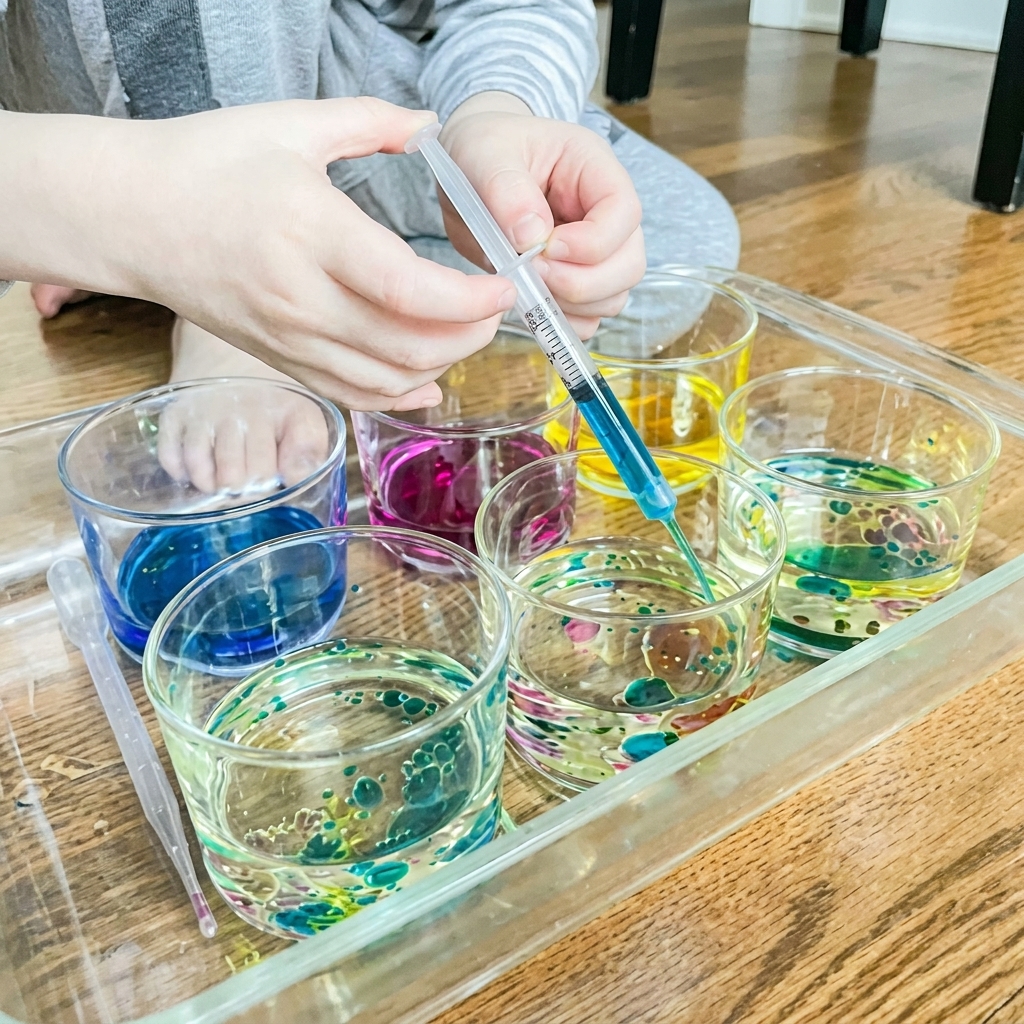
Science becomes truly exciting when children can see, touch, and explore it in action. One of the simplest yet most fascinating STEM activities for young learners is A scientific experiment with oil and water for a child. This experiment demonstrates a basic but powerful scientific principle: oil and water do not mix.
At first glance, this may seem like a simple kitchen trick. But in reality, it introduces children to important scientific concepts such as density, molecular behavior, immiscibility, and observation skills. It also encourages curiosity, creativity, and hands-on learning.
In this essay, we will explore how this experiment works, what materials are needed, and—most importantly—why five key reasons make children absolutely love it.
Quick Summary Table
| Feature | Details |
| Experiment Name | Oil and Water Science Experiment |
| STEM Focus | Chemistry & Physics |
| Difficulty Level | Easy |
| Age Group | 4–12 years |
| Time Required | 10–20 minutes |
| Key Concept | Density & Immiscibility |
| Materials Needed | Oil, water, food coloring, glass or cup |
| Learning Outcome | Understanding liquid separation |
What Is A Scientific Experiment with Oil and Water for a Child?
A scientific experiment with oil and water for a child is a simple hands-on activity where children mix oil and water to observe how they behave. Instead of blending together, the two liquids separate into layers.
This happens because oil and water have different chemical properties. Water molecules are polar, meaning they attract each other strongly. Oil molecules are non-polar, so they do not mix with water. As a result, oil floats on top of water due to its lower density.
For children, this creates a visually striking effect: two clear layers that never fully combine. This makes it an ideal experiment for introducing basic scientific concepts in a fun and engaging way.
Materials Needed
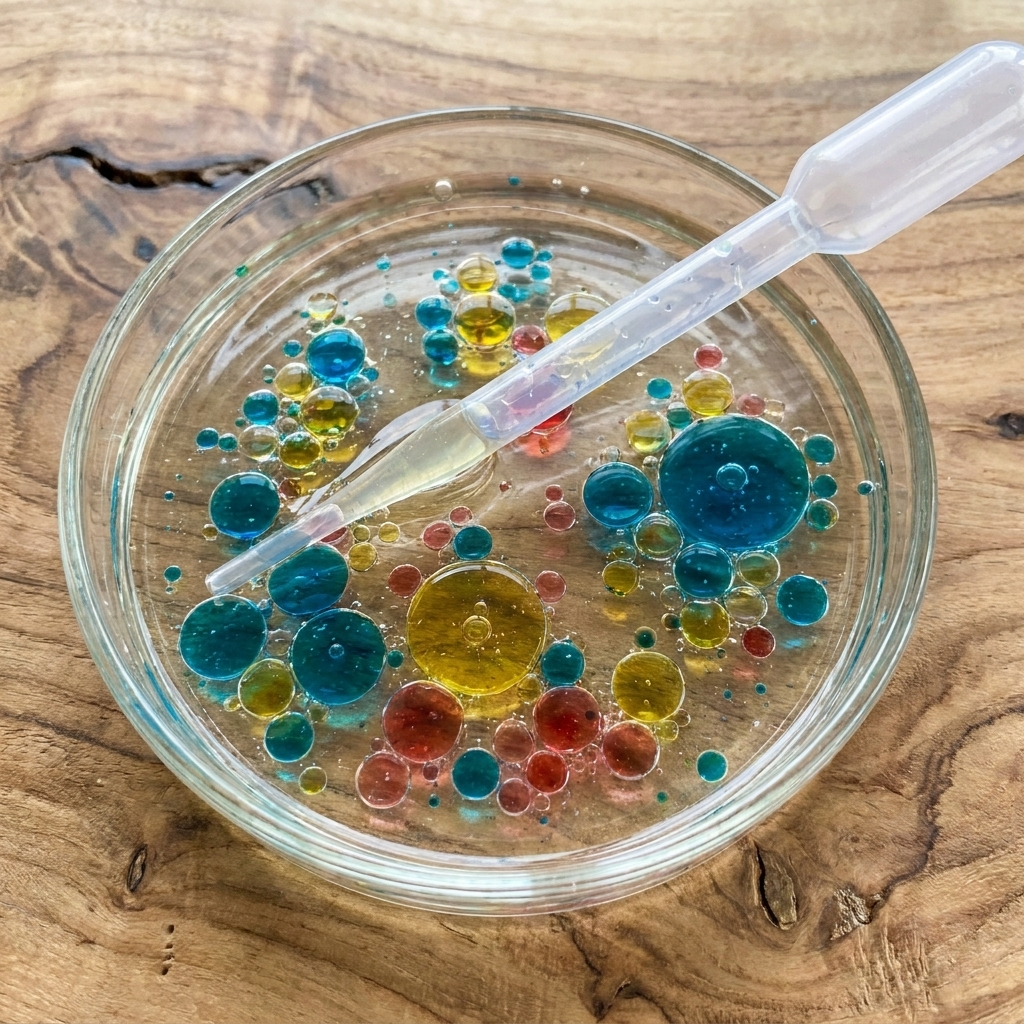
One of the biggest advantages of this experiment is its simplicity. Most materials are already available at home.
- Clear glass or transparent cup
- Water
- Cooking oil
- Food coloring
- Spoon for mixing (optional)
- Small bowl or tray for safety
Because everything is safe and inexpensive, this experiment is perfect for home learning, classrooms, or STEM workshops.
Step-by-Step Instructions
Step 1: Fill the Container
Pour water into a clear glass until it is about halfway full.
Step 2: Add Oil
Slowly pour cooking oil into the glass and observe how it floats on top of the water.
Step 3: Add Color
Drop food coloring into the mixture and watch how it moves through the oil before settling into the water layer.
Step 4: Observe Closely
Encourage children to observe how the liquids separate and behave differently.
Step 5: Optional Stirring
Gently stir the mixture and watch how it quickly separates again.
Why Five Kids Love It
1. It Looks Like Magic
The first reason children love this experiment is because it looks magical. When oil and water are mixed, kids often expect them to combine. Instead, they instantly separate into two distinct layers.
This unexpected behavior creates surprise and excitement. Children often ask:
- Why don’t they mix?
- What makes them separate?
- Is something wrong?
This sense of wonder is a powerful gateway into scientific thinking. When learning feels like magic, curiosity naturally increases.
2. It Is Easy to Understand
Many scientific concepts can feel complex or abstract for children. However, A scientific experiment with oil and water for a child simplifies these ideas into something visible and easy to understand.
Children can clearly see:
- Oil floats on water
- Liquids separate into layers
- Colors behave differently in each layer
Instead of memorizing facts, they observe real evidence. This visual learning helps reinforce understanding and improves long-term memory retention.
3. It Encourages Hands-On Exploration
Children love activities where they can actively participate instead of just watching.
In this experiment, they can:
- Pour liquids
- Add colors
- Stir mixtures
- Predict outcomes
- Record observations
This involvement transforms learning into an interactive experience. It also helps develop fine motor skills, coordination, and confidence in scientific exploration.
Hands-on learning is one of the most effective ways to teach STEM subjects, especially to younger children.
4. It Sparks Curiosity and Questions
One of the most important outcomes of this experiment is the curiosity it creates. After observing oil and water separate, children naturally begin asking deeper questions:
- Why don’t oil and water mix?
- What happens if we shake it harder?
- Can other liquids mix with water?
- What is density?
These questions encourage critical thinking and open the door to further exploration. Instead of simply giving answers, adults can guide children to discover solutions through experimentation.
Curiosity is the foundation of scientific learning, and this experiment strengthens it effectively.
5. It Is Fun and Visually Engaging
Finally, children love this experiment because it is visually exciting. The contrast between clear water, floating oil, and colorful drops creates a beautiful and dynamic display.
The slow movement of colors through the layers looks like a miniature science artwork. This combination of science and visual beauty keeps children engaged and entertained.
When learning is fun, children are more likely to remember and enjoy it.
The Science Behind Oil and Water
The reason oil and water do not mix is due to their molecular structure.
Water Molecules
- Polar
- Strong attraction between molecules
- Mix easily with other polar substances
Oil Molecules
- Non-polar
- Weak interaction with water
- Prefer to stick together instead of mixing
Density Difference
Oil is less dense than water, which is why it floats on top.
This combination of polarity and density explains the separation clearly.
STEM Learning Benefits
A scientific experiment with oil and water for a child supports multiple areas of STEM education:
Science
Children learn about:
- Density
- Molecular structure
- Liquids and mixtures
Technology
They can use tools like cameras or tablets to document observations.
Engineering
Children can design variations of the experiment using different containers or liquids.
Mathematics
They can measure quantities, compare results, and record observations.
Classroom Applications
Teachers often use this experiment because it is simple, safe, and effective.
It helps teach:
- Chemistry basics
- Properties of matter
- Scientific observation
- Critical thinking
It also works well as a demonstration for group discussions.
At-Home Learning Benefits
Parents appreciate this experiment because it requires minimal preparation.
Benefits include:
- Low cost
- Quick setup
- Safe materials
- Strong educational value
- High engagement
It is perfect for weekend activities or homeschooling lessons.
Safety Tips
Although this experiment is safe, basic precautions are important:
- Do not ingest any materials
- Use plastic containers for younger children
- Clean spills immediately
- Supervise small children during pouring
Safety ensures a smooth and enjoyable experience.
Extending the Experiment
To deepen learning, try variations such as:
- Adding salt to see its effect
- Using different types of oil
- Testing warm vs cold water
- Shaking the mixture vigorously
- Adding glitter for visual effects
These extensions help children understand variables and experimentation.
Why This Experiment Matters
A scientific experiment with oil and water for a child is more than just a fun activity. It introduces foundational scientific concepts in a way that is simple, visual, and memorable.
By turning everyday kitchen materials into a learning experience, children begin to see that science is everywhere. This realization encourages curiosity, exploration, and a lifelong interest in learning.
Conclusion
The oil and water experiment is one of the most effective and enjoyable STEM activities for children. It combines simplicity with powerful scientific principles, making it perfect for early education.
The five reasons children love it—its magical appearance, easy understanding, hands-on participation, curiosity-building nature, and visual appeal—make it a timeless learning tool.
A scientific experiment with oil and water for a child proves that even the simplest materials can unlock the wonders of science. Through observation and exploration, children not only learn scientific facts but also develop a love for discovery that can last a lifetime.
