
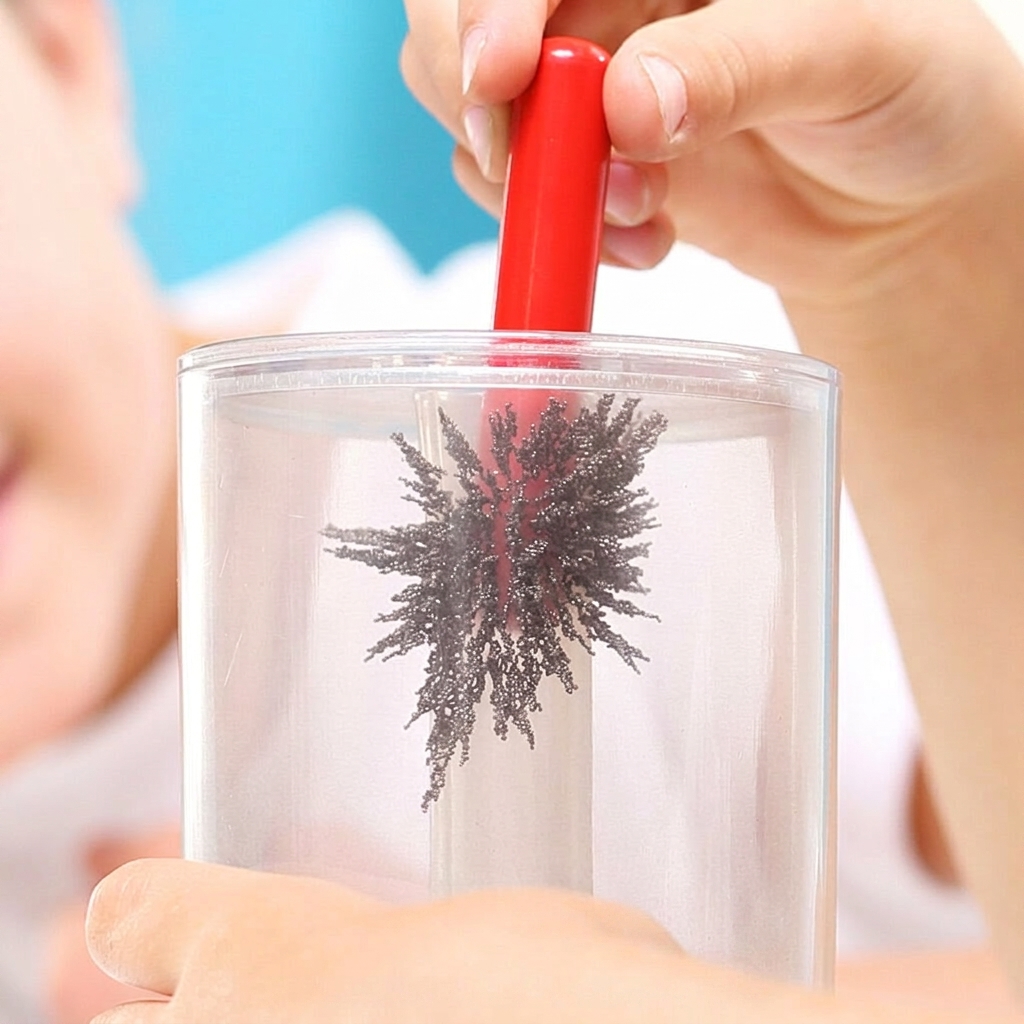
The magnet experiment and metal discovery is one of the most exciting science activities that children and families can perform at home. Magnets seem almost magical because they can attract certain objects without touching them. However, behind this fascinating behavior lies real science that helps us understand metals, magnetic forces, and everyday materials.
This simple home experiment encourages curiosity, observation, and hands-on learning. Children enjoy testing different objects and predicting which ones will stick to a magnet. At the same time, they gain valuable knowledge about materials and scientific investigation.
In this article, we will explore the magnet experiment and metal discovery in detail, explain the science behind magnetism, and walk through seven exciting tests that reveal how magnets interact with different metals and objects.
Quick Summary Table
| Feature | Details |
| Experiment Name | The magnet experiment and metal discovery |
| Difficulty Level | Easy |
| Recommended Age | 5+ years |
| Time Required | 20–30 minutes |
| Main Topic | Magnetism and metals |
| Location | Home or classroom |
| Materials Needed | Magnet and household items |
| Learning Focus | Scientific observation and testing |
What Is the Magnet Experiment and Metal Discovery?
The magnet experiment and metal discovery is a simple science activity that uses magnets to investigate which materials are magnetic and which are not.
Many children assume that all metals stick to magnets. Through experimentation, they quickly discover that only certain metals are magnetic. This surprising finding makes the activity both educational and entertaining.
The experiment encourages children to:
- Make predictions
- Test hypotheses
- Observe results
- Record discoveries
- Understand scientific concepts
Because the materials are easy to find at home, this activity is perfect for family learning sessions.
Materials Needed
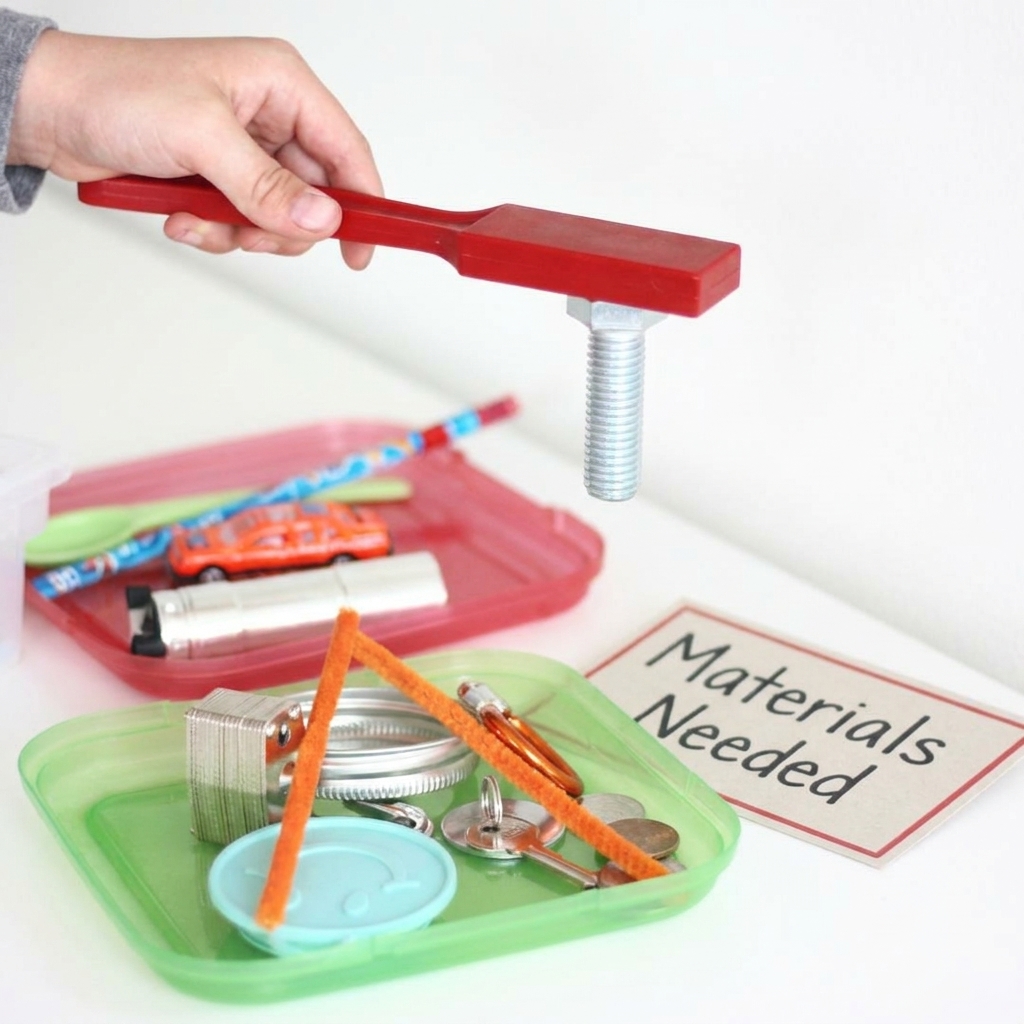
You do not need expensive equipment to perform the magnet experiment and metal discovery.
Basic Materials
- Strong magnet
- Paper clips
- Coins
- Aluminum foil
- Steel spoon
- Plastic spoon
- Keys
- Nails
- Small notebook
- Pencil
Optional Materials
- Refrigerator magnets
- Metal toys
- Bottle caps
- Washers
- Screws
Collecting a variety of objects makes the experiment more exciting.
Understanding Magnetism
Before beginning the tests, it helps to understand what magnetism is.
Magnetism is a force that allows magnets to attract certain materials without direct contact.
Magnets create invisible magnetic fields around them. These fields influence specific metals such as:
- Iron
- Nickel
- Cobalt
- Steel (which contains iron)
Materials that respond strongly to magnetic fields are called ferromagnetic materials.
Many common objects contain these metals, which is why they stick to magnets.
Safety Guidelines
The magnet experiment and metal discovery is generally safe, but a few precautions are important.
Adult Supervision
Young children should perform the activity with an adult.
Avoid Small Parts
Keep small metal pieces away from very young children.
Protect Electronics
Strong magnets should not be placed near:
- Computers
- Smartphones
- Credit cards
- Tablets
Following these simple guidelines ensures a safe learning experience.
Test 1: Paper Clip Investigation
Objective
Determine whether a paper clip is magnetic.
Procedure
Place the magnet near a paper clip.
Observation
The paper clip quickly jumps toward the magnet.
Explanation
Most paper clips are made from steel, which contains iron.
Because iron is magnetic, the paper clip is attracted to the magnet.
What Kids Learn
- Steel often contains iron.
- Magnetic attraction can occur without touching.
This test usually amazes children because the paper clip appears to move by itself.
Test 2: Coin Discovery
Objective
Find out whether coins are magnetic.
Procedure
Test several different coins using the magnet.
Observation
Some coins may stick while others do not.
Explanation
Coins are made from different metal combinations depending on the country and denomination.
Some contain magnetic metals, while others contain metals that do not respond to magnets.
What Kids Learn
- Not all metals are magnetic.
- Different metals have different properties.
This often surprises children and encourages deeper investigation.
Test 3: Aluminum Foil Test
Objective
Determine whether aluminum is magnetic.
Procedure
Bring the magnet close to aluminum foil.
Observation
Nothing happens.
Explanation
Aluminum is a metal, but it is not strongly magnetic.
What Kids Learn
- Being metal does not automatically mean magnetic.
- Scientific testing helps reveal hidden properties.
This test helps correct a common misconception.
Test 4: Steel Spoon Experiment
Objective
Test a metal spoon.
Procedure
Place the magnet against a steel spoon.
Observation
The spoon sticks to the magnet.
Explanation
Steel contains iron, making it magnetic.
What Kids Learn
- Household items can contain magnetic materials.
- Everyday objects can become science tools.
Many children enjoy exploring the kitchen to find additional magnetic objects.
Test 5: Plastic Spoon Challenge
Objective
Compare metal and plastic objects.
Procedure
Place the magnet near a plastic spoon.
Observation
The spoon remains unaffected.
Explanation
Plastic contains no magnetic metals.
What Kids Learn
- Magnets affect some materials but not others.
- Comparing objects helps scientists understand patterns.
This comparison strengthens observation skills.
Test 6: Key Mystery
Objective
Determine whether keys are magnetic.
Procedure
Test several household keys.
Observation
Results may vary.
Explanation
Some keys contain magnetic metals while others are made from brass or other non-magnetic materials.
What Kids Learn
- Objects can look similar but behave differently.
- Material composition matters.
This test often leads to interesting discussions about manufacturing.
Test 7: Nail Attraction Test
Objective
Investigate whether nails are magnetic.
Procedure
Bring the magnet close to a nail.
Observation
The nail strongly sticks to the magnet.
Explanation
Most nails are made from steel.
Steel contains iron, making it highly magnetic.
What Kids Learn
- Iron-based materials are usually magnetic.
- Construction materials often contain magnetic metals.
Children often enjoy comparing nails of different sizes.
Recording Results
Scientists keep records of their experiments.
Create a simple chart like this:
| Object | Prediction | Result |
| Paper Clip | Magnetic | Yes |
| Coin | Unsure | Varies |
| Aluminum Foil | Magnetic | No |
| Steel Spoon | Magnetic | Yes |
| Plastic Spoon | Not Magnetic | No |
| Key | Unsure | Varies |
| Nail | Magnetic | Yes |
Keeping records teaches scientific organization.
Why Children Love This Experiment
The magnet experiment and metal discovery is popular among kids for several reasons.
1. It Feels Like Magic
Objects suddenly move toward the magnet.
This creates excitement and wonder.
2. It Encourages Exploration
Children enjoy searching the house for test objects.
3. It Produces Immediate Results
Unlike some science activities, the results appear instantly.
4. It Involves Predictions
Kids enjoy guessing outcomes before testing.
5. It Builds Confidence
Each successful test reinforces scientific thinking.
Real-World Uses of Magnets
Magnets play important roles in daily life.
Transportation
Trains and electric vehicles use magnetic technology.
Medicine
MRI machines rely on powerful magnets.
Electronics
Speakers, headphones, and computers use magnetic components.
Recycling
Magnets help separate metals during recycling processes.
Industry
Factories use magnets to move heavy metal materials.
Learning about these applications helps children connect science to the real world.
Extending the Experiment
After completing the seven tests, children can explore additional activities.
Magnet Strength Test
Compare different magnets to see which attracts objects from the greatest distance.
Magnetic Treasure Hunt
Hide metal objects around the house and locate them using a magnet.
Create a Magnetic Maze
Move a paper clip through a maze using a magnet beneath the paper.
Sort Objects
Create piles of magnetic and non-magnetic materials.
These extensions keep learning fresh and engaging.
Educational Benefits
The magnet experiment and metal discovery supports multiple learning goals.
Science Skills
Children learn:
- Observation
- Testing
- Classification
- Prediction
Critical Thinking
Kids analyze patterns and explain results.
Problem Solving
Unexpected outcomes encourage further investigation.
STEM Learning
The activity introduces key concepts in science and engineering.
Common Questions
Why Are Some Metals Magnetic?
Only certain metals have atomic structures that respond strongly to magnetic fields.
Is Gold Magnetic?
No. Pure gold is not magnetic.
Is Silver Magnetic?
No. Silver is generally not magnetic.
Why Is Steel Magnetic?
Steel contains iron, which is magnetic.
Can Magnets Wear Out?
Most magnets maintain their strength for many years if handled properly.
Conclusion
The magnet experiment and metal discovery is a fun, affordable, and educational activity that transforms ordinary household objects into scientific tools. Through seven simple tests, children learn how magnets interact with different materials and discover that not all metals behave the same way.
The experiment encourages curiosity, observation, and critical thinking while providing immediate and exciting results. Whether performed at home, in a classroom, or during a family science day, it offers valuable learning opportunities that children will remember long after the activity ends.
By exploring paper clips, coins, spoons, keys, nails, and other everyday objects, young scientists gain a deeper understanding of magnetism and the hidden properties of materials all around them. The magnet experiment and metal discovery proves that some of the best science lessons can happen right at home.
