
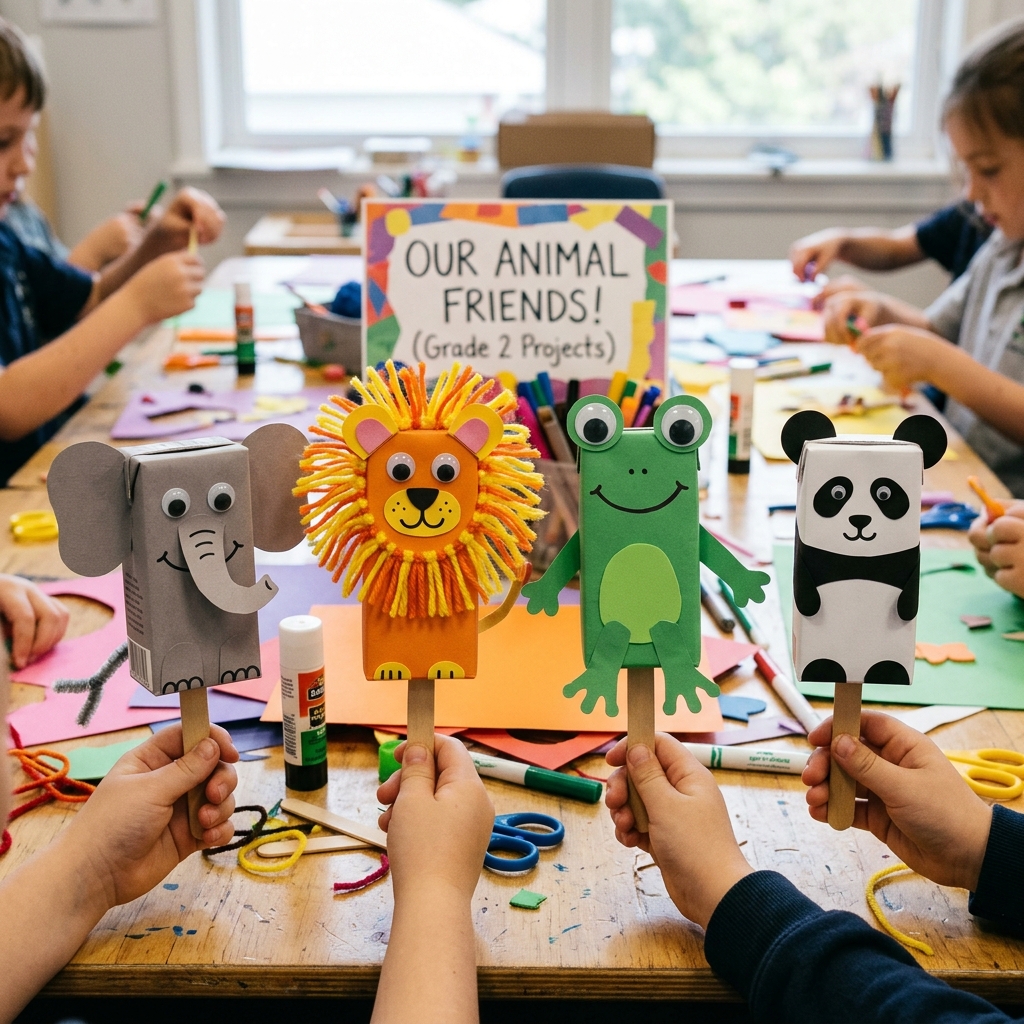
Children naturally enjoy creating, exploring, and transforming ordinary objects into something magical. One of the most enjoyable and educational craft projects for children is making animal puppets from empty juice boxes. This simple recycling activity combines creativity, environmental awareness, storytelling, art, and hands-on learning in one exciting project. Instead of throwing away used juice cartons, children can turn them into colorful animal puppets that become the stars of imaginative stories, puppet shows, and classroom activities.
Animal puppets are much more than simple crafts. They encourage children to think creatively, solve problems, express emotions, and communicate with others. Every puppet has its own personality, appearance, and story. Whether children choose to create a roaring lion, a playful monkey, a wise owl, a friendly panda, or even an imaginary creature, each project reflects their imagination and artistic style.
Teachers, parents, and caregivers appreciate this activity because it is inexpensive, environmentally friendly, and suitable for children of different ages. Most of the materials are recycled or easily available at home, making the project accessible to nearly everyone. At the same time, children develop valuable life skills while enjoying every step of the creative process.
Most importantly, the finished puppets continue providing entertainment long after the craft session has ended. They become educational toys that encourage storytelling, role-playing, dramatic performances, and social interaction.
Why Children Love This Project
Children love projects that allow them to create something they can actually play with afterward. Animal puppets offer exactly that opportunity.
Instead of simply completing a craft and putting it away, children continue using their puppets for imaginative games and performances.
They especially enjoy:
- Choosing their favorite animals
- Decorating each puppet creatively
- Giving every puppet a unique personality
- Making funny voices
- Performing puppet shows
- Inventing adventures
Because every child creates a different animal, no two puppets are exactly alike. This uniqueness gives children a strong sense of ownership and pride.
Educational Goals
Although this activity feels like play, it supports learning in many different ways.
Children develop:
- Creativity
- Fine motor skills
- Hand-eye coordination
- Problem-solving abilities
- Communication skills
- Storytelling skills
- Artistic expression
- Patience
- Concentration
- Teamwork
- Environmental awareness
- Self-confidence
Project-based learning helps children connect knowledge from different subjects while remaining fully engaged.
Materials Needed
One of the greatest advantages of this project is its simplicity.
Basic materials include:
- Empty juice boxes
- Colored paper
- Construction paper
- Cardboard scraps
- Child-safe scissors
- Craft glue
- Masking tape
- Paint
- Paintbrushes
- Markers
- Googly eyes
- Yarn
- Pipe cleaners
- Cotton balls
- Felt
- Popsicle sticks
Optional decorations include:
- Buttons
- Fabric scraps
- Feathers
- Glitter
- Foam sheets
- Ribbon
- Stickers
- Pom-poms
Almost every item can be found in classrooms or at home.
Preparing the Juice Boxes
Before construction begins, the juice boxes should be cleaned thoroughly.
Children learn the importance of hygiene by washing away any remaining juice and allowing the cartons to dry completely.
Teachers may explain why recycling materials should always be clean before they are reused.
This simple preparation introduces responsible habits.
Choosing an Animal
Selecting the animal is often the most exciting step.
Popular choices include:
- Lion
- Tiger
- Elephant
- Panda
- Dog
- Cat
- Rabbit
- Fox
- Owl
- Penguin
- Monkey
- Frog
- Crocodile
- Bear
- Giraffe
Some children enjoy inventing fantasy animals with colorful wings, unusual horns, or magical powers.
Creative freedom encourages originality.
Painting the Puppet
The juice box becomes the body of the puppet.
Children paint it according to the colors of their chosen animal.
For example:
A lion may be painted golden yellow.
A panda uses black and white.
A frog becomes bright green.
A fox is orange.
A penguin combines black, white, and orange.
Painting strengthens artistic confidence while improving brush control.
Creating the Face
The face gives every puppet its personality.
Children cut and glue:
- Eyes
- Ears
- Noses
- Mouths
- Whiskers
- Horns
- Beaks
- Eyebrows
- Teeth
- Tongues
Googly eyes often make the puppets look especially funny and expressive.
Yarn creates soft fur or lion manes.
Pipe cleaners become whiskers or tails.
Making a Moving Mouth
One of the most exciting features is the moving mouth.
By folding the juice box correctly, children create a puppet whose mouth opens and closes when squeezed.
This simple mechanism immediately brings the puppet to life.
Children naturally begin speaking through their creations.
Adding Creative Details
Small decorations make each puppet truly unique.
Children may add:
- Hats
- Bow ties
- Scarves
- Glasses
- Flowers
- Necklaces
- Buttons
- Tiny backpacks
- Crowns
- Capes
These details encourage careful observation and creativity.
Encouraging Imagination
Every child imagines a different character.
One lion becomes a brave king.
Another turns into a funny comedian.
A rabbit becomes an explorer.
An owl becomes a teacher.
A panda becomes a chef.
Children quickly discover that their puppets have individual personalities.
Storytelling Activities
After construction, storytelling begins.
Children invent adventures such as:
The Lost Lion
The Brave Rabbit
The Helpful Panda
The Singing Frog
The Wise Owl
The Jungle School
Storytelling strengthens vocabulary, sequencing skills, and creativity.
Puppet Theater
A puppet theater transforms the classroom into a stage.
Children perform:
- Fairy tales
- Animal adventures
- Friendship stories
- Environmental lessons
- Funny conversations
- Original plays
Performing helps children build confidence while practicing public speaking.
Language Development
Animal puppets are excellent language-learning tools.
Children practice:
- Speaking
- Listening
- Reading
- Describing
- Asking questions
- Answering questions
- Creating dialogue
Even shy children often become more comfortable speaking through a puppet character.
Science Connections
The project can easily connect with science lessons.
Children research:
- Animal habitats
- Food chains
- Life cycles
- Adaptations
- Endangered species
- Animal behavior
Their puppets become visual learning tools.
Mathematics in the Project
Mathematics also appears naturally.
Children count:
- Legs
- Wings
- Eyes
- Spots
- Stripes
They measure paper pieces, compare sizes, and recognize shapes while constructing their puppets.
Learning becomes practical and enjoyable.
Developing Fine Motor Skills
Many construction tasks improve hand coordination.
Children practice:
- Cutting
- Folding
- Painting
- Gluing
- Drawing
- Holding small objects
These activities strengthen muscles needed for handwriting.
Environmental Education
Perhaps the most valuable lesson is sustainability.
Children discover that waste materials still have value.
Teachers discuss:
- Recycling
- Reusing
- Reducing waste
- Protecting nature
- Saving resources
Children begin seeing empty containers as creative opportunities rather than garbage.
Working Together
Many classrooms organize group activities.
Children cooperate by sharing materials, exchanging ideas, and helping each other solve problems.
Working together teaches:
- Respect
- Communication
- Cooperation
- Responsibility
- Leadership
Teamwork strengthens classroom friendships.
Seasonal Puppet Themes
The project can be adapted throughout the year.
Spring:
- Rabbits
- Chicks
- Butterflies
Summer:
- Dolphins
- Turtles
- Flamingos
Autumn:
- Foxes
- Owls
- Hedgehogs
Winter:
- Penguins
- Polar bears
- Reindeer
Seasonal themes keep the activity fresh and exciting.
Home Extension Activities
Families can continue the fun at home.
Parents and children may:
- Build entire animal families.
- Create puppet theaters.
- Record puppet videos.
- Write storybooks.
- Invent songs.
- Decorate puppet houses.
These shared experiences strengthen family relationships.
Safety Guidelines
Simple rules help everyone stay safe.
Children should:
- Use scissors carefully.
- Allow adults to handle craft knives.
- Keep workspaces clean.
- Avoid putting small decorations in their mouths.
- Wash hands after painting.
Adult supervision ensures a positive experience.
Learning from Mistakes
Every project includes challenges.
Perhaps:
- An ear falls off.
- Paint smudges.
- Eyes are uneven.
- Glue takes longer to dry.
Children learn that mistakes are part of creativity.
They discover new solutions and improve their designs.
Presenting the Finished Puppets
At the end of the project, each child introduces their puppet.
Presentations may include:
- The puppet’s name
- Favorite food
- Habitat
- Personality
- Adventures
- Special talents
Public presentations strengthen speaking skills and confidence.
Skills Developed
By completing this project, children improve many lifelong abilities.
These include:
- Creative thinking
- Artistic skills
- Communication
- Storytelling
- Collaboration
- Planning
- Patience
- Fine motor coordination
- Environmental responsibility
- Self-expression
These skills benefit children in every area of education.
Tips for Teachers
Teachers can make the project even more successful by:
- Preparing clean materials in advance.
- Demonstrating each construction step.
- Encouraging creative freedom.
- Praising effort rather than perfection.
- Allowing time for storytelling.
- Organizing puppet performances.
- Displaying finished puppets proudly.
Positive encouragement inspires children to keep creating.
Long-Term Benefits
Unlike many classroom crafts that are quickly forgotten, juice box animal puppets continue providing educational value.
Children use them for:
- Dramatic play
- Reading activities
- Creative writing
- Classroom presentations
- Family entertainment
- Social interaction
The puppets often become treasured keepsakes that remind children of their creativity and accomplishments.
Conclusion
Making animal puppets from juice boxes is one of the most enjoyable and educational children’s projects. It combines creativity, recycling, storytelling, science, language development, and artistic expression into a single hands-on experience that children genuinely love. By transforming empty juice cartons into colorful animal characters, children discover that imagination can turn ordinary materials into extraordinary creations.
Throughout the project, they strengthen fine motor skills, improve communication, develop problem-solving abilities, and gain a deeper understanding of environmental responsibility. Most importantly, they experience the joy of creating something meaningful with their own hands.
The finished puppets become much more than simple crafts. They become storytellers, performers, teachers, and companions in countless imaginative adventures. Whether used in classrooms, homes, libraries, or community workshops, juice box animal puppets inspire curiosity, creativity, cooperation, and confidence. With only a few recycled materials and a little imagination, children can create unforgettable characters that continue bringing smiles, laughter, learning, and inspiration long after the project is complete.
