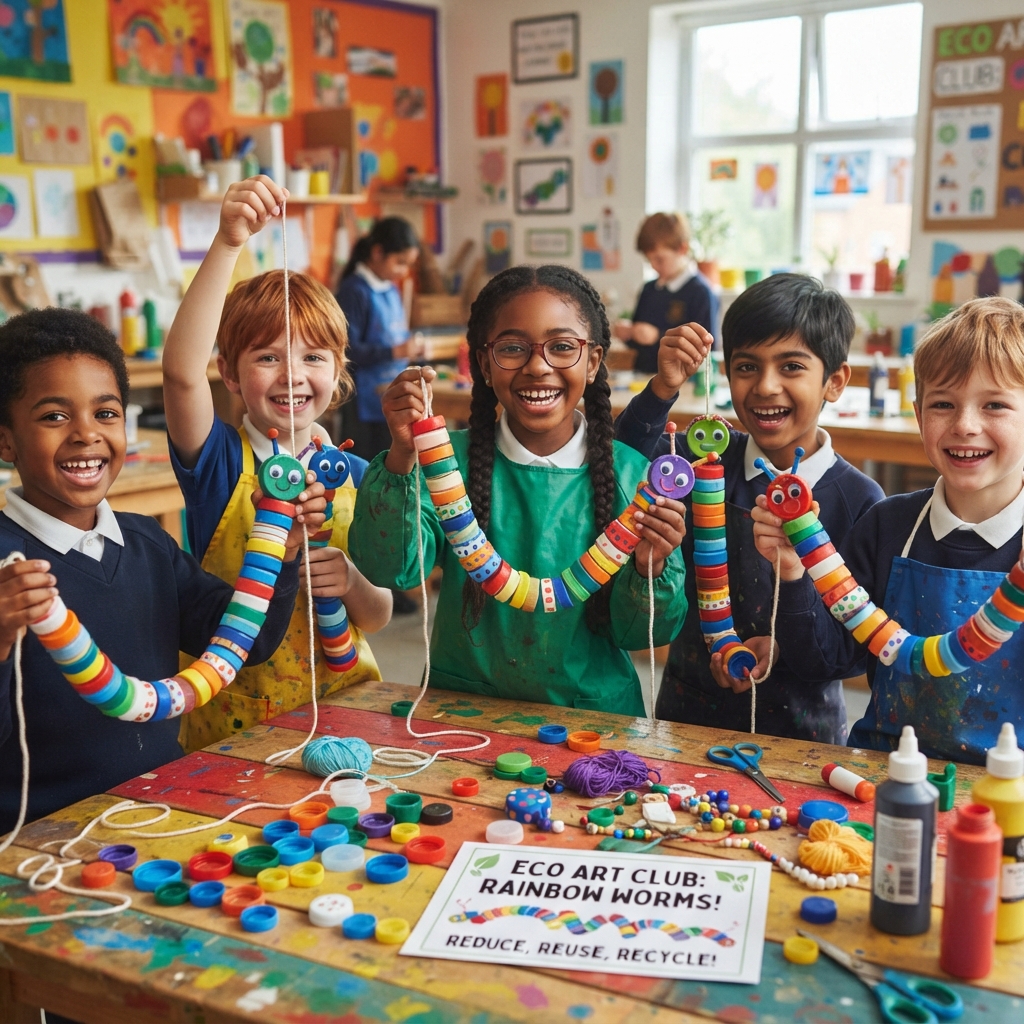
Creative school projects play an important role in helping children learn through hands-on experiences. Instead of only reading from textbooks, students become active participants by designing, building, painting, and creating unique crafts. These activities encourage curiosity, improve problem-solving skills, strengthen fine motor development, and make learning enjoyable.
One exciting and environmentally friendly classroom activity is Rainbow Worms Made from Bottle Caps. This colorful craft transforms ordinary plastic bottle caps into cheerful rainbow worms while teaching children about recycling, colors, patterns, and creativity. Using simple materials that are often available at home or in school, children can create imaginative artwork while learning valuable lessons about protecting the environment.
This project is suitable for preschool, kindergarten, and elementary school students and can easily be adapted for different age groups and learning objectives.
Why Choose This School Project?
The Rainbow Worms Made from Bottle Caps project combines art, environmental education, and early mathematics into one enjoyable activity. It encourages children to think creatively while understanding that everyday recyclable materials can be reused instead of being thrown away.
This project helps children:
- Learn the importance of recycling.
- Improve creativity and imagination.
- Strengthen fine motor skills.
- Recognize and arrange colors.
- Practice sequencing and pattern recognition.
- Build concentration and patience.
- Develop hand-eye coordination.
- Gain confidence through creative expression.
Every rainbow worm is unique, allowing each child to express their own artistic style.
Educational Benefits
This project supports learning across several subject areas.
Fine Motor Skills
Picking up bottle caps, arranging them, and gluing them onto paper helps strengthen the small muscles in children’s hands and fingers, improving coordination for writing and drawing.
Creativity
Children can experiment with different color combinations, facial expressions, decorations, and backgrounds to create a one-of-a-kind rainbow worm.
Mathematics
Arranging bottle caps in repeating rainbow patterns introduces early math concepts such as sequencing, sorting, counting, and pattern recognition.
Environmental Awareness
By reusing plastic bottle caps, children learn how recycling helps reduce waste and protects the environment.
Materials Needed
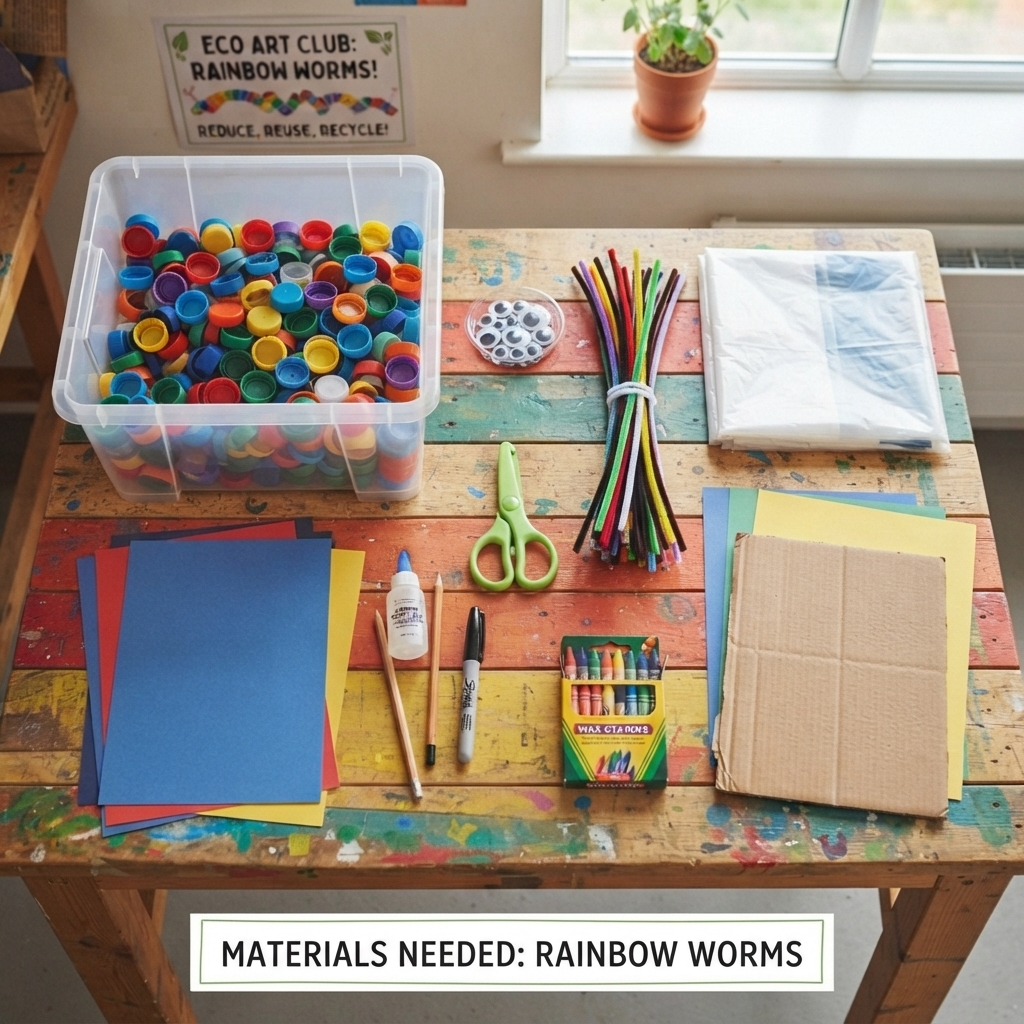
This project requires only simple and affordable supplies.
You will need:
- Plastic bottle caps in different colors
- Thick cardboard or construction paper
- Strong craft glue
- Googly eyes
- Black marker
- Colored markers or crayons
- Pipe cleaners (optional)
- Child-safe scissors
- Pencil
- Protective table covering
Teachers can also encourage students to collect bottle caps at home before beginning the activity.
Step-by-Step Instructions
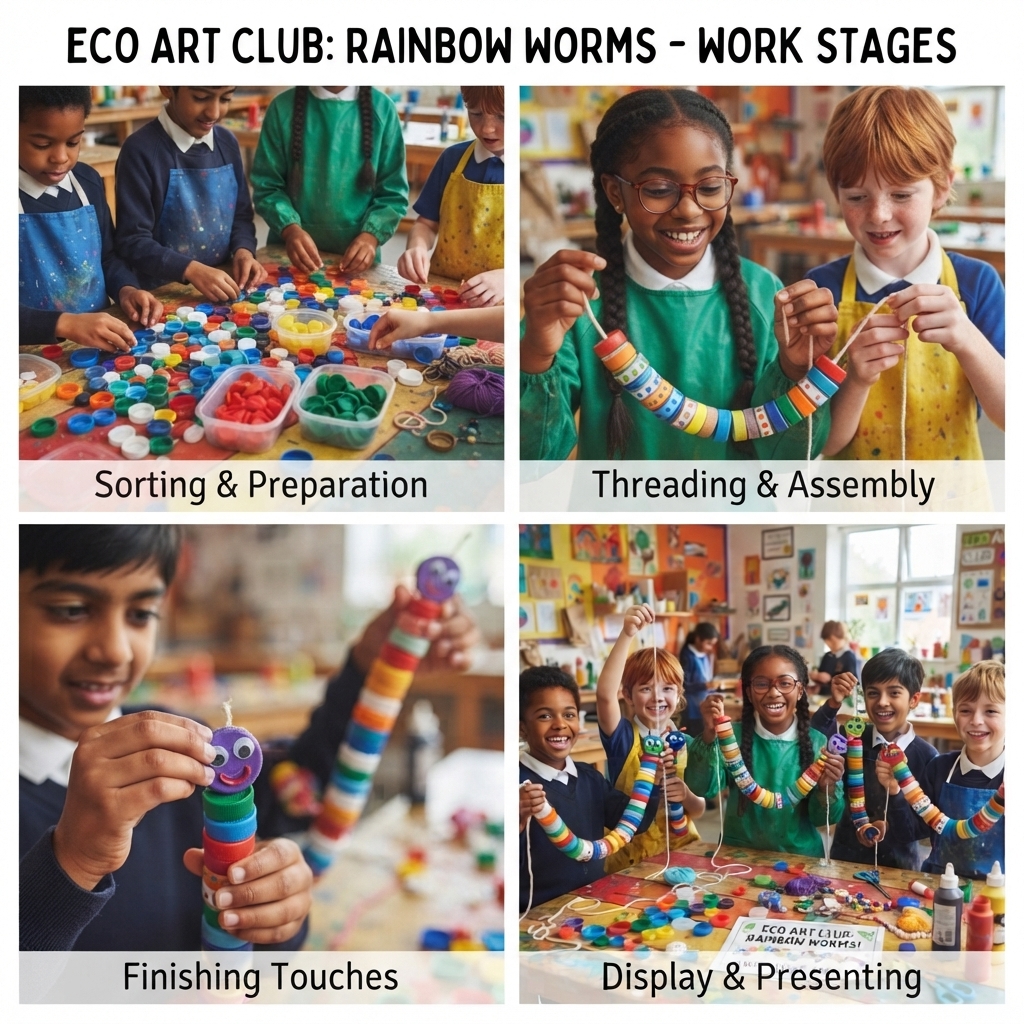
Step 1: Collect and Clean the Bottle Caps
Wash and dry all bottle caps before using them.
Children can sort the caps by color to prepare for building the rainbow pattern.
Step 2: Arrange the Rainbow Colors
Place the bottle caps in rainbow order:
- Red
- Orange
- Yellow
- Green
- Blue
- Purple
Repeat the sequence if you would like to make a longer rainbow worm.
Step 3: Prepare the Background
Choose a piece of cardboard or construction paper as the base.
Children can decorate the background with grass, flowers, butterflies, sunshine, clouds, or a rainbow.
Step 4: Build the Worm
Glue the bottle caps side by side to form the worm’s body.
Select one bottle cap to become the head.
Step 5: Add the Face
Attach googly eyes or draw eyes using a marker.
Add a smiling mouth, rosy cheeks, eyebrows, or freckles to give the worm a friendly personality.
Step 6: Create Antennae
Attach colorful pipe cleaners behind the head.
Children can curl the ends to make playful antennae.
Step 7: Finish the Artwork
Complete the picture by adding:
- Flowers
- Bees
- Ladybugs
- Leaves
- Trees
- Birds
- Mushrooms
The finished project becomes a cheerful garden scene.
Classroom Learning Opportunities
This activity can be connected to several school subjects.
Art
Children explore:
- Color combinations
- Creative design
- Composition
- Texture
- Decorative techniques
Mathematics
Teachers can use the bottle caps for:
- Counting
- Sorting by color
- Comparing quantities
- Measuring worm length
- Creating repeating patterns
Science
Students learn about:
- Recycling
- Plastic waste
- Environmental conservation
- Worms and small garden animals
Language Arts
Children can:
- Name their rainbow worm.
- Write a short story about its adventures.
- Describe its colors and personality.
- Present their project to the class.
These activities strengthen vocabulary, storytelling, and speaking skills.
Creative Variations
The project can easily be adapted for different educational themes.
Alphabet Worm
Write one letter on each bottle cap to practice spelling words.
Number Worm
Label each cap with a number for counting and simple math activities.
Emotion Worm
Draw different facial expressions on each bottle cap to help children discuss feelings and emotions.
Shape Worm
Decorate each cap with a different geometric shape.
Seasonal Worm
Use colors and decorations that represent spring, summer, autumn, or winter.
Tips for Teachers
To make the project enjoyable and successful:
- Prepare clean bottle caps before class.
- Organize all supplies in advance.
- Demonstrate each step clearly.
- Encourage creativity rather than perfection.
- Allow children to personalize their designs.
- Praise every student’s effort.
- Display completed projects around the classroom.
Displaying the finished artwork helps children feel proud of their accomplishments.
Cross-Curricular Connections
| Subject | Learning Activity |
| Art | Designing and decorating rainbow worms |
| Science | Learning about recycling and caring for the environment |
| Mathematics | Counting, sorting, measuring, and creating patterns |
| Language Arts | Writing stories and describing the project |
| Environmental Education | Understanding how recycling protects nature |
Integrating multiple subjects into one activity helps children make meaningful connections between classroom lessons and everyday life.
Skills Children Develop
By completing the Rainbow Worms Made from Bottle Caps project, children strengthen many valuable skills, including:
- Creativity
- Fine motor coordination
- Observation
- Pattern recognition
- Communication
- Critical thinking
- Organization
- Patience
- Environmental responsibility
- Self-confidence
These skills contribute to children’s overall academic, social, and personal development.
Conclusion
The Rainbow Worms Made from Bottle Caps school project is a colorful, educational, and environmentally friendly activity that encourages children to learn through creativity and play. By transforming recycled bottle caps into cheerful rainbow worms, students explore colors, patterns, recycling, and artistic design while strengthening important academic and practical skills. The project also promotes imagination, teamwork, and environmental awareness, showing children that simple everyday materials can become beautiful works of art. Through activities like this, learning becomes an enjoyable adventure that inspires creativity, responsibility, and a lifelong appreciation for both art and nature.
