Creative school projects help children learn by doing. Instead of simply reading about animals, nature, or recycling, students become active participants in the learning process through hands-on activities. Craft projects encourage imagination, improve fine motor skills, and teach children how to solve problems while expressing their creativity.
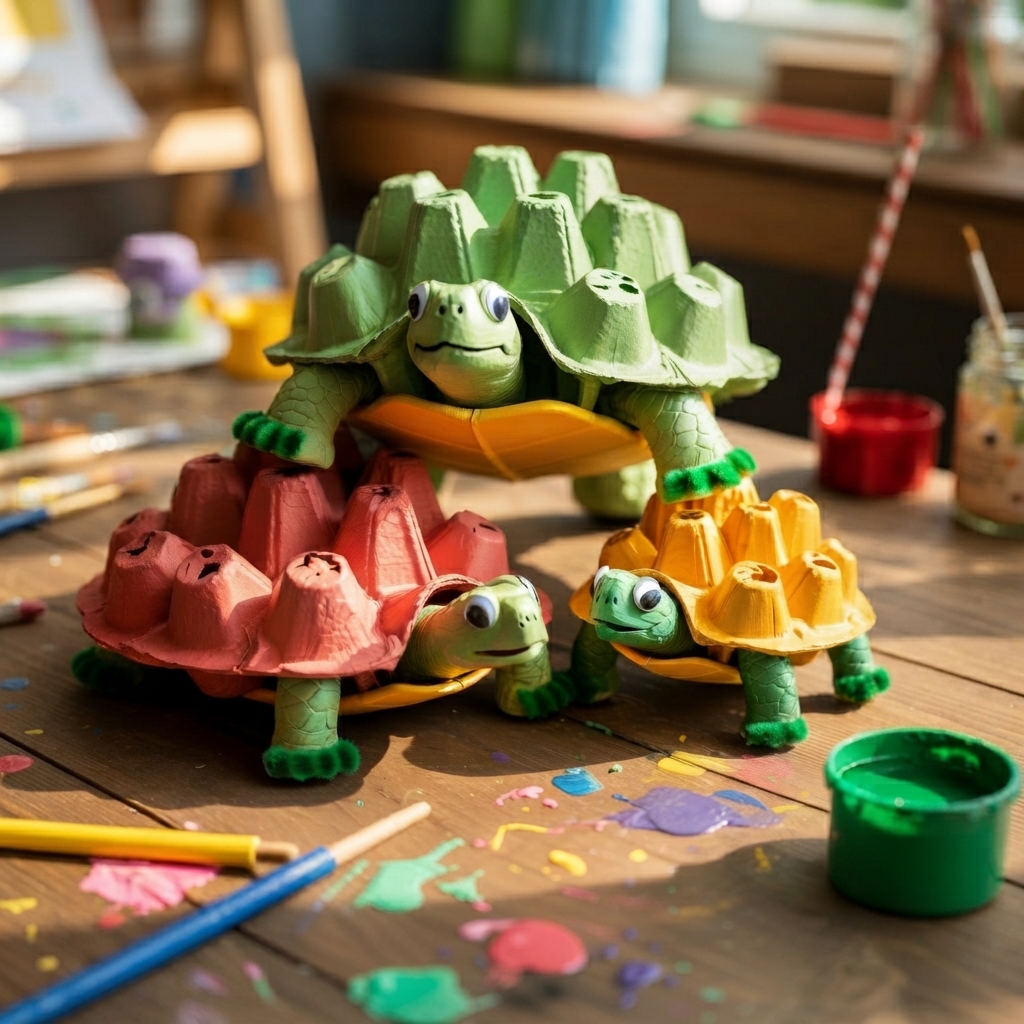
One enjoyable and eco-friendly classroom activity is Turtles in an Egg Carton. This project transforms an ordinary cardboard egg carton into adorable turtles using simple craft materials such as paint, paper, glue, and markers. It is an excellent activity for preschool, kindergarten, and elementary school students because it combines art, science, environmental education, and storytelling in a fun and meaningful way.
By creating colorful turtles from recycled materials, children discover that everyday objects can become wonderful works of art while learning about wildlife and the importance of protecting the environment.
Why Choose This School Project?
The Turtles in an Egg Carton project is simple, affordable, and suitable for children of different ages. It encourages creativity while introducing the concept of recycling through practical experience.
This project helps children:
- Develop creativity and imagination.
- Improve fine motor skills.
- Learn about recycling and sustainability.
- Practice following step-by-step instructions.
- Build concentration and patience.
- Strengthen hand-eye coordination.
- Increase confidence through creative work.
- Discover interesting facts about turtles and their habitats.
Each child can design unique turtles by choosing different colors, patterns, and decorations.
Educational Benefits
This project supports learning across several subject areas.
Fine Motor Development
Painting, cutting, gluing, and assembling the turtle pieces strengthen hand muscles and improve coordination, helping children develop skills needed for writing and drawing.
Creativity
Children can decorate each turtle with colorful shell patterns, smiling faces, and imaginative backgrounds that reflect their own artistic ideas.
Environmental Awareness
Reusing an egg carton teaches children that recyclable materials can be transformed into creative projects instead of becoming waste.
Observation Skills
Students learn about the body structure of turtles by identifying their shell, head, legs, and tail while discussing how turtles live and survive in nature.
Materials Needed
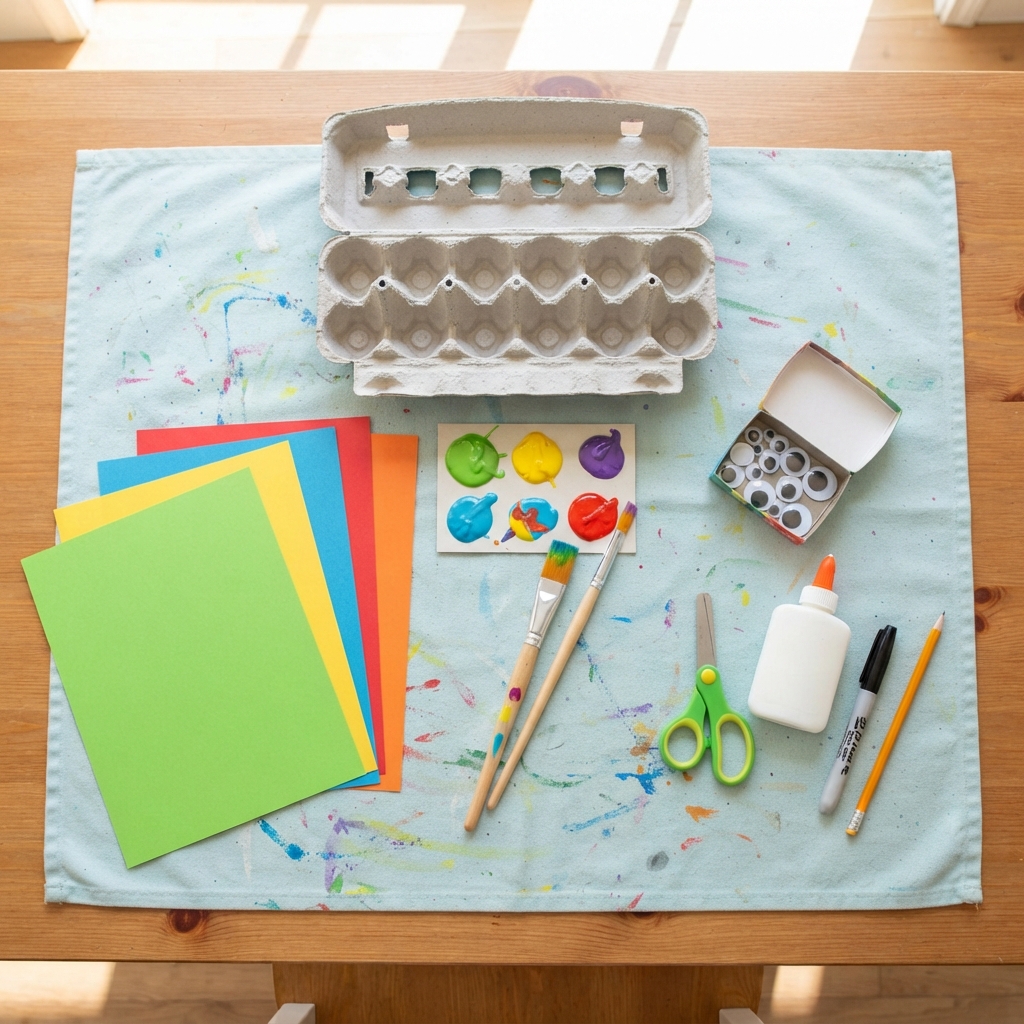
This project uses simple and inexpensive materials.
You will need:
- An empty cardboard egg carton
- Green paint or other colorful paints
- Paintbrushes
- Construction paper or cardstock
- Child-safe scissors
- Craft glue
- Googly eyes
- Black marker
- Pencil
- Protective table covering
Optional decorations include glitter, stickers, buttons, foam shapes, or colorful markers.
Step-by-Step Instructions
Step 1: Prepare the Egg Carton
Separate the individual egg carton cups. Each cup will become one turtle shell.
Step 2: Paint the Shells
Paint each egg carton cup green or decorate it with colorful patterns.
Allow the paint to dry completely.
Step 3: Cut Out the Turtle Parts
Using construction paper, cut out:
- One head
- Four legs
- One tail
Teachers may provide templates for younger children to make cutting easier.
Step 4: Assemble the Turtle
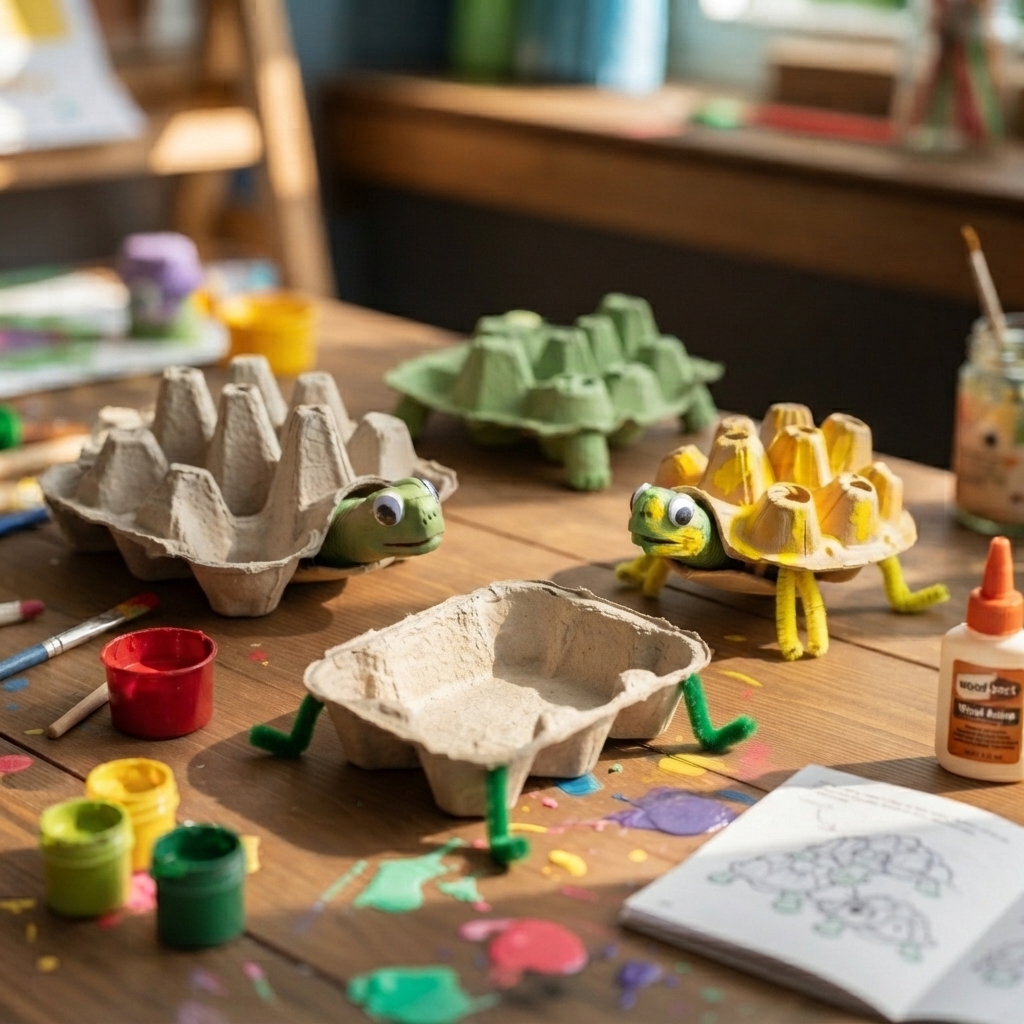
Glue the head, legs, and tail underneath the painted egg carton shell.
The egg carton cup becomes the turtle’s protective shell.
Step 5: Add the Face
Attach googly eyes or draw eyes with a black marker.
Draw a smiling mouth and other facial details to give the turtle a friendly appearance.
Step 6: Decorate the Shell
Children can decorate the shell using:
- Dots
- Hearts
- Flowers
- Stars
- Stripes
- Zigzag patterns
- Geometric designs
Every turtle will have its own unique personality.
Step 7: Create a Turtle Habitat
Students can glue their turtles onto a large piece of cardboard and decorate the scene with:
- Grass
- Trees
- Flowers
- Rocks
- A pond
- Sunshine
- Clouds
This creates a beautiful natural environment for the turtles.
Classroom Learning Opportunities
This project can be integrated into several school subjects.
Science
Children learn about:
- Turtle habitats
- Freshwater and sea turtles
- Animal life cycles
- Adaptations
- Wildlife conservation
Teachers can discuss why turtles are important members of many ecosystems.
Art
Students explore:
- Color mixing
- Painting techniques
- Three-dimensional crafts
- Creative design
- Decorative patterns
Mathematics
The turtles can be used for:
- Counting
- Sorting by color
- Comparing sizes
- Measuring shell width
- Creating repeating patterns
Language Arts
Children can:
- Give each turtle a name.
- Write a short story about the turtles.
- Describe where they live.
- Present their project to the class.
These activities improve vocabulary, storytelling, and speaking confidence.
Creative Variations
Teachers can adapt the activity to support different learning goals.
Alphabet Turtles
Write one letter on each shell to practice the alphabet and spelling.
Number Turtles
Label each turtle with a number for counting and simple math games.
Emotion Turtles
Draw different facial expressions to introduce discussions about emotions and feelings.
Seasonal Turtles
Decorate each turtle to represent spring, summer, autumn, or winter.
Pattern Turtles
Use repeating colors and designs to reinforce early mathematics concepts.
Tips for Teachers
To ensure a successful classroom activity:
- Prepare materials before class.
- Demonstrate each step clearly.
- Encourage creativity instead of perfection.
- Allow children to choose their own colors and decorations.
- Help younger students with cutting when needed.
- Praise every child’s effort.
- Display completed turtle projects around the classroom.
Displaying student artwork creates a positive classroom atmosphere and builds confidence.
Cross-Curricular Connections
| Subject | Learning Activity |
| Art | Painting and decorating turtle shells |
| Science | Learning about turtles and their habitats |
| Mathematics | Counting, sorting, and measuring turtles |
| Language Arts | Writing stories and presenting projects |
| Environmental Education | Recycling egg cartons and protecting wildlife |
Connecting multiple subjects through one project helps children understand how learning applies to everyday life.
Skills Children Develop
By completing the Turtles in an Egg Carton project, children strengthen many valuable skills:
- Creativity
- Fine motor coordination
- Observation
- Communication
- Critical thinking
- Organization
- Patience
- Teamwork
- Environmental responsibility
- Self-confidence
These lifelong skills support both academic achievement and personal development.
Conclusion
The Turtles in an Egg Carton school project is a fun, educational, and environmentally friendly activity that transforms a simple recycled egg carton into colorful turtle crafts. Through painting, cutting, gluing, and decorating, children develop artistic abilities, improve fine motor skills, and learn about turtles, habitats, and recycling. The project also encourages imagination, storytelling, teamwork, and environmental awareness, making it an engaging learning experience for young students. By turning everyday materials into creative works of art, children discover that learning can be both meaningful and enjoyable while developing skills that will benefit them throughout their lives.
