
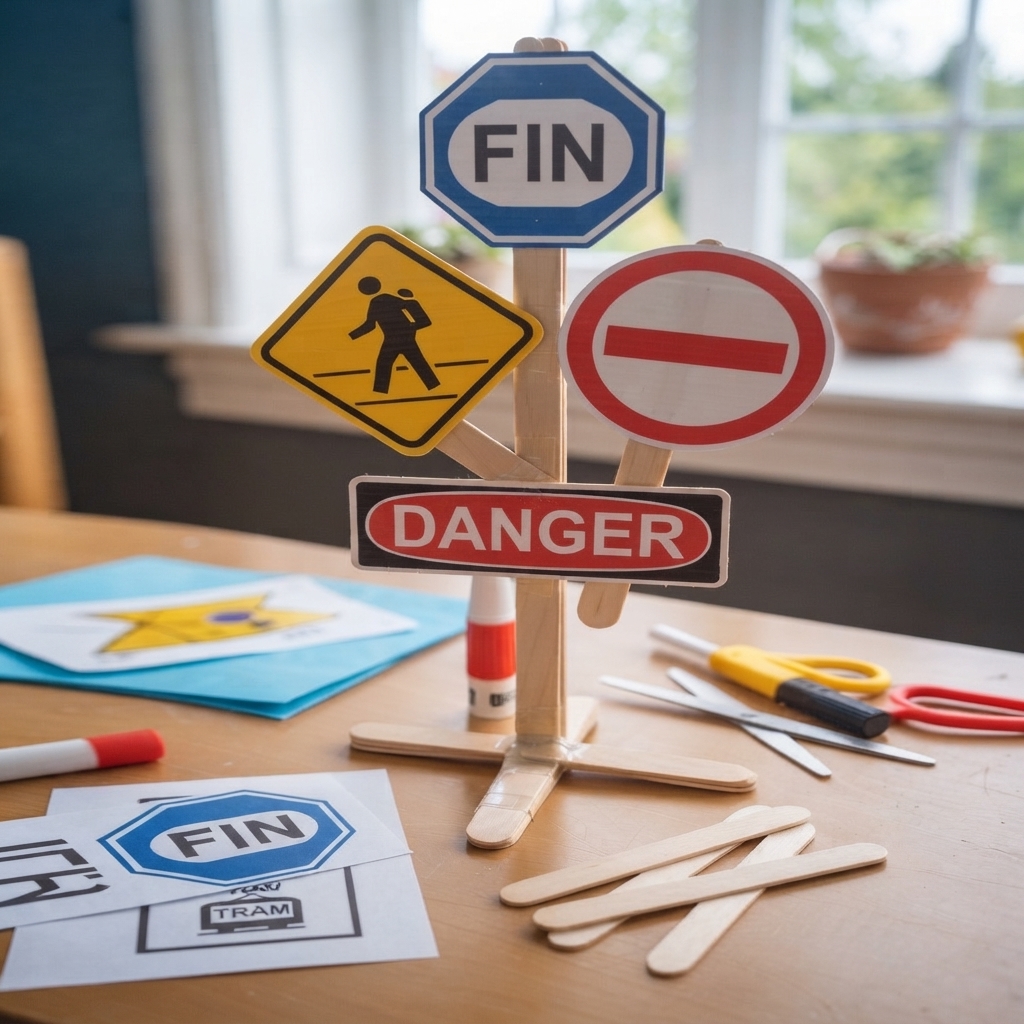
School projects are a wonderful way to help children learn through creativity, exploration, and hands-on experiences. Instead of only reading from books, students actively participate by building, painting, cutting, and assembling simple craft projects. These activities encourage imagination, improve fine motor skills, and make learning more engaging and enjoyable.
One fun and educational classroom activity is Traffic Lights Shaped Like Popsicle Sticks. This creative project allows children to build miniature traffic lights using popsicle sticks, colored paper, paint, and glue. While creating their crafts, students learn about road safety, the meaning of traffic signals, and the importance of following rules that keep everyone safe.
This project is perfect for preschool, kindergarten, and elementary school students because it combines art, transportation education, and practical life skills in one exciting activity.
Why Choose This School Project?
Traffic lights are a familiar part of everyday life. Children see them when walking to school, riding in a car, or crossing the street. Building a traffic light model helps them understand how these signals organize traffic and protect pedestrians and drivers.
This project encourages children to:
- Learn the meaning of traffic light colors.
- Understand basic road safety rules.
- Improve creativity and artistic skills.
- Strengthen fine motor coordination.
- Practice following step-by-step instructions.
- Develop concentration and patience.
- Build confidence through hands-on learning.
- Recognize the importance of community safety.
Because every child decorates the project differently, each finished traffic light becomes a unique piece of artwork.
Educational Benefits
This activity supports learning across several educational areas.
Fine Motor Development
Painting popsicle sticks, cutting circles, and gluing small pieces together strengthen hand muscles and improve coordination.
Creativity
Children use colors, shapes, and decorations to design their own traffic lights and create imaginative street scenes.
Cognitive Skills
Learning the correct order and purpose of the traffic light colors improves memory, sequencing, and observation skills.
Citizenship Education
The project teaches children about responsibility, public safety, and the importance of following traffic rules.
Materials Needed
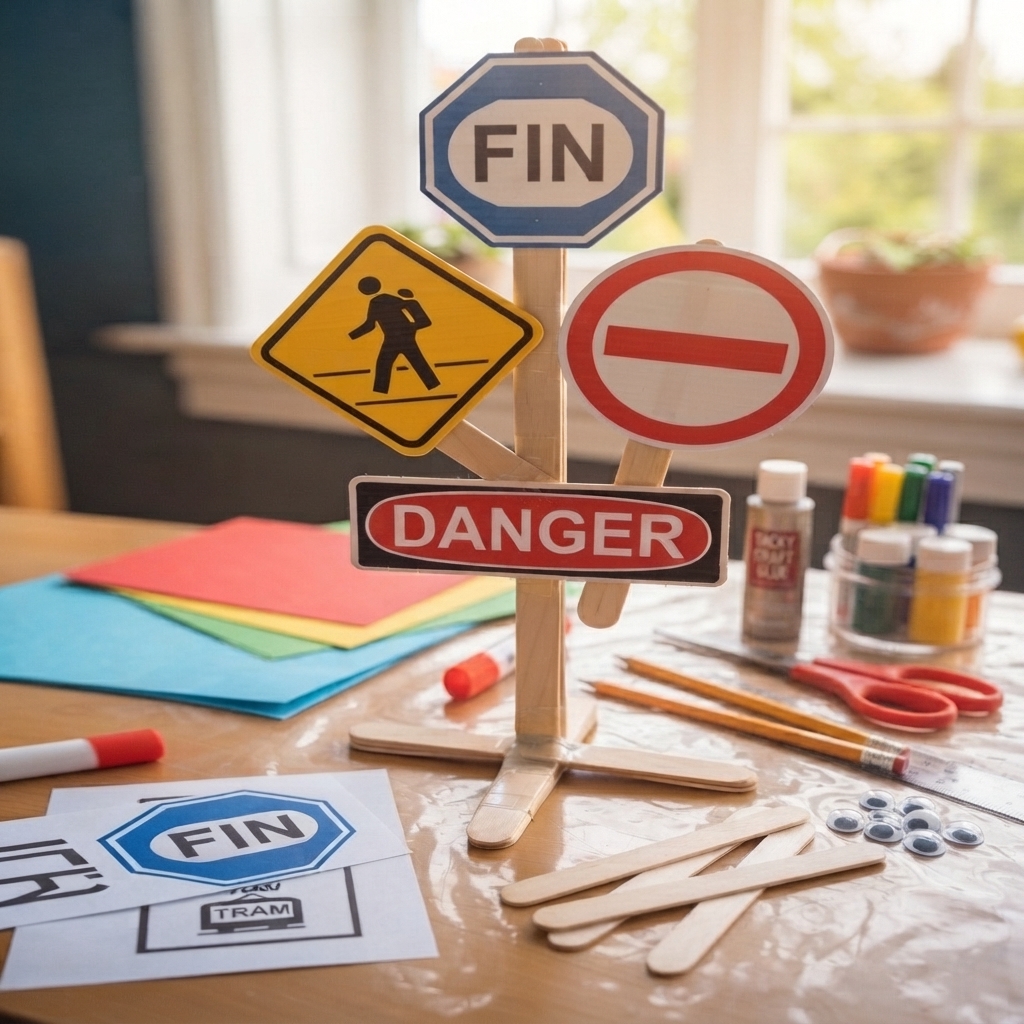
The project requires only simple and inexpensive craft supplies.
You will need:
- Popsicle sticks
- Black construction paper or cardstock
- Red, yellow, and green paper
- Craft glue
- Child-safe scissors
- Paint or colored markers
- Pencil
- Ruler
- Googly eyes (optional)
- Protective table covering
Optional decorations include stickers, foam shapes, toy cars, cotton balls for clouds, and paper trees.
Step-by-Step Instructions
Step 1: Build the Base
Glue several popsicle sticks side by side to create a strong rectangular base.
Allow the glue to dry completely.
Step 2: Paint the Popsicle Sticks
Children may paint the sticks black or gray to resemble a real traffic light pole, or choose bright colors for a more creative design.
Step 3: Make the Traffic Light
Cut a rectangle from black construction paper to form the traffic light housing.
Step 4: Prepare the Signal Lights
Cut three equal circles from colored paper:
- Red
- Yellow
- Green
These circles represent the traffic signals.
Step 5: Assemble the Traffic Light
Glue the circles onto the black rectangle in the correct order:
- Red at the top
- Yellow in the middle
- Green at the bottom
Explain the meaning of each color while assembling the project.
Step 6: Attach the Traffic Light
Glue the completed traffic light onto the popsicle stick base.
Allow the craft to dry before decorating.
Step 7: Create a Street Scene
Children can complete the project by adding:
- Roads
- Crosswalks
- Cars
- Bicycles
- Trees
- Buildings
- Clouds
- Pedestrians
This transforms the craft into a miniature city scene.
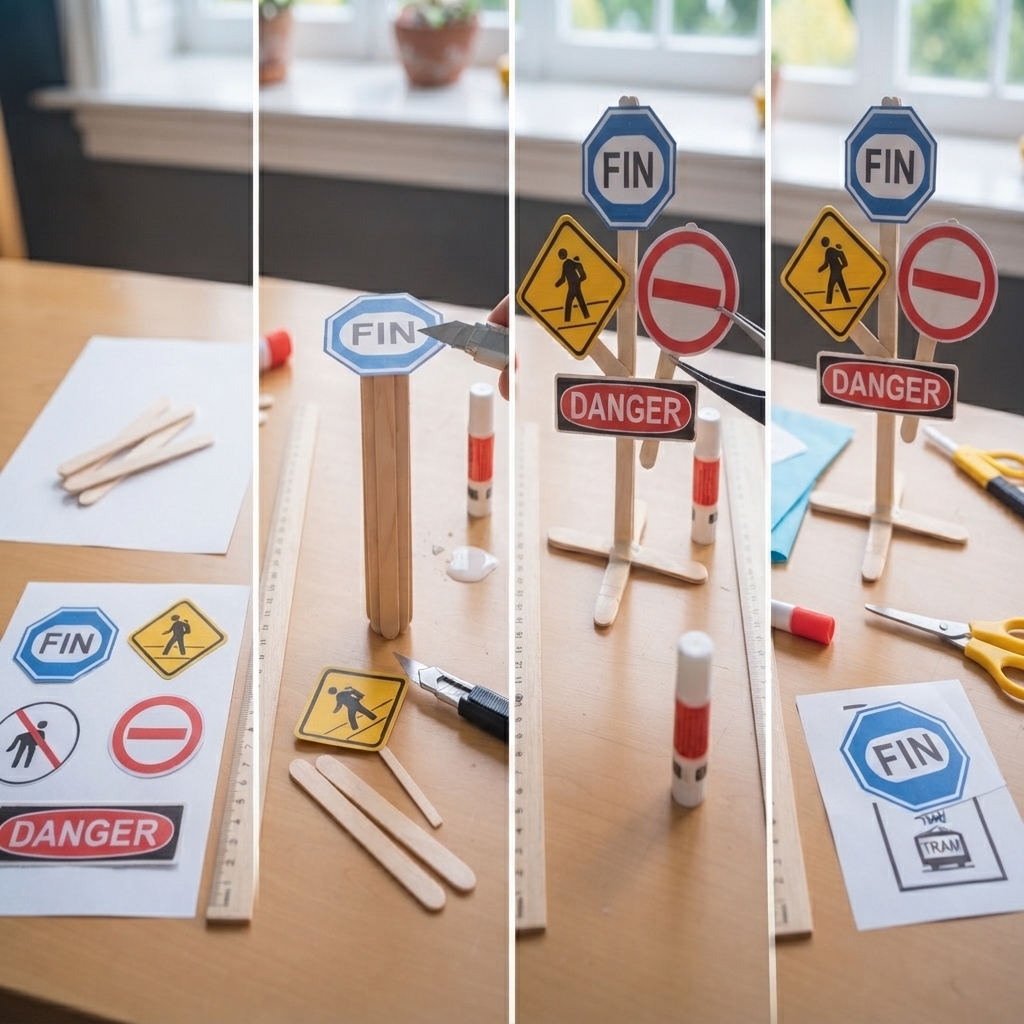
Learning the Meaning of Traffic Light Colors
This project is an excellent opportunity to introduce road safety.
Red Means Stop
The red light tells vehicles to stop. Pedestrians should also wait until it is safe to cross.
Yellow Means Slow Down
The yellow light warns that the signal is about to change. Drivers should slow down and prepare to stop if it is safe.
Green Means Go
The green light allows traffic to move forward when the road is clear. Children should still remember to look both ways before crossing the street.
Classroom Learning Opportunities
This project connects with several school subjects.
Art
Children practice:
- Painting
- Cutting
- Gluing
- Designing
- Color recognition
Mathematics
Students learn:
- Counting
- Sequencing
- Shape recognition
- Position words such as top, middle, and bottom
Language Arts
Children can:
- Describe their traffic light.
- Explain the meaning of each color.
- Write a short story about road safety.
- Present their project to classmates.
Social Studies
Teachers can discuss:
- Transportation
- Community helpers
- Road signs
- Pedestrian safety
- Responsible citizenship
Creative Variations
This project can be adapted for different classroom themes.
Classroom Rules Traffic Light
Use the colors to represent classroom behavior:
- Red: Stop talking.
- Yellow: Think before acting.
- Green: Ready to learn.
Emotion Traffic Light
Children connect colors with emotions:
- Red: Angry
- Yellow: Worried
- Green: Happy
This encourages emotional awareness and communication.
Mini City Project
Students work together to build a model town with roads, traffic lights, vehicles, parks, and buildings.
Transportation Week
Combine the project with lessons about buses, bicycles, trains, emergency vehicles, and safe travel.
Tips for Teachers
To make the activity enjoyable:
- Prepare all materials before class.
- Demonstrate each step carefully.
- Show pictures of real traffic lights.
- Encourage creativity instead of perfection.
- Allow children to personalize their designs.
- Praise effort and participation.
- Display completed projects around the classroom.
Displaying children’s work helps build confidence and creates a colorful learning environment.
Cross-Curricular Connections
| Subject | Learning Activity |
| Art | Building and decorating traffic lights |
| Mathematics | Counting, sequencing, and identifying shapes |
| Language Arts | Writing and presenting road safety stories |
| Social Studies | Learning about transportation and community safety |
| Citizenship Education | Understanding responsibility and safe behavior |
Combining multiple subjects into one project helps children connect classroom learning with everyday life.
Skills Children Develop
By completing this project, children strengthen many important skills:
- Creativity
- Fine motor coordination
- Observation
- Communication
- Critical thinking
- Organization
- Patience
- Teamwork
- Responsibility
- Self-confidence
These skills contribute to both academic success and personal growth.
Conclusion
The Traffic Lights Shaped Like Popsicle Sticks school project is a fun, creative, and educational activity that teaches children about road safety while developing artistic and practical skills. Using simple materials such as popsicle sticks, colored paper, glue, and paint, students create colorful traffic lights that help them understand the meaning of red, yellow, and green signals. Along the way, they improve creativity, fine motor coordination, communication, and teamwork. This engaging project demonstrates that learning can be exciting, meaningful, and connected to everyday life, inspiring children to become creative learners and responsible members of their community.
