
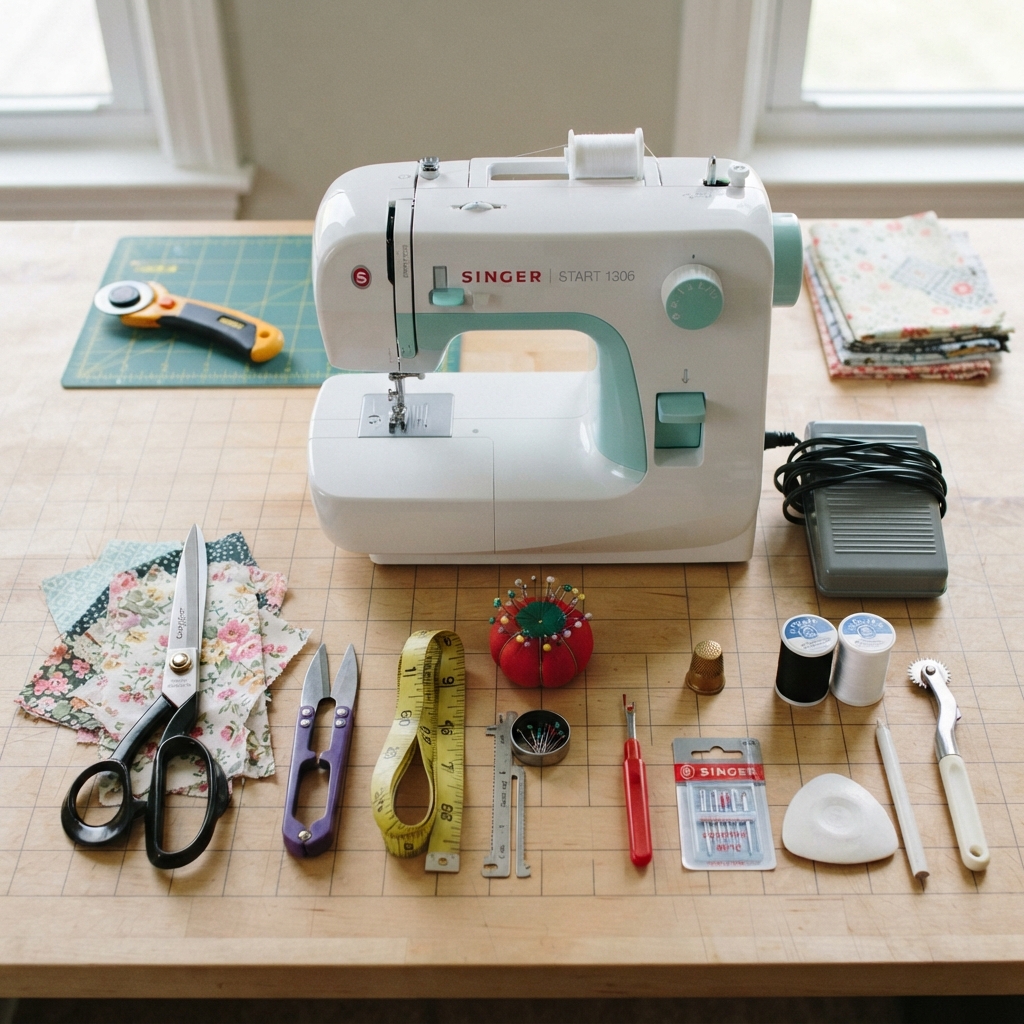
Starting a sewing hobby can feel overwhelming when you see how many different tools are available. The good news is that beginners do not need to buy everything at once. A small collection of reliable, useful sewing tools is enough to learn the basics, complete simple projects, and build confidence.
Whether you want to learn hand sewing, make fabric crafts, repair clothes, or eventually use a sewing machine, having the right tools makes every project easier. Here are the best sewing tools every beginner should have.
1. Sewing Needles
Sewing needles are one of the most important tools in any sewing kit.
For beginners, a small assortment of general-purpose hand-sewing needles is a great place to start. Different needle sizes are useful for different fabrics and thread thicknesses.
Choose needles with:
- A sharp point
- A comfortable length
- An eye large enough for your thread
- Different sizes for different fabrics
Keep your needles in a pincushion or needle case so they are easy to find and safely stored.
2. Sewing Thread
Good-quality thread helps create stronger and cleaner stitches.
Cotton or polyester thread is suitable for many beginner projects. Choose colors that match your fabric for basic sewing, and add a few bright colors for decorative projects.
Avoid using extremely old or weak thread because it can break while you are sewing.
A beginner does not need dozens of colors. Start with a few basic shades such as:
- White
- Black
- Gray
- Navy
- Beige
- Red
You can add more colors as your projects become more varied.
3. Fabric Scissors
A sharp pair of fabric scissors is an essential sewing tool.
Fabric scissors are designed to cut cloth smoothly without creating uneven edges.
Keep your fabric scissors separate from regular household scissors. Using them only for fabric helps keep the blades sharp.
When cutting fabric, place it on a flat surface and cut slowly along your marked lines.
4. Small Thread Snips
Thread snips are small scissors designed specifically for trimming loose threads.
They are not essential for your first project, but they can make sewing much faster and more convenient.
Keep them near your sewing area so you can quickly remove excess thread after finishing a seam.
5. Tape Measure
A flexible tape measure is essential for taking body measurements and measuring fabric.
It is especially useful when making clothing or checking the size of a sewing project.
Look for a tape measure with clear markings in centimeters and inches if you use both measurement systems.
6. Ruler
A ruler is useful for measuring fabric and drawing straight lines.
A basic 30-centimeter ruler is enough for many small projects.
As you progress, you may want to add a longer ruler or a quilting ruler for larger fabric projects.
7. Fabric Marking Tools
Fabric marking tools help you draw sewing lines, patterns, hems, and other guides.
Beginners can use:
- Washable fabric markers
- Fabric pencils
- Tailor’s chalk
- Water-soluble pens
Always test a marking tool on a scrap piece of fabric before using it on your project. Some marks may be difficult to remove from certain materials.
8. Pins
Pins help hold fabric pieces together before and during sewing.
Straight pins with colorful heads are easy for beginners to see.
When using pins, place them perpendicular to the sewing line when appropriate, or use clips if the fabric is thick or delicate.
Store pins in a pincushion or magnetic pin holder.
9. Sewing Clips
Sewing clips are a useful alternative to traditional pins.
They are particularly helpful for thick fabrics, layered materials, and projects where pins may leave holes.
Clips can also make it easier to hold fabric edges together without worrying about accidentally pricking your fingers.
10. Pin Cushion
A pincushion gives you a safe place to store needles and pins while you work.
A simple cushion is enough for beginners.
You can also make your own pincushion as a small sewing project. This is a fun way to practice your stitches while creating something useful.
11. Seam Ripper
A seam ripper is one of the most useful tools for beginners.
Mistakes are a normal part of learning to sew. A seam ripper allows you to carefully remove unwanted stitches without damaging the fabric.
Choose a comfortable seam ripper with a sharp point and protective cap.
Do not be afraid to use it. Even experienced sewists occasionally need to remove stitches.
12. Thimble
A thimble protects your finger when pushing a needle through fabric.
It is especially useful when sewing thicker materials or making many stitches by hand.
Traditional thimbles are often made from metal, but plastic and silicone options are also available.
Try different styles to find one that feels comfortable.
13. Iron and Ironing Board
Pressing fabric is an important part of sewing.
An iron can help:
- Remove wrinkles
- Create clean hems
- Flatten seams
- Prepare fabric before cutting
- Give finished projects a professional appearance
You do not necessarily need a special sewing iron when you are starting. A regular household iron can work well.
Always follow the fabric’s care instructions and use an appropriate temperature.
14. Seam Gauge
A seam gauge is a small ruler with a sliding marker.
It helps you measure small distances accurately, such as seam allowances and hems.
Although beginners can start with a regular ruler, a seam gauge becomes very useful when you begin making clothing or projects that require precise measurements.
15. Embroidery Hoop
If you are interested in decorative hand sewing or embroidery, an embroidery hoop is a useful addition.
The hoop keeps fabric stretched and stable while you stitch.
It is especially helpful for practicing designs such as flowers, stars, butterflies, hearts, and other decorative patterns.
16. Sewing Machine
A sewing machine is not necessary for learning hand sewing, but it can become a valuable tool later.
If you decide to sew larger projects, a beginner-friendly machine can save time and help you create stronger seams.
Do not feel pressured to buy a machine immediately. Learning basic hand sewing first can help you understand fabric, thread, seams, and stitches.
17. Storage Box or Sewing Organizer
A simple storage box can keep your sewing supplies organized.
You can divide the box into sections for:
- Needles
- Thread
- Pins
- Scissors
- Measuring tools
- Buttons
- Zippers
- Embroidery supplies
Keeping everything organized makes it easier to start a project and prevents small tools from getting lost.
How to Build a Beginner Sewing Kit
You do not need to purchase every tool on this list at once.
A basic beginner kit can start with:
- Sewing needles
- Good-quality thread
- Fabric scissors
- Tape measure
- Pins
- Seam ripper
- Fabric marking pencil
- Small ruler
- Thimble
- Pincushion
These tools are enough for many basic hand-sewing projects.
As your skills improve, you can add sewing clips, an iron, an embroidery hoop, specialty needles, and other tools.
Tips for Choosing Sewing Tools
When buying sewing supplies, focus on quality rather than quantity.
A sharp pair of scissors is more useful than several inexpensive pairs. Good needles and thread can also make sewing much easier.
Choose tools that feel comfortable in your hands. If a tool is difficult or uncomfortable to use, you are less likely to enjoy sewing.
It is also a good idea to buy supplies gradually based on the projects you want to make.
Final Thoughts
The best sewing tools for beginners are the ones that make basic sewing simple, comfortable, and enjoyable. You do not need a large professional sewing kit to get started.
Begin with essential items such as needles, thread, fabric scissors, pins, a tape measure, a seam ripper, and a fabric marker. As you gain experience, add tools that match your interests and projects.
With the right basic supplies and regular practice, you can build your sewing skills and create everything from simple repairs to beautiful handmade crafts.
