
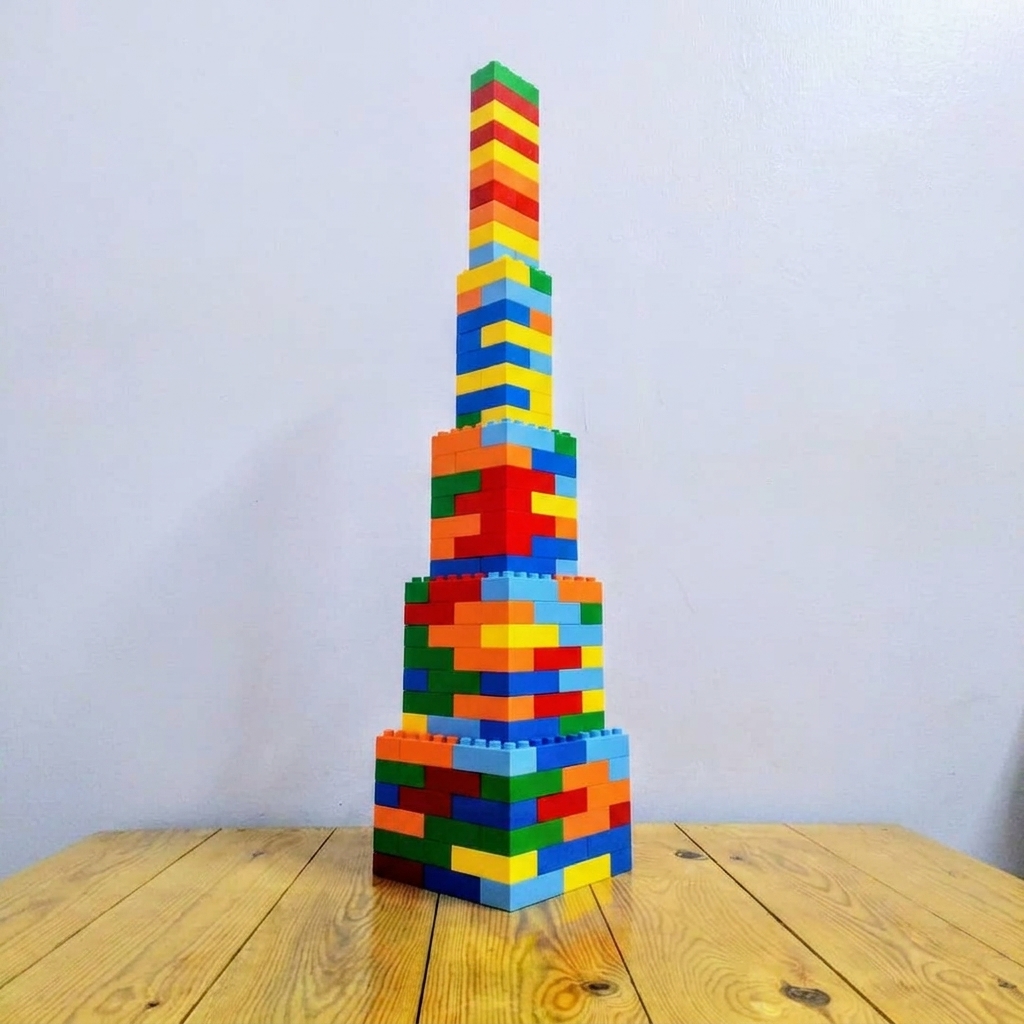
Building a tower that can withstand the greatest possible weight is one of the most exciting STEM challenges for children, students, and even adults. At first glance, it may seem like a simple craft project using sticks, paper, or blocks. However, it is actually a real engineering challenge that introduces core concepts of physics, structure design, and material strength.
The goal is simple but powerful: create a tower that can support as much weight as possible without collapsing. This could be coins, books, small toys, or any safe weighted objects used for testing. The fun lies in the experimentation, testing, and improvement process.
What makes this activity especially engaging is that there is no single correct answer. Every design is different, and every attempt teaches something new. Children quickly learn that success depends not just on materials, but on how those materials are arranged and reinforced.
In this article, we will explore how building a tower that can withstand the greatest possible weight works, why children love it, and the step-by-step method to achieve strong and stable designs.
Quick Overview Table
| Feature | Details |
| Project Name | Building a Tower That Can Withstand the Greatest Possible Weight |
| Type | STEM Engineering Challenge |
| Difficulty Level | Easy to Advanced |
| Age Group | 7–15 Years |
| Time Required | 1–3 Hours |
| Materials | Paper, straws, sticks, tape, glue |
| Core Concept | Structural strength and load distribution |
| Skills Developed | Engineering, problem-solving, design thinking |
| Cost | Very Low |
| Fun Level | Very High |
What Does This Challenge Mean?
Building a tower that can withstand the greatest possible weight means designing a structure that does not collapse under pressure. The tower must remain stable while carrying increasing loads placed on top.
This challenge is widely used in schools and STEM workshops because it introduces real engineering principles in a fun and accessible way.
The tower may be made from:
- Paper rolls
- Straws
- Wooden sticks
- Cardboard
- Tape or glue
The main objective is not height, but strength and stability.
Why Kids Love Building a Strong Tower
1. It Feels Like a Real Engineering Competition
Children enjoy challenges where they can test their skills against limits. This activity feels like a competition where their tower competes against gravity.
Each improvement brings them closer to a stronger design.
This competitive and experimental nature makes the activity exciting.
2. Instant Testing and Feedback
One of the most engaging aspects is immediate testing.
Kids place weights on their towers and watch what happens.
If the tower holds, they feel proud. If it collapses, they learn what needs improvement.
This instant feedback loop encourages learning through trial and error.
3. It Encourages Creativity and Innovation
There is no fixed design. Children can experiment with:
- Shapes (triangles, squares, circles)
- Materials (paper, straws, sticks)
- Reinforcements (layers, supports, braces)
This freedom encourages innovation and creative thinking.
4. It Teaches Real Engineering Concepts
Without realizing it, children learn core principles such as:
- Load distribution
- Balance
- Center of gravity
- Structural integrity
- Friction and support
These are foundational engineering ideas.
5. It Turns Failure Into Learning
When a tower collapses, it is not a failure—it is data.
Children learn:
- Why it fell
- What weak point caused collapse
- How to improve next time
This mindset is essential for scientific thinking.
Materials Needed
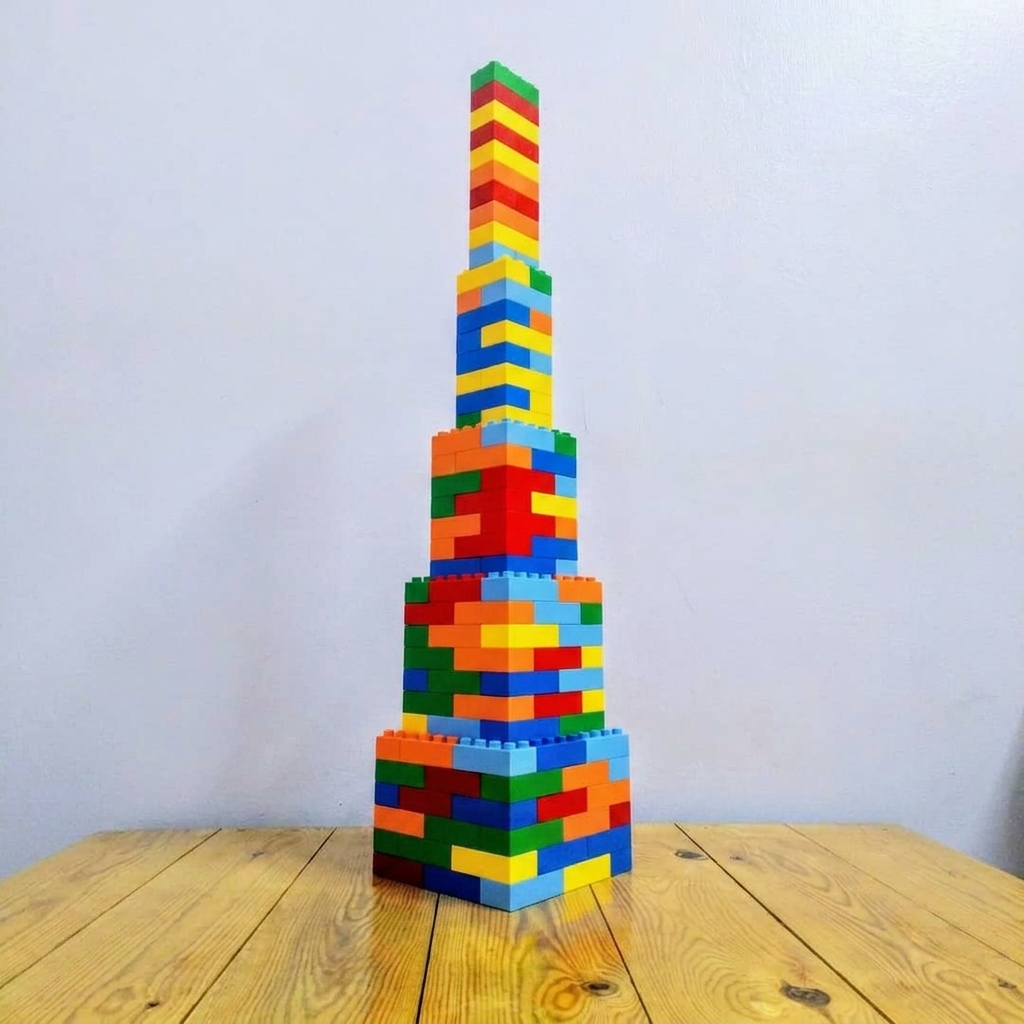
To begin building a tower that can withstand the greatest possible weight, gather:
- Paper sheets or cardboard
- Straws or sticks
- Tape or glue
- Scissors
- Ruler
- Small weights (coins, books, stones)
- Flat testing surface
These simple materials make the activity accessible for everyone.
The Science Behind Strong Towers
Strong towers rely on key physics principles:
- Base support – A wide base improves stability
- Load distribution – Weight must spread evenly
- Triangular structures – Triangles are stronger than squares
- Center of gravity – Lower center increases stability
- Reinforcement – Extra support prevents collapse
Understanding these principles helps children build better structures.
Step-by-Step Guide: 7 Steps to Build a Strong Tower
Step 1: Plan the Design
Start by sketching the tower.
Decide:
- Height
- Shape
- Materials
- Base size
Planning improves stability and reduces mistakes.
Step 2: Build a Strong Base
The base is the most important part of the tower.
A wide and solid base prevents tipping.
Use:
- Folded paper layers
- Thick cardboard
- Cross-bracing techniques
Step 3: Construct Vertical Supports
Add vertical columns using straws or rolled paper.
These act as the main load-bearing structures.
Make sure they are evenly spaced.
Step 4: Add Cross Bracing
Connect vertical supports with diagonal braces.
This forms triangles, which are structurally strong.
Cross bracing prevents bending and wobbling.
Step 5: Strengthen Joints
Weak joints often cause collapse.
Use:
- Extra tape
- Glue reinforcement
- Overlapping materials
Strong connections improve durability.
Step 6: Test Small Loads
Before full testing, place light objects on the tower.
Observe:
- Stability
- Flexibility
- Weak points
Make adjustments as needed.
Step 7: Add Maximum Weight Gradually
Gradually increase the load using coins, books, or small weights.
Watch how the tower responds and improve if necessary.
This final step determines success.
Educational Benefits
STEM Learning
This project teaches:
- Science: forces and balance
- Technology: construction methods
- Engineering: structural design
- Mathematics: measurement and symmetry
Problem-Solving Skills
Children learn to identify weaknesses and improve designs.
Creativity
Each tower is unique, encouraging innovation.
Critical Thinking
Students analyze what works and what fails.
Why Teachers Use This Activity
Teachers love this project because it is:
- Simple to organize
- Low cost
- Highly educational
- Engaging for students
It fits perfectly into STEM lessons about physics and engineering.
It can also be turned into a classroom competition.
How Parents Can Help
Parents can support children by:
- Providing materials
- Asking guiding questions
- Encouraging redesign
- Helping test structures
Questions like “Why did it collapse?” or “How can we make it stronger?” deepen understanding.
Common Challenges and Solutions
Tower Collapses Quickly
Strengthen the base and add cross bracing.
Weak Joints
Use stronger glue or more tape layers.
Uneven Structure
Measure carefully and ensure symmetry.
Top Heaviness
Lower the center of gravity or widen the base.
Creative Variations
Children can try:
- Tallest tower challenge
- Strongest bridge extension
- Earthquake simulation test
- Wind resistance tower
Each variation adds complexity and fun.
Real-Life Applications
This project reflects real engineering used in:
- Skyscrapers
- Bridges
- Towers
- Buildings
Engineers use the same principles of balance, support, and load distribution.
Long-Term Learning Impact
Building a tower that can withstand the greatest possible weight helps children develop:
- Engineering thinking
- Scientific curiosity
- Problem-solving skills
- Creativity
- Persistence
These skills are essential for future academic and career success.
Conclusion
Building a tower that can withstand the greatest possible weight is more than a simple classroom activity. It is a powerful introduction to engineering and physics concepts that shape the world around us.
Children love this project because it is hands-on, interactive, and full of discovery. They get to design, build, test, and improve their creations while learning how real structures work.
Every collapse becomes a lesson, and every success builds confidence. Through this process, children learn that strong designs come from careful thinking, creativity, and persistence.
This is why building a tower that can withstand the greatest possible weight remains one of the most effective and enjoyable STEM challenges for young learners.
