
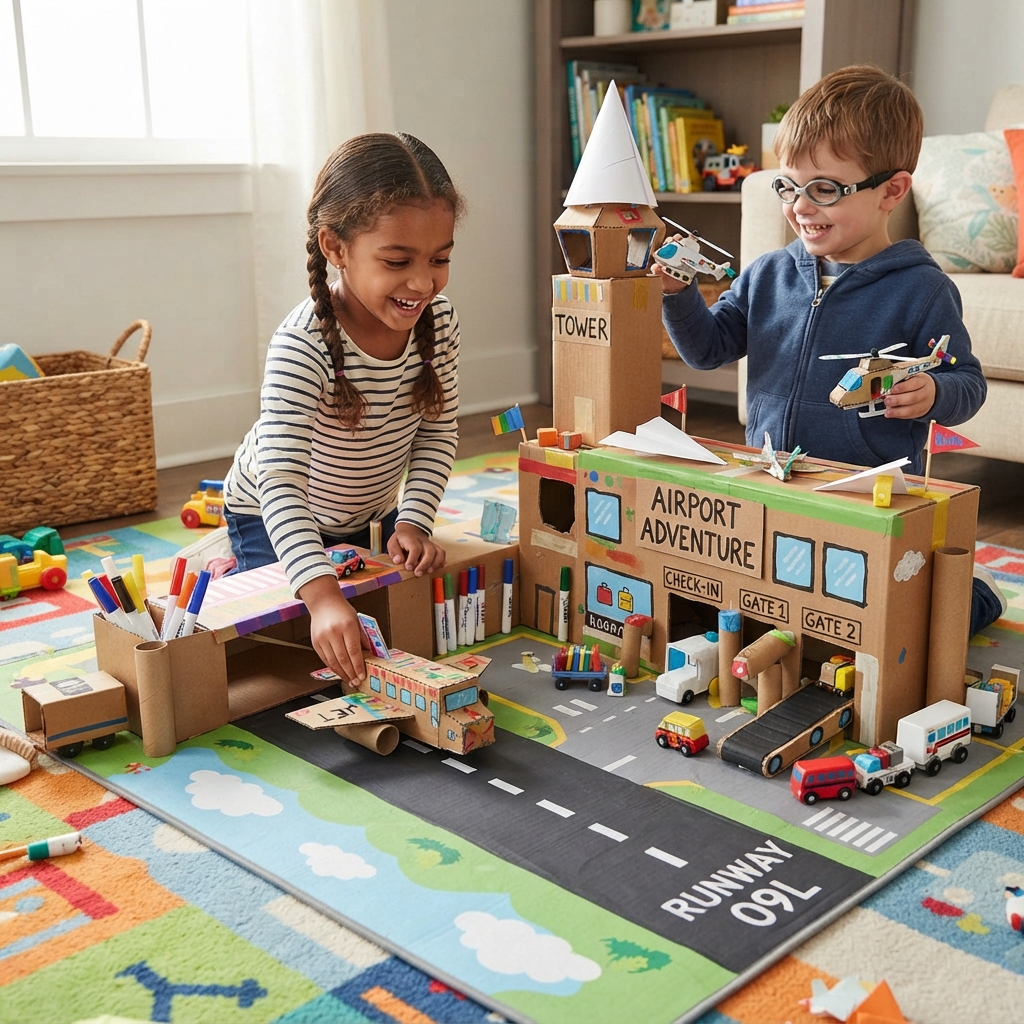
Building a cardboard airport is an exciting craft project that combines creativity, imagination, and learning. Children can design runways, terminals, airplanes, control towers, and baggage areas using simple household materials. This hands-on activity encourages problem-solving, storytelling, and fine motor skills while introducing young learners to the fascinating world of aviation.
Whether for a rainy afternoon, a classroom project, or family craft time, creating a cardboard airport offers hours of educational fun.
Why Make a Cardboard Airport?
Airports are busy places filled with interesting vehicles, buildings, and people. By recreating one from cardboard, children can:
- Learn how airports work.
- Improve creativity and engineering skills.
- Practice cutting, folding, and assembling.
- Develop teamwork through collaborative building.
- Create endless pretend-play adventures.
The finished airport can become a favorite toy that children enjoy long after the craft is complete.
Materials You’ll Need
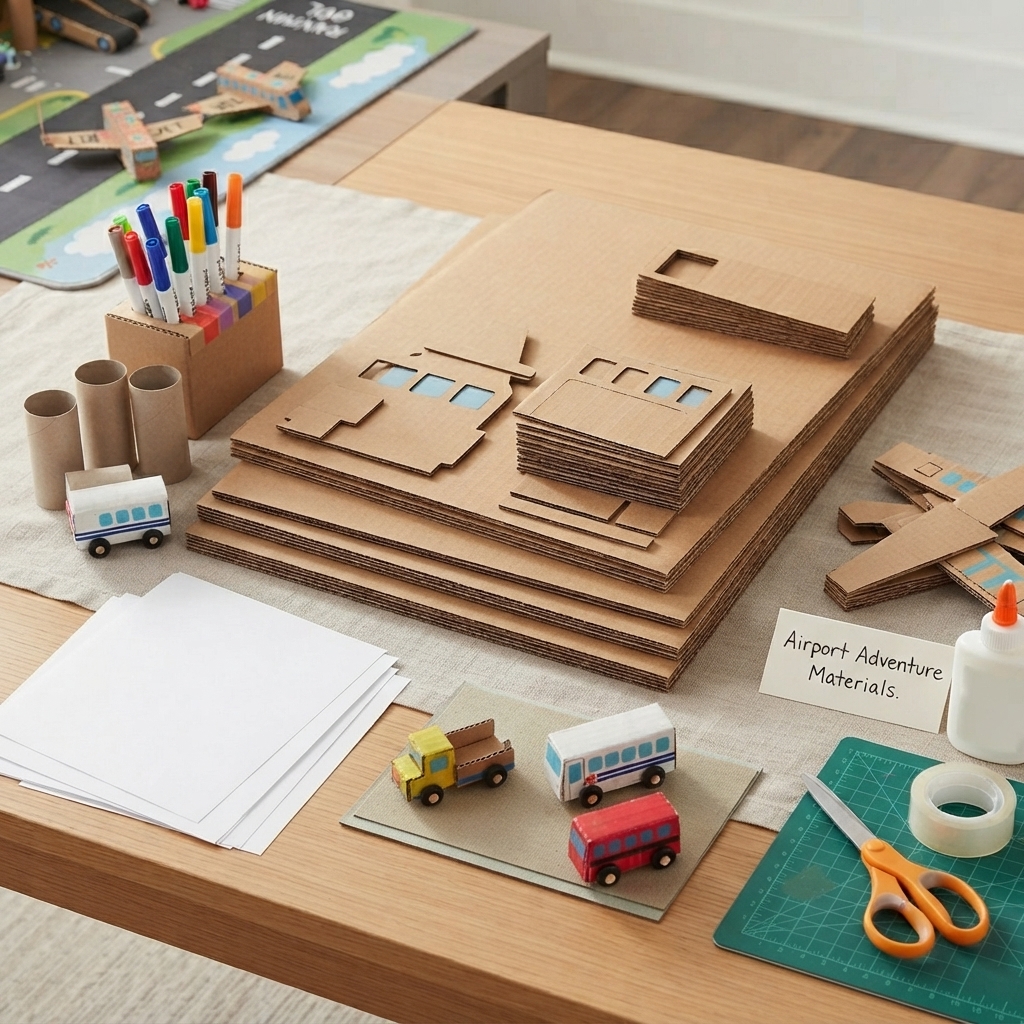
Most supplies can be found around the house.
- Large cardboard boxes
- Small cardboard pieces
- Toilet paper rolls
- Paper towel tubes
- Colored construction paper
- White paper
- Markers and crayons
- Acrylic or washable paint
- Glue
- Child-safe scissors
- Tape
- Popsicle sticks
- Bottle caps
- Black marker
- Ruler
- Cotton balls (optional)
- Toy airplanes or handmade paper airplanes
- Stickers for decoration
Step 1: Create the Airport Base
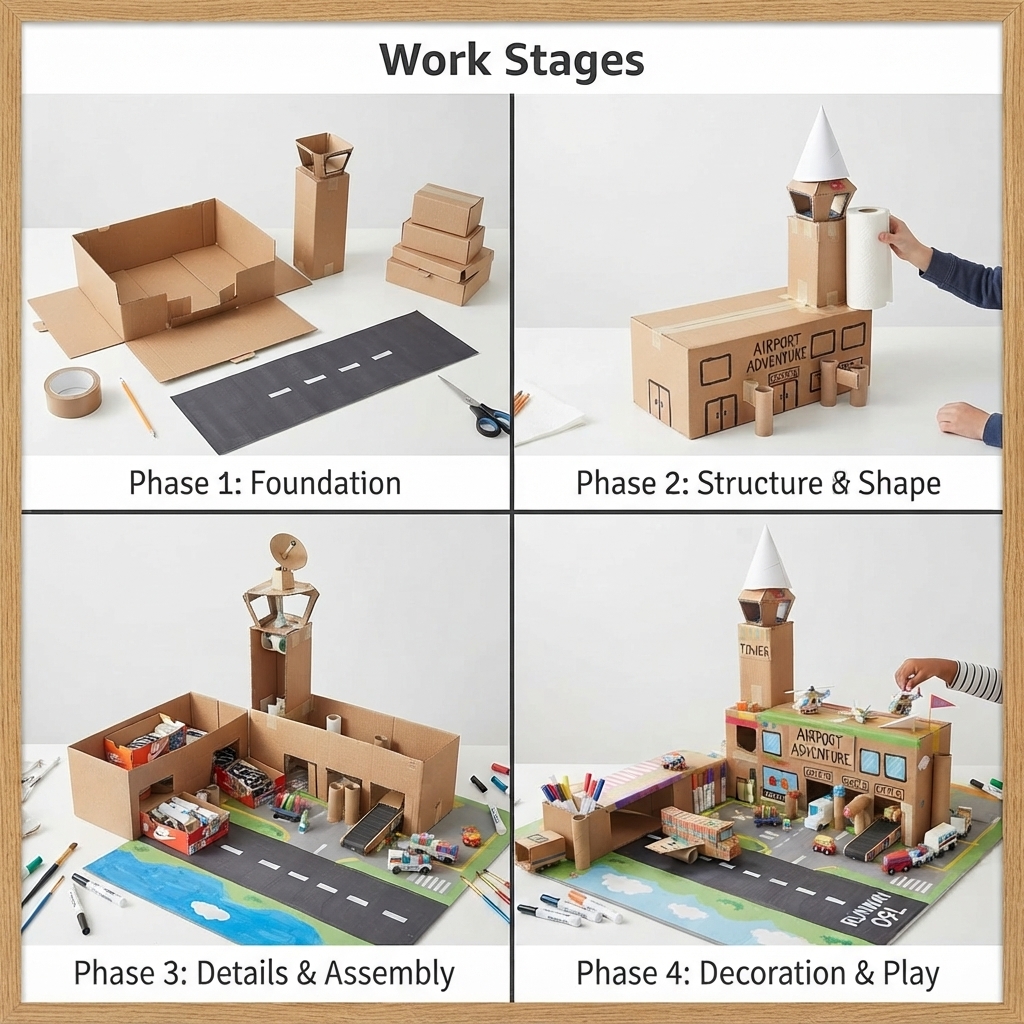
Start with a large flat piece of cardboard.
This will become the airport grounds.
Paint it green to represent grass.
Leave long gray strips for:
- Runways
- Taxiways
- Parking aprons
Allow everything to dry completely before moving on.
Step 2: Make the Runway
Cut a long rectangle from cardboard.
Paint it dark gray or black.
Use white paint or white paper strips to create:
- Center runway lines
- Side markings
- Landing numbers
Children can even invent their own runway numbers.
Step 3: Build the Terminal
The terminal is where passengers enter the airport.
Fold a medium-sized cardboard box into a building.
Add:
- Windows
- Doors
- Waiting area
- Boarding gates
Use clear plastic packaging for pretend glass windows if available.
Decorate with colorful signs such as:
- Check-In
- Gate A
- Departures
- Arrivals
Step 4: Construct the Control Tower
The control tower is one of the most exciting parts.
Use:
- A paper towel tube
- Small cardboard box
Glue the box on top of the tube.
Draw windows around the upper section.
Paint the tower white and gray.
Children can pretend to guide airplanes safely.
Step 5: Design Airplanes
Airplanes can be made from:
- Cardboard
- Thick paper
- Craft foam
Cut out:
- Wings
- Tail
- Body
Decorate each plane with:
- Airline logos
- Colorful stripes
- Passenger windows
- Cockpit windows
Each child can invent a unique airline.
Step 6: Create Airport Vehicles
Every airport needs service vehicles.
Build miniature:
- Fuel truck
- Baggage cart
- Airport bus
- Fire truck
- Pushback tractor
Bottle caps make excellent wheels.
Small cardboard boxes become vehicle bodies.
Step 7: Add a Parking Lot
Draw parking spaces beside the terminal.
Children can park toy cars for passengers.
Include:
- Crosswalks
- Streetlights
- Trees
- Road signs
These small details make the airport look realistic.
Step 8: Build a Baggage Claim Area
Inside the terminal, create a baggage section.
Use cardboard strips to make a conveyor belt.
Add tiny cardboard suitcases decorated with:
- Stickers
- Colored paper
- Name tags
Children love pretending to collect luggage after flights.
Step 9: Make Passenger Figures
Draw people on cardstock.
Cut them out and fold small tabs at the bottom so they can stand.
Create different characters:
- Pilots
- Flight attendants
- Travelers
- Airport workers
- Families
Children can invent stories for every traveler.
Step 10: Decorate the Airport
Now comes the fun part.
Add creative decorations like:
- Airport signs
- National flags
- Trees
- Benches
- Clouds made from cotton balls
- Security checkpoints
- Ticket counters
Every decoration makes the airport more exciting.
Educational Benefits
This craft teaches many useful skills.
Creativity
Children design their own airport layout and decorations.
Engineering
Building structures helps children understand balance and construction.
Fine Motor Skills
Cutting, gluing, and folding improve hand coordination.
Language Development
Pretend travel encourages storytelling and conversation.
Geography
Children learn about countries, travel, and transportation.
Mathematics
Measuring runways and arranging buildings strengthens basic math skills.
Fun Airport Games
Once the airport is finished, children can enjoy many imaginative games.
Airport Manager
Organize flights and help passengers board.
Pilot Adventure
Fly airplanes between imaginary countries.
Lost Luggage
Hide miniature suitcases for children to find.
Emergency Landing
Practice helping airplanes land safely.
Air Traffic Control
Use the control tower to direct several airplanes at once.
Safety Tips
Always supervise young children during crafting.
Use:
- Child-safe scissors
- Non-toxic glue
- Washable paint
Cover tables with newspaper before painting.
Allow glue to dry before moving the airport.
Creative Ideas
Children can personalize their airport by adding:
- Helicopter landing pad
- Cargo terminal
- Airplane hangar
- Airport hotel
- Observation deck
- Airport café
- Fuel station
- Weather station
- Passport control
- Customs office
The possibilities are endless.
Extend the Learning
Parents and teachers can use the finished airport for educational activities.
Ask children questions like:
- Where is the airplane flying?
- Which country are the passengers visiting?
- What happens before boarding?
- Why is the control tower important?
- How is luggage loaded onto airplanes?
These conversations strengthen communication and critical thinking.
Conclusion
A cardboard airport for children is much more than a simple craft. It is an imaginative project that combines art, engineering, storytelling, and education in one exciting activity. Using recycled materials, children can build a realistic airport complete with runways, airplanes, terminals, and control towers while learning about travel and transportation.
Once completed, the airport becomes a wonderful playset that inspires endless adventures. Every flight can become a new story, every passenger a new character, and every takeoff the beginning of another exciting journey. This enjoyable craft is a perfect way to encourage creativity, teamwork, and hands-on learning while making unforgettable family memories.
