
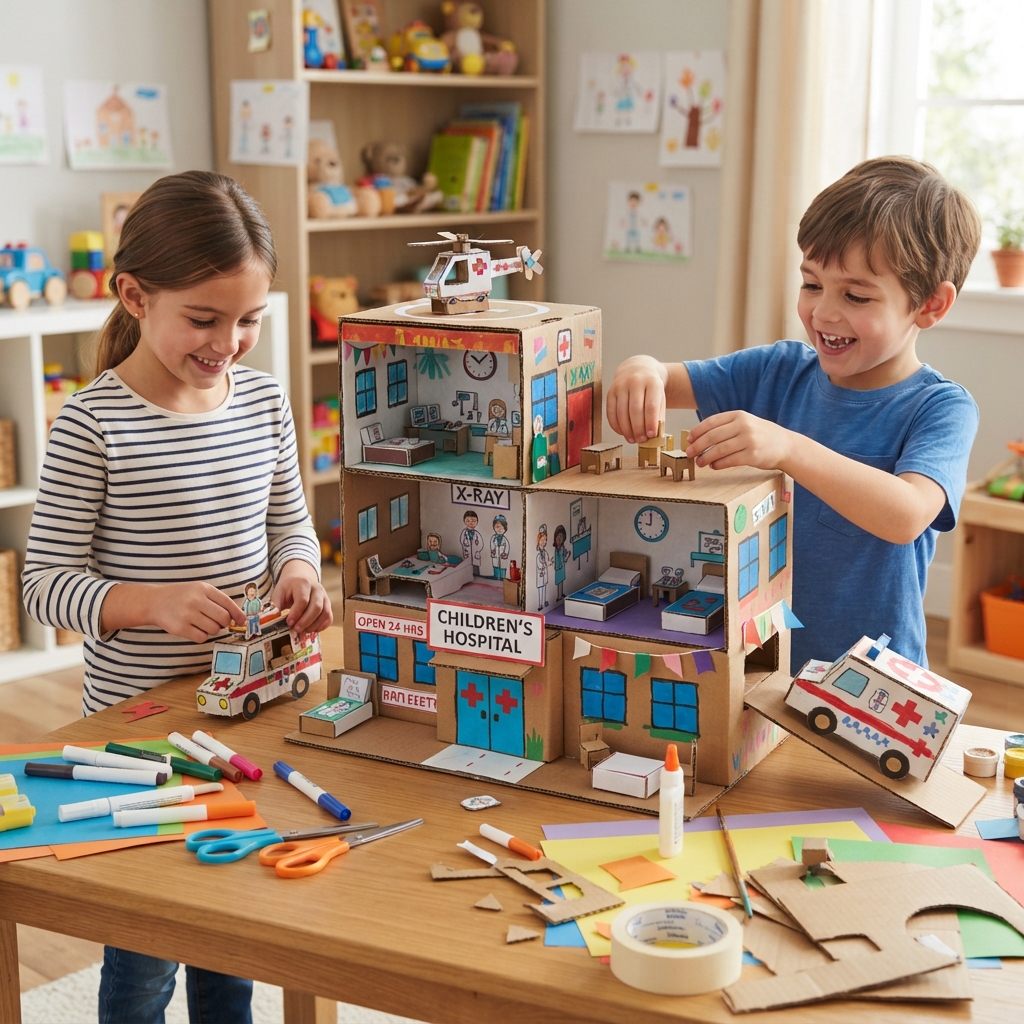
A cardboard hospital project is a wonderful hands-on activity that helps children learn about healthcare, kindness, and community helpers while having fun with arts and crafts. Using recycled cardboard and simple craft supplies, kids can build their own miniature hospital complete with patient rooms, an emergency entrance, an ambulance bay, and even a doctor’s office.
This engaging project encourages imaginative play, creativity, teamwork, and problem-solving while introducing children to the important role hospitals play in keeping people healthy.
Why Make a Cardboard Hospital?
Hospitals can seem mysterious to young children, but building one from cardboard makes the topic friendly and exciting. As children create different rooms and role-play as doctors, nurses, and patients, they become more familiar with medical environments and develop empathy for others.
This project also promotes recycling by turning everyday cardboard boxes into an amazing educational playset.
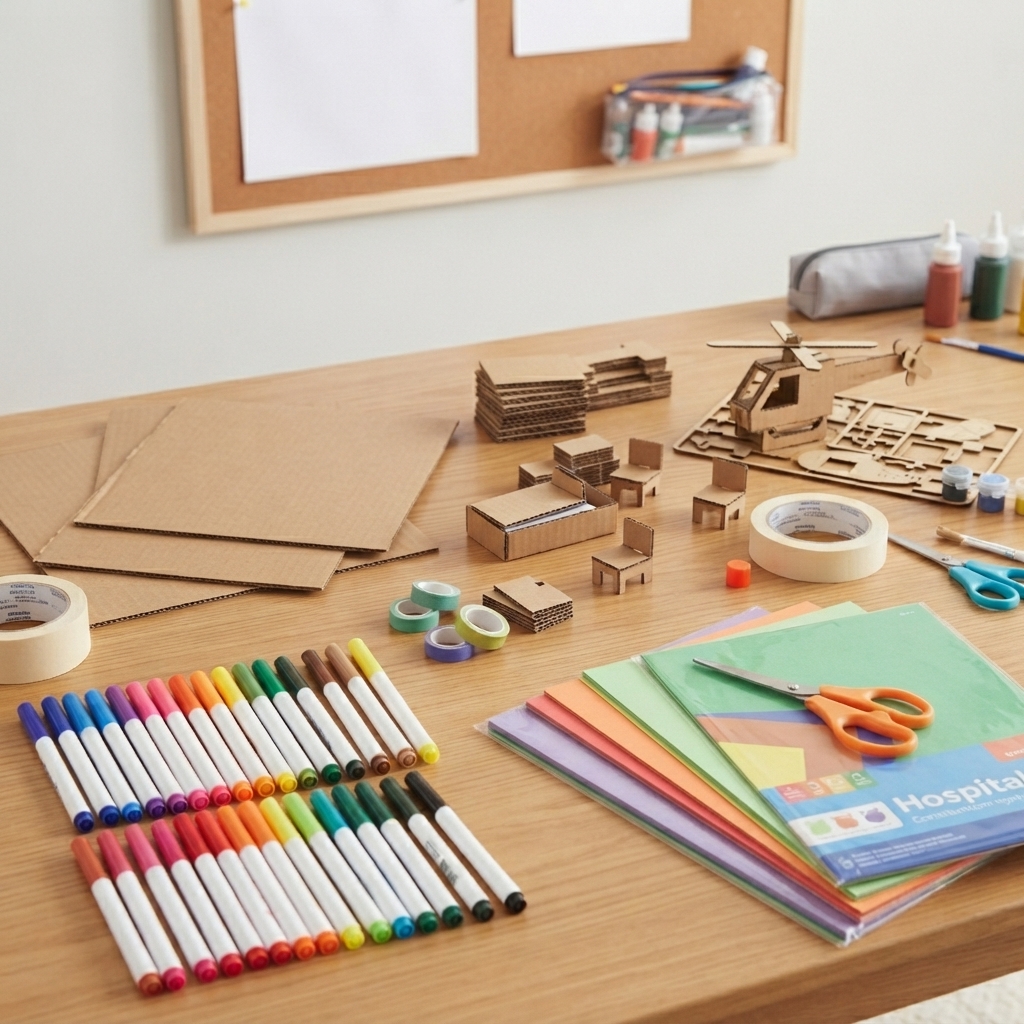
Materials You’ll Need
Most of the supplies are inexpensive and easy to find.
- Large cardboard boxes
- Small cardboard scraps
- Colored construction paper
- White paper
- Markers
- Crayons
- Washable paint
- Child-safe scissors
- Non-toxic glue
- Tape
- Popsicle sticks
- Toilet paper rolls
- Paper towel tubes
- Bottle caps
- Cotton balls
- Ruler
- Stickers
- Toy figures or handmade paper dolls
Step 1: Create the Hospital Base
Choose a large flat piece of cardboard to serve as the foundation.
Sketch the layout before building.
Include areas such as:
- Main entrance
- Emergency room
- Reception
- Patient rooms
- Pharmacy
- Waiting room
- Ambulance parking
- Garden
Painting the base first makes decorating much easier later.
Step 2: Build the Hospital Building
Use medium-sized cardboard boxes to create the main hospital.
Cut openings for:
- Doors
- Windows
- Hallways
Decorate the outside with colorful signs.
Write “Children’s Hospital” above the entrance and add a bright red cross or another child-friendly medical symbol.
Step 3: Make the Reception Desk
Every hospital needs a welcoming reception area.
Create a small desk using folded cardboard.
Add tiny paper items like:
- Appointment forms
- Clipboards
- Name badges
- Computer screen
Children can pretend to check in patients before treatment.
Step 4: Design Patient Rooms
Cut small cardboard dividers to make hospital rooms.
Each room can include:
- Bed
- Pillow
- Blanket
- Chair
- Side table
- Window
Decorate every room with cheerful colors, flowers, or animal pictures to make patients feel comfortable.
Step 5: Build the Doctor’s Office
Use another small cardboard box for the doctor’s office.
Add miniature furniture such as:
- Desk
- Chair
- Medical cabinet
- Examination bed
Draw simple medical tools on paper, including:
- Stethoscope
- Thermometer
- Blood pressure monitor
- Clipboard
Step 6: Create the Emergency Room
The emergency department can be one of the most exciting parts.
Include:
- Emergency entrance
- Wheelchair
- Hospital bed
- Medical equipment
- First aid station
Children can role-play helping injured patients with kindness and care.
Step 7: Make an Ambulance
Turn a small cardboard box into a colorful ambulance.
Draw:
- Windows
- Headlights
- Medical symbols
- Emergency lights
Bottle caps make perfect wheels.
Children can transport patients safely to the hospital.
Step 8: Build a Pharmacy
Create a tiny pharmacy using folded cardboard shelves.
Fill them with paper medicine boxes labeled:
- Vitamins
- Bandages
- Cough Syrup
- First Aid Kit
Explain that medicine should only be used with help from trusted adults or healthcare professionals.
Step 9: Add Medical Staff
Draw and cut out characters such as:
- Doctors
- Nurses
- Receptionists
- Patients
- Paramedics
- Visitors
Fold small tabs at the bottom so the figures can stand.
Children can invent names and stories for every character.
Step 10: Decorate the Hospital
Bring the hospital to life with fun details.
Add:
- Trees
- Flowers
- Benches
- Parking spaces
- Direction signs
- Waiting room chairs
- Clock
- Elevator signs
- Hospital logo
Cotton balls can become fluffy clouds outside the building.
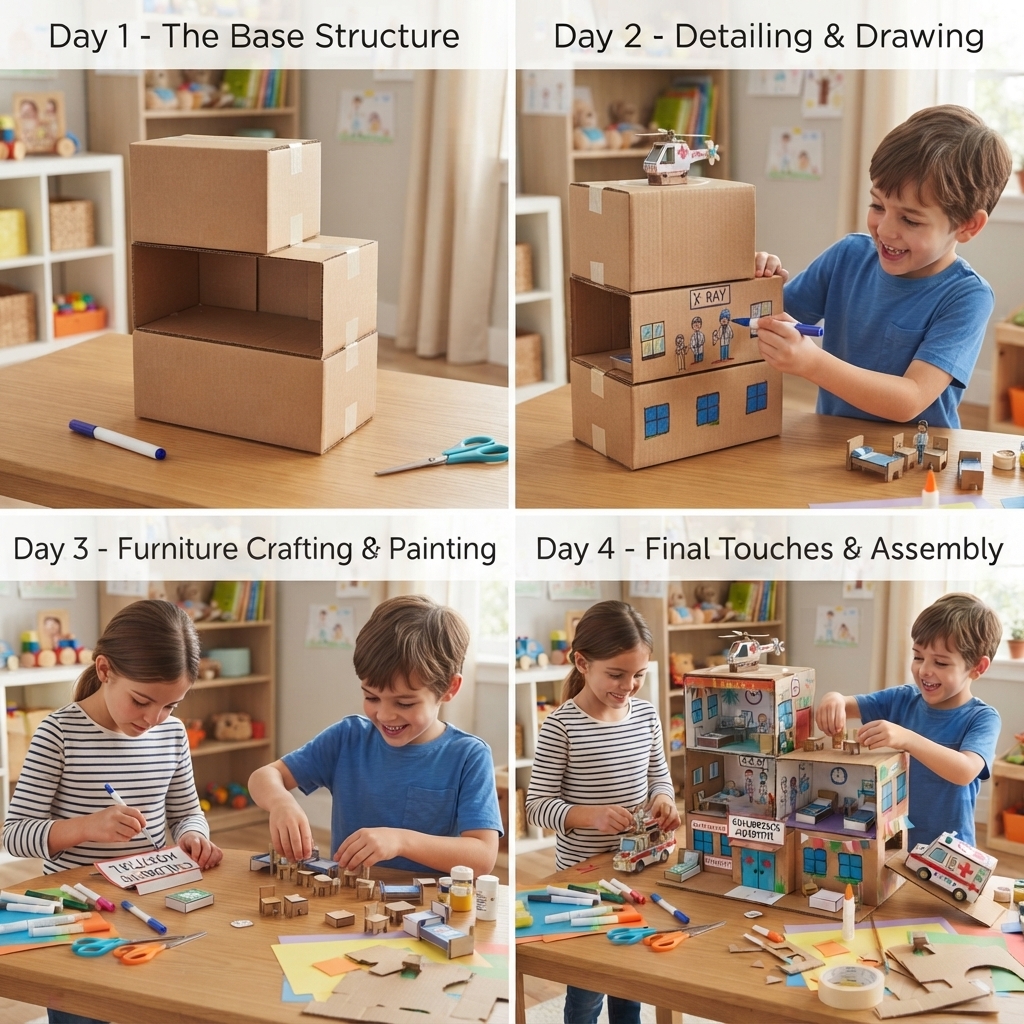
Educational Benefits
This project teaches valuable skills beyond crafting.
Creativity
Children design their own hospital using imagination.
Fine Motor Skills
Cutting, folding, painting, and gluing strengthen hand coordination.
Communication
Role-playing encourages conversation and storytelling.
Problem-Solving
Children decide how rooms connect and how patients move through the hospital.
Empathy
Pretending to care for patients helps children understand kindness and compassion.
Community Awareness
Kids learn about the important jobs performed by doctors, nurses, pharmacists, and emergency workers.
Fun Pretend Play Ideas
Once the hospital is complete, children can enjoy endless role-playing adventures.
Doctor for the Day
Perform simple checkups for family members or toys.
Emergency Rescue
Drive the ambulance to help pretend patients.
Teddy Bear Hospital
Treat stuffed animals with bandages and gentle care.
Healthy Checkups
Measure height, weight, and temperature using pretend medical tools.
Hospital Tour
Guide visitors through every room and explain its purpose.
Safety Tips
Always supervise young children during crafting.
Use:
- Child-safe scissors
- Non-toxic glue
- Washable paint
Keep small decorations away from toddlers who may put them in their mouths.
Clean the work area after crafting.
Creative Extension Ideas
Children can continue expanding their hospital by adding:
- X-ray room
- Laboratory
- Children’s play area
- Dental clinic
- Eye examination room
- Operating theater
- Helipad
- Cafeteria
- Gift shop
- Ambulance garage
Each new section creates even more opportunities for imaginative play.
Learning Activities
Parents and teachers can ask questions while children play.
Examples include:
- Why do people visit hospitals?
- What does a nurse do?
- Why is kindness important when someone is sick?
- How does an ambulance help people?
- Which room would you visit first?
These discussions encourage curiosity and build confidence.
Conclusion
A cardboard hospital project for children is a creative and educational craft that transforms recycled materials into a colorful world of caring and imagination. As children build patient rooms, doctor’s offices, ambulances, and pharmacies, they gain a better understanding of healthcare while developing artistic, social, and problem-solving skills.
More than just a craft, this project inspires empathy, teamwork, and imaginative storytelling. Best of all, the finished cardboard hospital becomes a reusable playset where children can create new adventures every day while learning about helping others and staying healthy.
