
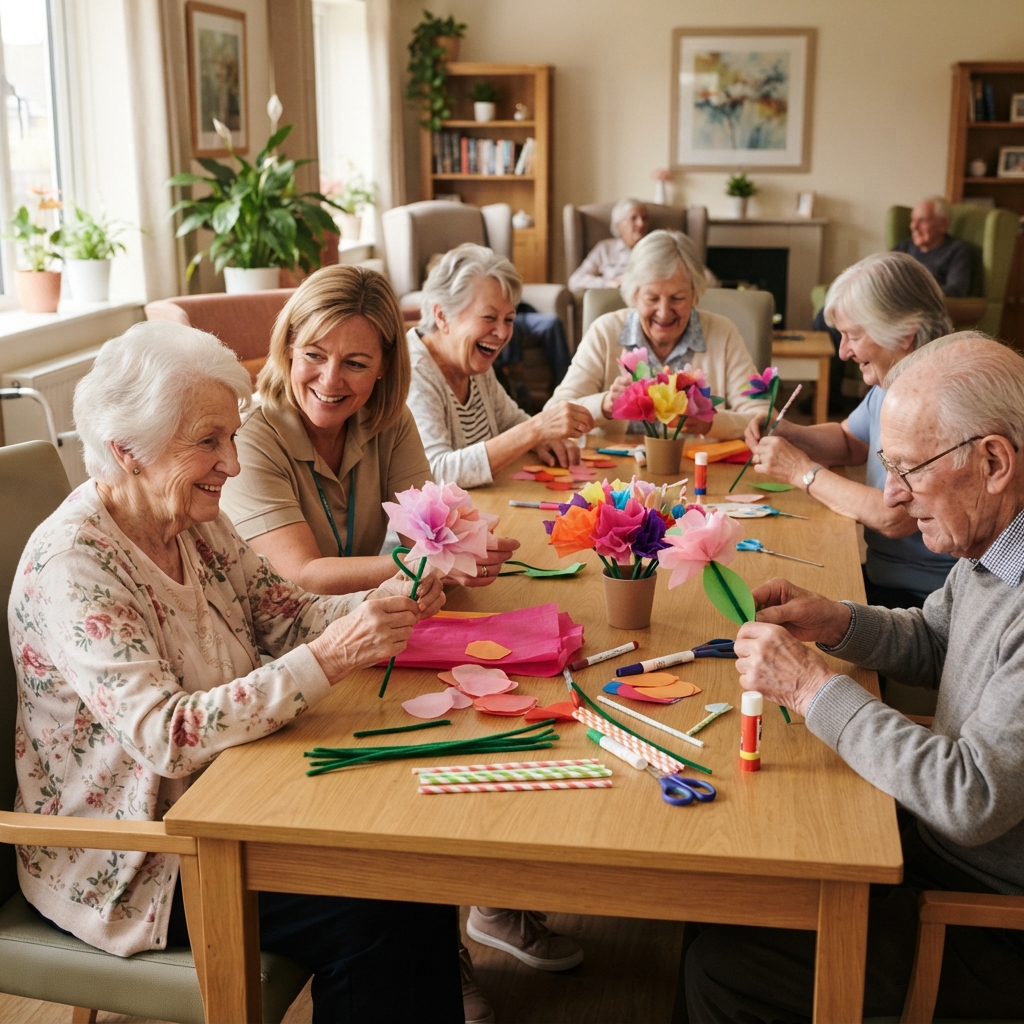
Craft activities can be a wonderful way for elderly people living in nursing homes to enjoy their free time, express themselves, connect with others, and create something beautiful with their own hands. Simple crafts do not need to be complicated or expensive. With a few basic supplies and a little creativity, residents can participate in enjoyable activities that encourage conversation, imagination, and a sense of accomplishment.
When choosing crafts for elderly people, it is important to consider comfort, mobility, vision, and individual abilities. Activities should be simple enough to follow but flexible enough that everyone can participate at their own level. Large materials, easy-to-hold tools, bright colors, and short activity sessions can make crafting more comfortable.
Here are some easy and enjoyable craft ideas that work particularly well in nursing homes.
1. Paper Flower Bouquets
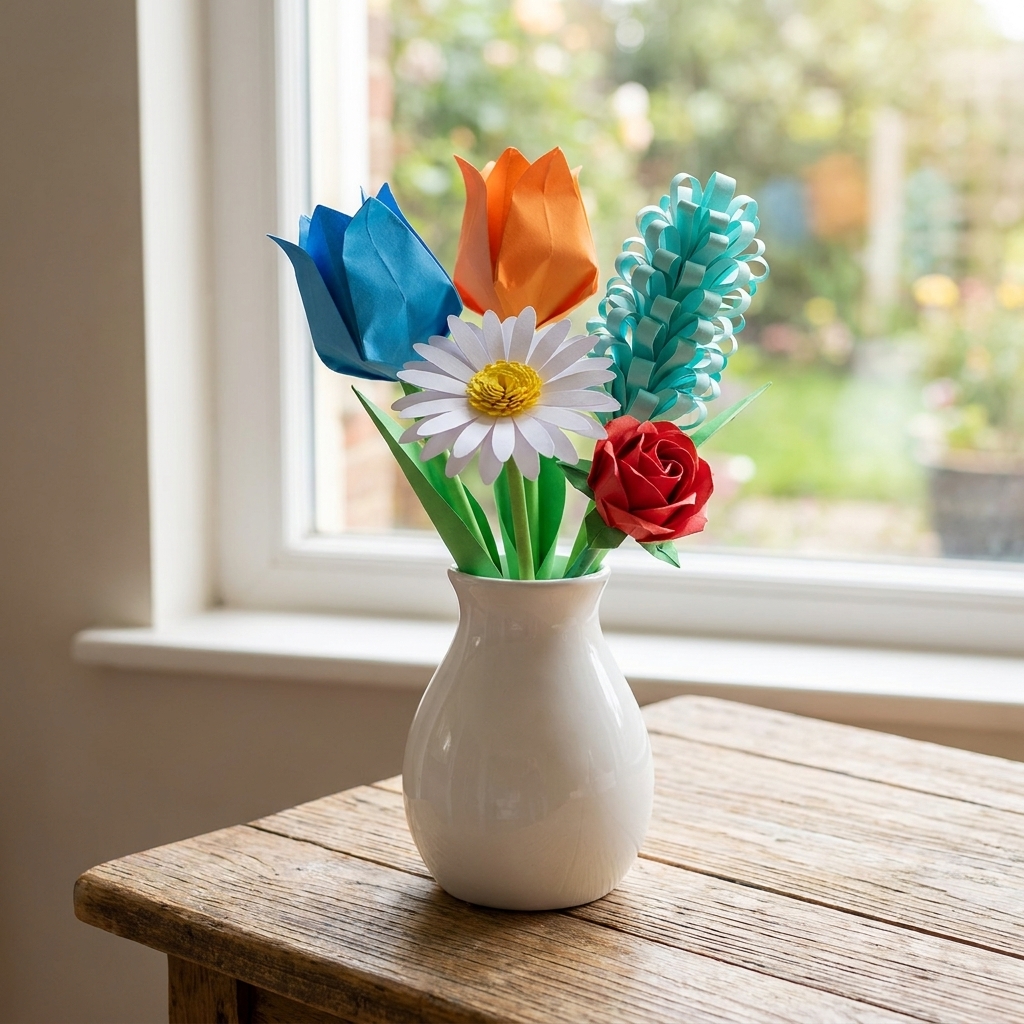
Paper flowers are colorful, inexpensive, and easy to personalize. Residents can choose their favorite colors and create flowers using construction paper, tissue paper, or old magazines.
To make a simple paper flower, cut several flower shapes from colored paper. Layer them together and attach them to a paper straw, wooden stick, or pipe cleaner. Add green paper leaves to complete the flower.
Residents can make individual flowers or work together to create a large bouquet. These flowers can be placed in vases around the activity room or given to family members as handmade gifts.
2. Decorated Greeting Cards
Making greeting cards is a meaningful craft that can encourage residents to stay connected with family and friends. Cards can be created for birthdays, holidays, thank-you messages, or simply to say hello.
Start with folded cardstock or blank cards. Provide stickers, colored paper, ribbons, stamps, markers, and large buttons. Residents can decorate the front of each card and write a personal message inside.
For people who have difficulty writing, staff members or volunteers can help write the message while the resident chooses the design.
3. Simple Painted Flower Pots
Small flower pots can become cheerful decorations with a little paint. Terracotta pots are especially easy to decorate.
Residents can paint dots, stripes, flowers, hearts, or simple patterns. Acrylic paint works well, but non-toxic craft paints should be selected for group activities.
After the pots dry, they can be used for small plants or artificial flowers. This activity combines creativity with a pleasant gardening theme.
4. Memory Collage
A memory collage can be both a creative activity and an opportunity for storytelling. Residents can use old magazines, postcards, photographs, colored paper, and printed pictures to create a collage based on a favorite theme.
Possible themes include childhood memories, favorite places, family celebrations, nature, travel, music, or seasons.
As residents choose pictures, encourage them to talk about their memories. This can turn a simple craft session into a warm social activity.
5. Button Art
Buttons can be used to create colorful pictures and patterns. Provide a sheet of thick paper or cardboard and a selection of large buttons.
Residents can arrange the buttons into flowers, trees, hearts, balloons, or abstract designs. If using glue, choose a non-toxic craft glue and provide assistance when necessary.
For residents who have difficulty handling small objects, use larger buttons or other lightweight decorative pieces.
6. Yarn-Wrapped Decorations
Yarn crafts can be adapted for different ability levels. One simple idea is to wrap colorful yarn around cardboard shapes.
Cut cardboard into hearts, stars, circles, or letters. Residents can wrap yarn around the shape until the cardboard is covered. Different colors can be combined to create attractive patterns.
This activity does not require complicated knitting or crocheting skills, making it suitable for beginners.
7. Paper Plate Flowers
Paper plates can be transformed into cheerful flowers with very few supplies. Cut the edges of a paper plate into rounded or pointed petals. Residents can then paint or color the plate.
Add a paper center and a green paper stem. Several flowers can be combined into a wall display.
This is particularly suitable for group activities because many residents can work on their own flower while contributing to one larger decoration.
8. Decorated Picture Frames
A simple picture frame can become a meaningful keepsake. Wooden or cardboard frames can be decorated with stickers, buttons, ribbon, paper shapes, or paint.
Residents can place a favorite photograph inside the finished frame. The project can be especially meaningful when family members provide photographs.
Large decorative pieces are generally easier to handle than tiny items, especially for residents with limited dexterity.
9. Nature-Inspired Crafts
Nature provides many easy craft materials and themes. Residents can create pictures of flowers, trees, birds, butterflies, or landscapes using paper and simple art supplies.
Another idea is to decorate small pieces of cardboard with leaves, flowers, or nature-inspired drawings. If real natural materials are used, they should be clean, dry, and safe to handle.
Nature crafts can also create opportunities to talk about gardens, seasons, favorite flowers, and memories from earlier years.
10. Seasonal Decorations
Seasonal crafts give residents something new to make throughout the year. Spring might feature paper flowers and butterflies, while summer could include sunshine and beach-themed decorations.
Autumn crafts can include colorful paper leaves, pumpkins, and harvest decorations. Winter activities can include paper snowflakes, holiday cards, and simple ornaments.
Seasonal projects can help make common areas feel more welcoming and give residents something to look forward to.
11. Simple Bookmark Crafts
Bookmarks are practical crafts that can be completed quickly. Cut thick paper or cardstock into long rectangles. Residents can decorate them with drawings, stickers, stamps, or colorful paper.
A ribbon can be attached to the top if desired. Residents who enjoy reading can make bookmarks for themselves, while others can give them to family members.
Because bookmarks are small, this activity can also be useful when a short craft session is preferred.
12. Painted Rocks
Smooth rocks can be turned into simple decorations. Residents can paint flowers, smiley faces, hearts, ladybugs, or inspirational words on clean stones.
Large stones are easier to hold and decorate than very small ones. After the paint dries, the stones can be displayed in a garden, activity room, or personal space.
For indoor activities, make sure the rocks are washed and completely dry before painting.
13. Easy Ribbon Crafts
Ribbon can be used in many simple projects. Residents can decorate cardboard shapes, small boxes, picture frames, or greeting cards with colorful ribbons.
Ribbons can also be tied around flower stems or used to create simple bows.
Choose wider ribbons when possible because they are generally easier to see and handle than very thin pieces.
14. DIY Paper Fans
Paper fans are easy to make and can be decorated with bright colors. Start with a rectangular sheet of paper and fold it back and forth like an accordion.
The folded paper can then be secured at one end to create a fan shape. Residents can decorate the paper before folding it using markers, stickers, stamps, or simple drawings.
This project can be especially fun during warmer months.
15. Simple Friendship Bracelets
Bracelet-making can be adapted for residents who enjoy working with yarn or larger beads. Instead of tiny beads, choose large, lightweight beads that are easier to see and handle.
Residents can select colors and create simple patterns. The finished bracelets can be kept as personal accessories or given as gifts to friends and family.
Staff should supervise materials carefully and select supplies appropriate for the residents participating.
16. Decorating Small Boxes
Small cardboard boxes can be transformed into decorative storage containers. Residents can cover them with colorful paper, fabric scraps, stickers, ribbons, or simple painted designs.
The finished boxes can hold cards, photographs, craft supplies, or other small personal items.
This project has the added benefit of producing something useful rather than simply decorative.
17. Handprint Art
Handprint art can create personal and memorable decorations. Residents can make handprints on paper using washable, non-toxic paint.
The handprint can then be turned into a flower, tree, bird, or other simple design.
For residents who do not want paint directly on their hands, their hand can be traced with a marker instead. The resulting artwork can be labeled with the resident’s name and date.
18. Simple Fabric Flowers
Fabric scraps can be used to make soft decorative flowers. Choose colorful fabric and cut simple petal shapes. The pieces can be arranged into flowers and attached to cardboard, a fabric backing, or a craft stick.
For residents who enjoy sewing, fabric flowers can also provide an opportunity to practice basic hand-stitching. Those who do not sew can use pre-cut pieces and assistance with assembly.
Making Crafts Comfortable and Accessible
The goal of nursing-home crafts is not perfection. The most important part is participation, enjoyment, and social connection.
Craft leaders should prepare materials before the activity begins. Place supplies in easy-to-reach containers and provide large, clear examples of the finished project.
Activities should be broken into simple steps. Instead of giving many instructions at once, explain one step and demonstrate it before moving to the next.
It is also helpful to offer choices. For example, residents might choose between painting, decorating, or drawing. Giving people control over colors and designs can make the activity more personal.
For residents with limited hand strength or dexterity, use lightweight materials and larger objects. Easy-grip scissors, thick markers, large paintbrushes, and oversized beads can make participation easier.
Good lighting is also important, particularly for detailed activities.
Safety Tips for Nursing Home Craft Activities
Safety should always come first. Use non-toxic paints, glues, and markers whenever possible. Avoid sharp tools unless staff members can provide appropriate supervision.
Small craft supplies such as beads, buttons, and tiny decorative pieces may not be suitable for every resident. Choose materials according to individual needs and facility safety policies.
Keep work areas clean and uncluttered. Spilled water, loose yarn, and other materials can create hazards, so they should be cleaned up promptly.
Craft sessions should also allow residents to take breaks whenever they become tired or uncomfortable.
Benefits of Easy Crafts for Older Adults
Crafting can provide several enjoyable benefits beyond the finished project. Creative activities can encourage self-expression and give residents a chance to make personal choices.
Craft sessions can also encourage social interaction. Residents can talk while they work, share ideas, help one another, and discuss memories connected to their projects.
Completing a craft can provide a sense of accomplishment. Even a very simple paper flower or decorated card can become something residents are proud to display.
Crafts can also provide meaningful opportunities for family connection. Handmade cards, picture frames, painted rocks, and other small projects can be shared with visitors or taken home by family members.
Final Thoughts
Easy crafts for elderly people in nursing homes should be enjoyable, accessible, and meaningful. Projects such as paper flowers, greeting cards, memory collages, decorated picture frames, painted rocks, seasonal decorations, and simple yarn crafts can provide hours of creative entertainment without requiring expensive supplies or advanced skills.
The best craft activities are those that allow everyone to participate in their own way. Some residents may enjoy painting, while others may prefer choosing colors, arranging materials, telling stories, or simply watching and encouraging their friends.
With thoughtful preparation and suitable materials, craft time can become much more than an activity. It can be a chance to create, socialize, remember special moments, and celebrate individual creativity. Most importantly, every finished project represents participation and personal expression—and that is what makes simple crafts so valuable in nursing homes.
