
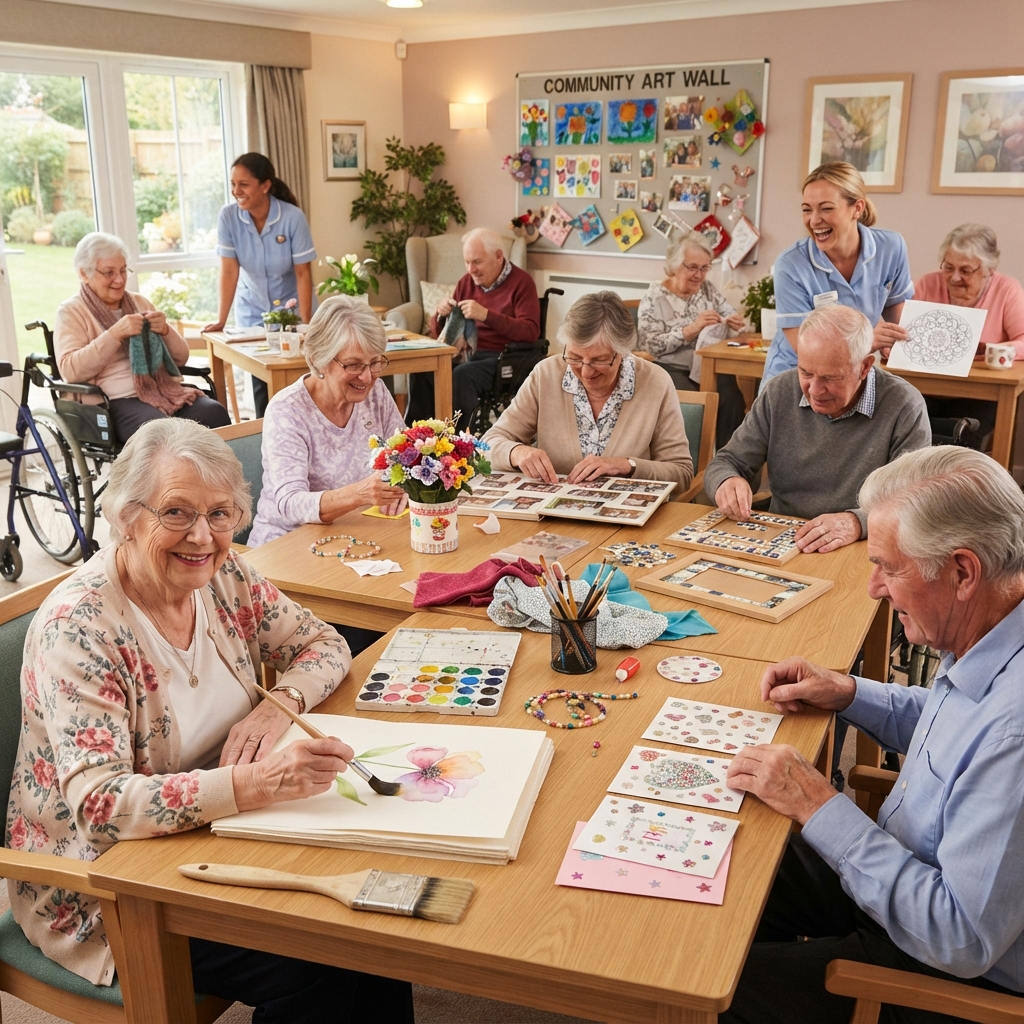
Creative activities can bring color, enjoyment, and a sense of purpose to everyday life in a care home. For elderly people, taking part in crafts, music, gardening, storytelling, and other creative projects can be a wonderful way to spend time while connecting with other residents. These activities do not need to be complicated or expensive. Simple projects can be adapted to different abilities, interests, and levels of mobility.
The most important goal is not to create a perfect piece of art. Instead, creative activities should provide opportunities for self-expression, conversation, relaxation, and social interaction. Care-home staff and family members can also use these activities to learn more about residents’ memories, interests, and personalities.
Here are 15 creative activities that can be enjoyable and meaningful for elderly people living in care homes.
1. Painting with Watercolors
Watercolor painting is a relaxing activity that can be adapted for beginners. Residents can paint flowers, landscapes, houses, animals, or abstract designs. They can also experiment with different colors and simple painting techniques.
Large brushes and thick paper can make the activity easier for people who have difficulty with small movements. Staff members can provide simple examples, but residents should be encouraged to choose their own colors and subjects.
Painting can also become a social activity when several residents work together around the same table. At the end, their artwork can be displayed around the care home, helping residents feel proud of what they have created.
2. Making Greeting Cards
Making handmade greeting cards is a simple project with a meaningful purpose. Residents can create birthday cards, holiday cards, thank-you cards, or cards for family members.
The materials can include colored paper, stickers, ribbons, stamps, markers, and safe glue. Residents who enjoy writing can add personal messages, poems, or short notes.
This activity can be especially rewarding because the finished cards can be given to relatives and friends. Creating something specifically for another person can provide a strong sense of purpose.
3. Flower Arranging
Flower arranging combines creativity with the beauty of nature. Fresh flowers, artificial flowers, leaves, and small decorative containers can be used to create attractive arrangements.
Residents can choose their favorite flowers and decide how they want to arrange them. For people who cannot easily handle scissors or heavy containers, staff can prepare the materials in advance.
The finished arrangements can decorate dining rooms, bedrooms, activity areas, or common spaces. The colors and fragrances of flowers can also create a pleasant atmosphere.
4. Simple Paper Crafts
Paper crafts are inexpensive and easy to adapt. Residents can make paper flowers, butterflies, bookmarks, decorative chains, paper fans, or seasonal decorations.
Using larger pieces of paper can make cutting and folding easier. Pre-cut shapes can also be provided for residents who have limited hand movement.
Paper crafts are particularly useful for group sessions because everyone can work on the same project while talking and sharing ideas.
5. Memory Collages
A memory collage can become a very personal and meaningful project. Residents can use photographs, magazine pictures, postcards, drawings, and decorative paper to create a collage about their lives.
For example, someone might create a collage about childhood, family, travel, favorite hobbies, or important celebrations.
While working on the collage, residents may naturally begin telling stories about the pictures they choose. This can encourage conversation and help staff and other residents learn more about their experiences.
6. Gardening and Planting
Gardening is another creative activity that can be adapted for care-home residents. Small pots, indoor plants, herbs, and flowers can be used when outdoor gardening is difficult.
Residents can fill pots with soil, plant seeds, water plants, and decorate containers. Raised garden beds can make outdoor gardening easier for people who cannot bend down comfortably.
Growing herbs such as mint, basil, or parsley can be particularly enjoyable because residents can see the plants develop and eventually use them in cooking.
7. Decorating Flower Pots
Flower-pot decorating is a creative alternative for residents who enjoy gardening but cannot participate in more demanding outdoor activities.
Plain terracotta or plastic pots can be decorated with paint, stickers, ribbons, patterns, or simple drawings. Residents can personalize their pots and then plant flowers or herbs inside them.
The decorated pots can be placed on windowsills, balconies, patios, or communal garden areas.
8. Knitting and Simple Yarn Crafts
Knitting and yarn crafts can provide a calming and familiar activity for residents who already have experience with them. People who have knitted throughout their lives may enjoy returning to a favorite hobby.
For beginners, simple projects such as yarn-wrapped decorations, pom-poms, or small woven designs may be easier than traditional knitting.
Thicker yarn and larger needles can sometimes make projects easier to handle. Staff should always adapt the activity to each person’s comfort and ability.
9. Making Friendship Bracelets
Simple bracelets can be made with colorful yarn, large beads, or soft cords. Residents can choose colors and create bracelets for themselves, friends, grandchildren, or other family members.
This activity can encourage creativity while also providing a small handmade gift.
For residents who have difficulty working with tiny beads, larger beads can be used. Staff can also prepare sections of the bracelet beforehand so participants can concentrate on decorating.
10. Music and Singing
Creativity is not limited to visual arts. Music can be one of the most enjoyable activities in a care home.
Residents can sing familiar songs, play simple instruments, listen to favorite music, or participate in rhythm activities. Staff can organize themed music sessions based on different decades or musical styles.
Singing familiar songs can also encourage residents to remember earlier experiences. A music session can quickly turn into a group conversation about dances, celebrations, family events, and favorite performers.
11. Storytelling and Creative Writing
Storytelling gives residents an opportunity to express themselves through words. They can write short stories, poems, memories, or imaginary adventures.
Residents who do not want to write can tell their stories while a staff member records or writes them down.
A useful group activity is to choose a topic such as “My Favorite Childhood Memory” or “The Best Holiday I Ever Had.” Participants can share their stories and listen to one another.
These stories can become valuable personal memories for families and future generations.
12. Decorating Picture Frames
Residents can decorate simple picture frames using paint, stickers, buttons, ribbons, shells, paper shapes, or other safe materials.
A photograph can be placed inside the finished frame, making the project more personal. Residents might create frames for pictures of grandchildren, friends, pets, or special events.
The activity can be completed in one session, making it suitable for residents who prefer short projects.
13. Seasonal Decorations
Seasonal crafts can help make the care home feel festive throughout the year. Residents can create decorations for spring, summer, autumn, winter, birthdays, or special celebrations.
For example, they might make paper flowers in spring, colorful summer decorations, autumn leaf collages, or paper snowflakes in winter.
Residents can work together to decorate common rooms. This creates a shared project and gives everyone a chance to contribute to the appearance of their environment.
14. Cooking and Decorating Simple Treats
Cooking can be a creative and enjoyable activity when appropriate safety measures are followed. Residents can decorate cookies, cupcakes, sandwiches, or simple desserts.
Instead of complicated recipes, care-home staff can choose activities that require simple steps. Participants can add fruit, icing, sprinkles, or other decorations.
Cooking also provides opportunities to share memories. Residents may remember family recipes, traditional celebrations, or meals they prepared when they were younger.
The finished treats can be enjoyed together, turning the activity into both a creative project and a social occasion.
15. Creating a Community Art Wall
A community art wall can bring together many smaller creative projects. Each resident can contribute a drawing, painting, photograph, poem, paper craft, or other piece of artwork.
The wall can have a theme such as “Our Memories,” “Four Seasons,” “Our Favorite Places,” or “Things We Love.”
This project is especially valuable because it emphasizes participation rather than artistic skill. Every resident can contribute something, and the final display becomes a shared representation of the community.
Making Creative Activities Accessible
When planning creative activities for elderly people, it is important to remember that residents have different abilities and interests. Some may have excellent hand control, while others may have difficulty holding small objects. Some may enjoy painting, while others may prefer music, gardening, cooking, or storytelling.
Activities should therefore be flexible. Large-handled brushes, large pieces of paper, easy-grip scissors, bigger beads, lightweight materials, and pre-cut shapes can make crafts easier.
Safety should also be considered. Staff should choose non-toxic materials, supervise activities when necessary, and avoid small objects when they may present a choking risk. Tables and chairs should be arranged so that residents can participate comfortably.
Most importantly, residents should never feel pressured to produce a perfect result. The creative process itself is the important part.
The Social Benefits of Creative Activities
Creative activities can also encourage social connection. Residents can sit together, exchange ideas, help one another, and talk about their projects.
A craft session can provide a natural reason for people to start conversations. Someone might see another resident’s painting and ask about the subject. A song can remind someone of an old memory. A flower arrangement can lead to a discussion about gardening.
Group activities can therefore help create friendships and reduce feelings of isolation.
Conclusion
Creative activities can make everyday life in care homes more enjoyable, meaningful, and social. The 15 ideas above—from painting and greeting cards to gardening, music, storytelling, and community art—can be adapted to suit different interests and abilities.
The best activities are those that allow elderly people to make choices, express themselves, remember meaningful experiences, and enjoy time with others. A finished craft does not have to be perfect. What matters is the happiness, connection, confidence, and sense of accomplishment created along the way.
With simple materials, thoughtful preparation, and encouragement, care homes can provide many opportunities for residents to discover or rediscover their creativity. Every handmade card, painted picture, planted flower, decorated frame, and shared story can become a small but meaningful part of life in the care-home community.
