
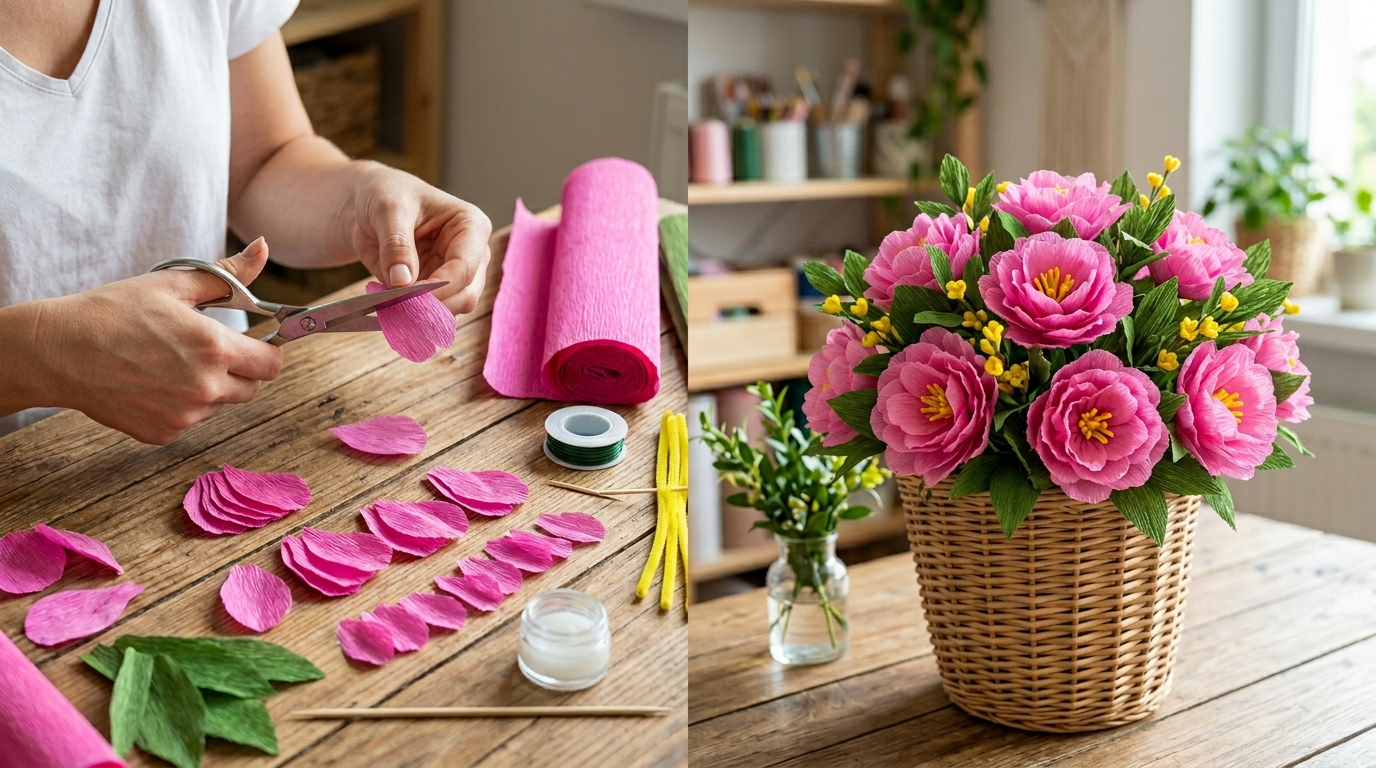
Introduction: Transforming Everyday Materials into Art
We present a comprehensive guide on how to create stunning flowers from ordinary shopping bags, turning waste into artful decorations. This activity is ideal for eco-friendly crafting, home décor, and educational projects, allowing anyone to produce durable, vibrant, and customizable flowers from materials readily available at home.
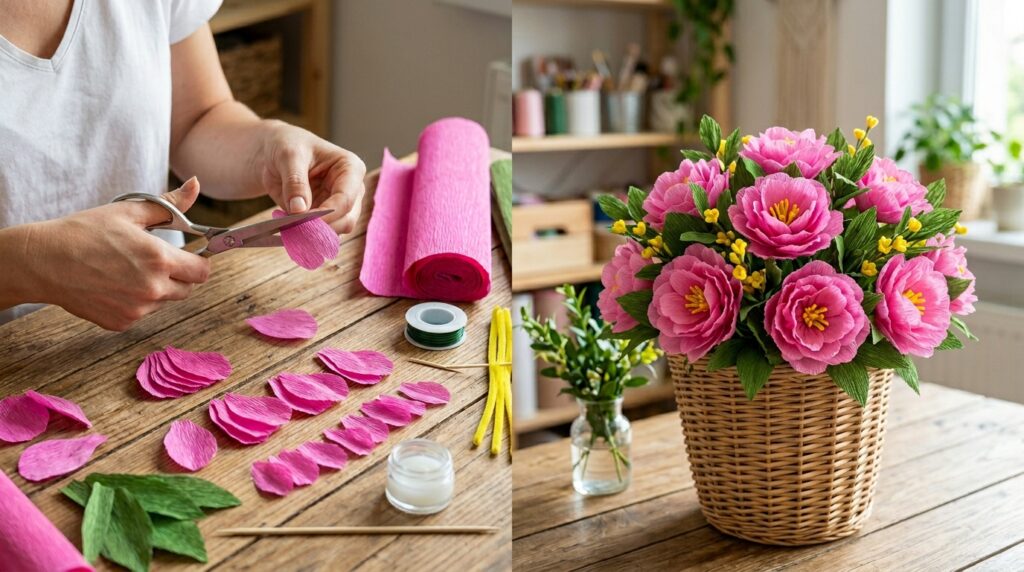
By repurposing plastic or paper shopping bags, we combine creativity with sustainability, producing flowers that are perfect for bouquets, wall art, party décor, or classroom projects. Each flower is unique, and children and adults alike can enjoy the therapeutic benefits of crafting while promoting environmental awareness.
Materials Required for Making Flowers from Shopping Bags
To achieve professional-looking results, we carefully select materials to ensure durability and beauty:
Essential Materials
- Plastic or paper shopping bags in various colors
- Scissors for cutting precise shapes
- Floral wire or pipe cleaners for stems
- Hot glue gun or strong adhesive
- Floral tape for wrapping stems
- Ruler and pencil for measuring and marking
Optional Decorative Materials
- Paint or permanent markers for color enhancement
- Glitter, beads, or sequins for added sparkle
- Ribbon or twine for bouquet arrangements
By combining these tools and materials, we can transform ordinary shopping bags into flowers that are visually striking and long-lasting.
Step 1: Selecting and Preparing Shopping Bags
We begin by choosing shopping bags with vibrant colors and sturdy texture. Paper bags work well for a more traditional flower look, while plastic bags create bright, glossy petals.
- Flatten the bag and remove any handles or extra parts.
- Cut the bag open to create a flat sheet.
- If multiple colors are desired, layer different bags for a multi-colored effect.
Step 2: Cutting Petals and Flower Shapes
Accurate petal shapes are essential for realism and visual appeal.
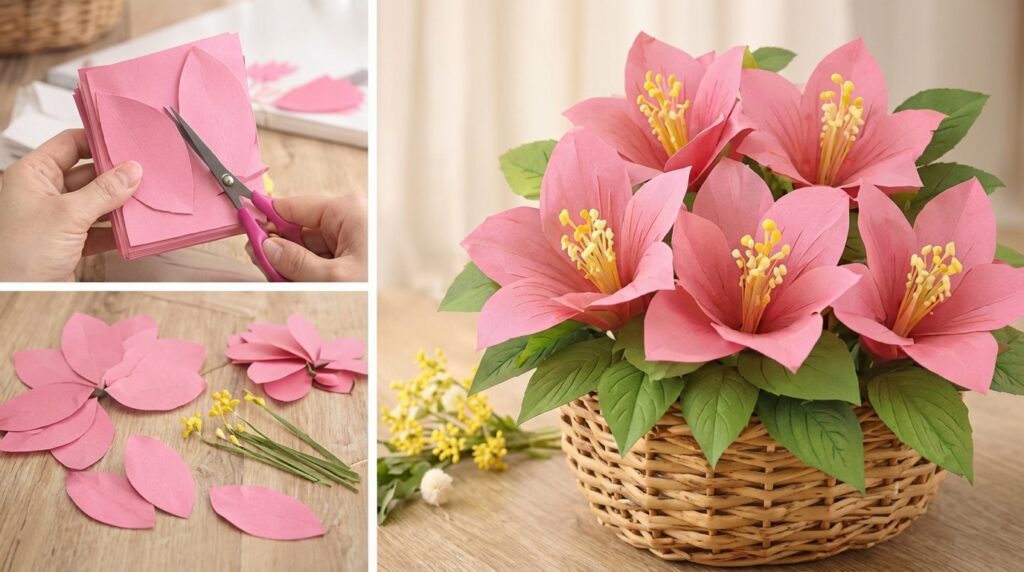
- Using a pencil, draw petal templates on the flattened bags.
- Common petal shapes include oval, rounded, or teardrop forms.
- Cut carefully along the outlines. Each flower typically requires 5–7 petals for fullness.
For a more elaborate flower, create inner smaller petals and larger outer petals, mimicking the natural structure of roses or peonies.
Step 3: Creating Flower Centers
The center of the flower provides depth and authenticity. Options include:
- Rolled strips of bag material: Cut a thin strip, roll tightly, and secure with glue to form a stamen.
- Beads or small balls: Add sparkle and texture for a decorative effect.
- Twisted paper or plastic: Create a rustic, textured look for a realistic floral center.
Once the center is prepared, we attach it to the stem using hot glue or floral wire, ensuring stability.
Step 4: Attaching Petals to the Center
Layering petals around the center creates full, dimensional flowers:
- Apply a small dab of glue at the base of each petal.
- Attach petals evenly around the center, overlapping slightly for a natural appearance.
- Continue adding layers until the flower reaches desired fullness.
For curved or realistic petals, we gently shape them by folding, curling, or pinching the edges, enhancing the three-dimensional effect.
Step 5: Crafting the Stem
Strong stems are essential for arranging flowers into bouquets or displays:
- Use floral wire, pipe cleaners, or rolled strips of bag material.
- Wrap the stem with floral tape for a uniform, polished look.
- Secure the flower head to the stem with glue and tape, ensuring it is sturdy.
Optional: Add leaves by cutting green bag material into leaf shapes and attaching them to the stem with glue.
Step 6: Decorative Enhancements
To elevate the flowers, we can apply various enhancements:
- Paint or markers: Add highlights or gradient colors to petals for realism.
- Glitter or sequins: Sprinkle lightly on petals for sparkling effects.
- Ribbon or twine: Wrap stems or tie bouquets for a finished, professional presentation.
These finishing touches transform simple shopping bag flowers into captivating, display-worthy art.
Step 7: Creating Arrangements and Bouquets
Once individual flowers are complete, we can combine multiple flowers into stunning arrangements:
- Choose flowers of different colors and sizes for dynamic visual appeal.
- Arrange in a vase or decorative container, adjusting heights for balance.
- Mix flowers with greenery or ribbon accents for a polished, natural look.
This approach allows for customizable home décor, perfect for gifting or festive occasions.
Educational and Creative Benefits
Making flowers from shopping bags is more than a craft—it is an educational tool:
- Environmental Awareness: Teaches recycling and sustainable practices.
- Fine Motor Development: Cutting, folding, and gluing petals enhance dexterity.
- Creativity and Imagination: Children explore colors, shapes, and floral design.
- Problem-Solving: Planning layers and assembling structures develops critical thinking.
- Confidence: Completing a beautiful flower provides a sense of accomplishment.
Advanced Techniques for Professional-Looking Flowers
- Layer multiple colored petals for gradient effects.
- Curl petal edges with scissors for lifelike movement.
- Use thin layers of plastic bags for delicate, translucent petals.
- Combine paper and plastic for mixed media flowers.
- Create large statement flowers by increasing petal count and size.
These techniques allow for gallery-quality projects suitable for classrooms, events, or personal décor.
Tips for Durability and Longevity
- Choose sturdy, thick bags for long-lasting flowers.
- Avoid over-handling to prevent tearing.
- Use hot glue sparingly to maintain flexibility.
- Store flowers upright in vases or containers to avoid deformation.
With proper care, shopping bag flowers can remain display-worthy for months, making them an eco-friendly alternative to artificial flowers.
Conclusion: Transform Everyday Bags into Artful Flowers
We have outlined a detailed, step-by-step guide to crafting beautiful flowers from shopping bags, turning waste materials into durable, visually stunning creations.
This project combines creativity, sustainability, and educational benefits, making it ideal for children, adults, and craft enthusiasts. By following these steps, anyone can produce unique, professional-looking flowers that are perfect for home décor, gifts, or classroom activities.
Start transforming ordinary shopping bags into artful, colorful flowers today and enjoy a creative, eco-friendly crafting experience
