
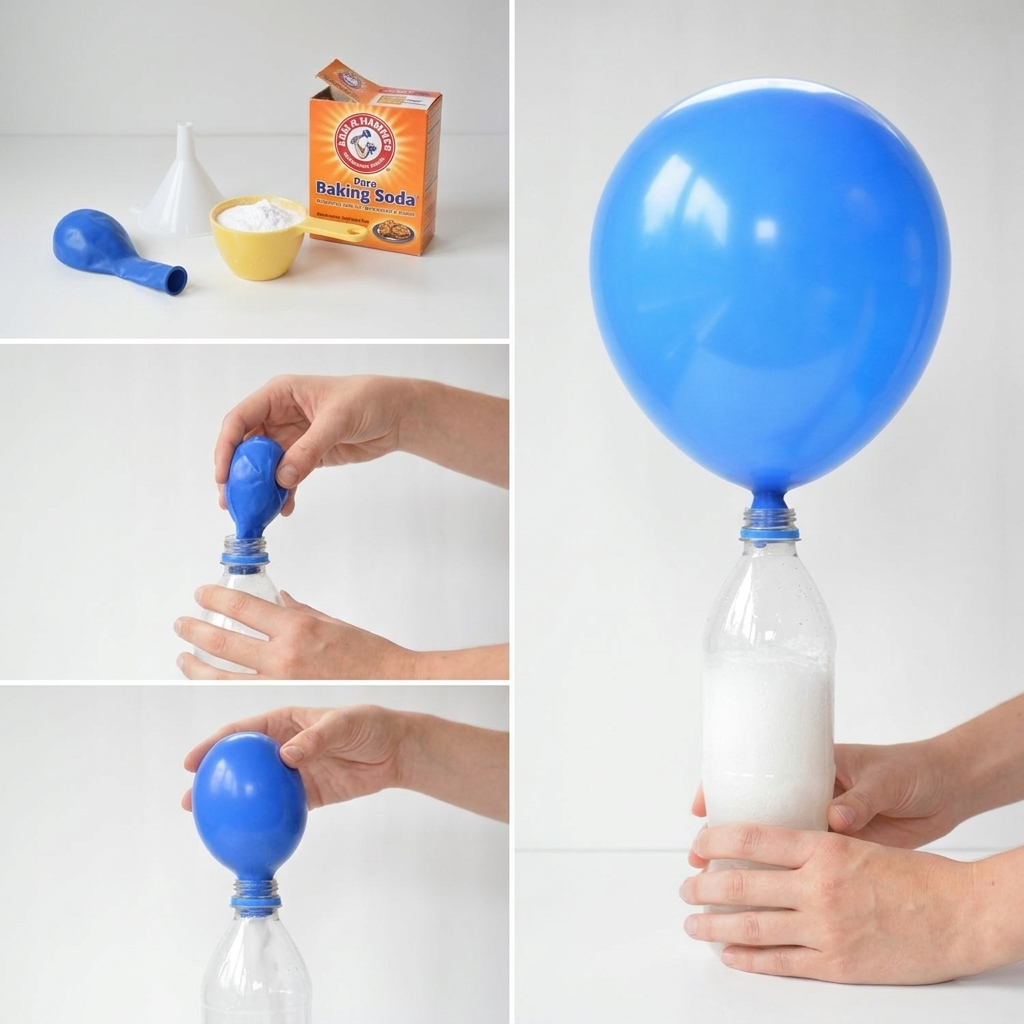
Have you ever seen a balloon magically grow without anyone blowing into it? If not, it’s time to try one of the most exciting home science experiments ever. You can easily inflate the balloon without air using vinegar and baking soda with only a few kitchen supplies and less than 10 minutes of setup.
This classic balloon experiment with vinegar and baking soda is a fun way to introduce children to chemistry, gas reactions, and scientific observation. It feels like magic, but the secret is actually a simple acid-base reaction that creates carbon dioxide gas. As the gas forms, it fills the balloon and causes it to expand all by itself.
Parents, teachers, and homeschoolers love this educational balloon activity because it’s affordable, safe, interactive, and packed with learning opportunities. Kids stay entertained while discovering how chemical reactions work in real life.
In this complete guide, you’ll learn how to inflate the balloon without air using vinegar and baking soda step by step, understand the science behind the reaction, discover troubleshooting tips, and explore creative ways to make the experiment even more exciting.
Essential Materials & Smart Substitutions
Before starting this balloon experiment with vinegar and baking soda, gather all your materials. Most of these items are already available at home.
Materials You Need
| Item | Purpose |
| Small plastic bottle | Holds the vinegar reaction |
| Balloon | Captures the gas |
| Baking soda | Creates the chemical reaction |
| White vinegar | Reacts with baking soda |
| Funnel | Helps pour baking soda into balloon |
| Safety goggles | Protects eyes from splashes |
| Spoon | Measures ingredients |
This educational balloon activity works best when using fresh vinegar and dry baking soda for maximum fizzing power.
Smart Substitutions
Don’t worry if you’re missing a few supplies. Here are simple alternatives:
- Use rolled paper instead of a funnel
- Replace the bottle with a small juice container
- Use reusable water bottles for eco-friendly experiments
- Try measuring cups if spoons are unavailable
Creative Enhancements
Want to make the experiment more exciting?
Try adding:
- Food coloring for colorful reactions
- Glitter for sparkle effects
- Marker drawings on balloons
- Halloween ghost faces or monster balloons
These small touches turn a simple science project into a memorable educational balloon activity for kids.
Step-by-Step Instructions: The No-Fail Method
Follow these easy instructions carefully if you want to inflate the balloon without air using vinegar and baking soda successfully on the first try.
Step 1: Prepare the Balloon
Stretch the balloon gently before starting. This helps the rubber loosen so inflation becomes easier.
Use a funnel to pour 1–2 tablespoons of baking soda into the balloon.
Pro Tip
If the funnel clogs, use a skewer or spoon handle to push the baking soda through carefully.
Step 2: Prepare the Bottle
Pour white vinegar into the bottle until it is about one-quarter to one-third full.
Fresh vinegar produces the strongest chemical reaction.
You can also add food coloring to make the bubbling reaction more visually exciting.
Step 3: Attach the Balloon
Carefully stretch the balloon opening around the mouth of the bottle.
Make sure the baking soda stays inside the balloon and does not fall into the vinegar too early.
Hold the balloon to the side until you are ready
Step 4: Start the Inflation
Lift the balloon upright so the baking soda falls into the vinegar.
Immediately, the mixture begins fizzing and bubbling.
Swirl the bottle gently to maximize the reaction and release more gas.
Within seconds, you will inflate the balloon without air using vinegar and baking soda like a real scientist.
The Science: Why Does It Inflate?
This balloon experiment with vinegar and baking soda teaches children several scientific concepts in a simple and hands-on way.
Level 1: Science for Younger Kids
Kids can learn about the three states of matter:
- Solid = baking soda
- Liquid = vinegar
- Gas = carbon dioxide
When the solid and liquid combine, they create a gas that fills the balloon.
This is an easy introduction to chemistry and physical science.
Level 2: Science for Older Kids
Older students can understand the experiment as an acid-base reaction.
- Vinegar is an acid
- Baking soda is a base
When combined, they react chemically and create carbon dioxide gas.
The chemical equation is:
NaHCO3+CH3COOH→CO2+H2O+CH3COONaNaHCO_3 + CH_3COOH \rightarrow CO_2 + H_2O + CH_3COONaNaHCO3+CH3COOH→CO2+H2O+CH3COONa
The gas molecules spread outward and push against the balloon walls.
Because the balloon is flexible, it stretches and inflates.
Why the Balloon Expands
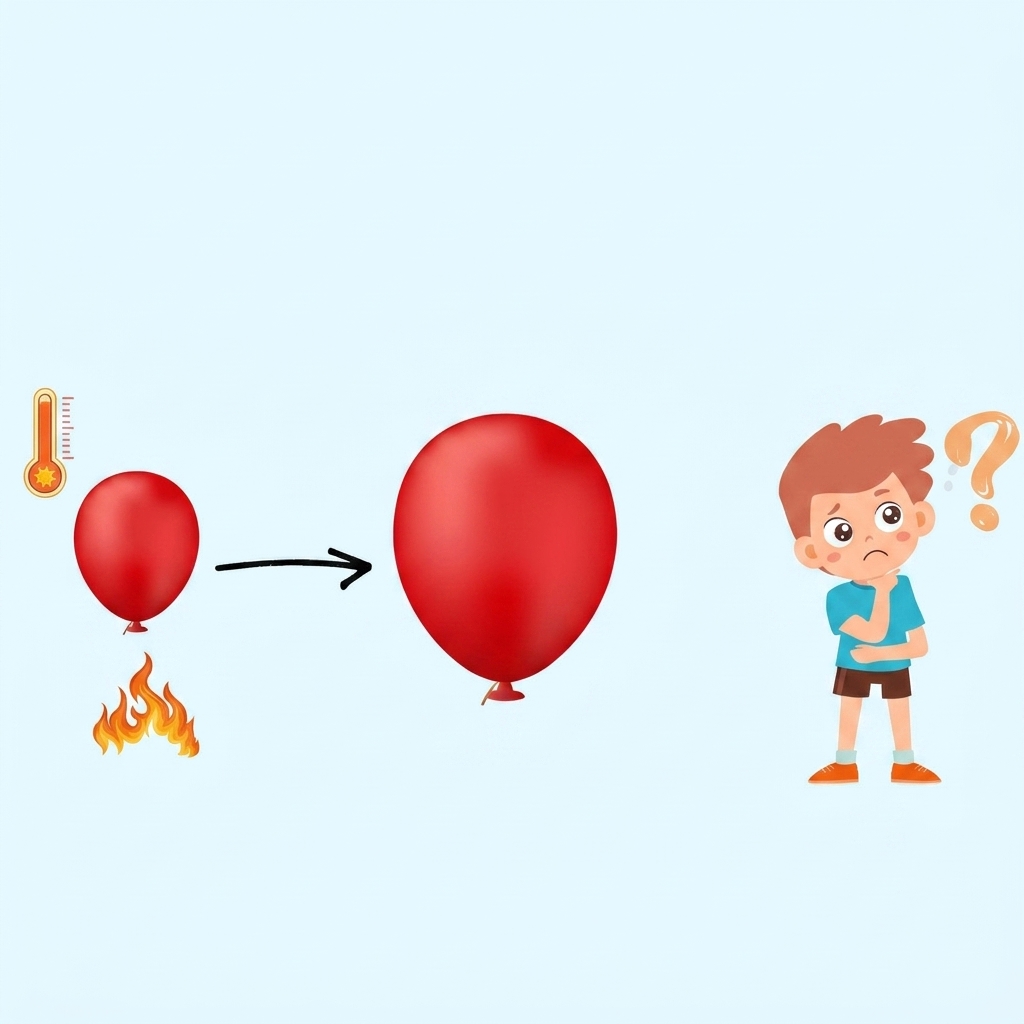
Gas molecules naturally move in every direction.
As carbon dioxide forms, pressure builds inside the bottle.
The gas escapes upward into the balloon, where it pushes outward equally on all sides.
That pressure makes the balloon grow larger.
Unique Science Insight
Carbon dioxide is heavier than normal air.
That means the balloon created during this educational balloon activity may fall faster than a regular air-filled balloon.
Kids love comparing the difference between both balloons.
Troubleshooting & Common Questions
Sometimes the experiment may not work perfectly the first time. Here are the most common issues and solutions.
Why Didn’t My Balloon Inflate?
Several things may cause weak inflation:
Poor Seal
If the balloon is loose around the bottle, gas can escape.
Solution:
Make sure the balloon neck fits tightly around the bottle opening.
Baking Soda Fell Too Early
If the baking soda entered the vinegar before sealing, the gas escaped before inflating the balloon.
Solution:
Keep the balloon hanging sideways until everything is attached securely.
Old Ingredients
Expired baking soda or weak vinegar may reduce the reaction.
Solution:
Use fresh supplies for stronger bubbling.
Is This Experiment Safe?
Yes, this balloon experiment with vinegar and baking soda is considered safe for classrooms and homes.
However, adults should supervise young children because:
- Vinegar can sting eyes
- Balloons may become choking hazards
- Bottles should not be squeezed too hard
Wearing safety goggles is always recommended.
How Big Will the Balloon Get?
The size depends on the amount of vinegar and baking soda used.
More ingredients create more gas, but eventually one ingredient becomes the limiting factor.
When that happens, the reaction stops.
Quick Overview Table
| Step | What Happens | Science Concept |
| Add baking soda to balloon | Prepares the reaction | Solid material |
| Pour vinegar into bottle | Creates acidic solution | Liquid المادة |
| Mix ingredients | Chemical reaction begins | Acid-base reaction |
| Balloon inflates | Gas fills the balloon | Carbon dioxide production |
Fun Variations to Try
Once you learn how to inflate the balloon without air using vinegar and baking soda, try these fun experiment upgrades.
Rainbow Balloon Experiment
Add different food colors to several bottles and compare the reactions.
Kids enjoy creating colorful science displays.
Balloon Race Challenge
Use different amounts of baking soda and vinegar to see which balloon inflates fastest.
This teaches measurement and prediction skills.
Monster Balloon Science
Draw funny monster faces on the balloons before inflating them.
As the balloons expand, the monster faces stretch and become hilarious.
Educational Benefits for Kids
This educational balloon activity helps children build important skills, including:
- Observation
- Problem-solving
- Scientific reasoning
- Measurement skills
- Cause-and-effect understanding
It also encourages curiosity and creativity through hands-on learning.
Science becomes much more memorable when children can see reactions happen in front of them.
Final Thoughts
Learning how to inflate the balloon without air using vinegar and baking soda is one of the easiest and most exciting science experiments for kids. It combines chemistry, creativity, and hands-on discovery into a simple activity that anyone can do at home.
This balloon experiment with vinegar and baking soda proves that science does not need expensive equipment or complicated instructions. With just a bottle, vinegar, baking soda, and a balloon, children can explore real chemical reactions in a fun and safe way.
Whether you’re a parent, teacher, or homeschool educator, this educational balloon activity is a fantastic way to make learning interactive and unforgettable.
Gather your supplies, start experimenting, and watch science come alive right in your kitchen.
