
Quick Overview Table
| Project Type | Main Materials | Learning Focus | Best Location |
| Fizzy sidewalk paint | Baking soda, cornstarch, vinegar | Chemistry + creativity | Outdoors |
| Erupting rainbow ice | Baking soda, food coloring, vinegar | Color mixing + sensory play | Outdoor/Tray |
| Scented drip art | Baking soda, citric acid drinks | STEM + sensory art | Indoor |
| Fizzy ice cubes | Frozen baking soda mix | Melting + reactions | Outdoor/summer play |
I. Introduction: Why Fizzy Art is the Ultimate “Double-Win”
Kids love surprises. They also love mess. Now imagine combining both into one unforgettable experience colorful art that suddenly bubbles, fizzes, and erupts like a mini volcano. That is exactly why Ingredients for children’s effervescent drawing have become a favorite among parents, teachers, and STEM educators.
At the heart of these activities is a simple scientific reaction. When baking soda (a base) meets vinegar or citric acid (an acid), they react and release carbon dioxide gas. That bubbling effect turns ordinary painting into an exciting science experiment.
This is where creativity meets chemistry. Children are not just painting—they are predicting, experimenting, and observing real scientific reactions in action. That makes Ingredients for children’s effervescent drawing perfect for STEM learning, sensory exploration, and creative play all at once.
Whether you’re planning weekend fun, classroom experiments, or travel-friendly activities, these fizzy art ideas turn simple materials into unforgettable learning moments.
II. Project 1: Essential Fizzy Sidewalk Paint (Outdoor Fun)
One of the most exciting DIY bubbling art activities is fizzy sidewalk paint. It transforms outdoor spaces into giant colorful science canvases.
Gold Standard Recipe
To make this classic version of Ingredients for children’s effervescent drawing, you need:
- 1 cup baking soda
- 1/2 cup cornstarch
- Food coloring or liquid watercolors
- Warm water (add slowly)
Mix everything until you reach a smooth, paint-like consistency.
How to Use It
Pour the mixture into:
- Muffin tins (color sorting fun)
- Ice cube trays (small paint portions)
- Squeeze bottles (fine motor control)
- Foam brushes (texture painting)
Then let kids paint sidewalks, patios, or large paper sheets outdoors.
The Big Fizz Moment
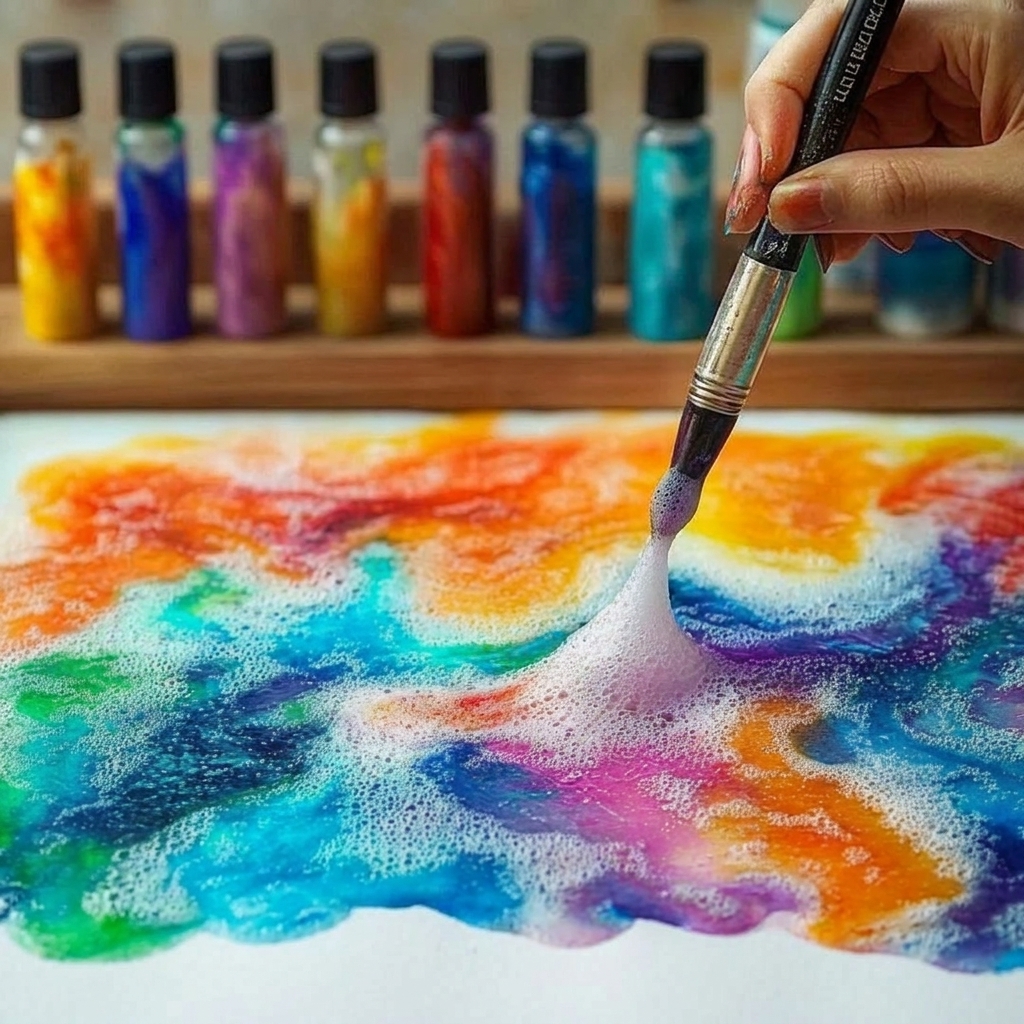
Once the artwork is ready, give children spray bottles filled with vinegar. As they spray, the painting begins to bubble, foam, and erupt into motion.
This reaction is what makes Ingredients for children’s effervescent drawing so magical—kids see their artwork come alive instantly.
III. Project 2: Erupting Rainbow & Fizzy Ice Sensory Fun
This project adds a sensory twist to traditional painting by turning science into color explosions.
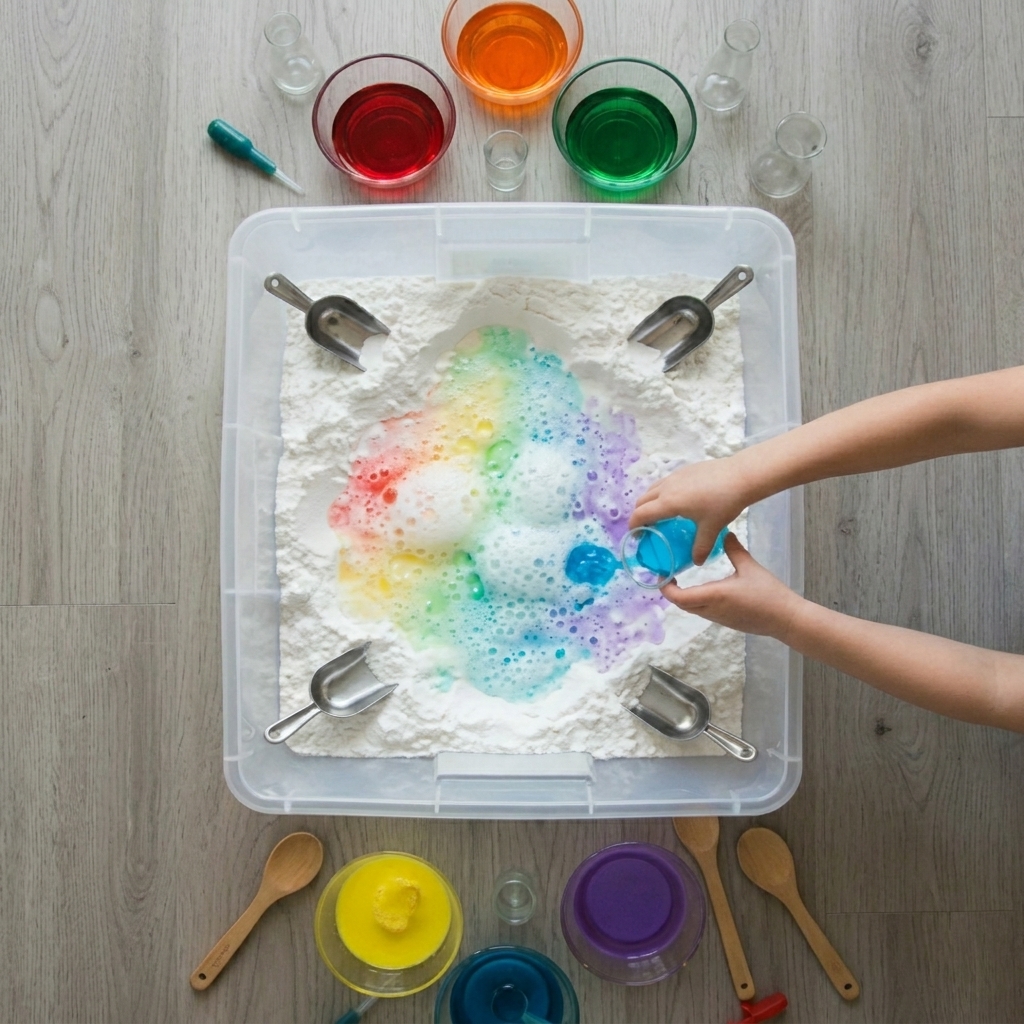
Ice Cube Tray Eruptions
Place into each compartment:
- Baking soda (1 tablespoon)
- Food coloring drops
Freeze or leave dry depending on variation. Then add vinegar using droppers or syringes.
The reaction creates mini color eruptions that mix and swirl together.
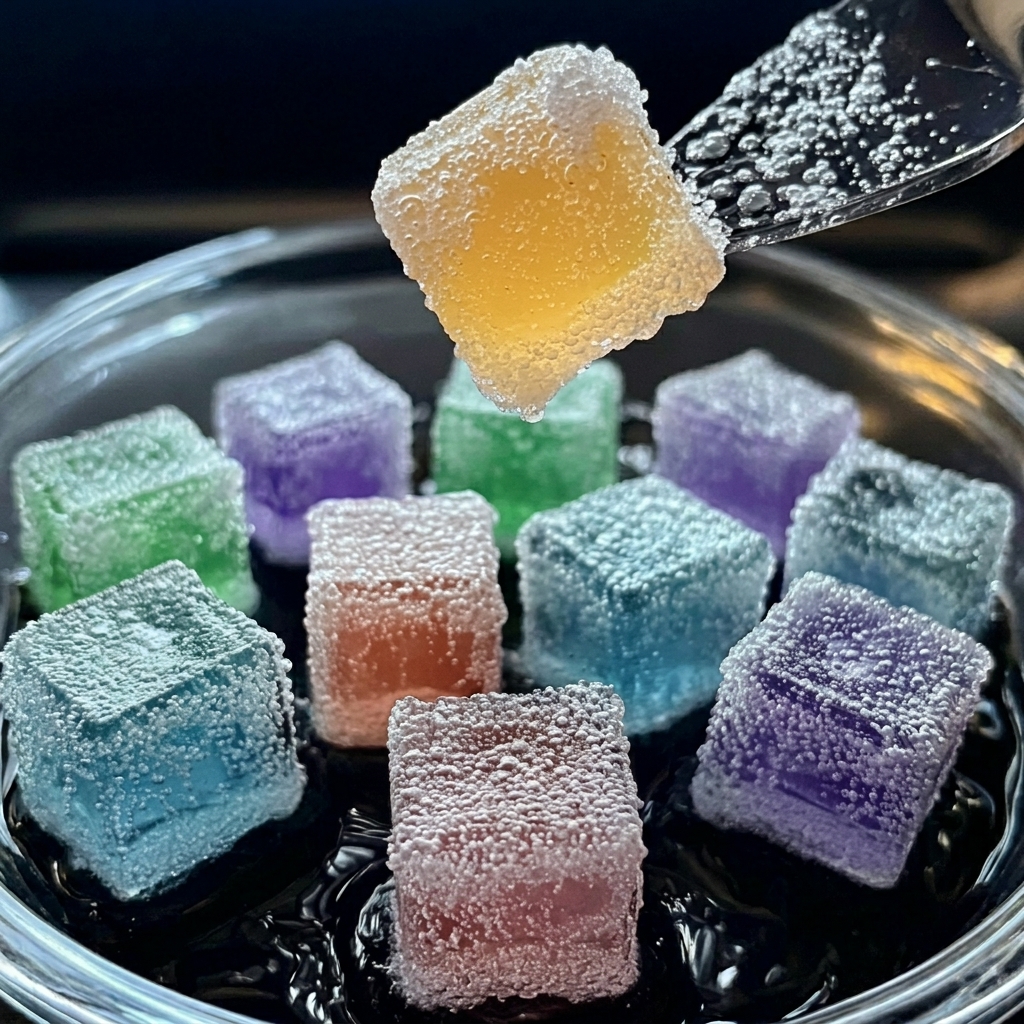
Fizzy Ice Variation
For a hotter day activity:
- Freeze baking soda paint into cubes
- Drop them onto trays
- Add vinegar slowly
As the ice melts, the fizz becomes stronger and more dramatic.
Learning Outcome
Children explore:
- Primary color mixing
- Cause and effect
- Temperature influence on reactions
This makes Ingredients for children’s effervescent drawing a powerful sensory STEM tool.
IV. Project 3: Scented & Drip Art (Indoor Creative Canvas)
Not all science art needs to be outdoors. This indoor version is perfect for rainy days or travel-friendly creativity.
Scented Fizzy Art
Use drink mix powders like Kool-Aid, which contain citric acid. When combined with baking soda, they create both:
- Colorful reactions
- Pleasant fruity scents
This enhances sensory engagement significantly.
Best Surface for Results
For best performance with Ingredients for children’s effervescent drawing, use:
- Thick watercolor paper (300gsm)
- Cardstock
- Tray-based art boards
These surfaces prevent warping and allow better fizz visibility.
Advanced Variation
For older kids:
- Let artwork dry
- Add a drop of rubbing alcohol
- Observe translucent “light effects”
This introduces early chemistry and material science concepts in a playful way.
V. The Science Simplified (Featured Snippet Ready)
Understanding the science behind Ingredients for children’s effervescent drawing makes the activity even more meaningful.
What is a Base?
Baking soda (sodium bicarbonate) is a base that reacts when mixed with acid.
What is an Acid?
Vinegar (acetic acid) or citric acid (found in drink powders) acts as the activator.
What Happens Next?
When they combine:
- Carbon dioxide gas (CO₂) is released
- The bubbles create fizz and foam
- The artwork appears to “erupt”
Simple Questions for Kids
- What happens if we add more vinegar?
- Does more baking soda create bigger bubbles?
- What colors mix when they explode?
- Why does the fizz stop after a while?
This transforms Ingredients for children’s effervescent drawing into a full STEM investigation.
VI. Troubleshooting & Pro Tips for Parents
Even simple experiments need a few smart tricks.
Problem: Paint Separates Quickly
Solution: Stir frequently. Baking soda and cornstarch naturally settle.
Problem: Strong Food Coloring Stains
Solution: Avoid deep blue or red on concrete unless rinsed immediately.
Problem: Weak Fizz Reaction
Solution: Ensure fresh vinegar and proper baking soda ratio.
Cleanup Hack
Vinegar actually helps break down leftover baking soda, making cleanup easier than expected.
Safety Tip
Always supervise younger children and avoid ingestion of materials.
VII. Why This Activity Works for Learning & Travel Play
One reason educators love Ingredients for children’s effervescent drawing is its flexibility. It works at home, in classrooms, and even during travel with small portable kits.
It also connects beautifully with:
- DIY bubbling art activities 1
- dough flour and water activities (sensory comparison play)
- STEM exploration kits for kids
- mess-free science experiments
This makes it ideal for families looking for engaging, screen-free entertainment.
VIII. Final Thoughts: Where Art Meets Science
At its core, Ingredients for children’s effervescent drawing turn everyday kitchen materials into a gateway for discovery. Children are not just painting—they are experimenting, predicting, and observing real chemical reactions.
From fizzy sidewalk masterpieces to erupting rainbow ice, every activity builds curiosity, confidence, and creativity.
When learning feels like play, children don’t just understand science—they experience it.
So grab your baking soda, vinegar, and colors… and let the fizzing adventure begin.
