
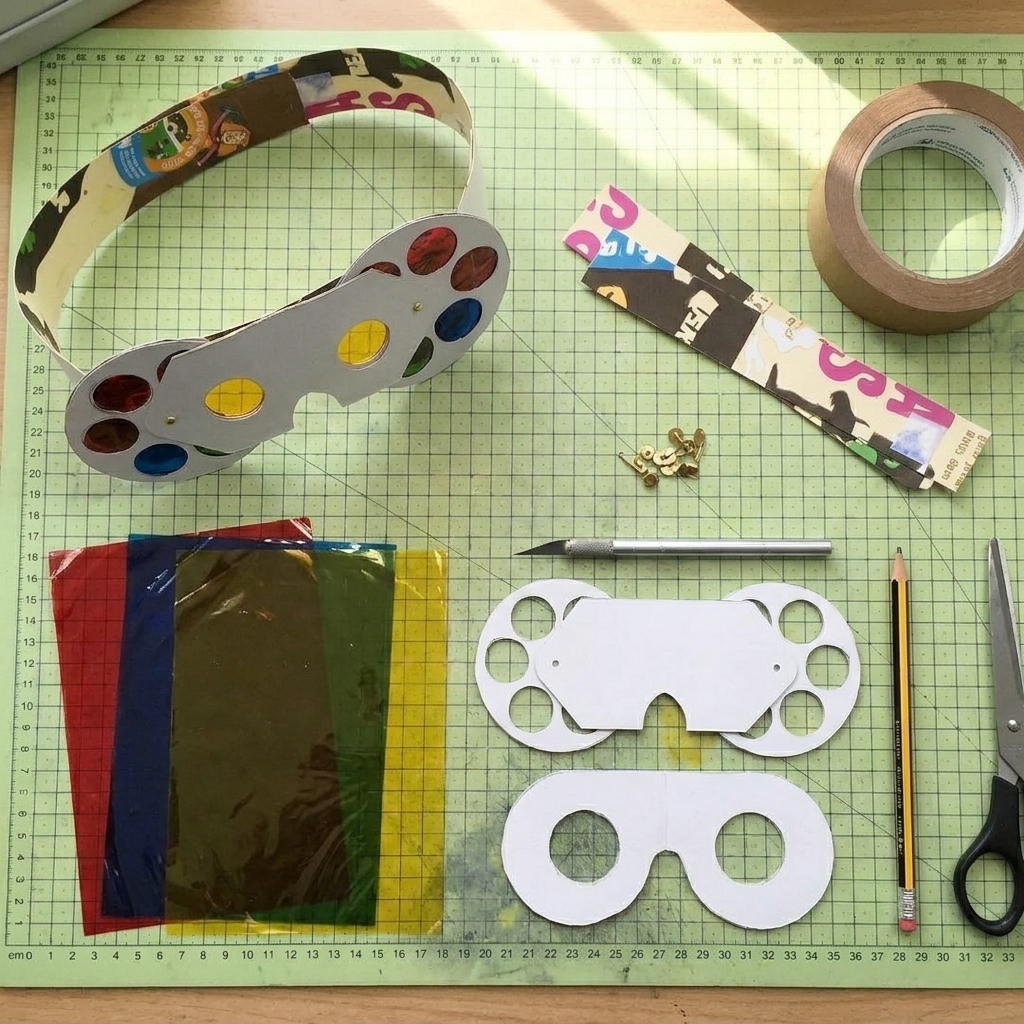
Making 3D glasses for children is a fun and educational activity that combines creativity, science, and hands-on learning. Children are naturally curious about how movies, images, and visual effects work. When they discover that they can create their own 3D glasses using simple household materials, their excitement grows even more.
This engaging project introduces kids to the fascinating world of optics while allowing them to build something useful. Instead of simply watching a science demonstration, children become active participants in the learning process. They cut, color, assemble, and test their own glasses while exploring how the human eye perceives depth and dimension.
Parents and teachers love this activity because it is affordable, easy to organize, and packed with educational value. Children love it because they get to create a cool gadget and experience amazing visual effects afterward. Making 3D glasses for children turns a simple craft session into an unforgettable science adventure.
Quick Summary Table
| Feature | Details |
| Project Name | Making 3D Glasses for Children |
| Activity Type | DIY Science Craft |
| Difficulty Level | Easy |
| Recommended Age | 6–12 Years |
| Time Required | 20–30 Minutes |
| Materials Needed | Cardboard, red and blue film, scissors, glue |
| Learning Topics | Optics, Light, Color Theory |
| Cost | Low |
| Indoor or Outdoor | Indoor |
| Fun Rating | Excellent |
What Are 3D Glasses?
3D glasses are special glasses designed to create the illusion of depth in images or videos. They work by presenting slightly different images to each eye. The brain combines these images and interprets them as a three-dimensional scene.
Many children have seen 3D movies but may not understand how the glasses work. Making 3D glasses for children provides an excellent opportunity to explore this concept in a hands-on way.
Simple homemade 3D glasses often use red and blue transparent filters. Each colored lens allows one image to pass through while blocking another. This creates the illusion of depth that makes objects appear to pop out from the screen.
Materials Needed
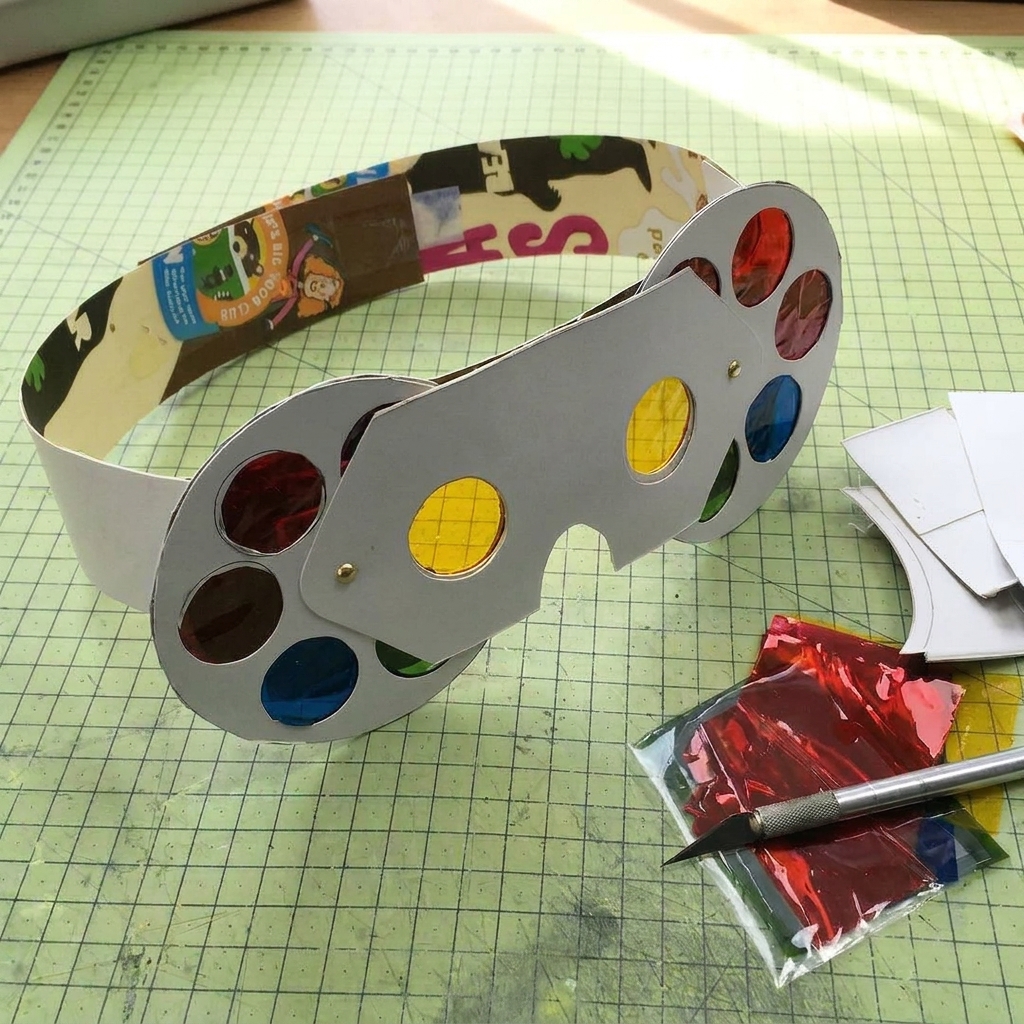
One reason making 3D glasses for children is so popular is that it requires only a few inexpensive materials.
Gather the following items:
- Cardboard or thick paper
- Red transparent plastic sheet
- Blue transparent plastic sheet
- Pencil
- Scissors
- Glue or tape
- Ruler
- Printable 3D image for testing
Most of these materials can be found at home, making the project affordable and accessible.
Step-by-Step Instructions
Step 1: Draw the Glasses Frame
Use a pencil and ruler to draw a simple glasses frame on cardboard.
The frame should include:
- Two eye openings
- A bridge section
- Side arms
Step 2: Cut Out the Frame
Carefully cut along the outline.
Adult supervision may be needed for younger children.
Step 3: Prepare the Lenses
Cut one piece of red transparent film and one piece of blue transparent film.
Make sure they fit inside the eye openings.
Step 4: Attach the Lenses
Glue the red lens on the left side and the blue lens on the right side.
Allow the glue to dry completely.
Step 5: Test the Glasses
Look at a red-blue anaglyph image.
Children will be amazed when flat images suddenly appear three-dimensional.
Why 7 Kids Love This Project
1. They Create Something Cool
Children enjoy making objects they can actually use.
Instead of creating a decoration that sits on a shelf, they build functional glasses that produce exciting visual effects.
This practical outcome increases motivation and engagement.
2. The Science Feels Like Magic
When children first put on their homemade glasses, they often react with surprise.
Objects appear to gain depth, making the experience feel magical.
This sense of wonder encourages curiosity and scientific exploration.
3. It Encourages Creativity
Making 3D glasses for children allows endless customization.
Kids can decorate their glasses with:
- Stickers
- Drawings
- Favorite colors
- Cartoon characters
- Glitter designs
Every pair becomes unique.
4. It Introduces Real Science Concepts
Children learn about:
- Light
- Color filtering
- Vision
- Brain perception
- Optical illusions
These lessons occur naturally through play and experimentation.
5. It Builds Confidence
Completing a successful project gives children a sense of accomplishment.
When the glasses work correctly, kids feel proud of their achievement.
This confidence often inspires them to try more STEM activities.
6. It Promotes Problem Solving
Not every pair of glasses works perfectly on the first attempt.
Children may need to:
- Adjust the lenses
- Improve alignment
- Strengthen the frame
These challenges teach perseverance and problem-solving skills.
7. It Makes Learning Fun
Perhaps the biggest reason children love this project is that it combines entertainment with education.
Kids learn without feeling like they are studying.
This positive experience helps develop a lifelong interest in science.
The Science Behind 3D Vision
Humans have two eyes positioned slightly apart.
Each eye sees the world from a slightly different angle.
The brain combines these two views to create depth perception.
This process allows us to judge:
- Distance
- Position
- Movement
- Size
3D glasses mimic this natural process by separating images intended for each eye.
The brain then merges the images, creating the illusion of three dimensions.
Making 3D glasses for children helps explain this fascinating process in a simple and memorable way.
Educational Benefits
Learning About Light
Children discover that light behaves in different ways when it passes through colored filters.
They observe how colors can block or transmit specific wavelengths.
Understanding Color Theory
The project introduces basic concepts of color interaction.
Children learn how red and blue filters affect what they see.
Improving Fine Motor Skills
Cutting, gluing, and assembling the glasses improves:
- Hand coordination
- Precision
- Control
- Crafting skills
Encouraging Observation
Kids carefully compare what they see with and without the glasses.
This develops observation and analytical thinking skills.
How Teachers Can Use This Activity
Making 3D glasses for children works exceptionally well in classrooms.
Teachers can integrate the project into lessons about:
- Physics
- Light
- Human vision
- Color theory
- Engineering
Students can work individually or in groups.
The activity promotes collaboration and discussion.
Teachers can also demonstrate various 3D images and videos after the glasses are completed.
How Parents Can Support Learning
Parents can extend the activity beyond the initial craft session.
Ideas include:
- Searching for 3D images online
- Creating custom anaglyph artwork
- Watching educational 3D videos
- Discussing how eyes work
- Exploring optical illusions
These extensions reinforce learning while maintaining excitement.
Fun Variations
Decorated Frames
Children can personalize their glasses using:
- Markers
- Paint
- Stickers
- Foam shapes
Animal-Themed Glasses
Frames can be shaped like:
- Cats
- Dogs
- Dinosaurs
- Butterflies
Superhero Glasses
Kids can design glasses inspired by their favorite heroes.
Group Challenges
Children can compare designs and test which frames are most comfortable and effective.
Common Problems and Solutions
The Image Looks Blurry
Check that the colored lenses are correctly positioned.
The Glasses Feel Weak
Use thicker cardboard for additional support.
The Lenses Fall Out
Apply stronger glue or reinforce with tape.
The 3D Effect Is Weak
Make sure the image being viewed is designed for red-blue 3D glasses.
Safety Tips
While making 3D glasses for children is generally safe, basic precautions should be followed.
- Use child-safe scissors.
- Supervise younger children.
- Avoid sharp tools.
- Handle glue carefully.
- Keep materials organized.
These simple measures ensure a positive experience.
Building Interest in STEM
STEM stands for:
- Science
- Technology
- Engineering
- Mathematics
Making 3D glasses for children introduces all four areas in an accessible way.
Science appears through optics.
Technology appears through visual imaging.
Engineering appears through construction.
Mathematics appears through measuring and designing.
This integrated learning experience helps children see how different subjects work together.
Long-Term Benefits
Projects like this offer more than short-term entertainment.
Children develop:
- Curiosity
- Creativity
- Confidence
- Critical thinking
- Problem-solving skills
These abilities support future success in school and beyond.
Many scientists, engineers, and inventors began their journeys with simple hands-on experiments just like this one.
Conclusion
Making 3D glasses for children is a wonderful combination of science, creativity, and fun. With only a few inexpensive materials, children can build a working pair of glasses that demonstrates fascinating principles of vision and light.
The project captures children’s imagination because it transforms ordinary materials into something extraordinary. They enjoy designing the glasses, testing them, and discovering how 3D images work. Along the way, they learn valuable lessons about optics, color theory, engineering, and problem-solving.
Whether used at home, in the classroom, or during a science event, making 3D glasses for children remains an engaging activity that sparks curiosity and encourages learning. It is easy to understand why so many children love this project and why it continues to be a favorite educational craft for young learners everywhere.
