
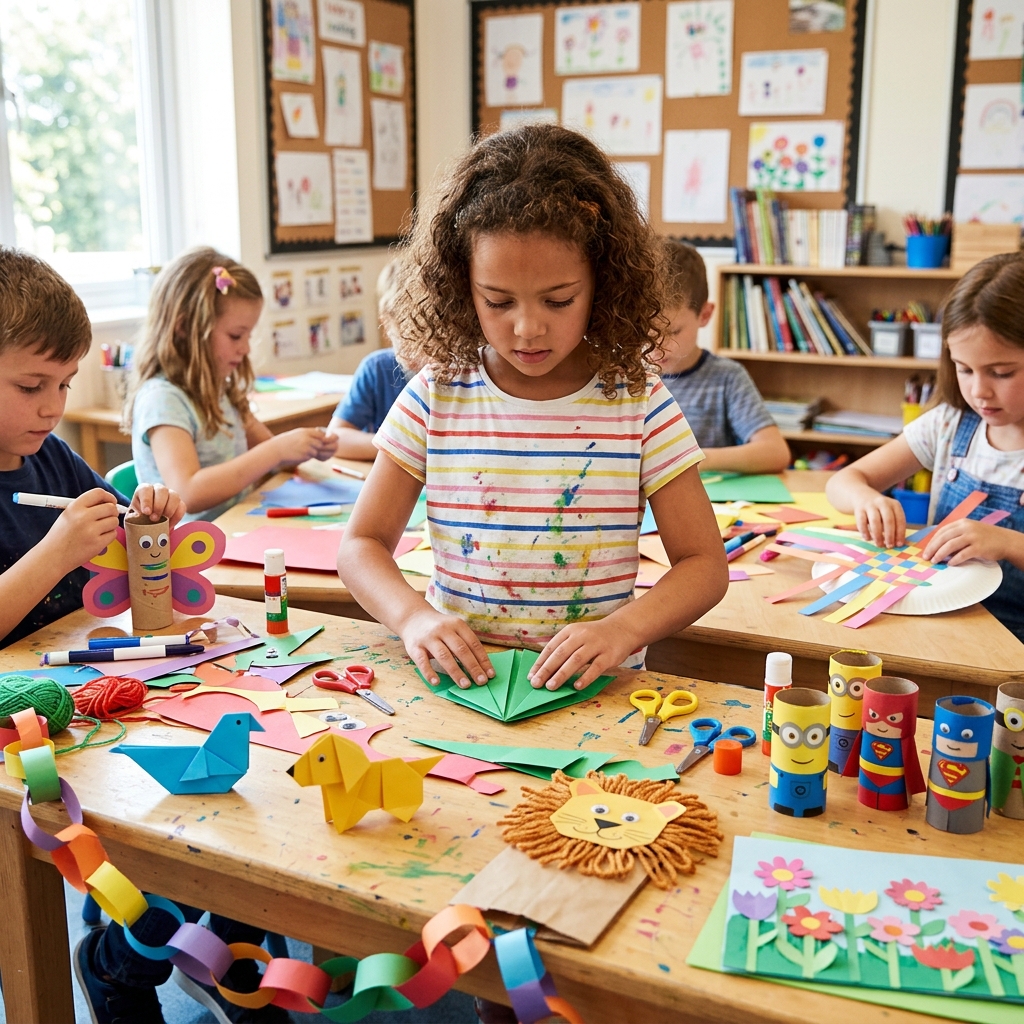
Paper crafts are one of the easiest and most affordable ways to keep children engaged while encouraging creativity and learning. With just a few sheets of paper, scissors, glue, and coloring supplies, kids can create everything from colorful animals and greeting cards to paper flowers and flying airplanes. Best of all, paper crafting requires minimal preparation and can be enjoyed at home, in classrooms, at birthday parties, or during rainy afternoons.
Unlike many modern toys that offer limited interaction, paper crafts invite children to use their imagination, solve problems, and express themselves through art. Every fold, cut, and decoration becomes part of a unique creation that reflects a child’s personality and ideas.
Whether you’re a parent, teacher, caregiver, or simply looking for fun activities, paper crafting provides endless opportunities for creative play while helping children develop valuable life skills.
Why Paper Crafts Are Great for Kids
Paper is inexpensive, widely available, and incredibly versatile. Children of nearly every age can enjoy paper crafting with projects suited to their skill level.
Benefits include:
- Encourages creativity and imagination
- Improves fine motor skills
- Develops hand-eye coordination
- Strengthens concentration
- Builds patience and perseverance
- Supports early learning concepts
- Promotes self-expression
- Creates quality family time
- Reduces screen time
- Uses inexpensive materials
Children also gain confidence by completing projects they can proudly display or give as gifts.
Materials You’ll Need
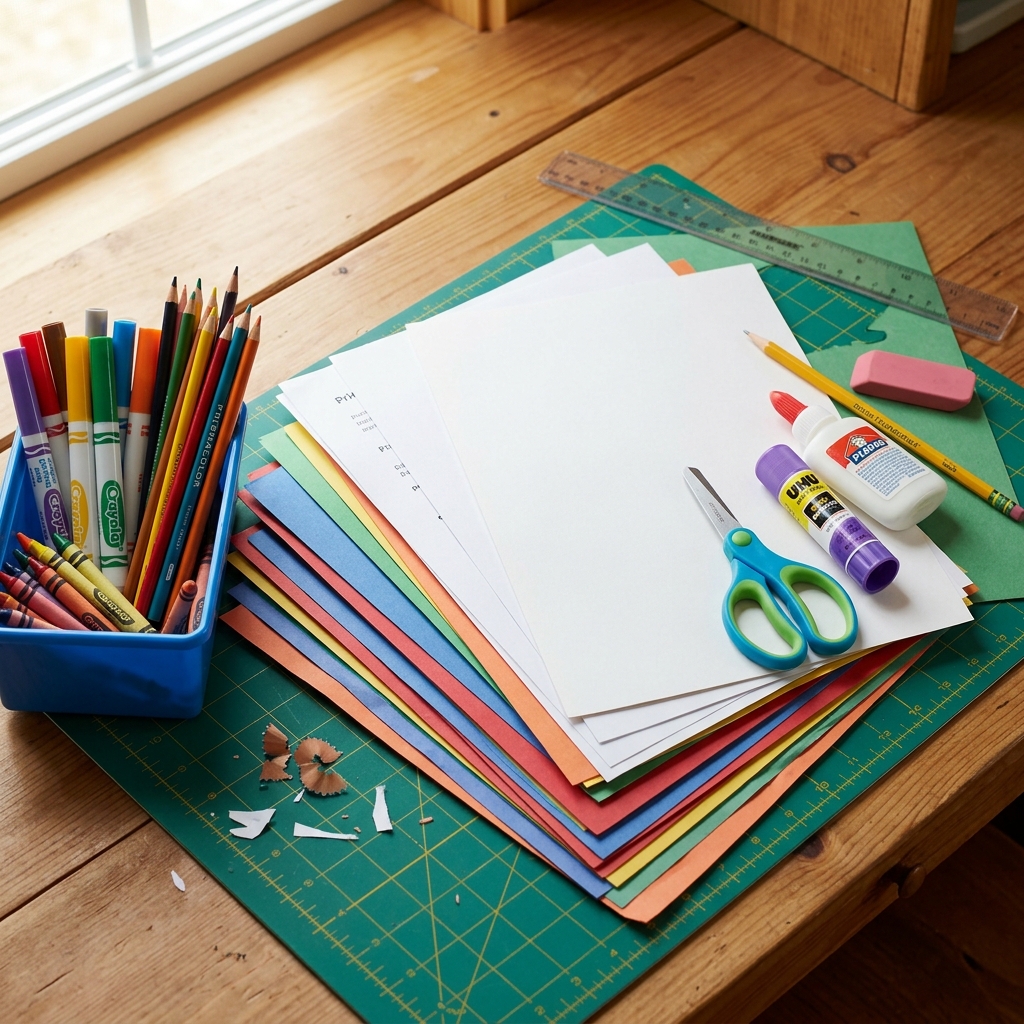
Most paper craft supplies are already available in many homes.
Basic Supplies
- Construction paper
- Colored paper
- White printer paper
- Cardstock
- Child-safe scissors
- Glue stick
- Liquid glue
- Pencil
- Eraser
- Ruler
- Markers
- Colored pencils
- Crayons
Optional Decorations
- Stickers
- Googly eyes
- Glitter
- Sequins
- Ribbon
- Yarn
- Tissue paper
- Washi tape
- Foam shapes
- Buttons
- Pipe cleaners
Having a variety of colors and textures makes projects even more exciting.
Safety First
Although paper crafts are generally safe, a few precautions are important.
- Use child-safe scissors.
- Adults should supervise younger children.
- Keep small decorations away from toddlers.
- Use non-toxic glue and coloring supplies.
- Protect tables with newspaper or craft mats.
- Clean up scraps to prevent slipping.
Safety allows everyone to focus on enjoying the creative process.
Paper Craft Idea 1: Paper Animals
Simple paper animals are perfect for beginners.
Children can make:
- Lions
- Cats
- Dogs
- Penguins
- Butterflies
- Frogs
- Elephants
- Owls
After cutting basic shapes, kids can decorate their animals using markers, crayons, and paper cutouts.
These animals also become wonderful storytelling characters.
Paper Craft Idea 2: Paper Flowers
Paper flowers never wilt and make beautiful decorations.
Popular flowers include:
- Roses
- Tulips
- Daisies
- Sunflowers
- Lilies
Children can experiment with different colors, folded petals, and layered designs.
Finished flowers make thoughtful handmade gifts.
Paper Craft Idea 3: Paper Airplanes
Paper airplanes remain one of the world’s favorite paper crafts.
Children enjoy:
- Folding different airplane designs
- Testing flight distance
- Comparing speed
- Improving designs
- Holding friendly competitions
This activity introduces simple engineering and physics concepts through play.
Paper Craft Idea 4: Greeting Cards
Homemade greeting cards are meaningful gifts.
Children can create cards for:
- Birthdays
- Mother’s Day
- Father’s Day
- Valentine’s Day
- Christmas
- Easter
- Teacher appreciation
- Thank-you notes
Decorating with drawings, stickers, and colorful paper makes each card unique.
Paper Craft Idea 5: Paper Chains
Paper chains are easy enough for preschoolers.
Simply:
- Cut paper strips.
- Form a loop.
- Glue the ends together.
- Add another strip through the first loop.
- Repeat.
Chains can decorate bedrooms, classrooms, or party spaces.
Paper Craft Idea 6: Origami
Origami introduces children to the Japanese art of paper folding.
Simple beginner projects include:
- Boats
- Hats
- Butterflies
- Fish
- Hearts
- Dogs
- Cranes
- Foxes
Origami teaches precision, patience, and sequential thinking.
Paper Craft Idea 7: Paper Puppets
Paper puppets encourage dramatic play.
Children can design:
- Animals
- Superheroes
- Princesses
- Pirates
- Dinosaurs
- Monsters
- Fairies
Attach popsicle sticks or foldable handles to bring the characters to life.
Puppet shows help improve communication and storytelling skills.
Quick Overview Table
| Feature | Details |
| Activity | Paper Crafts for Kids |
| Difficulty Level | Easy to Intermediate |
| Recommended Age | 3–12 years |
| Time Required | 20–90 minutes |
| Materials Needed | Colored paper, scissors, glue, markers, crayons, stickers |
| Budget | Very affordable |
| Skills Developed | Creativity, fine motor skills, concentration, problem-solving |
| Educational Benefits | Art, geometry, storytelling, color recognition |
| Best For | Home, classrooms, parties, rainy days |
| Eco-Friendly Option | Use recycled paper whenever possible |
Paper Craft Idea 8: Paper Masks
Masks inspire imaginative role-playing.
Popular choices include:
- Tigers
- Rabbits
- Foxes
- Bears
- Dragons
- Superheroes
Elastic string or craft sticks make masks easy to wear.
Children enjoy pretending to become their favorite characters.
Paper Craft Idea 9: Paper Rainbows
Create bright rainbows using colorful strips of paper.
Children practice:
- Cutting
- Arranging colors
- Gluing carefully
- Understanding color order
Rainbows also make cheerful classroom decorations.
Paper Craft Idea 10: Paper Pinwheels
Paper pinwheels combine crafting with science.
After folding and assembling the paper, children can watch the pinwheel spin in the wind.
This activity introduces ideas about air movement and motion.
Educational Benefits of Paper Crafting
Paper crafts provide much more than entertainment.
Fine Motor Skills
Cutting, folding, and gluing strengthen small hand muscles needed for writing.
Creativity
Children invent designs, choose colors, and solve artistic challenges.
Problem-Solving
Projects encourage children to think critically when pieces don’t fit or designs need improvement.
Mathematics
Paper crafts introduce:
- Shapes
- Symmetry
- Measurement
- Patterns
- Counting
Language Development
Children describe their projects, tell stories, and explain their ideas.
Confidence
Completing a craft builds pride and encourages children to try more challenging projects.
Seasonal Paper Crafts
Different seasons provide endless inspiration.
Spring
- Flowers
- Butterflies
- Birds
- Rainbows
Summer
- Ice cream cones
- Suns
- Beach scenes
- Fish
Autumn
- Leaves
- Pumpkins
- Apples
- Scarecrows
Winter
- Snowflakes
- Snowmen
- Penguins
- Holiday decorations
Seasonal themes keep crafting fresh throughout the year.
Encouraging Creativity
Instead of copying examples exactly, encourage children to make their own choices.
Ask questions like:
- What colors would you choose?
- Can you invent a new animal?
- How would you decorate your flower?
- What story does your puppet tell?
- Can you combine two ideas into one project?
There are no wrong answers in creative crafting.
Organizing a Craft Session
Successful crafting starts with preparation.
Helpful tips include:
- Organize supplies before beginning.
- Cover the table.
- Demonstrate one step at a time.
- Allow children to work independently.
- Praise creativity rather than perfection.
- Display finished artwork proudly.
Positive encouragement builds enthusiasm for future projects.
Common Mistakes to Avoid
Avoid these common crafting problems:
- Giving projects that are too difficult
- Rushing children
- Overcorrecting their designs
- Using dull scissors
- Providing too few materials
- Expecting every project to look identical
Remember that the creative process matters more than the final result.
Eco-Friendly Paper Crafting
Paper crafts also teach environmental responsibility.
Families can reuse:
- Old magazines
- Newspapers
- Junk mail
- Wrapping paper
- Cardboard packaging
- Paper bags
- Scrap paper from previous projects
Recycling materials encourages children to appreciate sustainability while reducing waste.
Tips for Making Craft Time More Fun
Try these ideas to create memorable crafting sessions:
- Play cheerful background music.
- Choose weekly craft themes.
- Create seasonal decorations together.
- Organize family craft challenges.
- Tell stories inspired by finished crafts.
- Make handmade gifts for relatives and friends.
- Display artwork on a family art wall.
Children often remember these creative experiences long after the crafts are finished.
Conclusion
Paper crafts are one of the most enjoyable, affordable, and educational activities for children of all ages. With just a few simple supplies, kids can transform ordinary sheets of paper into colorful animals, flowers, greeting cards, puppets, airplanes, masks, pinwheels, and countless other imaginative creations.
Beyond producing beautiful artwork, paper crafting helps children develop creativity, fine motor skills, patience, concentration, and problem-solving abilities. It also encourages self-expression, strengthens family bonds, and introduces important lessons about recycling and sustainability when reused materials are included.
Whether you’re looking for a quiet indoor activity, an engaging classroom project, or a fun weekend craft, paper crafts offer endless opportunities for learning through play. The next time you have paper, scissors, and a little imagination, gather the children around the table and start creating—because every folded, cut, and decorated piece of paper has the potential to become something truly extraordinary.
