
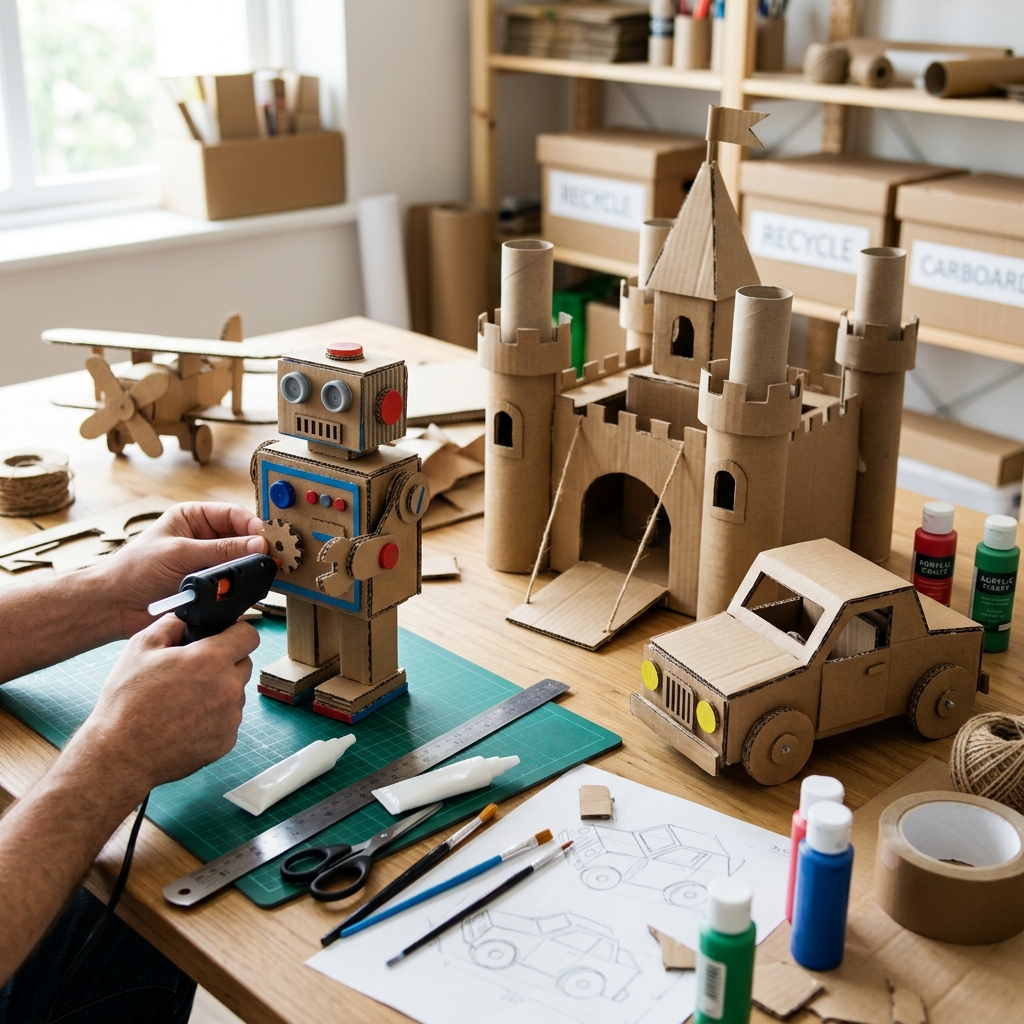
Creating toys doesn’t have to involve expensive materials or complicated tools. In fact, one of the best crafting supplies is something many families throw away every week—cardboard. From cereal boxes and shipping cartons to paper towel tubes, cardboard can be transformed into imaginative toys that entertain children while encouraging creativity, problem-solving, and hands-on learning.
Unlike plastic toys that often have a single purpose, homemade cardboard toys invite children to invent their own stories, design their own games, and even improve their creations over time. Building toys from cardboard is also an eco-friendly activity that teaches kids about recycling and sustainability in a fun and meaningful way.
Whether you’re crafting on a rainy afternoon, planning a classroom project, or searching for a budget-friendly family activity, making toys from cardboard offers endless possibilities.
Why Make Toys from Cardboard?
Cardboard is one of the most versatile craft materials available. It’s lightweight, easy to cut, simple to paint, and readily available in most homes.
Some of the biggest benefits include:
- Encourages creativity and imagination
- Improves fine motor skills
- Builds engineering and problem-solving abilities
- Promotes environmental awareness through recycling
- Saves money compared to buying new toys
- Creates meaningful family bonding time
- Helps children learn patience and planning
Children often enjoy the building process just as much as playing with the finished toy.
Materials You’ll Need
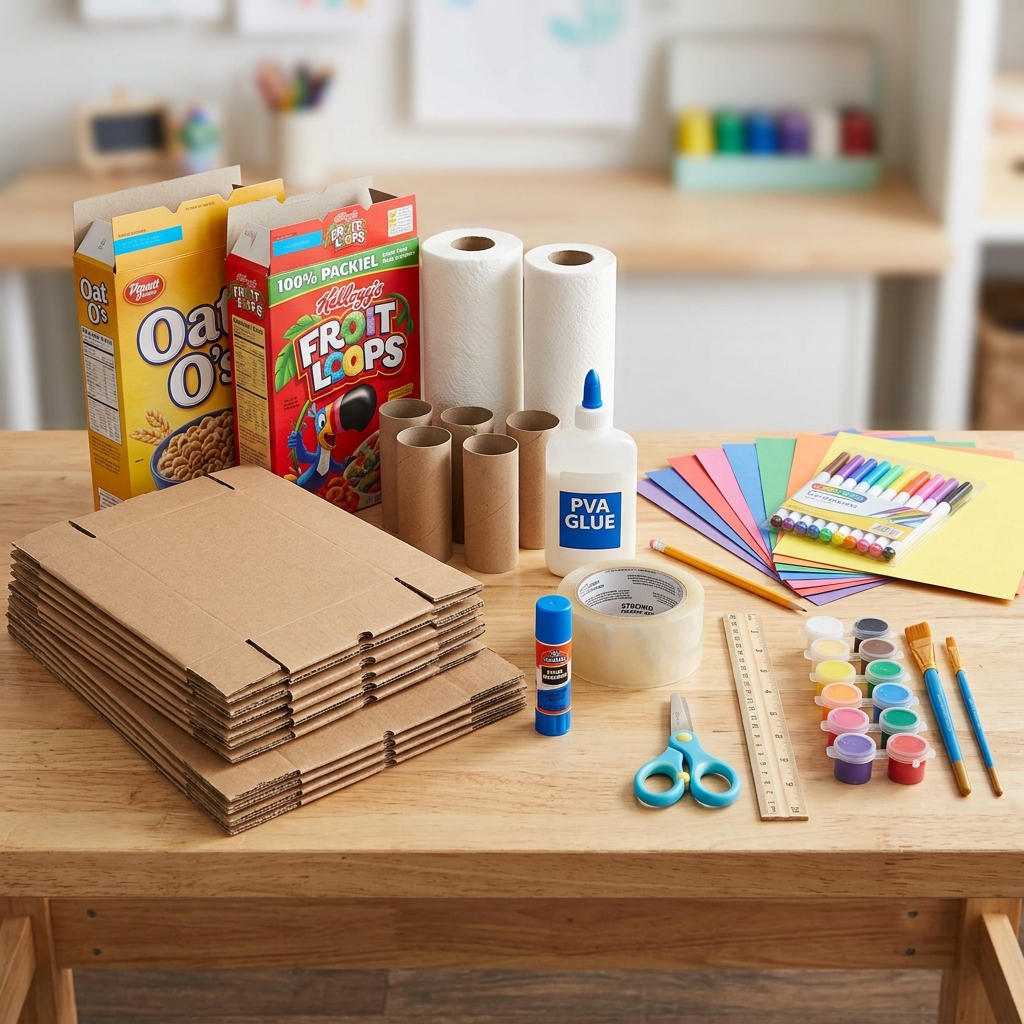
Before starting, gather a few basic supplies.
Essential Materials
- Cardboard boxes
- Cereal boxes
- Paper towel rolls
- Toilet paper tubes
- Glue
- Strong tape
- Child-safe scissors
- Ruler
- Pencil
- Markers
- Colored paper
- Paint
- Paintbrushes
Optional Decorations
- Bottle caps
- Popsicle sticks
- Buttons
- Yarn
- Stickers
- Googly eyes
- Fabric scraps
- Aluminum foil
- Washi tape
Most of these items can be found around the house, making this an inexpensive hobby.
Safety Tips
Always keep safety in mind during crafting.
- Adults should handle craft knives.
- Use child-safe scissors for young children.
- Work on a protected surface.
- Avoid very small decorations with toddlers.
- Allow glue and paint to dry completely before play.
- Supervise younger children throughout the project.
Toy Idea 1: Cardboard Race Car
One of the easiest projects is creating a race car.
Materials
- Medium cardboard box
- Bottle caps
- Wooden skewers
- Paint
- Glue
Instructions
- Cut the box into the desired car shape.
- Paint the body.
- Glue decorative details like headlights.
- Attach bottle caps as wheels.
- Let everything dry completely.
Children can organize racing competitions once the cars are finished.
Toy Idea 2: Cardboard Dollhouse
A cardboard dollhouse offers endless imaginative play.
You can include:
- Bedrooms
- Kitchen
- Living room
- Bathroom
- Balcony
- Garage
Furniture can also be made from smaller cardboard pieces.
Children enjoy decorating each room with paper wallpaper, miniature rugs, and tiny furniture.
Toy Idea 3: Robot Costume
Large shipping boxes can become impressive robot costumes.
Add:
- Arm holes
- Eye openings
- Painted buttons
- Cardboard antennas
- Aluminum foil details
Kids love pretending to be friendly robots during imaginative play.
Toy Idea 4: Marble Maze
Build a maze inside a shallow cardboard box.
Glue strips of cardboard throughout the box to create pathways.
Children guide a marble from the start to the finish by tilting the maze.
This activity develops:
- Hand-eye coordination
- Patience
- Logical thinking
Toy Idea 5: Puppet Theater
A large box quickly becomes a puppet theater.
Cut out a stage window.
Decorate with:
- Curtains
- Stars
- Clouds
- Castle walls
- Jungle scenes
Children can perform puppet shows using handmade paper puppets.
Toy Idea 6: Airplane
Cardboard airplanes are surprisingly easy.
Create:
- Wings
- Tail
- Cockpit
- Propeller
Paint colorful designs before taking imaginary flights around the house.
Toy Idea 7: Castle
Every young knight or princess dreams of a castle.
Use several cardboard boxes to build:
- Towers
- Drawbridge
- Windows
- Battlements
- Secret doors
Add painted bricks for a realistic appearance.
Toy Idea 8: Parking Garage
Car-loving children enjoy multi-level parking garages.
Include:
- Ramps
- Parking spaces
- Elevator
- Car wash
- Gas station
Small toy cars fit perfectly inside.
Quick Overview Table
| Feature | Details |
| Project | Making Toys from Cardboard |
| Difficulty | Easy to Intermediate |
| Recommended Age | 4–12 years (with supervision) |
| Time Required | 30 minutes to 3 hours |
| Materials | Cardboard, glue, scissors, tape, paint, markers |
| Cost | Very low (mostly recycled materials) |
| Skills Developed | Creativity, engineering, fine motor skills, problem-solving |
| Best For | Home activities, classrooms, rainy days, family crafting |
| Eco-Friendly | Yes—uses recycled cardboard and household materials |
Toy Idea 9: Mini Kitchen
Transform several boxes into a pretend kitchen.
Add:
- Oven
- Microwave
- Sink
- Refrigerator
- Stove knobs
Paint realistic details for extra fun.
Toy Idea 10: Cardboard Animals
Simple shapes become wonderful animal toys.
Try making:
- Dinosaurs
- Cats
- Dogs
- Elephants
- Birds
- Fish
Decorate each animal using paint or colored paper.
Educational Benefits
Cardboard crafting teaches much more than art.
Children develop:
Creativity
They imagine new worlds and invent original designs.
Engineering Skills
Building stable structures introduces basic engineering concepts.
Mathematics
Measuring, counting, and creating symmetry strengthen math skills.
Fine Motor Skills
Cutting, folding, and gluing improve hand coordination.
Language Development
Children often create stories involving their handmade toys.
Confidence
Completing a project gives children a sense of achievement.
Decorating Ideas
Make every toy unique by adding creative decorations.
Ideas include:
- Bright paint
- Stickers
- Glitter (used sparingly)
- Colored tape
- Paper flowers
- Fabric curtains
- Yarn hair
- Felt details
- Recycled buttons
- Foam shapes
There are no limits to personalization.
Encouraging Independent Creativity
Instead of giving children step-by-step instructions every time, encourage them to make design choices.
Ask questions like:
- What color should your robot be?
- How many rooms does your dollhouse need?
- Can your race car carry passengers?
- What secret features does your castle have?
Open-ended questions help children think creatively.
Making Craft Time More Fun
Turn cardboard crafting into a memorable family event.
Ideas include:
- Play music while crafting.
- Have a decorating contest.
- Create themed toys together.
- Tell stories inspired by each creation.
- Display finished projects around the house.
- Host pretend play sessions afterward.
Children often treasure homemade toys because they helped create them.
Common Mistakes to Avoid
Avoid these common issues:
- Using cardboard that is too thin
- Rushing the drying time
- Cutting complicated shapes too early
- Using too much glue
- Ignoring stability when building large toys
- Forgetting to reinforce moving parts
Taking your time produces stronger and longer-lasting toys.
Eco-Friendly Learning
Making toys from recycled cardboard teaches children that everyday materials can have a second life.
Instead of throwing boxes away, families learn to transform waste into valuable play experiences. This encourages responsible habits that children can carry into adulthood.
Crafting also reduces unnecessary purchases while showing that imagination is often more valuable than expensive toys.
Tips for Long-Lasting Cardboard Toys
To increase durability:
- Reinforce corners with tape.
- Use thick corrugated cardboard for large projects.
- Apply two coats of paint.
- Store toys in a dry place.
- Repair damaged pieces instead of replacing them.
- Cover frequently handled areas with clear tape.
With proper care, cardboard toys can provide months of imaginative play.
Conclusion
Making toys from cardboard is one of the most rewarding, affordable, and environmentally friendly activities for children and families. With just a few recycled boxes and basic craft supplies, kids can create race cars, castles, dollhouses, robots, airplanes, puppet theaters, marble mazes, and countless other imaginative toys.
Beyond the fun, these DIY projects nurture creativity, build problem-solving skills, strengthen fine motor coordination, and teach valuable lessons about sustainability and resourcefulness. Best of all, every handmade toy reflects a child’s unique ideas and imagination, making it far more meaningful than many store-bought alternatives.
The next time you receive a cardboard box, don’t throw it away. Instead, gather some markers, glue, and scissors, and turn it into a one-of-a-kind toy that inspires hours of creative play and lasting family memories.
