
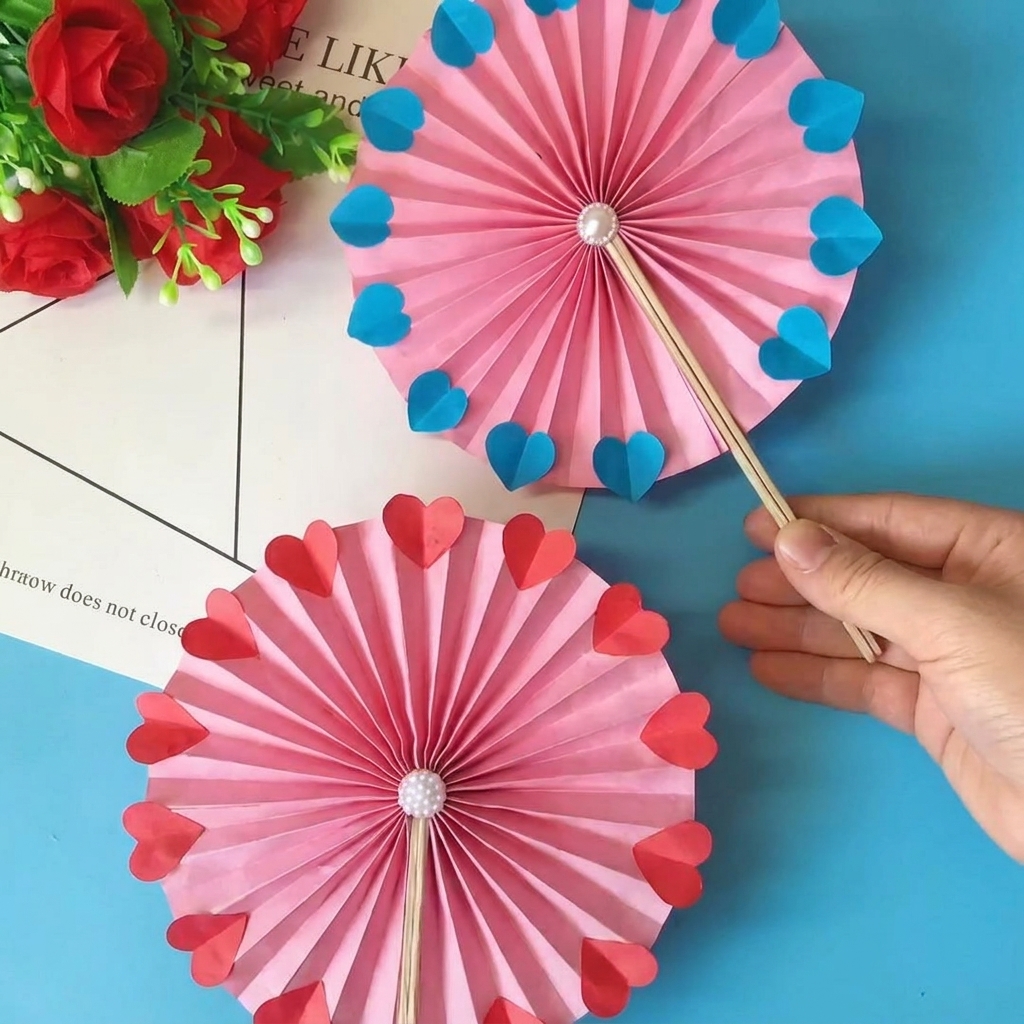
Making a paper fan that spins in the air is an exciting craft and science activity that combines creativity with hands-on learning. Sometimes called a paper helicopter, this simple project uses only a few everyday materials, yet it demonstrates fascinating scientific concepts such as gravity, air resistance, lift, and balance. When dropped from a height, the paper fan spins gently as it falls, creating a fun visual effect that captures children’s attention.
This activity is ideal for classrooms, homeschool lessons, scout meetings, rainy-day projects, or family craft time. Children can decorate their paper fans, experiment with different designs, and investigate how changes in size, weight, and shape affect the spinning motion. It is an engaging way to introduce basic engineering and physics while encouraging creativity and problem-solving.
Quick Overview Table
| Feature | Details |
| Activity | Paper Fan That Spins in the Air (Paper Helicopter) |
| Activity Type | STEM Craft & Science Experiment |
| Age Group | 5–12 years |
| Difficulty | Easy |
| Time Required | 20–30 minutes |
| Main Materials | Paper, scissors, ruler, paper clip |
| Science Topic | Gravity, Air Resistance, Lift, Balance |
| Indoor/Outdoor | Both |
| Adult Supervision | Recommended (for scissors) |
| Skills Developed | Fine Motor Skills, Creativity, Observation, Engineering |
What Is a Paper Fan That Spins in the Air?
A paper fan that spins in the air is a lightweight paper craft designed to rotate as it falls. Unlike a toy airplane that glides forward, this craft spins vertically because of the way its blades interact with the air.
The spinning motion slows the fall, making the toy look like a tiny helicopter. Although it is very simple, it demonstrates important principles of aerodynamics and shows how air can influence the movement of objects.
Children enjoy making several versions and comparing how different designs behave.
Why Kids Love This Activity
Children are naturally curious about things that fly and spin. A paper fan combines both, making it an exciting project from start to finish.
Some reasons children enjoy it include:
- It flies in a unique way.
- It is easy to build.
- It can be decorated with colorful designs.
- Every flight is slightly different.
- Small design changes produce noticeable results.
The activity also encourages repeated testing and experimentation.
Materials You’ll Need
Most supplies are already available at home or in the classroom.
Essential Materials
- One sheet of paper or cardstock
- Scissors
- Ruler
- Pencil
- Paper clip
Optional Materials
- Markers
- Colored pencils
- Stickers
- Washi tape
- Hole punch
- Lightweight cardboard
A paper clip helps stabilize the toy by adding weight to the bottom.
Step-by-Step Instructions
Step 1: Draw the Template
Using a ruler, draw a long rectangle on the paper.
A simple size is approximately:
- 15 cm (6 inches) long
- 4 cm (1.5 inches) wide
Mark the top half for the blades and the bottom half for the body.
Step 2: Cut the Shape
Carefully cut out the rectangle.
Adult supervision is recommended when children use scissors.
Step 3: Create the Blades
Cut a straight line down the middle of the upper section.
This creates two long flaps that will become the spinning blades.
Do not cut all the way down.
Leave the lower section connected.
Step 4: Fold the Blades
Fold one blade forward.
Fold the other blade backward.
The blades should point in opposite directions.
This opposite arrangement causes the paper fan to spin during its fall.
Step 5: Fold the Bottom
Fold the lower section upward once or twice to create a thicker base.
Attach a paper clip to the folded end.
The extra weight helps keep the toy balanced while falling.
Step 6: Test the Flight
Hold the paper fan high above the ground.
Release it without throwing it.
Watch as it gently spins toward the floor.
Repeat the test several times and observe the movement.
The Science Behind the Spinning Motion
Although the paper fan seems simple, several scientific forces work together to make it spin.
These include:
- Gravity
- Air resistance
- Lift
- Balance
Understanding these forces helps children see how engineering and physics influence everyday objects.
Understanding Gravity
Gravity is the force that pulls objects toward Earth.
Without gravity, the paper fan would not fall.
As the fan drops, gravity provides the downward motion needed for the blades to interact with the air.
Understanding Air Resistance
Air resistance is the force that opposes motion through the air.
As the paper fan falls, the blades push against the air.
The air pushes back on the blades.
Because the blades are folded in opposite directions, this force causes the paper fan to rotate instead of simply falling straight down.
Air resistance also slows the descent, making the toy fall more gently.
Understanding Lift
Although a paper helicopter does not produce lift like a real helicopter, the angled blades create small upward forces as they spin.
These forces help slow the fall and keep the toy rotating smoothly.
Children can observe that wider blades often stay in the air slightly longer because they interact with more air.
Why Balance Matters
The paper clip at the bottom helps keep the center of mass low.
A balanced toy spins more smoothly.
If the bottom is too light, the fan may tumble instead of rotating.
If it is too heavy, it may fall quickly without spinning well.
Experimenting with different paper clip sizes helps children discover the importance of balance.
Educational Benefits
This activity supports learning across many subjects.
Science
Children learn about:
- Gravity
- Air resistance
- Motion
- Aerodynamics
- Observation
Engineering
Young learners begin thinking like engineers by:
- Building prototypes
- Testing designs
- Solving problems
- Improving performance
Mathematics
Children practice:
- Measuring
- Comparing lengths
- Estimating flight time
- Recording observations
Art
Decorating the paper fan encourages creativity.
Children can design:
- Butterflies
- Birds
- Rainbows
- Superheroes
- Space themes
- Favorite animals
Creative Decoration Ideas
Before testing the paper fan, children can personalize their creations.
Ideas include:
- Bright rainbow stripes
- Polka dots
- Stars and planets
- Flowers
- Dinosaurs
- Cartoon faces
- Sports team colors
Decorations make each fan unique and encourage artistic expression.
Fun Experiments to Try
Once children build one paper fan, they can investigate many variations.
Compare Blade Lengths
Create fans with:
- Short blades
- Long blades
Observe which spins longer.
Compare Blade Widths
Try:
- Narrow blades
- Wide blades
Record the differences.
Change the Weight
Use:
- One paper clip
- Two paper clips
- No paper clip
Compare how the weight affects spinning.
Different Paper Types
Test:
- Printer paper
- Construction paper
- Cardstock
- Recycled paper
Discuss which material works best and why.
Questions Children Can Investigate
Encourage scientific thinking by asking:
- Which design spins the fastest?
- Does a heavier paper clip make the fan fall faster?
- What happens if the blades are folded at different angles?
- Which paper type stays in the air the longest?
- What happens if the blades are wider?
- Can two paper fans race each other?
Recording predictions and observations reinforces the scientific method.
Real-Life Connections
The ideas explored in this activity relate to many real-world technologies.
Examples include:
Helicopters
Helicopter rotor blades generate lift and control movement through the air.
Maple Seeds
Some tree seeds, especially maple seeds, spin as they fall.
Their unique shape helps them stay in the air longer and spread farther from the parent tree.
Wind Turbines
Wind turbine blades rotate because moving air pushes against them.
Although they generate electricity rather than slowing a fall, they rely on similar aerodynamic principles.
Drones
Modern drones use spinning propellers to produce lift and control their movement.
Common Mistakes
Sometimes the paper fan may not spin correctly.
Here are common problems and solutions.
Blades Folded the Same Way
Each blade should fold in the opposite direction.
Too Much Weight
A very heavy paper clip may cause the toy to drop too quickly.
Uneven Blades
Both blades should be approximately the same size.
Crooked Body
The center section should remain straight for stable flight.
Safety Tips
This activity is generally very safe.
Remember to:
- Supervise children using scissors.
- Avoid dropping the paper fan near people.
- Keep the testing area clear.
- Pick up paper clips after use.
- Wash hands if decorating with markers or paint.
Testing indoors on a carpeted floor can help prevent damage to the paper fan.
Extending the Learning
This craft can become part of a larger STEM lesson.
Children can:
- Time each flight with a stopwatch.
- Measure spinning speed.
- Create charts comparing different designs.
- Research helicopter engineering.
- Study seed dispersal in plants.
- Design their own improved versions.
These activities encourage scientific investigation and engineering design.
Why Teachers Love This Activity
Teachers appreciate paper fan projects because they are:
- Inexpensive.
- Easy to prepare.
- Highly engaging.
- Connected to STEM learning.
- Suitable for individual or group work.
- Excellent for introducing engineering concepts.
Students enjoy building, testing, redesigning, and improving their paper fans while discussing the science behind each flight.
Frequently Asked Questions
Why does the paper fan spin?
The folded blades interact with the air as the toy falls. Air resistance creates forces that cause the fan to rotate while gravity pulls it downward.
Can I use cardboard?
Lightweight cardstock works well, but thick cardboard is usually too heavy to spin effectively.
Why isn’t my paper fan spinning?
Check that:
- The blades fold in opposite directions.
- The body is straight.
- The weight is balanced.
- The paper is not too heavy.
Small adjustments often improve performance.
Can I make a larger paper fan?
Yes. Larger versions often spin more slowly and may require additional weight to stay balanced.
Can this activity be done outdoors?
Yes, but choose a calm day. Strong wind can interfere with the spinning motion and make results harder to compare.
Conclusion
Learning how to make a paper fan that spins in the air is a fun and educational way to introduce children to the principles of gravity, air resistance, lift, and balance. With only paper, scissors, a ruler, and a paper clip, young learners can create a simple spinning toy that demonstrates how design influences movement through the air.
This hands-on STEM activity encourages creativity, observation, experimentation, and problem-solving. By testing different blade sizes, paper types, and weights, children begin to think like engineers, discovering that even small design changes can produce different results.
Whether used at home, in a classroom, or during a homeschool science lesson, this project offers an engaging combination of craft, science, and play. It shows that remarkable lessons about physics and engineering can begin with ordinary materials, inspiring children to explore the fascinating world of flight through curiosity and creativity
