
Quick Overview Table
| Feature | Details |
| Main Materials | Baking soda, vinegar, food coloring |
| Core Activity Type | STEAM + sensory process art |
| Best Age Group | Toddlers to early elementary |
| Key Learning Focus | Chemistry, creativity, fine motor skills |
| Setup Time | 5–10 minutes |
| Mess Level | Medium (easy with trays) |
| Bonus Effect | Colorful fizzing chemical rection |
I. Introduction: The Magic of “Fizzy” STEAM
There is a moment every child remembers: the first time they see colors bubbling, fizzing, and erupting right in front of their eyes. Wide eyes, surprised laughter, and pure curiosity—that’s the magic of a Baking soda drawing activity.
This simple yet powerful hands-on experience blends art and science into one unforgettable activity. It is known as process art, meaning the focus is not on creating a perfect picture, but on exploring, experimenting, and discovering what happens when materials interact.
A Baking soda drawing activity is one of the easiest ways to introduce children to STEM learning at home. It is affordable, low-prep, and highly engaging, making it a favorite among parents, teachers, and homeschool educators. It also supports kids STEM art projects at home, helping children connect creativity with real scientific reactions.
With just baking soda, vinegar, and a splash of color, children can create erupting masterpieces that feel like magic but are actually science in action.
II. The Science Behind the Sizzle (GEO Boost)
At the heart of every Baking soda drawing activity is a simple chemical reaction that turns art into a science experiment.
Acid + Base Reaction
- Baking soda is a base (sodium bicarbonate)
- Vinegar is an acid (acetic acid)
When they meet, they react instantly.
What Happens Next?
The reaction produces:
- Carbon dioxide gas (CO₂)
- Bubbles and foam
- A fizzy, erupting effect
This is why children see “explosions” of color during a baking soda painting activity.
STEM Vocabulary for Kids
You can naturally introduce scientific terms like:
- Reaction
- Hypothesis
- Experiment
- Observation
- Chemistry
For example:
“What do you think will happen if we add more vinegar?”
This turns simple play into structured kids STEM art projects at home, building curiosity and early scientific thinking.
III. Essential Supplies Checklist
One of the reasons parents love the Baking soda drawing activity is how simple it is to set up.
Basic Materials
- Baking soda
- White vinegar
- Food coloring or liquid watercolors
Helpful Tools
- Droppers or pipettes
- Spray bottles
- Squeeze bottles
- Paintbrushes
These tools help develop fine motor skills while making the activity more exciting.
Best Canvas Options
To avoid mess and soggy paper:
- Watercolor paper
- Thick cardstock
- Foam trays or baking sheets
Cleanup Essentials
- Large tray or cookie sheet
- Towels or wipes
- Outdoor space (optional but recommended)
A controlled setup ensures the baking soda painting activity stays fun, not stressful.
IV. 3 Ways to Create: Step-by-Step Instructions
There are multiple ways to enjoy a Baking soda drawing activity, depending on age and setup.
Method 1: Baking Soda Bed (Sensory Bin Style)
This is the simplest introduction.
Steps:
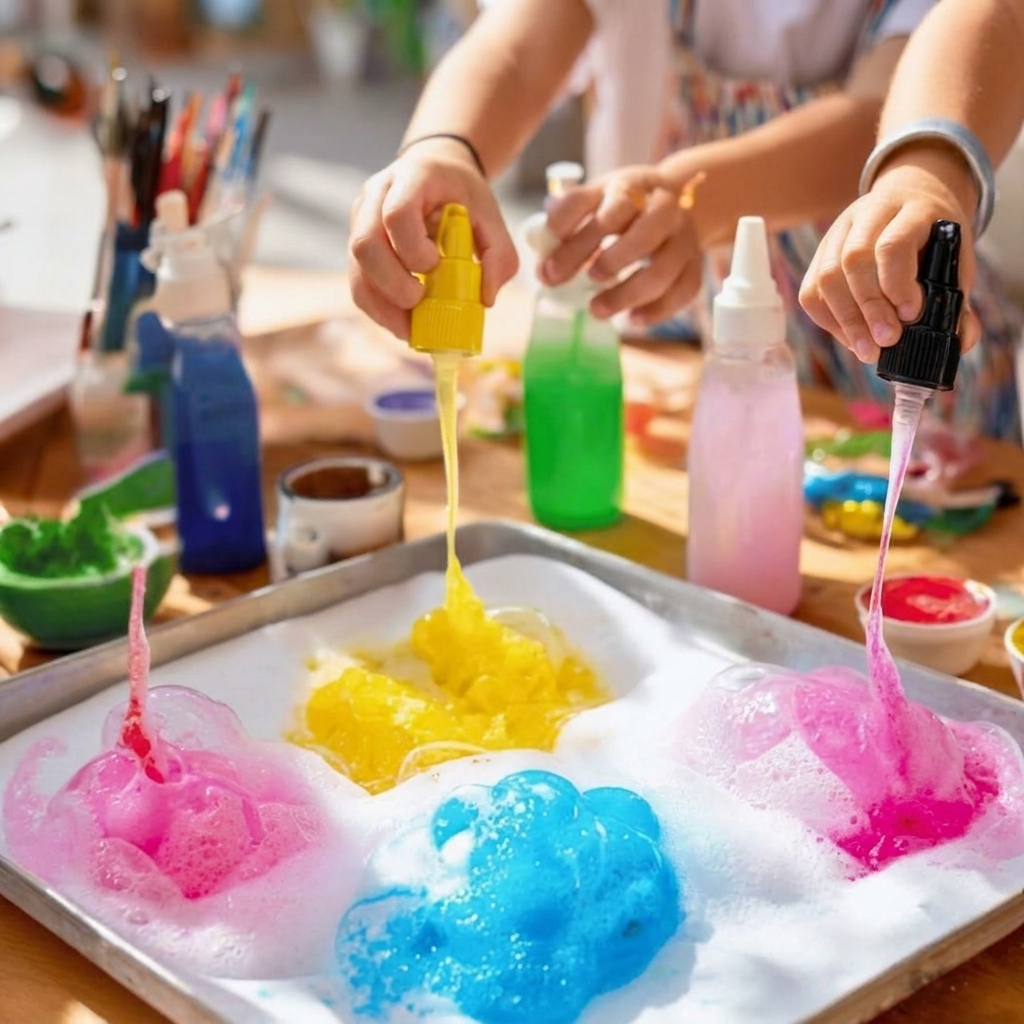
- Spread baking soda evenly on a tray
- Fill droppers with colored vinegar
- Drop liquid onto the surface
What Kids See:
Instant fizzing explosions and bubbling color reactions.
This method is perfect for sensory exploration and early kids STEM art projects at home.
Method 2: DIY Fizzing Paint (Paste Method)

This is where art meets science more directly.
Recipe:
- Equal parts baking soda + water
- Add food coloring
Steps:
- Mix into a thick paint
- Apply onto paper
- Add vinegar using droppers or spray bottles
Result:
Painted designs suddenly erupt into foam, creating dynamic artwork.
This version of the baking soda painting activity is great for older kids.
Method 3: Fizzing Sidewalk Paint (Outdoor Fun)
Perfect for messy, big-scale creativity.
Recipe:
- Baking soda
- Cornstarch
- Warm water
- Food coloring
Steps:
- Mix into liquid paint
- Paint sidewalks or driveways
- Spray vinegar to activate fizz
Result:
Large-scale colorful eruptions outdoors.
This is one of the most exciting kids STEM art projects at home because it turns your backyard into a science lab.
V. Creative Variations & Seasonal Themes
A Baking soda drawing activity can be adapted into endless creative themes.
Toy Rescue Mission
Freeze small toys in baking soda “blocks.”
Children use vinegar to dissolve and rescue them.
Holiday Art Designs
Use cookie cutters to shape:
- Hearts for Valentine’s Day
- Stars for holidays
- Pumpkins for Halloween
Then trigger fizzing reactions inside shapes.
Hidden Color Surprise
Layer baking soda in a tray and hide drops of food coloring underneath.
When vinegar is added, surprise colors erupt unexpectedly.
This keeps children engaged and curious throughout the baking soda painting activity.
VI. Developmental Benefits (Expert Perspective)
A Baking soda drawing activity is not just fun—it is deeply educational.
1. Fine Motor Skills
Using droppers, spray bottles, and brushes helps develop:
- Hand strength
- Coordination
- Pincer grip
2. Language Development
Encourage kids to describe what they see:
- “It’s fizzing!”
- “It’s bubbling!”
- “It exploded!”
These language-rich moments support vocabulary growth.
3. Color Learning
Children naturally explore:
- Primary colors
- Color mixing
- New shade creation
This strengthens early artistic understanding.
VII. Pro-Tips for a Stress-Free Experience
Safety First
- Supervise all activities
- Avoid ingestion or eye contact
- Use science goggles for older children
Boost the Fizz Effect
Add a small amount of dish soap to the baking soda mixture.
This creates:
- Longer-lasting foam
- Bigger bubbles
- More dramatic reactions
Keep It Active
Stir baking soda mixtures regularly because:
- Powder settles quickly
- Mixing ensures consistent reactions
VIII. Conclusion & Frequently Asked Questions
The Baking soda drawing activity is one of the most powerful and simple ways to combine art and science at home. It transforms everyday materials into an exciting STEAM experience that children never forget.
From bubbling paint to erupting sidewalk art, this activity encourages curiosity, creativity, and hands-on discovery.
It also fits perfectly into kids STEM art projects at home, making learning fun, visual, and interactive.
FAQ
Does baking soda art dry?
Yes. It dries with a textured, slightly grainy finish. Excess powder can be brushed off once dry.
Is it safe for kids?
Yes, when supervised. All ingredients are non-toxic, but not meant for eating.
Why doesn’t my activity fizz much?
You may need fresh vinegar or a stronger baking soda mixture. Adding dish soap can also boost foam.
Can I reuse the materials?
No. Once the reaction happens, the fizzing effect is complete.
Final Thought
A Baking soda drawing activity proves that science doesn’t need a lab—it just needs curiosity, color, and a little fizz.
