
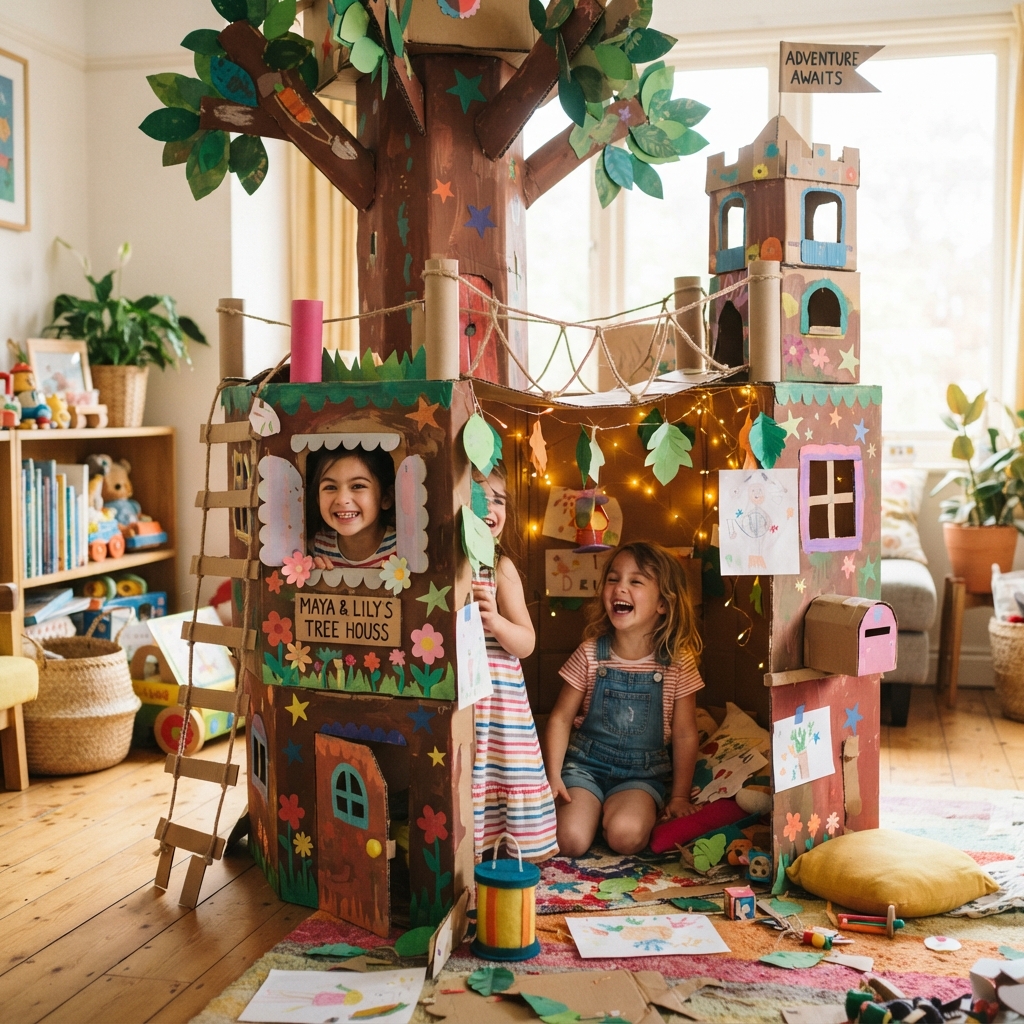
A cardboard tree house is a wonderful craft project that inspires children to dream, build, and explore. Using recycled cardboard, colorful paper, paint, and a few simple craft supplies, kids can create their own miniature tree house high among imaginary branches. This fun activity combines creativity, engineering, storytelling, and environmental awareness while encouraging children to use their imagination.
Whether it becomes a cozy hideaway for toy animals, a secret clubhouse for dolls, or an adventurous lookout tower, a cardboard tree house offers endless opportunities for creative play and learning.
Why Make a Cardboard Tree House?
Tree houses have always been special places where children can imagine exciting adventures. Building one from cardboard allows them to create a magical world while learning valuable crafting skills.
This project helps children:
- Develop creativity through designing unique tree houses.
- Improve fine motor skills by cutting, folding, and gluing.
- Practice problem-solving while assembling the structure.
- Learn about trees, forests, and nature.
- Encourage storytelling and imaginative role-playing.
- Discover the importance of recycling everyday materials.
Materials You’ll Need
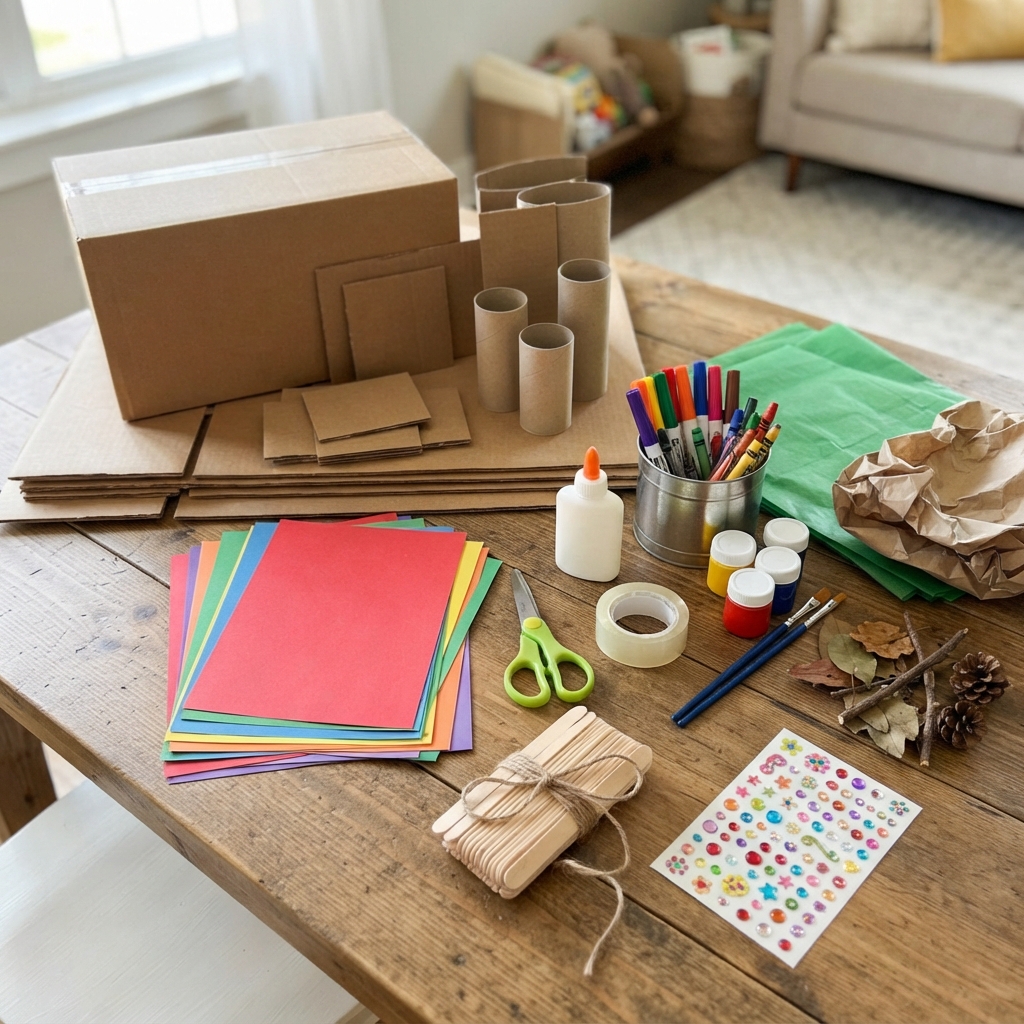
Before you begin, gather these easy-to-find supplies:
- Large cardboard boxes
- Small cardboard pieces
- Cardboard tubes
- Colored construction paper
- Child-safe scissors
- Craft glue or tape
- Markers and crayons
- Paint and paintbrushes (optional)
- Popsicle sticks
- Twine or string
- Green tissue paper
- Brown paper
- Leaves, sticks, or pinecones (optional)
- Stickers and craft decorations
Most of these materials can be found around the home or in a recycling bin.
Step 1: Build the Tree Trunk
Start by creating a strong tree trunk from a cardboard tube or by rolling a large piece of cardboard into a cylinder.
Cover it with brown paper or paint it in shades of brown. Draw bark patterns and knots to make it look like a real tree.
Attach the trunk securely to a sturdy cardboard base.
Step 2: Create the Tree House
Use a small cardboard box as the main tree house.
Cut out:
- Windows
- A front door
- Small balconies
- Round attic windows
Decorate the walls with bright colors, flowers, and cheerful designs to make the house warm and inviting.
Step 3: Add a Roof
Create a sloping roof using folded cardboard.
Paint it red, green, or brown, or cover it with colored paper. Draw roof tiles or decorate it with leaves to give it a woodland feel.
A chimney made from a small cardboard tube adds extra charm.
Step 4: Build a Ladder or Staircase
Children can create a way to reach the tree house using:
- Popsicle sticks
- Thin strips of cardboard
- Twine for rope ladders
Make sure the ladder reaches from the ground to the front door.
Step 5: Design Tree Branches
Attach cardboard branches around the trunk.
Cover them with green tissue paper, paper leaves, or painted cardboard foliage.
The leafy branches create a beautiful canopy around the tree house.
Step 6: Decorate the Interior
Make the inside of the tree house cozy and fun.
Create miniature furniture such as:
- Bed
- Table
- Chairs
- Bookshelf
- Rug
- Toy chest
These tiny details make the tree house feel like a real home.
Step 7: Add Forest Friends
Bring the woodland scene to life by making friendly animals from cardboard or paper.
Some ideas include:
- Squirrels
- Birds
- Owls
- Rabbits
- Foxes
- Hedgehogs
- Butterflies
Give each animal a smiling face and a colorful personality.
Step 8: Decorate the Surroundings
Build a peaceful forest around the tree house.
Add:
- Flowers
- Mushrooms
- Rocks
- Small bushes
- Garden path
- Wooden fence
- Pond
- Swing hanging from a branch
These decorations create a magical outdoor setting.
Step 9: Enjoy Imaginative Adventures
Once the tree house is complete, children can invent endless stories.
They might:
- Welcome woodland visitors.
- Host tea parties in the tree house.
- Watch birds from the balcony.
- Build secret treasure maps.
- Go on forest adventures.
- Rescue lost baby animals.
- Celebrate birthdays with forest friends.
Storytelling encourages creativity, language development, and confidence.
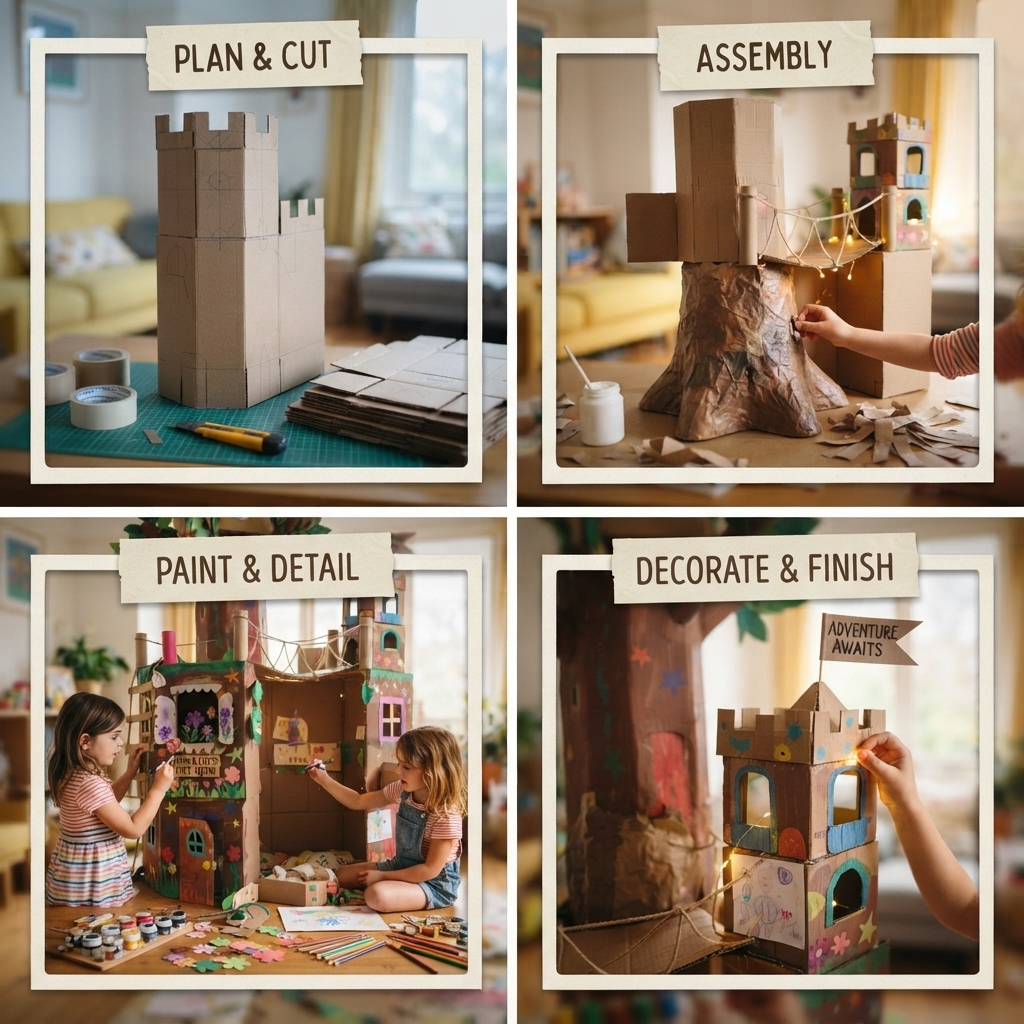
Learning Benefits
A cardboard tree house provides many educational opportunities.
Children practice:
- Fine motor coordination
- Creative thinking
- Spatial awareness
- Problem-solving
- Storytelling
- Communication
- Planning and organization
- Appreciation for nature
The project also introduces basic ideas about forests, wildlife, and environmental care.
Eco-Friendly Crafting
One of the greatest lessons of this activity is learning to reuse everyday materials.
Old cardboard boxes, paper tubes, paper scraps, and natural items such as leaves and twigs can become a beautiful tree house instead of being thrown away.
This teaches children that recycling is both creative and environmentally responsible.
Tips for Parents and Teachers
To make the activity even more enjoyable:
- Read a story about tree houses or forest adventures before crafting.
- Take a nature walk to collect leaves and small twigs.
- Encourage children to create names for their tree house and animal friends.
- Discuss why trees are important for people and wildlife.
- Display the finished project in a classroom or playroom.
- Invite children to explain the different parts of their tree house and share imaginative stories.
Celebrate every child’s creativity and unique ideas throughout the project.
Conclusion
A cardboard tree house is a delightful craft project that combines imagination, creativity, and learning. Children enjoy building cozy homes among leafy branches, decorating woodland scenes, and inventing exciting adventures with friendly forest animals. Along the way, they strengthen artistic abilities, fine motor skills, problem-solving, and storytelling while discovering the value of recycling and caring for nature. Best of all, a simple cardboard box can become a magical tree house where every branch leads to a new adventure and every child becomes the architect of their own enchanted forest.
