
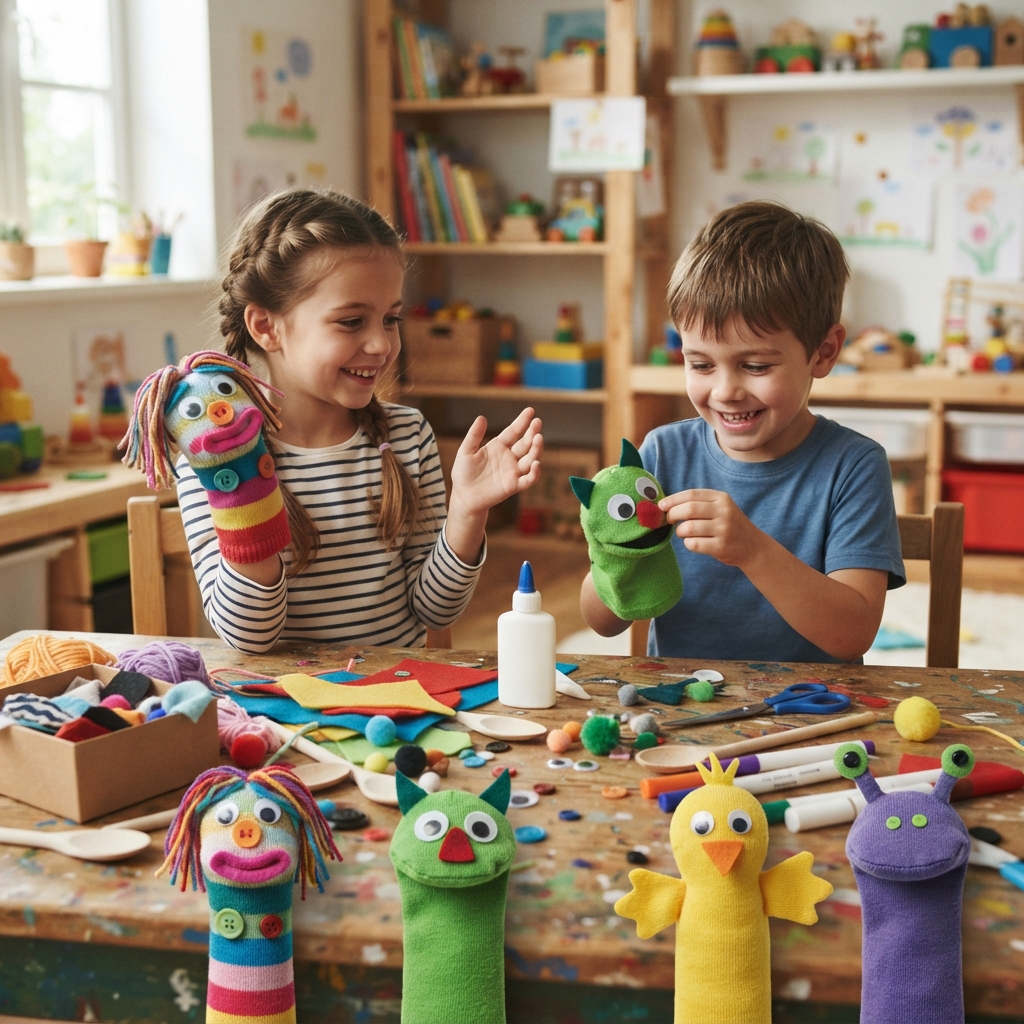
A DIY handmade puppet project is a fun and imaginative craft that encourages children to create their own unique characters using simple materials. Whether made from felt, fabric, paper, socks, or recycled supplies, handmade puppets inspire storytelling, role-playing, and endless creative adventures. Children love bringing their puppets to life by giving them colorful outfits, funny faces, and exciting personalities.
This craft is perfect for classrooms, daycare centers, summer camps, birthday parties, library activities, or family craft afternoons. It combines creativity with hands-on learning while helping children develop valuable skills such as fine motor coordination, problem-solving, and self-expression.
By the end of the project, every child has a one-of-a-kind puppet that can be used for puppet shows, imaginative play, or as a treasured keepsake
Why Kids Love Handmade Puppets
Handmade puppets are exciting because children create characters from their own imagination.
Kids enjoy:
- Designing unique puppet faces.
- Choosing colorful fabrics and decorations.
- Giving their puppet a funny name.
- Creating voices for their puppet.
- Performing puppet shows.
- Telling original stories.
- Playing with friends and family.
- Keeping a handmade toy they created themselves.
Every puppet has its own personality and style.
Materials You’ll Need

Most of the supplies are inexpensive and easy to find:
- Felt sheets or fabric
- Old socks (optional)
- Craft foam
- Cotton stuffing
- Yarn for hair
- Googly eyes
- Fabric glue or child-safe craft glue
- Needle and thread (adult supervision required)
- Child-safe scissors
- Markers or fabric pens
- Buttons (for decoration only)
- Ribbon, lace, or fabric scraps
- Colored paper
Recycled materials can also be used to make the project more environmentally friendly.
Prepare Your Workspace
Cover the table with newspaper or a craft mat.
Arrange all materials in small containers so children can easily reach them.
Have paper towels nearby for quick cleanup.
A clean and organized workspace makes crafting more enjoyable.
Step 1: Choose Your Puppet Design
Children can decide what kind of puppet they would like to make.
Popular ideas include:
- A friendly monster
- A puppy
- A kitten
- A rabbit
- A bear
- A princess
- A superhero
- A dragon
- A dinosaur
- A magical fairy
Encourage children to sketch their ideas before they begin.
Step 2: Create the Puppet Body
Cut two matching pieces of felt or fabric using the chosen template.
Glue or sew around the edges, leaving an opening for the hand if making a hand puppet.
If using a sock, simply decorate the sock to become the puppet.
Step 3: Add the Face
Now it’s time to give the puppet a personality.
Children can attach:
- Googly eyes
- A smiling mouth
- A small nose
- Rosy cheeks
- Funny eyebrows
- Colorful ears
Every face makes the puppet unique.
Step 4: Add Hair and Decorations
Use yarn, ribbon, or felt to create fun hairstyles.
Decorate the puppet with:
- Hats
- Bows
- Flowers
- Buttons
- Stars
- Hearts
- Capes
- Scarves
Children can mix colors and textures to create a truly original character.
Step 5: Create Clothing
Dress the puppet in handmade outfits.
Ideas include:
- Dresses
- T-shirts
- Jackets
- Superhero capes
- Pirate costumes
- Fairy wings
- Animal costumes
- Fancy hats
Simple fabric scraps can become creative costumes.
Step 6: Give the Puppet a Story
Once the puppet is finished, children can invent its background.
They can decide:
- What is the puppet’s name?
- Where does it live?
- What are its favorite hobbies?
- Who are its friends?
- What adventures does it enjoy?
- Does it have any magical powers?
Storytelling helps develop imagination and communication skills.

Put on a Puppet Show
After completing the puppets, children can perform for family or friends.
They can create stories about:
- Friendship
- Helping others
- Animals
- Fairy tales
- Space adventures
- Pirates
- Magical forests
- School adventures
Puppet shows encourage teamwork, confidence, and public speaking.
Educational Benefits
This craft develops many important skills, including:
- Fine motor skills
- Hand-eye coordination
- Creativity
- Imagination
- Communication
- Storytelling
- Problem-solving
- Patience
- Confidence
- Social interaction
Crafting and dramatic play work together to support child development.
Safety Tips
To keep the activity safe:
- Adult supervision is recommended.
- Use child-safe scissors.
- Use non-toxic craft glue.
- Keep small decorations away from very young children.
- Handle needles only with adult assistance.
- Wash hands after crafting.
Safety allows everyone to enjoy the activity.
Great for Group Activities
This puppet project is perfect for:
- Elementary schools
- Preschools
- Summer camps
- Birthday parties
- Library craft sessions
- Community centers
- Scout meetings
- Family craft nights
Children enjoy sharing ideas and performing together.
Tips for Beautiful Puppet
For the best results:
- Use bright colors.
- Mix different textures.
- Encourage original designs.
- Let children choose their own decorations.
- Give every puppet a unique personality.
- Celebrate every child’s creativity.
There is no right or wrong design—every puppet is special.
Conclusion
A DIY handmade puppet project is a creative and educational activity that children will love from start to finish. Using simple craft materials, kids can design unique puppet characters, decorate them with colorful details, and bring them to life through imaginative storytelling and puppet shows. Along the way, they strengthen fine motor skills, creativity, confidence, and communication.
Whether at home, in school, or during a special event, this hands-on craft provides hours of fun while creating lasting memories. Every finished puppet becomes a cherished handmade friend and a reminder that imagination has no limits.
