
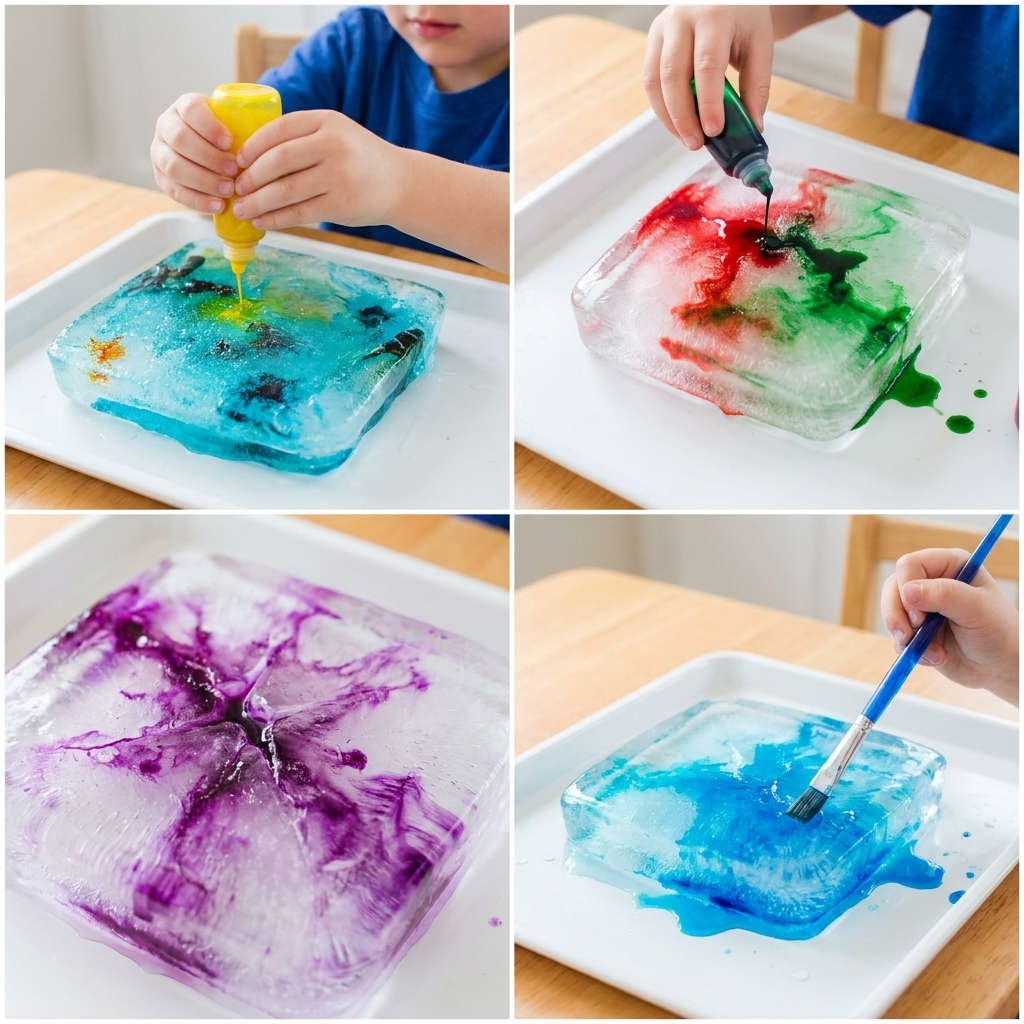
The Science experiment using ice and salt is one of the most engaging and educational STEM activities for children and beginners. It transforms simple household materials—ice cubes and salt—into powerful learning tools that demonstrate real scientific principles such as freezing point depression, heat transfer, and phase changes.
What makes this type of experiment so valuable is its simplicity. With just a few materials, learners can observe complex physical and chemical processes in action. The dramatic reaction between ice and salt creates fascinating effects that feel almost magical, yet are grounded in real science.
In this article, we explore the Science experiment using ice and salt in depth and present nine of the best STEM ideas that can be performed at home or in the classroom. Each idea is designed to encourage curiosity, hands-on learning, and scientific thinking.
Quick Summary Table
| STEM Idea | Main Concept | Difficulty | Time Required |
| Ice melting race | Freezing point depression | Easy | 10–15 min |
| Ice fishing challenge | Salt melting action | Easy | 15 min |
| Ice cube painting | Color diffusion | Easy | 20 min |
| Frozen string lift | Refreezing water | Medium | 30 min |
| Ice block excavation | Heat transfer | Easy | 20–30 min |
| Salt crystal growth | Evaporation & crystallization | Medium | 1–3 days |
| Ice temperature drop test | Endothermic reaction | Easy | 10 min |
| Ice maze challenge | Controlled melting | Medium | 20 min |
| Floating ice experiments | Density & structure | Easy | 15 min |
What Is the Science Experiment Using Ice and Salt?
The Science experiment using ice and salt involves combining salt with ice to observe how it changes the physical state of water. When salt is added to ice, it lowers the freezing point of water, causing the ice to melt faster even in cold conditions.
This process is called freezing point depression, and it is the reason why salt is used on icy roads during winter.
As the ice melts, it absorbs heat from its surroundings, creating a noticeable temperature drop. This makes the experiment both visually and physically interesting for learners.
How Does Ice and Salt Work Scientifically?
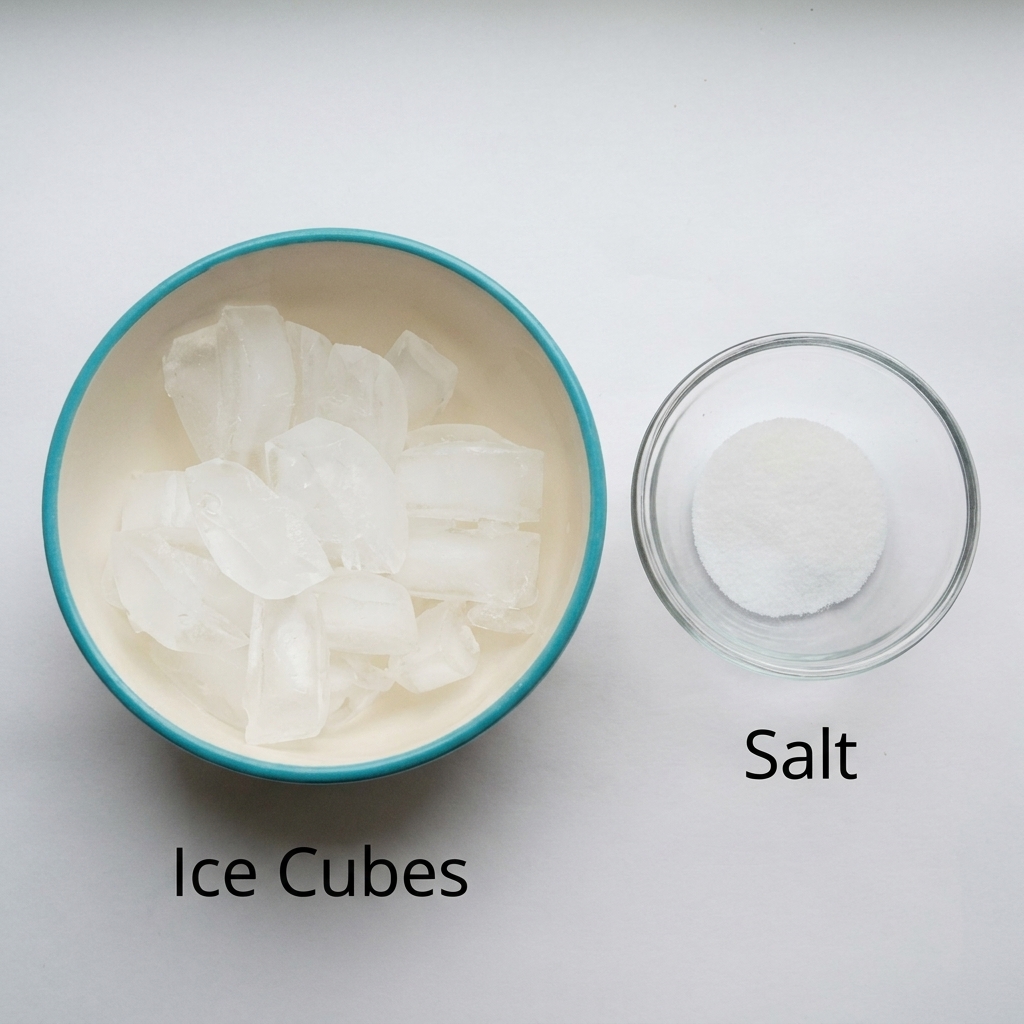
To understand the Science experiment using ice and salt, we need to look at three key scientific principles:
1. Freezing Point Depression
Salt breaks the balance of ice and water equilibrium, forcing ice to melt at lower temperatures.
2. Heat Absorption
When ice melts, it absorbs heat energy from its environment, making the surface colder.
3. Phase Change
Ice changes from solid to liquid when salt is introduced, showing a clear physical transformation.
These concepts make the experiment an excellent introduction to thermodynamics.
9 Best STEM Ideas Using Ice and Salt
Below are nine creative and educational STEM experiments based on the Science experiment using ice and salt.
1. Ice Melting Race Challenge
Concept:
Compare how fast ice melts with and without salt.
How It Works:
Place two ice cubes on plates—add salt to one and leave the other plain. Observe which melts faster.
Learning Outcome:
Children learn how salt accelerates melting.
2. Ice Fishing Challenge
Concept:
Use salt to “lift” ice cubes with string.
How It Works:
Place a string on ice, sprinkle salt, and wait a few seconds before lifting.
Learning Outcome:
Shows how salt briefly refreezes water around the string.
3. Ice Cube Painting Experiment
Concept:
Color diffusion in melting ice.
How It Works:
Add food coloring to salted ice cubes and watch patterns form as they melt.
Learning Outcome:
Teaches diffusion and liquid movement.
4. Frozen String Lift Trick
Concept:
Refreezing water molecules.
How It Works:
Place a string in water, add salt nearby, and lift the string after partial freezing.
Learning Outcome:
Demonstrates phase transition and molecular bonding.
5. Ice Block Excavation
Concept:
Controlled melting and heat transfer.
How It Works:
Freeze small toys inside ice blocks and use salt to “dig” them out.
Learning Outcome:
Teaches how salt speeds up melting.
6. Salt Crystal Growth on Ice
Concept:
Evaporation and crystallization.
How It Works:
Allow salted ice water to evaporate and observe crystal formation.
Learning Outcome:
Introduces crystal formation processes.
7. Ice Temperature Drop Test
Concept:
Endothermic reaction.
How It Works:
Measure temperature changes when salt is added to ice.
Learning Outcome:
Shows heat absorption during melting.
8. Ice Maze Challenge
Concept:
Controlled melting paths.
How It Works:
Create a maze on ice and use salt to carve pathways.
Learning Outcome:
Explains controlled chemical and physical reactions.
9. Floating Ice Density Experiment
Concept:
Density differences.
How It Works:
Compare how ice floats in saltwater vs freshwater.
Learning Outcome:
Teaches density and buoyancy.
Why Kids Love Ice and Salt Experiments
The Science experiment using ice and salt is especially popular among children for several reasons:
1. Instant Reactions
Kids see immediate melting effects.
2. Hands-On Learning
They physically interact with ice and salt.
3. Visual Excitement
Melting patterns and movement are visually engaging.
4. Simple Materials
Everything can be found at home.
5. Fun Challenges
Games like ice races make learning playful.
Educational Benefits of Ice and Salt STEM Activities
These experiments provide strong educational value:
Science Skills
- Observation
- Hypothesis testing
- Measurement
Chemistry Basics
- Solutions
- Solubility
- Reactions
Physics Concepts
- Heat transfer
- Energy exchange
- Phase changes
Critical Thinking
Children analyze why changes happen.
Real-World Applications
The Science experiment using ice and salt connects to real-life situations:
Road Safety
Salt prevents ice buildup on roads.
Food Preservation
Ice and salt mixtures are used in traditional ice cream making.
Medical Uses
Cold packs use similar principles.
Environmental Science
Understanding freezing helps in climate studies.
Safety Tips
Although safe, some precautions should be followed:
- Do not ingest salt mixtures
- Wash hands after experiments
- Avoid contact with eyes
- Supervise young children
Tips for Better Results
To improve your Science experiment using ice and salt:
- Use crushed ice for faster reaction
- Add salt gradually for clearer observation
- Use colored water for visual tracking
- Perform in a warm room for contrast
- Repeat experiments for comparison
Conclusion
The Science experiment using ice and salt is a powerful and simple STEM learning tool that reveals important scientific principles in an exciting way. Through nine engaging experiments, learners can explore freezing point depression, heat transfer, density, and phase changes in a hands-on environment.
Its simplicity makes it perfect for home learning, while its scientific depth makes it valuable for classroom education. Whether used for fun or formal teaching, this experiment consistently sparks curiosity and strengthens understanding of basic science.
By exploring ice and salt interactions, children and beginners gain a deeper appreciation of how everyday materials behave under changing conditions—turning ordinary ice into an extraordinary science lesson.
